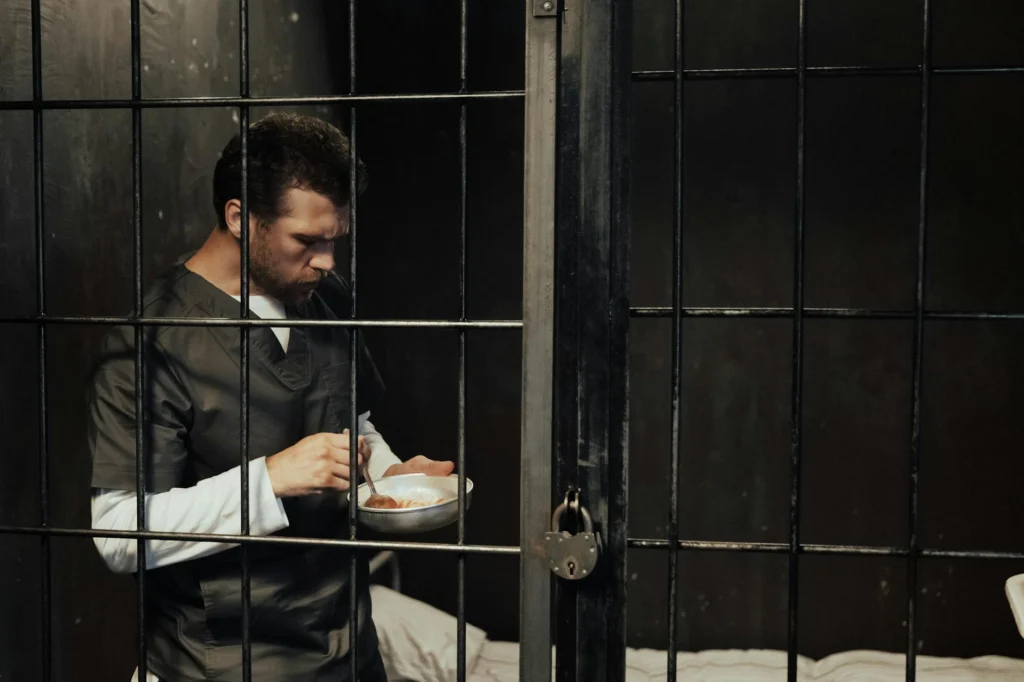
The United States incarcerates approximately 1.9 million people across federal prisons, state prisons, local jails, and other detention facilities[s]. Behind these walls exists a shadow economy worth billions of dollars, one that extracts money from incarcerated people earning pennies per hour and their families struggling to support them from the outside. Prison commissary prices, phone call fees, and medical co-pays form the pillars of this extraction system, transferring the costs of incarceration from government budgets onto some of America’s most vulnerable populations.
Prison Commissary Prices: The Company Store Returns
The prison commissary functions as a captive market. Incarcerated people cannot shop elsewhere. They cannot compare prices or choose competitors. This monopoly position allows commissary vendors to charge whatever the market will bear, and investigations have found prison commissary prices reaching five times higher than community retail rates, with individual item markups as high as 600 percent[s].
These are not luxury purchases. Research from Prison Policy Initiative found that food dominates commissary sales because prison cafeterias are notorious for serving small portions of unappealing food[s]. Incarcerated people in Illinois and Massachusetts spent an average of over $1,000 per person annually at the commissary, with most of that money going to food and basic hygiene products[s].
The disparity between prison commissary prices and prison wages creates an impossible equation. The average incarcerated worker earns between 14 and 63 cents per hour for regular prison jobs[s]. In Alabama, Arkansas, Florida, Georgia, and Texas, most prison labor is entirely unpaid[s]. A person working in a New York prison described working 60 to 80 hours over two weeks and accumulating around six dollars to spend[s].
Phone Calls: Staying Connected Costs a Fortune
Families seeking to maintain contact with incarcerated loved ones face another extraction point: telephone and video calling services. For decades, specialized telecommunications companies have charged rates that would be unthinkable in the free market, enabled by exclusive contracts with correctional facilities.
In July 2024, the Federal Communications Commission voted to cap phone call rates at 6 cents per minute for prisons and large jails, with the first-ever caps on video calling set at 11 to 25 cents per minute depending on facility size[s]. The FCC also banned “site commissions,” the kickbacks that telecom companies paid to facilities in exchange for exclusive contracts[s].
That reform proved short-lived. In October 2025, the FCC voted to increase the rate caps by as much as 83 percent[s]. Under the new interim rules, phone calls now cost up to 11 cents per minute in large prisons and 18 cents per minute in the smallest jails. Video calls can cost as much as 41 cents per minute in small facilities[s].
FCC Commissioner Anna Gomez, who voted against the rollback, called it “indefensible,” stating that the decision gives monopoly telecom providers “the authority to increase the costs for families to maintain critical connections with their loved ones in prison”[s].
Medical Co-Pays: Paying to Stay Healthy
Forty states charge incarcerated people medical co-pays for physician visits, medications, dental treatment, and other health services[s]. A $2 to $5 co-pay may seem modest, but for someone earning 14 cents per hour, these fees become prohibitive.
Prison Policy Initiative calculated the equivalent cost if minimum wage workers faced the same proportional burden. In West Virginia, where incarcerated people earn as little as $6 per month, a single doctor visit costs nearly an entire month’s pay. Translated to minimum wage terms, that equals a co-pay of $1,093[s].
Research published in JAMA Internal Medicine found that high medical co-pays directly reduce healthcare access. Among people with chronic health conditions, about 70 percent more went untreated in prisons with high co-pays compared to those with no co-pays[s]. The National Commission on Correctional Health Care has warned that co-pays may jeopardize the health of incarcerated populations, staff, and the public[s].
Who Profits?
The system of mass incarceration costs governments and families at least $182 billion every year[s]. Private companies that supply goods to prison commissaries or provide telephone service bring in approximately $2.9 billion annually[s].
State corrections departments also take their cut from inflated prison commissary prices. In Florida, a five-year $175 million contract with commissary vendor Keefe Group gives the Department of Corrections a 35.6 percent commission on all marked-up items[s]. In Kentucky, the Department of Corrections receives 16 percent commission from canteen and vending sales[s].
By privatizing services like phone calls, medical care, and commissary, prisons and jails offload the costs of incarceration onto incarcerated people and their families[s]. Whether through prison commissary prices, telecommunications fees, or medical co-pays, the burden falls hardest on those least able to bear it.
The United States holds approximately 1.9 million people in 1,566 state prisons, 98 federal prisons, 3,116 local jails, and hundreds of other detention facilities[s]. Within this sprawling carceral network operates a parallel economy, one designed to extract revenue from incarcerated people and their families. Prison commissary prices, telecommunications fees, and medical co-pays form the primary mechanisms of this extraction, together constituting a multi-billion dollar industry built on captive consumers who have no alternative.
Prison Commissary Prices: Monopoly Economics
The prison commissary is a company store for the incarcerated. Unable to leave, unable to comparison shop, prisoners face whatever prices vendors choose to set. A 2024 investigation by The Appeal examined commissary lists from 46 states and found prison commissary prices up to five times higher than community retail rates, with individual item markups reaching 600 percent[s].
Specific examples illustrate the scale of gouging. In Georgia prisons, a denture cup carried a markup exceeding 600 percent[s]. Indiana prisons charged approximately $33 for an 8-inch fan that sells for about $23 at Lowe’s. For an incarcerated person earning as little as 30 cents per hour, purchasing that fan would require more than 100 hours of labor[s].
Even basic items show wild price variation. Maruchan-brand ramen noodles cost 57 cents in Missouri prisons but $1.06 in Florida prisons, roughly three times the Target retail price[s]. The highest-priced ramen was found at commissaries operated by Keefe Group, a company controlled by private equity firm HIG Capital, which also owns prison healthcare provider Wellpath and prison food company Trinity Services Group[s].
Prison Policy Initiative research in Illinois, Massachusetts, and Washington found that incarcerated people spent an average of $947 per person annually on commissary purchases. In Illinois and Massachusetts specifically, spending exceeded $1,000 per person per year[s]. Food dominated the sales reports, contradicting the myth that incarcerated people buy luxuries; most of their limited money goes to basic necessities[s].
The Wage Gap
The true burden of prison commissary prices becomes clear when measured against prison wages. The average incarcerated worker earns between 14 and 63 cents per hour for regular prison jobs. That average has actually declined since 2001, when it ranged from 93 cents to $4.73 per day[s].
Five states pay nothing at all for most prison labor: Alabama, Arkansas, Florida, Georgia, and Texas[s]. A first-person account published by the Vera Institute described the mathematics: working 60 to 80 hours over two weeks yields approximately six dollars. Basic hygiene items alone, including soap at $1.15, deodorant at $2.00, laundry soap at $6.75, and lotion at $3.14, would require an entire month of labor to afford[s].
Telecommunications: The Cost of Connection
Prison phone and video calling represents another extraction mechanism. Specialized providers like Securus Technologies and ViaPath Technologies operate under exclusive contracts with correctional facilities, creating monopoly conditions that enable inflated pricing.
The 2023 Martha Wright-Reed Fair and Just Communications Act gave the FCC authority to regulate these rates. In July 2024, the commission voted unanimously to cap phone calls at 6 cents per minute for prisons and large jails, 7 cents for medium jails, and between 9 and 12 cents for smaller facilities. Video calling caps ranged from 11 to 25 cents per minute[s]. The FCC also prohibited site commissions, the kickbacks that inflated costs while enriching facilities at families’ expense[s].
The telecom industry and correctional facilities pushed back. In June 2025, the FCC announced a two-year postponement. By October, the commission voted 2-1 to raise rate caps by as much as 83 percent[s]. Phone calls now cost up to 11 cents per minute in large prisons and 19 cents in extremely small jails. Video rates reach 25 cents in prisons and 44 cents in the smallest jails[s].
Commissioner Anna Gomez dissented, calling the decision “indefensible” and arguing it gives monopoly providers authority to increase costs for families maintaining critical connections[s]. Six states, including California, New York, and Connecticut, have made prison phone calls free, bypassing federal regulation entirely[s].
Medical Co-Pays: Healthcare as Revenue
Forty states charge incarcerated people co-pays for medical services, typically between $2 and $5 per visit[s]. Administrators justify these fees as deterrents against “frivolous” medical visits. The reality is that they deter necessary care among a population with disproportionately high rates of chronic and infectious disease.
Prison Policy Initiative calculated the relative burden: in West Virginia, where the minimum prison wage is approximately $6 per month, a single doctor visit costs nearly an entire month’s earnings. Translated to minimum wage terms, that proportional burden equals $1,093[s]. Fourteen states charge co-pays equivalent to more than $200 for minimum wage workers[s].
The health consequences are measurable. A 2024 study published in JAMA Internal Medicine analyzed nationally representative data and found that 16.1 percent of incarcerated people with chronic conditions in high co-pay prisons had never received treatment, compared to 9.4 percent in prisons without co-pays. That represents roughly 70 percent more untreated chronic illness[s].
California and Illinois have eliminated medical co-pays in prisons. Texas remains an outlier, charging a $100 annual healthcare fee – the highest in the nation – to workers who earn nothing[s].
Following the Money
The system of mass incarceration costs governments and families at least $182 billion annually[s]. Private companies supplying commissary goods and telephone services generate approximately $2.9 billion per year, nearly as much as the $3.9 billion governments pay to operate private prisons[s].
Corrections departments share in commissary profits through commission structures. Florida’s $175 million contract with Keefe Group includes a 35.6 percent commission on marked-up items[s]. These revenues nominally fund “inmate welfare” programs, but investigations have found allegations of misuse in some states[s].
Reform efforts targeting prison commissary prices show mixed results. California passed legislation capping commissary markups at 35 percent through 2028. Michigan eliminated markups on hygiene items and reduced food markups to 14 percent[s]. But most states impose few consumer protections on this captive population, leaving prison commissary prices unregulated.
The fundamental structure remains: by privatizing phone calls, medical care, and commissary operations, prisons offload costs onto incarcerated people and their families while generating revenue for both private vendors and state agencies[s]. The financial burden falls on those who can least afford to bear it, extracting wealth from communities already devastated by mass incarceration.