For more than a decade, the Gilgo Beach killer operated in plain sight. Rex Heuermann, a New York architect with a midtown Manhattan office and a suburban Long Island home, commuted to work each morning in a suit and tie while families of his alleged victims waited for answers that never came. It took a multi-agency task force, a discarded pizza crust, and a revolution in DNA science to end one of the longest-running serial murder investigations in American history.
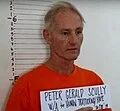
On July 13, 2023, Heuermann was arrested outside his Manhattan office[s] and charged with three counts of first-degree murder. He now stands accused of killing seven women over a span of 17 years, from 1993 to 2010. After maintaining his innocence for nearly three years, Heuermann is expected to plead guilty on April 8, 2026[s].
How the Gilgo Beach Killer Was Found
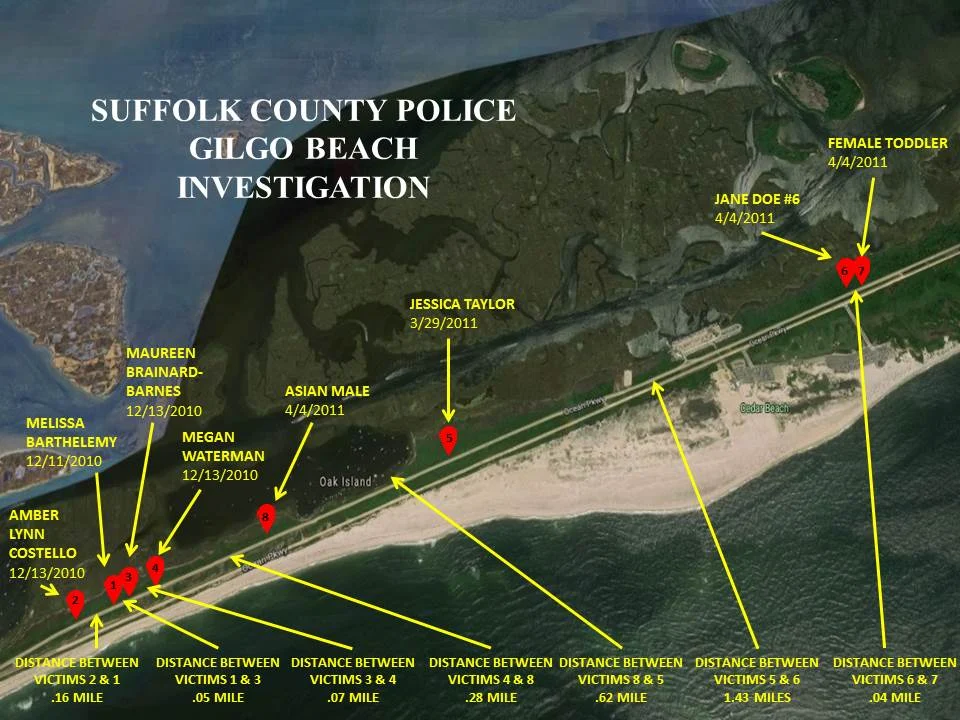
The story begins not with Heuermann, but with the women he is accused of killing. Between 2007 and 2010, four young women who advertised escort services on Craigslist disappeared from Long Island: Maureen Brainard-Barnes, Melissa Barthelemy, Megan Waterman, and Amber Lynn Costello. Their remains were discovered in December 2010 along Ocean Parkway near Gilgo Beach, wrapped in camouflaged burlap, scattered across a half-mile stretch of scrubland. The discovery came during a search for another missing woman, Shannan Gilbert[s], whose 2010 disappearance from a gated community in nearby Oak Beach had prompted the police response.
By spring 2011, the body count rose to 10 sets of human remains found along the same corridor. The case went cold. For over a decade, the Gilgo Beach killer remained unidentified, the subject of a Netflix film, true-crime podcasts, and growing frustration among the victims’ families.
The Taunting Calls
One of the most disturbing elements of the case emerged early. After Melissa Barthelemy vanished in July 2009, her teenage sister began receiving phone calls from an unknown man using Barthelemy’s own cell phone. Prosecutors allege that on four different dates between July 17 and August 26, 2009[s], the Gilgo Beach killer made taunting calls to Barthelemy’s family. In one call, the man told the teenager: “Do you think you’ll ever see her again? You won’t. I killed her.”
The calls were traced to locations in midtown Manhattan, near what investigators would later identify as Heuermann’s office. But at the time, the technology to close that gap did not yet exist.
A Task Force, a Truck, and a Pizza Crust
The breakthrough came in January 2022, when a joint federal, state, and local task force[s] launched a comprehensive re-examination of all evidence. By March 2022, investigators linked Heuermann to a first-generation Chevrolet Avalanche, the same type of truck a witness had described seeing when Amber Costello disappeared in 2010. That witness had described the driver as appearing like “an ogre.”
FBI analysts compared cell site data from the victims’ phones and from seven burner phones allegedly used by the Gilgo Beach killer. The data showed that Heuermann’s personal phone was repeatedly in the same locations as the burner phones. His cell records, credit card billing data, and the burner phone locations all converged on the same pattern.
Then came the DNA. In January 2023, a surveillance team recovered a pizza box Heuermann had discarded in a trash can on Fifth Avenue. The forensic lab compared mitochondrial DNA from the pizza crust to a male hair recovered from the burlap used to wrap Megan Waterman’s body. The result: 99.96% of the North American population could be excluded[s], but Heuermann could not.
An Architect’s Blueprint for Murder
After the arrest, investigators seized more than 350 electronic devices from Heuermann’s home. On a hard drive in his basement, forensic analysts recovered a deleted Word document, created in 2000 and modified over several years[s], that prosecutors described as a “blueprint” for serial murder. The document contained sections labeled “Supplies,” “Body Prep,” and “Problems,” with “DNA” listed as the top concern. It included instructions for removing identifying marks like tattoos, disposing of evidence, and checking locations for surveillance cameras.
The Gilgo Beach killer also tracked his own investigation obsessively. Prosecutors allege Heuermann conducted more than 200 Google searches about the Gilgo Beach case[s] in a 14-month period, along with searches for photos of victims and their family members.
A Precedent in DNA Science
The case broke new legal ground in September 2025, when a Suffolk County judge ruled that whole genome sequencing could be admitted as evidence[s] for the first time in New York state. The technique, performed by Astrea Forensics, extracted DNA from degraded, rootless hair strands found on six of the seven victims and connected them to Heuermann, his ex-wife, and his adult daughter. The defense called the method “magic.” The prosecution called it science. The judge agreed with the prosecution.
Now, with a guilty plea expected, the case that haunted Long Island for over 15 years may finally reach its conclusion. But for the families of Barthelemy, Waterman, Costello, Brainard-Barnes, Jessica Taylor, Sandra Costilla, and Valerie Mack, the questions may never fully stop.
For more than a decade, the Gilgo Beach killer evaded identification while living an unremarkable suburban life in Massapequa Park, New York. Rex Heuermann, a licensed architect who ran a small Manhattan consulting firm, commuted daily by train, raised two children, and maintained a marriage, all while allegedly murdering seven women across 17 years. The digital forensics trail that ultimately exposed him represents one of the most complex convergences of cell site analysis, DNA science, and computer forensics in modern criminal investigation.
The Gilgo Beach Killer Victims and Timeline
The earliest known murder attributed to Heuermann dates to 1993, when Sandra Costilla’s remains were found by hunters in a wooded area of Southampton[s]. Partial remains of Valerie Mack, a 24-year-old Philadelphia mother, were discovered in Manorville in November 2000. Jessica Taylor’s partial remains surfaced in the same area in 2003. Additional remains of both Mack and Taylor were later recovered along Ocean Parkway in 2011.
The “Gilgo Four” cluster followed: Maureen Brainard-Barnes disappeared in July 2007, Melissa Barthelemy in July 2009, Megan Waterman in June 2010, and Amber Lynn Costello in September 2010. All four advertised escort services on Craigslist. Their remains were found in December 2010, wrapped in camouflaged burlap along a half-mile stretch of Ocean Parkway near Gilgo Beach[s], during a search for missing woman Shannan Gilbert. By spring 2011, searchers had found 10 sets of human remains in the area.
Burner Phone Architecture
The Gilgo Beach killer’s operational security was methodical. For each murder, Heuermann allegedly acquired an individual prepaid burner phone, used it to contact the victim, and disposed of it shortly after the killing. Suffolk County District Attorney Ray Tierney described the pattern: “For each of the murders, he got an individual burner phone and he used that to communicate with the victims and then shortly after the death of the victims, he then would get rid of the burner phone.”[s]
FBI analysts ultimately identified seven anonymous prepaid phones linked to the case. Cell site data from these burner phones was cross-referenced against data from the victims’ own phones, Heuermann’s personal cell phone, and his known locations. The overlap was consistent: burner phone activations clustered near Heuermann’s midtown Manhattan office and his Massapequa Park residence.
Prosecutors further allege that Heuermann used Brainard-Barnes’ and Barthelemy’s own cell phones[s] after their deaths to check voicemail and make taunting calls. Between July 17 and August 26, 2009, a male caller used Barthelemy’s phone to contact her teenage sister on four occasions, admitting to killing and sexually assaulting Barthelemy[s]. Those calls pinged towers near Heuermann’s office.
The 2022 Task Force and the Chevrolet Avalanche
The case broke open in early 2022, when Suffolk County Police Commissioner Rodney Harrison formed a multi-agency task force[s] including the Suffolk County Police Department, the Suffolk County Sheriff’s Office, New York State Police, and the FBI. In March 2022, a state investigator running records through a vehicle database flagged Heuermann as the registered owner of a first-generation Chevrolet Avalanche, matching a truck described by a witness who saw Amber Costello’s suspected killer in 2010.
The vehicle match aligned with cell tower analysis that had already narrowed the suspect’s likely residence to Heuermann’s neighborhood. Investigators began physical surveillance and started collecting discarded items for DNA analysis. In late 2022, they recovered a cup believed to have been used by Heuermann, but the DNA sample was insufficient. In January 2023, a surveillance team obtained a pizza box Heuermann had thrown away on Fifth Avenue in Manhattan.
DNA: From Pizza Crust to Whole Genome Sequencing
The Suffolk County Crime Laboratory compared mitochondrial DNA from the pizza crust to a male hair recovered from burlap wrapping Megan Waterman’s remains. The profiles matched, with 99.96% of the North American population excluded[s]. Additional DNA testing on bottles from Heuermann’s household trash linked his wife’s DNA to female hairs found on the remains of Waterman and Costello, consistent with secondary transfer from clothing.
The case pushed DNA science into new legal territory. Suffolk County prosecutors contracted Astrea Forensics to perform whole genome sequencing on degraded, rootless hair samples, a technique that examines tens of thousands of DNA variations rather than the standard 24 to 27 markers used in conventional forensic testing. In September 2025, a judge ruled the method admissible in New York for the first time[s], after a series of Frye hearings. Astrea connected Heuermann, his ex-wife, and his adult daughter to nine hair strands found on six of the seven victims. Suffolk County alone spent $130,000 on the Gilgo Beach DNA analysis.
The Planning Document and Digital Forensics
After Heuermann’s arrest, investigators seized more than 350 electronic devices from his home. On a hard drive in the basement, forensic analysts recovered a Word document from “unallocated space,” data that had been deleted but remained recoverable. The document, labeled “HK2002-04,” had been created in 2000 and modified over several years.[s]
The file contained organized sections: “Pre-Prep” (checking for surveillance cameras), “Supplies” (cutting tools, acid, hair nets, tarps), “Body Prep” (instructions for removing heads, hands, tattoos, and trace DNA), and “Post Event” (changing tires, establishing alibis). A “Things to Remember” section documented lessons from previous killings, noting that lighter rope “broke under the stress of being tightened.” The document also referenced pages of Mindhunter: Inside the FBI’s Elite Serial Crime Unit by former FBI profiler John Douglas.
The Gilgo Beach killer also monitored his own investigation compulsively. Over a 14-month period, Heuermann conducted more than 200 Google searches[s] related to the case, including queries like “why hasn’t the long island serial killer been caught” and searches for photos of victims and their relatives. At the time of his arrest, he was carrying a burner phone linked to a fake email account used for these searches.
Toward a Guilty Plea
On March 27, 2026, sources confirmed to the Associated Press and NBC News[s] that the Gilgo Beach killer intends to plead guilty at his April 8 court appearance. Victims’ families have reportedly been notified. John Ray, attorney for Valerie Mack’s son, cautioned that full accountability depends on the allocution: “If the full facts do not come out, make no mistake, we are going to pursue this. It’s not over.”
Whether the plea provides the closure that 15 years of investigation could not remains to be seen. What is certain is that the convergence of cell site forensics, advanced DNA sequencing, and digital evidence recovery broke a case that conventional policing could not solve alone.