The war on drugs failure is not a matter of opinion. It is a matter of arithmetic. Since President Richard Nixon declared drug abuse “public enemy number one” in 1971, the United States has spent over $1 trillion on enforcement, interdiction, and incarceration[s]. The result? Drug use rates have remained essentially flat, overdose deaths have exploded past 112,000 per year[s], and the country now incarcerates more people than any other nation on Earth. This is not a policy that needs more time. This is a policy that has had more time than any reasonable standard should allow.
The question worth asking is no longer whether the drug war works. Even the people running it have admitted it does not. Former U.S. drug czar Gil Kerlikowske told the Associated Press plainly: “In the grand scheme, it has not been successful. Forty years later, the concern about drugs and drug problem is, if anything, magnified, intensified.”[s] The real question is why, given four decades of evidence against it, American drug policy has barely changed.
The War on Drugs Failure by the Numbers
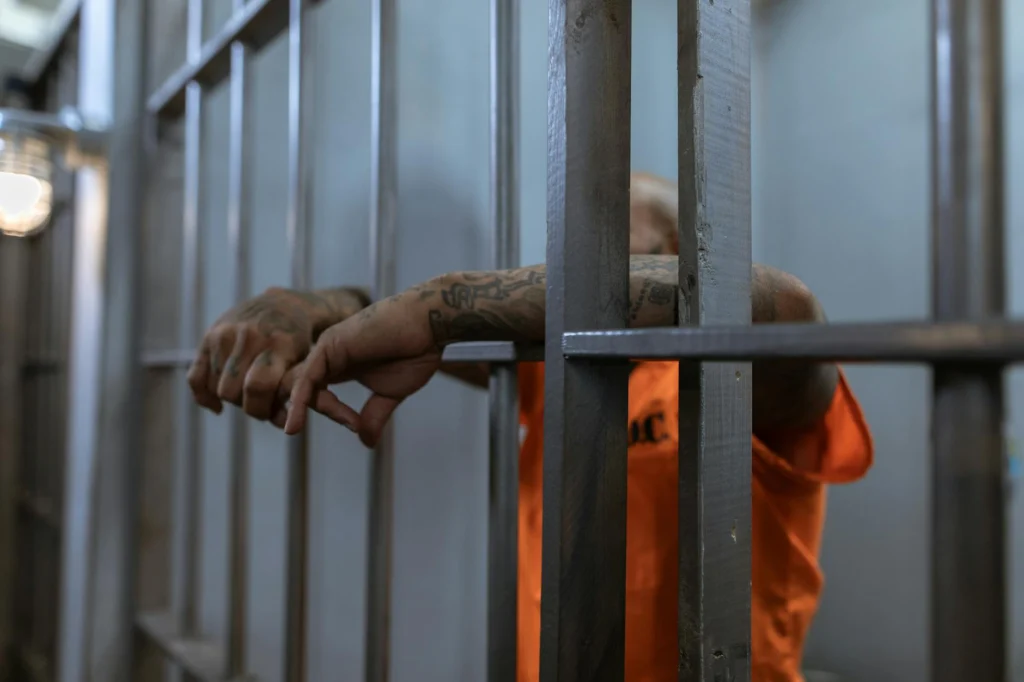
The numbers are damning. The number of people convicted of drug-related crimes has risen more than 500% since the early 1980s[s]. Drug offenses now account for 45% of the federal prison population[s]. Before the Anti-Drug Abuse Act of 1986, federal drug sentences averaged under two years; by 2005, they averaged seven[s]. None of this reduced the availability of drugs or the rate of addiction.
Meanwhile, 65% of incarcerated individuals meet the medical criteria for drug addiction, yet only 11% receive treatment[s]. The federal government spends roughly $44 billion a year on drug control. Research published in JAMA found that incarceration costs approximately $22,000 per month per inmate, while methadone treatment costs $4,000 per month and actually reduces both drug use and criminal recidivism[s]. Every dollar spent on drug courts saves approximately $4 in avoided incarceration and health care costs[s]. The math is not subtle.
A Policy Born in Bad Faith
The war on drugs failure is easier to understand once you know why the policy was created in the first place. In 1994, Nixon’s former domestic policy chief John Ehrlichman told journalist Dan Baum what the quiet part had always been:
“The Nixon campaign in 1968, and the Nixon White House after that, had two enemies: the antiwar left and Black people. […] We knew we couldn’t make it illegal to be either against the war or Black, but by getting the public to associate the hippies with marijuana and Blacks with heroin, and then criminalizing both heavily, we could disrupt those communities. […] Did we know we were lying about the drugs? Of course we did.”[s]
The racial targeting Ehrlichman described was not a side effect. It was the blueprint. Black men are sent to state prison on drug charges at 13 times the rate of white men[s], despite the fact that white Americans use and sell drugs at comparable or higher rates[s]. One in five Black men born in 2001 is likely to be imprisoned at some point in their lifetime[s]. The 1986 Anti-Drug Abuse Act required a five-year mandatory minimum for possessing five grams of crack cocaine, while the same sentence for powder cocaine required 500 grams, a 100-to-1 disparity that fell overwhelmingly on Black communities[s].
We Know What Works, and We Are Not Doing It
Portugal decriminalized personal drug use in 2001 and invested heavily in treatment, counseling, and housing. Over the next two decades, the country cut drug deaths by 80% and halved its rates of HIV/AIDS and hepatitis among drug users[s]. People in Portugal are now 45 times less likely to die from an overdose than people in the United States. Police there refer drug users to counseling instead of arresting them, and roughly 90% of those referred actually show up for their sessions[s].
In the United States, during that same period, drug deaths increased by over 500%. Researchers now predict that unless the country changes course, the overdose crisis will kill a total of 2.2 million Americans by the end of this decade[s]. The contrast is not ambiguous. It is a controlled experiment running at national scale, and the results are in.
So Why Hasn’t Policy Changed?
If the evidence is this clear, the persistence of the war on drugs failure demands an explanation beyond ignorance. The answer is structural: too many powerful interests benefit from the status quo.
Private prisons need full beds. The two largest private prison companies have spent $35 million on lobbying and campaign contributions since 1989[s]. The number of prisoners in private facilities has grown 1,600% since 1990[s]. These companies have publicly acknowledged in regulatory filings that changes to drug laws could reduce demand for their facilities. Their business model requires a steady supply of people convicted of drug offenses.
Law enforcement budgets depend on drug enforcement. More than 60% of municipal and county law enforcement agencies surveyed in one study said that civil asset forfeiture profits were a necessary part of their budget[s]. Federal civil forfeitures grew from $93.7 million in 1986 to $4.5 billion by 2014, a 4,600% increase[s]. In 80% of civil forfeiture cases, the person whose property was seized was never charged with a crime[s]. A former U.S. national security adviser on narcotics described the result: “the drug war has given rise to a military-industrial-narcotics complex that is sustained wholly on its own logic, however flawed that logic might be.”[s]
Police officers are psychologically invested. A survey of over 1,000 U.S. police officers found that the vast majority opposed drug decriminalization[s]. Here is the striking part: only 11% of those same officers believed the war on drugs was actually reducing drug use[s]. They oppose changing the policy while simultaneously acknowledging it does not work. Researchers attribute this to cognitive dissonance: officers who have spent careers enforcing drug laws cannot easily accept that their work may have caused more harm than good.
Politicians face asymmetric risk. Being “tough on crime” has been a reliable electoral strategy since the Nixon era. Being “soft on drugs” can end a career. The political incentive structure rewards escalation, not evidence. Even when individual politicians recognize the war on drugs failure, they calculate that the electoral cost of saying so outweighs the policy benefit of acting on it.
The Racial Double Standard Tells the Story
Perhaps the most revealing indicator of how policy is shaped by politics rather than evidence is the opioid crisis. When the face of addiction was perceived as Black and urban, the response was mandatory minimums and mass incarceration. When the opioid epidemic hit white, suburban, and rural communities, the response shifted to public health, treatment access, and compassion. At a University of Pennsylvania seminar, Helena Hansen, then a professor at UCLA, documented this pattern: “The popular press and politicians have been circulating images of Black, brown and even Asian people as addicted and dangerous for over 100 years and these racialized images built political support for prohibitionist criminalizing drug policies.”[s]
The selective medicalization of addiction for white communities while continuing to criminalize it in communities of color is not an oversight. It is the war on drugs failure made visible in two competing policy frameworks, applied to the same disease based on the demographics of who suffers from it.
What Would Change Look Like?
In January 2025, President Biden commuted the sentences of nearly 2,500 people convicted of non-violent drug offenses, one of the largest clemency actions in American history[s]. It was a significant gesture. It was also an acknowledgment, decades overdue, that thousands of people were locked up under policies that even their architects knew were wrong.
Meaningful reform would treat drug addiction as the medical condition it is. It would redirect the billions now spent on enforcement toward treatment, which costs less and works better. It would end civil asset forfeiture as a revenue model for police departments. It would remove the profit motive from incarceration. None of these steps require new science or new evidence. They require political will to override financial interests.
The war on drugs failure is not a mystery. It is a choice, renewed each year by institutions that benefit from it, funded by taxpayers who bear the cost, and suffered by communities that never had a say in the matter. The evidence has been clear for 40 years. The only thing missing is the courage to act on it.
The war on drugs failure is, at this point, among the most extensively documented policy failures in modern American governance. Since President Nixon’s 1971 declaration that drug abuse was “public enemy number one,” the federal government has spent over $1 trillion on interdiction, enforcement, and incarceration[s]. The current annual federal drug control budget exceeds $44 billion. The stated objective of reducing drug availability and consumption has not been achieved by any measure the government itself uses. Overdose deaths reached approximately 112,000 per year before a recent modest decline[s], and the illicit drug supply has proven consistently resilient to enforcement pressure.
The persistence of this policy in the face of its own failure metrics is the more analytically interesting question. This article examines the structural, institutional, and political economy factors that sustain the current framework despite the accumulated evidence of the war on drugs failure.
The Evidentiary Record
Drug-related convictions increased more than 500% over four decades[s]. At the federal level, 45% of the prison population serves time for drug offenses[s]. Average federal drug sentences expanded from under two years before the 1986 Anti-Drug Abuse Act to seven years by 2005[s]. The racial disparity in sentencing is well-documented: the average federal drug sentence for Black individuals was 11% higher than for whites before the 1986 Act; four years after its passage, the gap had widened to 49%[s]. Black men are sent to state prison on drug charges at 13 times the rate of white men[s].
The treatment gap is equally stark. Approximately 65% of incarcerated individuals meet diagnostic criteria for substance use disorder, while only 11% receive treatment[s]. A JAMA-published study by researchers at the National Institute on Drug Abuse found that less than 20% of inmates with drug abuse or dependence receive formal treatment, despite consistent evidence that treatment reduces both substance use and recidivism[s]. The cost differential is significant: incarceration costs approximately $22,000 per month per person, while methadone maintenance costs $4,000 per month and demonstrates superior outcomes on drug use reduction and criminal behavior metrics[s]. Drug court programs yield approximately $4 in savings per $1 invested[s].
The Portugal counterfactual
Portugal’s 2001 decriminalization of personal drug use, combined with investment in health services, treatment, and harm reduction infrastructure, provides the closest available natural experiment. Over two decades, Portugal cut drug deaths by 80% and halved HIV/AIDS transmission among drug users[s]. The Portuguese model redirected police from arrest functions to referral functions, with 90% of police-referred individuals attending at least an initial counseling session[s]. During the same period, U.S. overdose deaths increased by over 500%, and researchers project a cumulative toll of 2.2 million overdose deaths by the end of this decade absent policy change[s].
War on Drugs Failure: Structural Resistance to Reform
The analytical puzzle is not whether the policy has failed but why failure has not triggered correction. Several institutional dynamics maintain the equilibrium.
The prison-industrial revenue stream
The two largest private prison companies, CoreCivic and GEO Group, have collectively spent $35 million on lobbying and campaign contributions since 1989[s]. The private prison population grew 1,600% since 1990[s]. These companies have explicitly identified drug law reform as a business risk in SEC filings. Nearly every private prison contract includes “bed mandates” requiring states to maintain 90-100% occupancy or pay for empty beds, creating a structural incentive to maintain high incarceration rates regardless of crime trends.
Civil asset forfeiture as a budget mechanism
Federal civil asset forfeitures grew from $93.7 million in 1986 to $4.5 billion by 2014[s]. More than 60% of surveyed law enforcement agencies identified forfeiture revenue as a necessary budget component[s]. The 1984 Comprehensive Crime Control Act earmarked forfeiture proceeds directly for law enforcement, creating a self-reinforcing financial loop: drug enforcement generates revenue, which funds more drug enforcement. In 80% of federal civil forfeiture cases, the property owner was never charged with a crime[s]. The SPLC documented that police departments in some jurisdictions incorporated projected future seizures into operating budgets, treating citizens’ assets as a predictable revenue line.
Law enforcement institutional identity
A University of Bergen analysis published in Nordisk Alkohol Nark identified four mechanisms sustaining police opposition to reform: availability bias (officers disproportionately encounter the most dysfunctional 10% of drug users), cognitive dissonance (acknowledging policy failure would invalidate career-long enforcement work), racial bias in enforcement patterns, and direct economic incentives through forfeiture and federal grants[s]. The study noted a revealing finding: only 11% of surveyed U.S. police officers believed the war on drugs was reducing drug use, yet the overwhelming majority still opposed decriminalization[s]. A former U.S. national security adviser on narcotics characterized the result as “a military-industrial-narcotics complex that is sustained wholly on its own logic, however flawed that logic might be.”[s]
Electoral asymmetry
The political economy of drug policy reform is characterized by concentrated benefits and diffuse costs. Drug enforcement spending sustains identifiable constituencies: police unions, prison guard unions, private prison shareholders, and rural communities where prisons are major employers. The beneficiaries of reform, people with substance use disorders, formerly incarcerated people, and affected communities, are politically marginalized, disenfranchised (through felony voting restrictions), or too stigmatized to organize effectively. The “tough on crime” framing, cemented into American political discourse during the Nixon and Reagan administrations, creates an electoral penalty for any politician who advocates evidence-based drug policy that can be characterized as “soft.”
The Racialized Policy Divergence
The most instructive natural experiment in American drug policy is not international but domestic. When crack cocaine devastated Black urban communities in the 1980s and 1990s, the policy response was the 1986 Anti-Drug Abuse Act (100-to-1 crack/powder sentencing disparity), the 1994 Crime Bill ($12.5 billion for prison expansion), and aggressive enforcement in communities of color. When the opioid epidemic struck predominantly white suburban and rural communities in the 2000s and 2010s, the response framework shifted to the Affordable Care Act’s inclusion of substance use disorder treatment as an essential health benefit, expanded access to medications like buprenorphine, and Good Samaritan laws protecting people who call 911 during overdoses.
University of Pennsylvania researchers documented this divergence explicitly. Helena Hansen, then at UCLA, noted that “the opioid crisis came to be seen as white” and that “it was not a popular political response to criminalize white, middle-class opioid users.”[s] The war on drugs failure is, in this analysis, not a failure at all from the perspective of its architects: the policy was designed to criminalize specific communities, and it accomplished that objective with remarkable efficiency.
Recent Developments and Trajectory
In January 2025, President Biden commuted the sentences of nearly 2,500 individuals convicted of non-violent drug offenses, acknowledging that they had received “excessively harsh punishments under discredited distinctions between crack and powder cocaine”[s]. In December 2025, President Trump announced the rescheduling of marijuana from Schedule I to Schedule III. These actions, while significant, address symptoms rather than the structural incentives that sustain the broader war on drugs failure. The HALT Fentanyl Act, passed by the House in February 2025, moves in the opposite direction: permanently scheduling all fentanyl-related substances as Schedule I and imposing new mandatory minimums.
The trajectory remains contested. State-level marijuana legalization continues to expand. Harm reduction approaches have gained mainstream credibility. But federal policy oscillates between modest reform and punitive escalation, driven more by electoral cycles than by the now-overwhelming evidence. The structural beneficiaries of the current system, private prisons, law enforcement agencies dependent on forfeiture revenue, and politicians invested in “tough on crime” branding, remain well-funded and well-organized.
Four decades of evidence have established beyond reasonable dispute that criminalizing addiction does not reduce addiction, that incarceration costs more and achieves less than treatment, and that enforcement falls disproportionately on communities of color. The war on drugs failure is not a knowledge problem. It is a power problem. The evidence is waiting. The institutions that would need to yield are not.