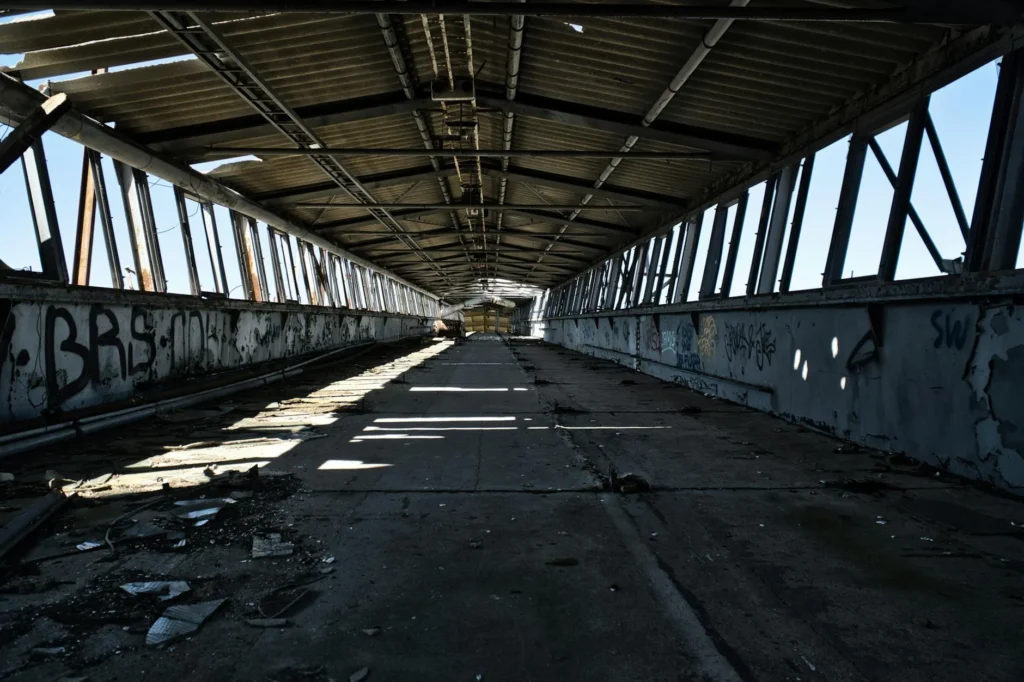
The United States has accumulated at least $1 trillion in deferred infrastructure maintenance[s]: scheduled repairs that should have been carried out but were postponed in favor of more pressing current spending needs. This is not a mystery. It is not an accident. It is the predictable outcome of a political system that rewards ribbon-cutting and punishes long-term stewardship.
The American Society of Civil Engineers gave the nation’s infrastructure a C grade in 2025, the highest mark since it began issuing report cards in 1998[s]. But the same report projects a $3.7 trillion gap between current planned investments and what would actually bring infrastructure to good working order. The total price tag to address all needs: $9.1 trillion[s]. The gap is not shrinking. It grew by over a trillion dollars since 2021.
Deferred Infrastructure Maintenance Delivers Higher Returns
Here is what makes deferred infrastructure maintenance particularly maddening: it is cheaper and more effective than building new. The Congressional Budget Office has estimated that real rates of return on maintaining highway conditions could reach 30 to 40 percent, much higher than returns from adding capacity[s]. Cost-benefit analyses often suggest that upgrading and maintaining existing infrastructure beats building new projects, MIT economist James Poterba noted in his research on infrastructure investment[s].
The pattern is consistent. Politicians and budget writers steer more dollars to new construction than to keeping existing assets in good repair, even though the federal government’s own analysis points the other way on returns[s]. This is not a market failure. Markets would correct a misallocation in which the higher-return option is systematically underfunded. This is a political failure, and a structural one.
The Ribbon-Cutting Phenomenon
Politicians prefer ribbons to brooms. This observation, made in a 1998 Clinton administration policy paper, remains devastatingly accurate: “There is often little political benefit to following maintenance schedules compared to ‘ribbon cutting’ associated with completion of a new facility.”[s]
Poterba puts it more plainly: “The political process, unfortunately, is a bit biased in favor of new projects. It’s the ribbon-cutting phenomenon. Elected officials get more favorable media coverage for a new highway or bridge, compared to extending an airport runway.”[s]
This is not about corruption or individual bad actors. Officials who prioritize long-term value get replaced by those who deliver short-term wins. Ribbon-cutting projects provide more photo opportunities than ongoing maintenance projects[s]. Voters see the new bridge. They do not see the water main that did not burst because someone replaced it on schedule.
The Temporal Asymmetry Problem
Infrastructure operates on 30 to 50 year timescales. Politics operates on 4 year electoral cycles. This temporal asymmetry is the core architectural flaw[s]. When a 4-year cycle governs a 30-year investment, every incentive points toward front-loading benefits and deferring costs.
Consider the math. A governor who invests in deferred infrastructure maintenance today will not see the political benefits for a decade or more. A governor who announces a flashy new project today can cut the ribbon before the next election. This is not cynicism; it is rational behavior given the incentive structure. The problem is not that politicians are short-sighted. The problem is that we have designed a system that systematically rewards short-sightedness.
What Deferred Infrastructure Maintenance Actually Costs
The abstract trillion-dollar figure becomes concrete when systems fail. In Flint, Michigan, the city switched water supplies to save money and failed to add anti-corrosion chemicals. The result: thousands of Flint children consumed lead-contaminated water, with CDC analysis finding that children under 6 were nearly 50% more likely to have elevated blood lead levels (≥5 µg/dL) after the switch[s]. A federal settlement later distributed $626 million to affected residents[s]. The prevention cost would have been negligible compared to the cleanup.
Jackson, Mississippi, offers another textbook case of deferred infrastructure maintenance. The city’s water infrastructure had been neglected for decades. In August 2022, flooding overwhelmed the fragile system and left roughly 160,000 residents without running water to drink, cook, or flush toilets[s][s]. Just a year before, Mississippi lawmakers had not allocated any of the $1.8 billion in American Rescue Plan Act funds the state received to Jackson, despite the mayor’s request for $47 million to cover immediate repairs. When the infrastructure finally collapsed, Congress allocated $600 million specifically for recovery. The refusal to spend preventively resulted in spending far more reactively.
When the I-35W bridge collapsed in Minneapolis in 2007, the Minnesota Department of Transportation calculated that road-user costs from the unavailable crossing totaled $400,000 per day[s]. The overall economic impact reached $17 million in 2007 and $43 million in 2008. These costs fell on commuters, trucking companies, and businesses. They showed up nowhere in any politician’s budget.
The Disclosure Problem
Perhaps the most damning evidence of the political invisibility of maintenance: most states do not even report how much deferred infrastructure maintenance they have accumulated. Research supported by the Pew Charitable Trusts found that only six states disclosed a total estimated cost of deferred maintenance across multiple asset classes in their capital budget, and just three identified sources of funding to address it[s].
You cannot manage what you do not measure. But the lack of measurement is itself a political choice. Quantifying the maintenance backlog would make it visible. Visible problems create political pressure. Politicians who benefit from kicking the can down the road have little incentive to install a camera that shows how far down the road the can has traveled.
What Would Actually Fix This
The standard policy prescriptions, more funding, better cost-benefit analysis, user fees, all have merit. But they miss the structural problem. As long as deferred infrastructure maintenance remains invisible to voters and politicians alike, as long as the incentives point toward ribbon-cutting over pipe-replacing, the gap will continue to grow.
The fix requires decoupling infrastructure investment from electoral cycles. Independent infrastructure authorities with dedicated funding streams. Mandatory disclosure of maintenance backlogs in capital budgets. Lifecycle cost requirements in procurement that force agencies to account for maintenance when they build new projects.
None of these are technically difficult. All of them are politically difficult. They require politicians to surrender control over spending that generates favorable media coverage. They require voters to pay attention to unglamorous line items in capital budgets. They require accepting that the roads, bridges, water systems, and power grids that keep society functioning need the same sustained attention we give to the new and shiny.
The $1 trillion in deferred infrastructure maintenance will not announce itself with a bridge collapse or a water crisis. It will grow quietly, invisibly, until it does not. The question is whether we wait for the catastrophe or act before it.