In 1868, Japan was a feudal archipelago ruled by regional warlords, with no railways, no national army, and no constitution. Forty-four years later, by the death of Emperor Meiji in 1912, it had become a centralized industrial state with an elected parliament, a powerful military, and a growing empire. The story of Meiji Restoration industrialization[s] is one of the most dramatic national transformations in modern history, made all the more striking by what happened next door: China’s Qing dynasty, facing the same Western threats, attempted similar reforms and failed catastrophically.
A Nation Jolted Awake
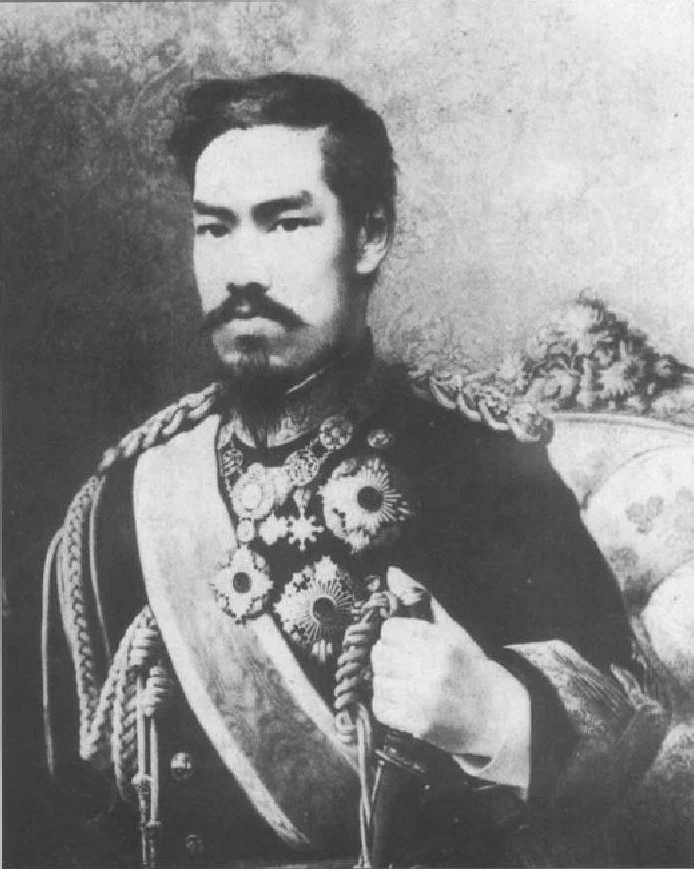
The Meiji Restoration began on January 3, 1868, when a coalition of samurai from the Satsuma and Choshu domains overthrew the Tokugawa shogunate and restored the teenage Emperor Mutsuhito to nominal power. The new leaders were young, pragmatic, and terrified. They had watched Western gunboats force open Chinese ports after the Opium Wars, and they feared Japan would be next. Their answer was a slogan that would define a generation: “Fukoku kyohei”[s], “Enrich the country, strengthen the army.”
What made Meiji Restoration industrialization possible was not just ambition but speed. Within five years[s], the new government dismantled the entire feudal system, abolishing the 270 semi-independent domains and replacing them with prefectures governed by centrally appointed officials. Feudal lords were stripped of their lands, samurai lost their hereditary privileges, and a universal conscription law in 1873 ended the warrior class’s monopoly on military service. Japan essentially rebuilt its state from scratch.
Learning from the West to Beat the West
In 1871, the Meiji government did something no Asian nation had attempted at such scale: it sent half its ruling elite abroad. The Iwakura Mission[s], comprising 107 top officials, scholars, and students, spent over a year traveling through the United States and Europe, studying everything from factories and railroads to parliaments and banking systems. The mission’s key insight was foundational: Western military superiority rested not on weapons alone, but on industrial economies that could produce them.
This realization drove Meiji Restoration industrialization at a feverish pace. The government built railway and shipping lines, telegraph systems, three shipyards, ten mines, five munitions works, and fifty-three consumer industries[s]. Japan’s first railway opened between Tokyo and Yokohama in 1872[s], built with British financing and engineering. The Tomioka Silk Mill, also completed in 1872, imported 300 French-designed machines and became a model for factories nationwide; it is now a UNESCO World Heritage site.
To accelerate the transfer of knowledge, Japan hired some 3,000 foreign specialists[s], with more than 500 present in the peak year of 1876. These experts commanded enormous salaries: the British engineer Thomas Kinder earned more per month at the imperial mint than the highest-ranking Japanese official in government. But the investment paid off. Japanese workers trained by foreigners went on to train others, creating a ripple effect of technical knowledge across the country.
From Government Factories to Corporate Empires
By the 1880s, the cost of state-led industrialization was straining government finances. In a pivotal shift, the Meiji government sold most of its pilot factories to private investors[s] with close ties to political leaders. These buyers became the founders of the zaibatsu, the corporate conglomerates that would dominate the Japanese economy for decades. Houses like Mitsui and Mitsubishi grew from these government-seeded origins into industrial empires spanning banking, shipping, mining, and manufacturing.
The results of Meiji Restoration industrialization were tangible and swift. Less than 30 years after 1868[s], Japan had established a functioning capitalist economy. Cotton and silk yarn production boomed, with Japanese textiles competing successfully against British products in Asian markets. By the turn of the century, the railway network spanned the entire country.
The Constitution and the Conscript Army
Political transformation kept pace with economic change. By 1889[s], Japan had adopted a constitution modeled on Prussia’s, with an elected parliament called the Diet. A national education system, established in the 1870s, produced a highly literate population. Japan was not starting from nothing: even before the Meiji era, temple schools had given Japan a literacy rate of roughly 40% for boys[s], among the highest in the world.
The new conscript army, trained in European methods and armed with modern weapons, proved its worth in 1877 when it crushed the Satsuma Rebellion, the last major samurai revolt. The message was clear: the old order was finished.
China’s Self-Strengthening: Too Little, Too Late
Across the East China Sea, the Qing dynasty faced the same Western threats but responded very differently. After humiliating defeats in the Opium Wars and the near-collapse of the state during the Taiping Rebellion (1850-1864), reform-minded officials launched the Self-Strengthening Movement[s] in the 1860s. Their motto: “Learn barbarian methods to combat barbarian threats.”
On paper, the parallels with Meiji Restoration industrialization look promising. China built arsenals, shipyards, and telegraph lines. The Jiangnan Arsenal in Shanghai, founded in 1865[s], produced weapons and translated Western scientific texts. Li Hongzhang, the movement’s most prominent champion, oversaw the creation of modern shipping companies, coal mines, and a northern naval fleet equipped with European ironclad warships.
But China’s reforms suffered from a fatal flaw. The Self-Strengthening Movement operated on the premise that economic and military modernization could be achieved without significant political or social reform[s]. The guiding philosophy was “Chinese learning for substance, Western learning for application”[s]: adopt Western technology, but keep Confucian values and the imperial system intact. Japan did exactly the opposite, tearing down its entire feudal political structure before rebuilding.
The War That Proved Everything
The First Sino-Japanese War of 1894-1895[s] was the ultimate test. Japan and China fought over influence in Korea, and the result shocked the world. Japan won decisively on both land and sea. By March 1895, Japanese forces controlled Manchuria and the Shandong Peninsula, commanding the sea approaches to Beijing.
The Treaty of Shimonoseki[s] forced China to recognize Korean independence, cede Taiwan, the Pescadores, and the Liaodong Peninsula, pay a massive indemnity, and grant Japan trading privileges on Chinese territory. For the Qing dynasty, the defeat was devastating: a smaller Asian neighbor, once considered inferior, had crushed them in less than a year. The war proved that Meiji Restoration industrialization had produced genuine military power, while China’s piecemeal reforms had produced only the appearance of strength.
The Hundred Days That Changed Nothing
China’s humiliation in 1895 finally spurred a more radical reform effort. In June 1898, the young Guangxu Emperor, influenced by the reformer Kang Youwei[s], launched the Hundred Days of Reform. Over roughly 100 days, the emperor issued more than 180 edicts[s] ordering sweeping changes: abolishing the traditional civil service examination, creating modern schools, reforming the military, and restructuring government administration.
It was too much, too fast, with too little support. Conservative officials, whose power depended on the old system, rallied behind the Empress Dowager Cixi. On September 21, 1898, Cixi launched a coup[s], placed the emperor under house arrest, and reversed most of his reforms. Six prominent reformers were executed. Kang Youwei fled to Japan. The failure of the Hundred Days marked the last attempt at radical reform by the Qing regime[s].
Why Japan Succeeded Where China Failed
The contrast between Meiji Restoration industrialization and Qing reform efforts comes down to several structural differences. Japan’s reformers seized complete political control in 1868 and wielded it ruthlessly, abolishing the samurai class and the feudal system entirely. China’s reformers, by contrast, were provincial officials working within a decentralized system, unable to compel national change.
Japan had a unifying symbol in the emperor, around whom reformers could rally national identity. China’s emperor was a virtual prisoner of a conservative court. Japan invested in universal education, building on an already high literacy rate. China’s educational reforms were blocked by Confucian traditionalists who saw Western learning as a threat to their status and livelihood.
Perhaps most critically, Japan embraced systemic change: it understood that you cannot build a modern army without a modern economy, and you cannot build a modern economy without a modern political system, education system, and legal code. By 1912, Japan had achieved all of this[s]: a centralized bureaucratic government, a constitution, universal education, a growing industrial sector, and a powerful military. The Qing dynasty, after decades of half-measures, fell in the revolution of 1911.
Meiji Restoration Industrialization and Its Legacy
The legacy of Japan’s transformation is complex. The same nationalist energy and military power that made Meiji Restoration industrialization successful also set Japan on a path toward imperial expansion, colonization, and eventually the catastrophes of the 20th century. As historian Tristan Grunow has noted[s], the “Meiji as success story” narrative deliberately overlooks the colonization of Hokkaido, the cultural genocide of the Ainu people, industrial pollution, forced labor, and persistent poverty.
For China, the failure of Qing-era reforms set the stage for decades of upheaval: the 1911 revolution, the warlord era, civil war, and foreign invasion. The lesson of these parallel histories is not simply that Japan chose wisely and China did not. It is that the depth and speed of institutional change, the willingness to dismantle old power structures entirely rather than patch them, determined which nation could meet the existential challenge of Western imperialism, and which could not.
The comparison between Japan’s Meiji-era transformation and the Qing dynasty’s failed modernization is one of the most studied problems in East Asian historiography. Meiji Restoration industrialization[s], which turned a feudal archipelago into a constitutional industrial state between 1868 and 1912, provides a striking counterpoint to China’s Self-Strengthening Movement (1861-1895), the Hundred Days of Reform (1898), and the eventual collapse of the Qing in 1911.
Meiji Restoration Industrialization: Structural Preconditions
Historians have identified several preconditions that made Japan’s rapid modernization possible. The Tokugawa period (1600-1868) bequeathed a society with unexpectedly high levels of institutional sophistication. The sankin kotai (alternate attendance) system, which required feudal lords to spend every other year in Edo, had stimulated national consciousness, an extensive road network, flourishing trade, and cultural diffusion. Thousands of temple schools gave Japan a literacy rate of perhaps 40% for boys and 10% for girls[s], ranking it near the top of the world and providing a leadership class committed to public service.
As Nippon.com’s analysis of Japan’s industrial revolution emphasizes, Japan was not greatly lagging behind the West[s] in the final Tokugawa years. The domain of Saga built a steam train just one year after Commodore Perry’s demonstration in 1854. Satsuma and other domains had already produced trial steam engines. This pre-existing technical curiosity and institutional capacity meant that Meiji Restoration industrialization did not start from zero.
The Political Revolution: Centralization as Prerequisite
The Meiji reformers understood something their Chinese counterparts did not: industrialization required political centralization first. Within five years[s], the new government dismantled the feudal domain system and replaced it with centrally governed prefectures. In 1869, the lords of Satsuma, Choshu, Tosa, and Saga were persuaded to return their lands to the throne[s], and others followed. By 1871, feudalism was formally abolished.
The samurai class, numbering with dependents almost two million people, was systematically dissolved. Their stipends were converted to bonds, their swords banned, their military monopoly ended by the 1873 conscription law. The Satsuma Rebellion of 1877[s], when former restoration hero Saigo Takamori led the last samurai revolt, was crushed by the new conscript army. This was not merely a military victory: it was proof that institutional transformation could override centuries of tradition.
Knowledge Transfer: The Iwakura Mission and Foreign Experts
The Iwakura Mission of 1871[s], comprising 107 officials and students, is often cited as a turning point. The delegation spent over a year observing American and European systems, and their conclusion that Western military power derived from industrial capacity became the intellectual foundation of Meiji Restoration industrialization.
The government supplemented these study tours by importing expertise directly. Some 3,000 foreign specialists[s] (called yatoi, or “live machines”) came to Japan to teach, build, and advise. The Tomioka Silk Mill (1872)[s], staffed initially by French technicians who trained Japanese workers, exemplified the strategy: absorb foreign knowledge, then diffuse it domestically. The government’s infrastructure program encompassed three shipyards, ten mines, five munitions works, and fifty-three consumer industries[s].
The Privatization Turn and the Zaibatsu
A critical phase in Meiji Restoration industrialization came in the 1880s, when fiscal pressures led the government to sell most state enterprises to private investors[s] with close political connections. The resulting zaibatsu conglomerates, notably Mitsui and Mitsubishi (the latter founded by Iwasaki Yataro, a former Tosa samurai), became the engines of Japan’s private-sector industrial growth. This state-to-private pipeline, while concentrating wealth in few hands, generated the capital formation and entrepreneurial dynamism that sustained Japan’s economic expansion into the 20th century.
China’s Self-Strengthening: The Limits of Selective Borrowing
The Qing dynasty’s Self-Strengthening Movement[s], launched in the 1860s after the Opium War defeats and the Taiping Rebellion, presents the historiographic contrast. Reformers like Zeng Guofan, Li Hongzhang, and Prince Gong operated under the formula “Chinese learning for substance, Western learning for application”[s] (zhongti xiyong): import Western technology while preserving Confucian social structures and the imperial system.
The movement achieved notable individual projects. The Jiangnan Arsenal (1865)[s], the Fuzhou Dockyard (1866), Li Hongzhang’s Beiyang Fleet, and the China Merchants’ Steam Navigation Company (1872) demonstrated real capacity. But these were provincially managed, often personally loyal to their regional sponsors rather than to the central state. The Qing government, unlike the Meiji state, never achieved the political centralization necessary to coordinate a national industrial strategy.
The fundamental weakness[s] was conceptual: the self-strengtheners assumed military and economic modernization could proceed without political or educational reform. The Confucian examination system remained the pathway to power. The bureaucracy resisted Western knowledge as threatening to its own legitimacy. Modern armies and navies existed as provincial assets, not national ones. When the test came in 1894, this patchwork collapsed.
The Sino-Japanese War: Empirical Verdict
The First Sino-Japanese War (1894-1895)[s] served as the empirical test of both nations’ reform programs. Foreign observers had predicted an easy Chinese victory based on sheer size, but Japan’s modernized forces achieved quick, overwhelming victories on land and sea. The Treaty of Shimonoseki[s] required China to cede Taiwan, the Pescadores, and the Liaodong Peninsula, pay a massive indemnity, and recognize Korean independence.
The war demonstrated the weakness of the Chinese empire[s] and simultaneously marked Japan’s emergence as a major world power. For comparative historians, it revealed what the preceding three decades of parallel reform had actually produced: Japan’s systemic transformation versus China’s surface-level modernization.
The Hundred Days and the Exhaustion of Reform
China’s post-1895 response underscored the structural barriers. Kang Youwei[s] and the Guangxu Emperor launched the Hundred Days of Reform in June 1898, issuing over 180 edicts[s] that attempted what the Self-Strengthening Movement had avoided: systemic institutional change. The edicts targeted the examination system, government structure, the military, and education.
The reform effort faced impossible odds[s]. Most high officials opposed it. The Confucian-Manchu power structure saw reforms as an existential threat. The Empress Dowager Cixi, commanding military loyalty through General Ronglu and the ambitious Yuan Shikai, launched a coup on September 21, 1898[s]. The emperor was imprisoned. Six reformers were executed. The edicts were reversed. Britannica’s assessment is stark: the failure of the Hundred Days marked the last attempt at radical reform by the imperial regime[s].
Comparative Analysis: Structural vs. Contingent Factors
The historiography of this comparison has evolved significantly. Early accounts often framed it as a simple cultural explanation: Japan was “open” and China was “closed.” More recent scholarship emphasizes structural factors. Japan was smaller, more ethnically homogeneous, and had a pre-existing proto-industrial economy. Its feudal system, paradoxically, made centralization easier: the domains were already organized administrative units that could be converted to prefectures. China’s vast geography, ethnic diversity, and decentralized provincial power structure made comparable centralization far more difficult.
Contingent factors mattered too. Japan’s reformers were young men in their 20s and 30s, unbound by established networks. China’s were provincial officials operating within a vast conservative bureaucracy. Japan had no equivalent of the Empress Dowager Cixi, a figure whose political skill was devoted primarily to preserving court power rather than national modernization.
The consequences of Meiji Restoration industrialization reverberated far beyond Japan. The 1895 defeat triggered revolutionary activity against the Qing[s], leading through the Hundred Days failure, the Boxer Rebellion, and ultimately the 1911 Revolution. Japan’s trajectory led through imperial expansion to the colonization of Korea, the invasion of China, and World War II. Both paths, as Grunow argues[s], resist simple narratives of success and failure. The Meiji transformation was both a remarkable achievement and the seedbed of future catastrophe.