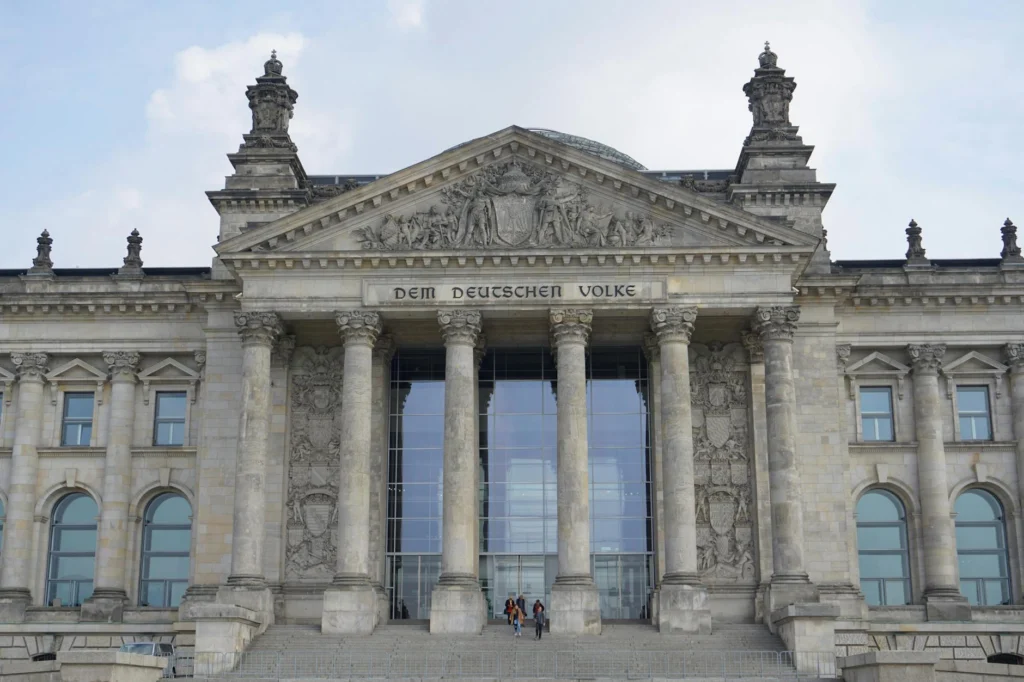
When democracies collapse in the twenty-first century, they rarely do so with tanks in the streets. The modern soft coup unfolds in legislative chambers and courtrooms, wrapped in the language of constitutional reform and popular mandate. These “legalistic autocrats,” as Princeton scholar Kim Lane Scheppele has termed them, “are elected by democratic publics and then use their electoral mandates to dismantle by law the constitutional systems they inherited.”[s]
This forensic architecture of the soft coup has become disturbingly predictable. From Budapest to Caracas, from Ankara to Warsaw, the tactics follow a recognizable script. Understanding this pattern is not merely academic; it is the first defense against a form of authoritarianism that exploits democracy’s own tools to destroy it.
What Makes a Soft Coup Different
A traditional coup d’état involves soldiers, violence, and the obvious suspension of constitutional order. A soft coup, by contrast, “occurs when a person or group seizes political power in a way consistent with their country’s constitution, as opposed to a traditional violent coup d’état, often by exploiting loopholes or ambiguities in the said constitution.”[s]
The genius of this approach lies in its deniability. Every individual step appears legal. The cumulative effect, however, is the systematic dismantling of the checks and balances that make democracy functional. As UCLA law professor Scott Cummings explains, modern autocrats “have figured out how to effectively consolidate power using law. They call it ‘rule by law,’ not by force.”[s]
The Weimar Warning: Emergency Powers as Gateway
The most instructive historical precedent comes from Germany’s Weimar Republic. Article 48 of the Weimar Constitution “allowed the German president to declare a state of emergency in Germany in times of national danger and to rule as a dictator for short periods of time.”[s] The provision was intended for genuine crises.
President Hindenburg invoked Article 48 sixty times in 1932 alone. This normalization of emergency governance “drastically weakened a system already operating under extreme tension. Rather than a solution for national emergencies, it became a crutch for authoritarian elites to resume ruling by decree.”[s]
When Hitler became Chancellor in 1933, the legal infrastructure for dictatorship was already in place. The Enabling Act “gave the German Cabinet, most importantly, the chancellor, Adolf Hitler, the power to make and enforce laws without the involvement of the Reichstag or President Paul von Hindenburg.”[s] It passed with a two-thirds majority. The soft coup was complete.
The Five Steps of Modern Soft Coups
Scholars studying democratic backsliding have identified a consistent playbook. The targets are well-established: “capture the courts; erase internal pockets of independence within the public bureaucracy; silent sources of free thought and expression in universities, civil society, and the media; replace independent public prosecutors and government lawyers with loyalists.”[s]
These steps do not happen overnight. They unfold incrementally, each building on the last, each appearing individually defensible while collectively devastating.
Step One: Claim the Mandate
The soft coup begins with an electoral victory, often legitimate, which is then interpreted as unlimited authority. The newly elected leader claims to speak for “the people” against corrupt elites and entrenched institutions. Any check on their power becomes an obstacle to the popular will.
Step Two: Neutralize the Constitutional Court
The judiciary represents the primary threat to executive overreach. Hungary under Viktor Orbán provides the template. After securing a two-thirds parliamentary majority in 2010, Fidesz “expanded the number of Court justices to fifteen, meaning the number of judges specifically appointed by Fidesz became the majority by 2013.”[s]
Poland adopted a variation: lowering retirement ages to force out sitting judges. The result was “the first EU Member State to no longer have an independent judicial branch following years of sustained attacks deliberately targeting Polish courts, judges and prosecutors.”[s]
Step Three: Rewrite Electoral Rules
With courts neutralized, electoral manipulation becomes possible. Hungary introduced “fractional votes” and gerrymandered districts. “By reducing the number of parliamentary seats from 386 to 199 and redrawing the map of electoral districts, Orbán increased the likelihood of Fidesz retaining its parliamentary seats.”[s]
Step Four: Capture All Oversight Bodies
Hungary’s supermajority allowed the ruling party to appoint loyalists to “the President of the Republic; the Commissioner for Fundamental Rights; the Attorney General; the President of the State Audit Office; multiple heads of the judiciary, including the Constitutional Court; members of the Media Council.”[s]
Step Five: Constitutional Entrenchment
The final step embeds these changes into fundamental law, making reversal nearly impossible. Turkey’s 2017 constitutional referendum “institutionalize[d] a populist, one-man system that jeopardizes legislative and judicial independence and consolidates them in the office of the president.”[s]
Venezuela: The Constituent Assembly Weapon
Hugo Chávez pioneered a distinct technique: the constituent assembly. Hours after his inauguration in 1999, Chávez “issued a decree calling for a referendum on a constituent assembly to rewrite the Venezuela constitution.”[s]
The assembly claimed unlimited authority. Chávez declared that “neither the president nor Congress nor the Supreme Court, which are the maximum representatives of the constituted powers, can contrive to place themselves above, or put into a subordinate position, a sovereign elected assembly.”[s]
The assembly “fired a number of judges for ‘corruption’ and replaced them with pliant new ones. The assembly next neutered the existing Venezuelan legislature, reducing it to a largely powerless body.”[s] A new constitution followed, with provisions ensuring such assemblies could be convened again.
Why Lawyers Are Essential
The soft coup requires legal expertise. “Lawyers are the key ingredient to this new autocratic legalism because you need lawyers to design, draft, and defend the laws that dismantle these democratic institutions.”[s]
This is not coincidental. “Victor Orbán was trained as a lawyer and the key parliamentarians that were involved in the initial constitutional revolution that broke down the rule of law institutions were trained at elite law schools in Hungary.”[s]
Reading the Warning Signs
“One should first suspect a democratically elected leader of autocratic legalism when he launches a concerted and sustained attack on institutions whose job it is to check his actions or on rules that hold him to account, even when he does so in the name of his democratic mandate.”[s]
The soft coup announces itself through specific behaviors: court-packing proposals, attacks on independent prosecutors, emergency powers invoked for non-emergencies, and constitutional amendments designed to extend or consolidate executive power. Each may have innocent explanations. The pattern does not.
History suggests that once a soft coup reaches its final stages, reversal becomes extraordinarily difficult. Poland’s experience after its 2023 change in government demonstrates the challenge: even with political will, dismantling captured institutions requires navigating the very legal structures designed to prevent exactly that.
Defining the Constitutional Coup
Political scientists distinguish between “democratic reversion,” the sudden collapse of democratic governance, and “democratic erosion,” the gradual hollowing out of constitutional norms. The soft coup belongs to the latter category but with a specific mechanism: the exploitation of constitutional procedures to achieve unconstitutional ends.
A constitutional coup “occurs when a person or group seizes political power in a way consistent with their country’s constitution, as opposed to a traditional violent coup d’état, often by exploiting loopholes or ambiguities in the said constitution.”[s]
Kim Lane Scheppele’s concept of “autocratic legalism” captures this phenomenon precisely. These leaders are “often following a script using tactics that they borrow from each other.”[s] The diffusion of authoritarian technique across borders has created a transnational playbook.
Historical Precedent: Weimar’s Article 48 and the Enabling Act
The Weimar Republic offers the canonical case study. Article 48 “allowed the German president to declare a state of emergency in Germany in times of national danger and to rule as a dictator for short periods of time.”[s] President Ebert initially used this power responsibly during genuine crises in 1923-24.
Under Hindenburg, however, Article 48 became normalized governance. “The habit of ruling via decree rather than legislation weakened the power of the Reichstag as well as the public’s confidence in the Weimar system.”[s] Hindenburg invoked it sixty times in 1932.
The Enabling Act of 1933 completed the trajectory. It “gave the German Cabinet, most importantly, the chancellor, Adolf Hitler, the power to make and enforce laws without the involvement of the Reichstag or President Paul von Hindenburg. By allowing the chancellor to override the checks and balances in the constitution, the Enabling Act of 1933 was a pivotal step in the transition from the democratic Weimar Republic to the totalitarian dictatorship of Nazi Germany.”[s]
The Autocratic Legal Playbook: A Systematic Framework
Contemporary scholarship has mapped the soft coup’s operational logic. The targets are consistent: “capture the courts; erase internal pockets of independence within the public bureaucracy; silent sources of free thought and expression in universities, civil society, and the media; replace independent public prosecutors and government lawyers with loyalists.”[s]
Cummings distinguishes between “fast track” and “slow road” approaches. The fast track involves claiming emergency authority to suspend constitutional processes, as Bolsonaro attempted in Brazil. The slow road involves incremental legal changes that cumulatively hollow out democratic institutions.
Hungary: The Template Soft Coup
Viktor Orbán’s Hungary has become the paradigmatic case. After Fidesz secured a two-thirds parliamentary majority in 2010, the party “passed a new Constitution implementing sweeping reforms. This constitution has been amended several times since, with each addition creating further obstacles to opposition.”[s]
The Constitutional Court was methodically captured. Fidesz “expanded the number of Court justices to fifteen, meaning the number of judges specifically appointed by Fidesz became the majority by 2013. An additional change to the constitution in 2012 lengthened the tenure of the Court’s justices from nine years to twelve.”[s]
The supermajority enabled appointment of loyalists across institutions: “the President of the Republic; the Commissioner for Fundamental Rights; the Attorney General; the President of the State Audit Office; multiple heads of the judiciary, including the Constitutional Court; members of the Media Council.”[s]
Electoral manipulation followed. “By reducing the number of parliamentary seats from 386 to 199 and redrawing the map of electoral districts (gerrymandering), Orbán increased the likelihood of Fidesz retaining its parliamentary seats.”[s]
Poland: The EU Confrontation
Poland’s Law and Justice party followed Hungary’s template but confronted stronger external constraints. EU legal scholars characterized the outcome bluntly: “To reinstate what amounts to a ‘Soviet-style justice system’, Polish authorities have repeatedly and deliberately violated the Polish Constitution and EU law.”[s]
The “muzzle law” of December 2019 formalized judicial capture. Poland became “the first EU Member State to no longer have an independent judicial branch following years of sustained attacks deliberately targeting Polish courts, judges and prosecutors.”[s]
A common technique appeared across both Hungary and Poland: “parliament passed laws reducing the mandatory retirement age so the ruling party could appoint loyalist judges to fill depleted ranks.”[s]
Venezuela: Constitutional Founding as Power Consolidation
Hugo Chávez exploited a different legal mechanism: constituent power. Hours after his 1999 inauguration, Chávez “issued a decree calling for a referendum on a constituent assembly to rewrite the Venezuela constitution.”[s]
The Venezuelan Supreme Court initially ruled that such an assembly would be “bound to the spirit of the constitution in force.” Chávez ignored this. He declared that “neither the president nor Congress nor the Supreme Court, which are the maximum representatives of the constituted powers, can contrive to place themselves above, or put into a subordinate position, a sovereign elected assembly.”[s]
The constituent assembly then “fired a number of judges for ‘corruption’ and replaced them with pliant new ones. The assembly next neutered the existing Venezuelan legislature.”[s] The resulting 1999 constitution entrenched this mechanism, with Article 347 stating that “the original constituent power rests with the people of Venezuela.”[s]
Turkey: Presidential Consolidation by Referendum
Turkey’s 2017 constitutional referendum exemplified the soft coup’s culminating move. The amendments “institutionalize[d] a populist, one-man system that jeopardizes legislative and judicial independence and consolidates them in the office of the president.”[s]
The reforms abolished the prime ministry, “transforming the parliamentary system into a presidential one. Unlike under the current system, the president would not have to be neutral, above politics and representing the whole nation.”[s]
Crucially, the president gained control over judicial appointments. “The president would select 18 of the 28 top-ranking members of the judiciary. If the president’s party at least has a 3/5 majority in parliament, the judiciary may then be entirely aligned with the executive.”[s]
The Professional Dimension: Lawyers as Architects
The legal profession occupies a paradoxical position in the soft coup. “Lawyers are the key ingredient to this new autocratic legalism because you need lawyers to design, draft, and defend the laws that dismantle these democratic institutions.”[s]
“Victor Orbán was trained as a lawyer and the key parliamentarians that were involved in the initial constitutional revolution that broke down the rule of law institutions were trained at elite law schools in Hungary.”[s]
Detection and Resistance
The soft coup’s incremental nature makes early detection critical. Scheppele identifies the warning sign: “One should first suspect a democratically elected leader of autocratic legalism when he launches a concerted and sustained attack on institutions whose job it is to check his actions or on rules that hold him to account, even when he does so in the name of his democratic mandate.”[s]
Poland’s 2023 transition demonstrates both the possibility and difficulty of reversal. Even after electoral defeat, the institutional capture achieved by Law and Justice created structural obstacles to democratic restoration. The captured Constitutional Tribunal continued issuing rulings; loyalist appointees remained in position.
The historical pattern suggests that the soft coup’s success depends on early consolidation. Once courts are packed, electoral rules gerrymandered, and loyalists installed across oversight bodies, the legal system itself becomes the barrier to its own correction.