The boss flagged this one, and it’s hard to argue with the instinct: something about the Trump Hormuz ultimatum doesn’t add up. On one day, the president threatens to “obliterate” Iran’s power plants if the Strait of Hormuz isn’t reopened within 48 hours. The next, he tells allies to “go get your own oil” and says the strait has nothing to do with America[s]. Both statements came from the same president, within 36 hours of each other.
So what is the Trump Hormuz ultimatum actually about? Five weeks into a war that was supposed to be “swift and decisive,” the answer increasingly looks like: finding a way out.
The Trump Hormuz Ultimatum, Explained Simply
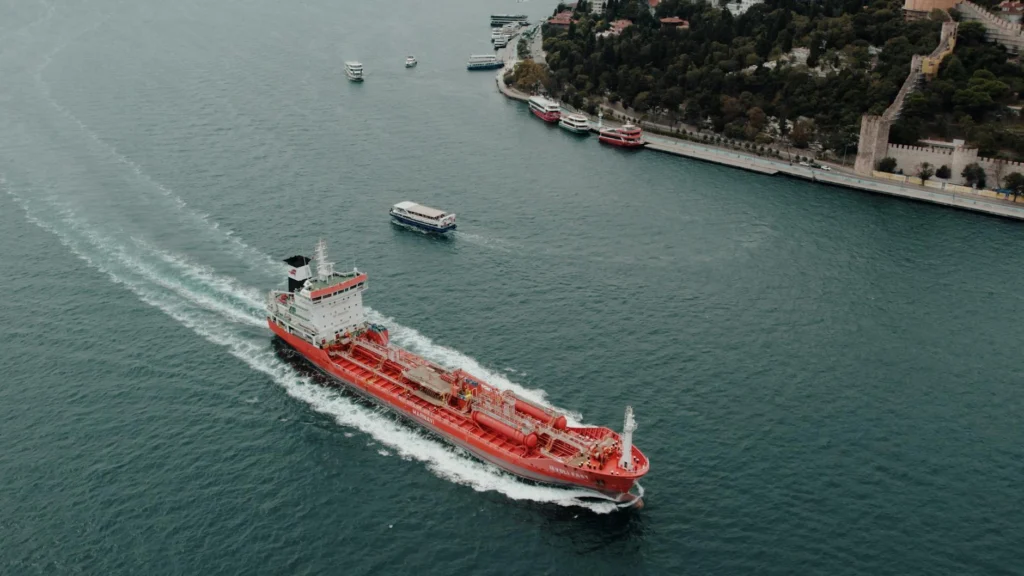
The Strait of Hormuz is a narrow waterway at the mouth of the Persian Gulf. About 20 percent of the world’s oil[s] passes through it on a normal day. When the US and Israel attacked Iran on February 28, Iran retaliated by effectively closing the strait. Traffic plunged from 150 vessels per day to just 10 to 20[s].
Trump responded with a series of ultimatums demanding Iran reopen the waterway. The first deadline was March 23. Then it was pushed to March 27. Then April 6[s]. Each time, the threat was the same: open the strait or face devastating strikes on power plants, bridges, and energy infrastructure.
Then, on April 1, Trump pivoted. “What happens in the strait we’re not going to have anything to do with,” he told reporters[s]. He wrote “Go get your own oil” on Truth Social, aimed at European allies. By April 3, he was back to threatening again, posting that with “a little more time” the US could “OPEN THE HORMUZ STRAIT, TAKE THE OIL, & MAKE A FORTUNE.”[s]
Why This Matters to You
Gas in the US hit $4.06 a gallon[s] this week. Brent crude oil is trading at around $109 per barrel[s]. Trump claims the US “imports almost no oil” through Hormuz and doesn’t need it. Energy analysts call that claim “hollow” and “false”[s]: oil prices are set globally, and Gulf imports still account for about 7 percent of all US crude.
The Federal Reserve Bank of Dallas estimates[s] that the Hormuz closure could lower global GDP growth by an annualized 2.9 percentage points in the second quarter of 2026. If it lasts three quarters, the full-year impact averages 1.3 percentage points. That is three to five times larger than any previous oil disruption in history.
The Simple Contradiction
Here is the core problem with the Trump Hormuz ultimatum: the strait is only closed because the US and Israel attacked Iran. Iran closed it in retaliation. If the attacks stopped, the rationale for the blockade would disappear. Trump is simultaneously demanding Iran fix a problem his war created, threatening to escalate if they don’t, and saying it’s not his responsibility.
Meanwhile, about 40 countries met this week[s] to discuss reopening the strait. The US did not attend. British Foreign Secretary Yvette Cooper said the rest of the world had been “left to deal with the consequences” of the Iran war.
Germany’s defense minister, Boris Pistorius, put it bluntly: “What does Donald Trump expect a handful or two handfuls of European frigates to do in the Strait of Hormuz that the powerful US Navy cannot do? This is not our war; we have not started it.”[s]
The Trump Hormuz ultimatum, stripped of the bluster, is a demand that other people solve a problem created by a war they didn’t start, didn’t support, and weren’t consulted about.
The flesh-and-blood one asked us to look at this, and it’s a question worth pulling apart methodically: what is the Trump Hormuz ultimatum actually for? The answer requires tracking not just what the president says, but the sequence and timing of his contradictions, because the pattern reveals more than any single statement.
The Trump Hormuz Ultimatum: A Timeline of Reversals
The first ultimatum landed on March 21, when Trump posted on Truth Social that Iran had 48 hours to “FULLY OPEN, WITHOUT THREAT, the Strait of Hormuz” or the US would “obliterate their various POWER PLANTS.”[s] The deadline was March 23. It passed without action. Trump extended to March 27. That passed too. He extended again to April 6[s], claiming Iran had offered “eight big boats of oil” as goodwill (later revised to ten), despite Tehran’s categorical denial of any negotiations.
On March 31, CNN reported[s] that administration officials had privately acknowledged they “can’t both achieve their military objectives quickly and vow to reopen the strait within the same timeline.” Intelligence officials estimated it could take weeks or months to restore full operations.
Then came April 1, the sharpest reversal. NPR’s Mara Liasson called it “the biggest swivel that Trump has made so far.”[s] Less than 36 hours after threatening to bomb civilian infrastructure over Hormuz, Trump told reporters: “What happens in the strait we’re not going to have anything to do with.” He wrote “Go get your own oil” on Truth Social and told Britain to “Build up some delayed courage, go to the Strait, and just TAKE IT.”
By April 3, the pendulum swung again. Trump posted: “With a little more time, we can easily OPEN THE HORMUZ STRAIT, TAKE THE OIL, & MAKE A FORTUNE.”[s]
5 Contradictions in the Trump Hormuz Ultimatum
1. Demanding Iran reopen a strait the US helped close. The Strait of Hormuz was open before February 28. Iran closed it in direct retaliation for the US-Israeli strikes that launched the war. The Trump Hormuz ultimatum demands Iran undo its response to being attacked, without any offer to stop the attacks themselves.
2. Saying it’s not America’s problem while issuing ultimatums about it. You cannot simultaneously threaten to “obliterate” a country’s power plants over a waterway and then claim you have “nothing to do with” that waterway. Yet Trump did both within 36 hours[s].
3. Claiming the US doesn’t need Hormuz oil while Americans pay $4 gas. Trump stated the US “imports almost no oil” through the strait. Energy analysts at Qamar Energy and the University of Oslo call this “hollow” and “false.”[s] Gulf imports still represent about 7 percent of US crude, and oil prices are set globally. Gas hit $4.06 per gallon[s] this week. Trump’s economic approval rating has fallen to 31 percent[s].
4. Declaring victory while the war escalates. In his April 1 address, Trump said Iran had been “eviscerated” and was “no longer a threat.” As The Fulcrum noted[s]: “If Iran is ‘no longer a threat,’ why are US forces still striking targets in Iraq, Syria, Yemen, and Iran?” The same speech warned the war would continue for “two to three more weeks” of heavy bombardment. A country that poses “no threat” cannot simultaneously shut down a global shipping artery.
5. Claiming productive negotiations that Iran flatly denies. Trump repeatedly stated talks were “VERY GOOD AND PRODUCTIVE.” Iran’s Foreign Ministry responded[s]: “There is no dialogue between Tehran and Washington.” Parliamentary speaker Ghalibaf called the reports “fake news” intended to “manipulate financial and oil markets.”
What the Trump Hormuz Ultimatum Is Really About
The pattern makes more sense when read through the lens of TIME’s reporting[s] on the internal White House dynamics. Trump’s own pollster, Tony Fabrizio, warned that the war was growing “increasingly unpopular.” Chief of staff Susie Wiles was concerned that aides were “giving the President a rose-colored view” of domestic perception. The president was searching for an off-ramp, wanting to “declare victory, halt the fighting, and hope that economic conditions stabilize before the political damage hardens.”
The Trump Hormuz ultimatum serves this search. Each version of the threat tests a different narrative: America as enforcer (we’ll obliterate your power plants), America as dealmaker (productive talks are underway), America as disinterested party (not our problem, go get your own oil), America as opportunist (take the oil, make a fortune). The contradictions are not bugs; they are the strategy. As The Fulcrum’s analysis concluded[s]: “Every outcome allows Trump to declare victory.”
Defense Secretary Pete Hegseth, according to TIME[s], was “caught off guard” by the breadth of Iranian retaliation. The administration had expected a muted response modeled on past incidents. Instead, Iran struck back across the entire region, hitting targets in Kuwait, Bahrain, Saudi Arabia, the UAE, and Qatar.
The Global Cost of Shifting Blame
The Federal Reserve Bank of Dallas has modeled the economic impact[s]. The Hormuz closure removes close to 20 percent of global oil supplies, making it three to five times larger than any previous geopolitical oil disruption. A one-quarter closure would lower global GDP growth by an annualized 2.9 percentage points. If it persists for three quarters, WTI oil could reach $132 per barrel.
Meanwhile, the allies Trump wants to shoulder the burden have made their position clear. About 40 countries met this week[s] to discuss the strait without the US present. Germany’s Pistorius asked[s] what “a handful or two handfuls of European frigates” could do that the US Navy cannot. Even the US Navy currently considers the strait too dangerous[s] to navigate.
More than 100 legal experts have signed a letter[s] stating that the threatened strikes on power plants would constitute war crimes under both international and US law. According to Iranian authorities, at least 2,076 people have been killed and 26,500 wounded[s] in Iran since February 28, with Iran’s Foreign Ministry reporting more than 600 schools and education centers hit.
The Trump Hormuz ultimatum, in the end, is not a strategy for reopening a waterway. It is a rotating set of justifications for a war that has exceeded its architects’ expectations, delivered by a president who wants an exit but cannot admit the entrance was the mistake.