Global public debt hit $102 trillion in 2024. For the world’s poorest countries, that number translates into something concrete: ports leased for 99 years, airports handed to foreign consortiums, and railways that cost more to service than they generate. The sovereign debt infrastructure crisis is no longer a warning; it is a transfer of ownership already underway.
Developing nations now hold $31 trillion in public debt[s], and in 2024 they spent $921 billion just on interest payments, a 10% jump from the year before. A total of 61 countries allocated more than 10% of their government revenues to debt interest alone. That money does not build schools or hospitals. It services loans.
Sovereign Debt Infrastructure: Who Pays and Who Profits
Since 2020, developing countries have been borrowing at rates two to four times higher[s] than the United States. When interest rates climbed in 2022 as Western central banks fought inflation, the cost of servicing existing debt exploded for countries that had no say in those policy decisions. The result: 3.4 billion people now live in countries that spend more on debt interest than on health or education.
The pattern is not new, but its scale is. In September 2025, 49% of countries eligible for IMF concessional financing[s] were either in or at high risk of debt distress. Three-quarters of those countries had been stuck in that category since at least 2018. They are not recovering. They are sinking.
Sri Lanka: A 99-Year Lesson
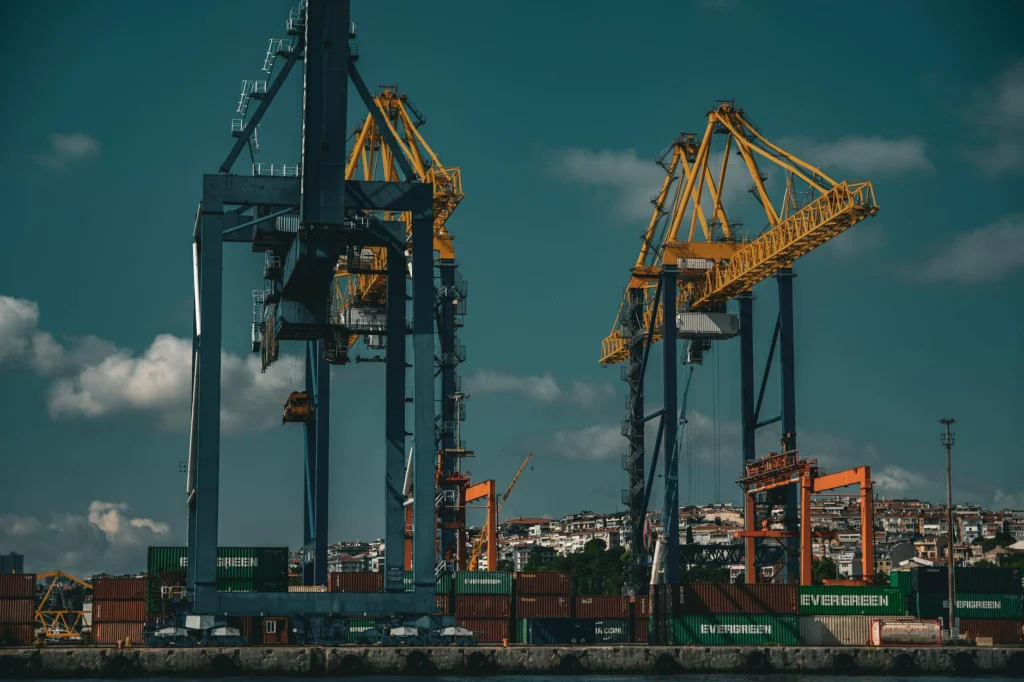
The most cited case of sovereign debt infrastructure loss is Sri Lanka’s Hambantota port. The deep-water facility was financed through Chinese loans at 6.3% interest, roughly double what multilateral development banks charge[s]. When the port failed to generate enough traffic, and Sri Lanka’s broader debt crisis deepened, the government in 2017 leased a controlling stake to China Merchants Port Holdings for 99 years.
The reality is more complicated than a simple “debt-trap” narrative. The lease did not cancel the underlying loans[s]; Sri Lanka still owes the money. The port’s problems were driven as much by domestic political ambition as by predatory lending. But the outcome is the same: a nation lost operational control of a strategic asset because it could not service the debt used to build it.
By 2015, some 95% of Sri Lanka’s government revenue was going toward debt service[s]. The country defaulted outright in 2022, the first sovereign default during the global food and fuel price crisis.
Greece: Austerity by Auction
Sri Lanka is not alone. When Greece needed its third bailout in 2015, worth 86 billion euros, creditors required the government to privatize state assets[s] alongside tax reforms and spending cuts. The original privatization target was €50 billion, about 17% of outstanding debt[s]. The plan called for selling public utilities, tourism properties, the Athens airport concession, and the port of Piraeus.
In practice, only two of 35 tenders were completed in 2012. The expected revenue collapsed to €8.7 billion. Greece’s 14 regional airports went to a consortium led by Germany’s Fraport[s], and a controlling stake in Piraeus port was sold to China’s COSCO. A country with 180% debt-to-GDP was forced to sell revenue-generating assets to pay creditors, reducing its future capacity to generate the income needed to service the remaining debt.
Kenya: The Railway That Ate the Budget
Kenya’s Standard Gauge Railway, built with roughly $5 billion in Chinese loans, was meant to connect Mombasa to the Ugandan border. It stopped 468 kilometers short, in a cornfield in the Rift Valley. The country now spends more than $1 billion per year servicing SGR debt to China[s]. In July 2025, SGR payments accounted for more than 81% of Kenya’s total foreign debt service.
Kenya’s debt-servicing costs equate to about 67.1% of revenue, well above the IMF’s recommended 30% threshold. The IMF classified Kenya at high risk of debt distress in March 2025, suspending a program review and blocking access to an $850 million disbursement. The government has announced it will transfer operations of the unfinished extension to private investors.
The Structural Problem
These are not isolated cases. A 2006 Norwegian government study found that 23 out of 40 poor countries had privatization conditions attached to their IMF loans.[s] The International Monetary Fund and World Bank have promoted infrastructure privatization since the 1980s, and structural adjustment programs demanded that borrower countries privatize state sectors[s] as a condition of financial assistance.
The sovereign debt infrastructure trap works in a cycle: countries borrow at high rates to build or maintain infrastructure, debt service crowds out other spending, a crisis forces the sale or lease of that infrastructure to creditors or foreign investors, and the country loses both the asset and the revenue it would have generated. The debt remains.
Rising interest payments reduced the share of government revenue available for other public spending in 99 developing countries[s] between 2018 and 2024. The consequences are measured in postponed investments, constrained budgets, and development goals drifting further from reach.
Global public debt reached $102 trillion in 2024[s], with developing countries accounting for $31 trillion of that total. The sovereign debt infrastructure crisis has moved from theoretical risk to observable pattern: nations unable to service high-interest loans are liquidating or leasing strategic physical assets to creditors and foreign investors, eroding both fiscal sovereignty and long-term revenue capacity.
Sovereign Debt Infrastructure: The Mechanics of the Trap
The mechanics are straightforward. Since 2020, developing countries have been borrowing at rates two to four times higher than the United States[s]. When the Federal Reserve and European Central Bank raised policy rates from 2022 onward to control domestic inflation, the cost of servicing dollar- and euro-denominated debt in the developing world surged. In 2024, developing nations spent $921 billion on net interest payments, up 10% from 2023. Sixty-one countries devoted more than 10% of government revenue to interest alone.
By September 2025, 49% of IMF-concessional-eligible countries[s] were in or at high risk of debt distress, and three-quarters of those had been in that category since at least 2018, indicating chronic, not cyclical, dysfunction. Rising interest reduced the share of government revenue available for non-debt spending in 99 developing countries between 2018 and 2024.
The result is a liquidity squeeze that hardens into asset liquidation. When governments cannot meet short-term obligations, they face pressure from creditors, multilateral institutions, or market conditions to monetize state-owned infrastructure.
Case Study: Hambantota Port and the Limits of “Debt-Trap Diplomacy”
Sri Lanka’s Hambantota port remains the paradigmatic case of sovereign debt infrastructure loss, though its lessons are frequently oversimplified. The port’s first phase was financed by a $307 million China EXIM Bank loan at 6.3% interest[s], roughly double the 2-3% rates offered by multilateral development banks. The project was politically driven: President Mahinda Rajapaksa pushed development of his home district despite a government task force’s concerns about duplicating capacity at Colombo port.
When the port generated insufficient traffic, and Sri Lanka’s overall debt crisis deepened, the government in 2017 leased a 70% equity stake and 99-year operating concession to China Merchants Port Holdings for $1.12 billion. Critically, the lease did not constitute a debt-equity swap[s]; the underlying EXIM Bank loans remain payable. The majority of debt that overwhelmed Sri Lanka’s economy was incurred after the port’s commissioning and resulted from domestic fiscal mismanagement rather than predatory enticement.
By 2015, approximately 95% of Sri Lanka’s government revenue was consumed by debt service[s]. The country defaulted in May 2022[s], the first sovereign default during the global food and fuel price shock. The broader lesson is that sovereign debt infrastructure crises emerge from the intersection of high-interest lending, domestic political incentives, and the absence of viable alternatives, not from any single actor’s predatory intent.
Greece: Privatization Under Duress
Greece’s experience illustrates the European variant of the same dynamic. The 2011 Troika agreement envisaged €50 billion in privatization proceeds, approximately 17% of outstanding debt[s], from the sale of public utilities, airport concessions, the port of Piraeus, and government stakes in telecommunications. The target was revised downward repeatedly, dropping to €8.7 billion by 2013 as legal delays, regulatory gaps, and political resistance stalled tenders.
The CEPR’s analysis of Greek privatization is instructive: for asset sales to improve solvency, the private sector must generate efficiency gains of at least 30% over state management, and the government must fully relinquish control rights. Empirical evidence from 113 privatized enterprises shows gains an order of magnitude below that threshold. In 65% of European privatizations studied, governments retained 10% or more of shares, diluting any efficiency benefit.
Greece ultimately sold 14 regional airports to a Fraport-led consortium[s] and a controlling stake in Piraeus to COSCO, while its total debt climbed to 180% of GDP and roughly €290 billion[s]. The privatizations did not restore solvency. They transferred revenue-generating assets while the debt stock remained largely unchanged.
Kenya’s SGR: Sovereign Debt Infrastructure in Real Time
Kenya’s Standard Gauge Railway provides a current example of sovereign debt infrastructure stress. Two Chinese loans totaling approximately $5 billion financed a 480-kilometer Mombasa-Nairobi railway and a 120-kilometer extension to Naivasha, as part of the Belt and Road Initiative. Kenya now spends more than $1 billion annually servicing SGR debt[s]. In the 2025-2026 fiscal year, Kenya owes China EXIM Bank $741 million in principal, $222 million in interest, and $41 million in penalties. SGR payments in July 2025 consumed 81% of Kenya’s total foreign debt service.
Debt-servicing costs equate to 67.1% of government revenue, more than double the IMF’s 30% sustainability threshold. The IMF classified Kenya at high risk of debt distress in March 2025 and suspended the final review of its program, blocking access to an $850 million disbursement. The planned next phase, from Naivasha to the Ugandan border, would cost another $5 billion. The government has instead announced a transfer of the extension’s operations to private investors, effectively privatizing an incomplete sovereign debt infrastructure project.
Systemic Drivers and the Reform Deficit
Structural adjustment programs since the 1980s[s] have demanded that borrower countries privatize state sectors, commodify public goods, and remove barriers to foreign capital as conditions for financial assistance. A Norwegian government study found that 23 out of 40 poor countries had privatization and liberalization conditions on their IMF loans[s] as late as 2006.
The G20 Common Framework for Debt Treatment, introduced during the pandemic, has produced negligible results. Zambia spent over 20 months attempting to restructure[s] its debt through the framework before any meaningful progress. Private creditors, who lent at high rates precisely because of the risk, have been reluctant to accept losses. The UNCTAD has called for an effective debt workout mechanism at the upcoming 4th International Conference on Financing for Development in April 2026, but the structural incentives, where creditors benefit from the current system and borrowers lack the leverage to change it, remain unchanged.
The sovereign debt infrastructure trap is self-reinforcing. Countries borrow at punitive rates, cannot service the debt, sell or lease the infrastructure that might have generated the revenue to recover, and emerge with the same debt and fewer assets. Until the international financial architecture addresses the structural inequality in borrowing costs and the conditionality that forces asset liquidation, the pattern will continue. Today, 3.4 billion people[s] live in countries that spend more servicing debt than investing in their own health or education. The cost is not abstract. It is measured in ports, railways, and airports that no longer belong to the nations they serve.