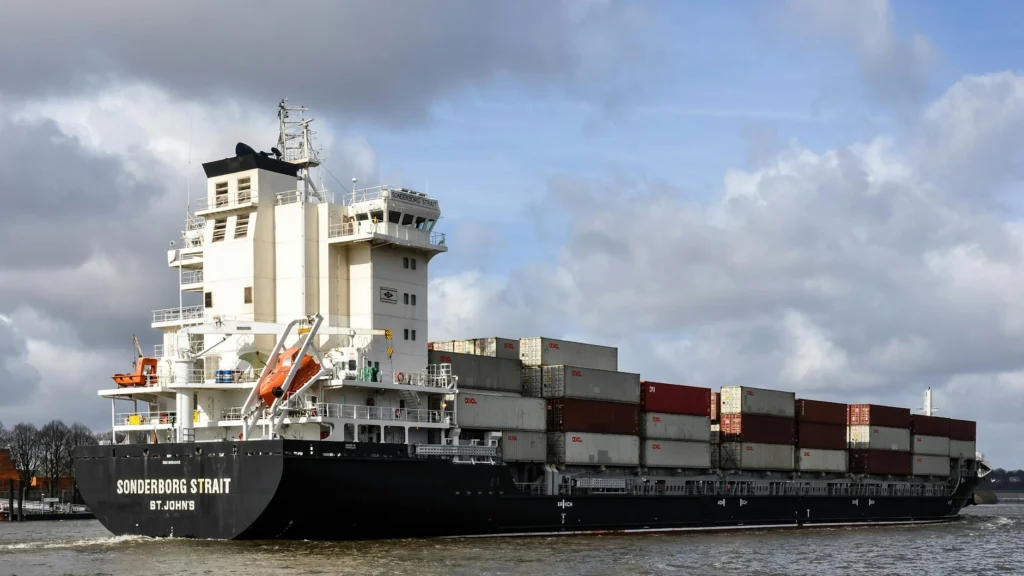
The products on store shelves, the gas in your car, and the components in your phone all share something in common: they likely passed through one of a handful of narrow waterways that control the flow of global commerce. Maritime chokepoints, the strategic straits and canals where shipping routes converge, represent one of the most consequential yet underappreciated vulnerabilities in the modern economy. When these passages face disruption, the effects ripple outward to consumers worldwide within weeks.
About 80% of all goods traded internationally travel by sea[s]. That cargo does not spread evenly across the oceans. Instead, it funnels through a small number of critical passages where geography forces ships into confined corridors. Seven major maritime chokepoints, plus the alternate route around South Africa’s Cape of Good Hope, now handle more than 70% of global oil demand and over 90% of seaborne oil trade[s].
Why Maritime Chokepoints Shape Your Cost of Living
The Strait of Malacca, running between Malaysia and Indonesia, handles roughly 23.2 million barrels of oil daily, accounting for 29% of all maritime oil trade[s]. The Strait of Hormuz, the narrow passage between Iran and Oman, moves another 20 million barrels per day, representing about $600 billion in annual energy trade[s]. The Suez Canal, connecting the Red Sea to the Mediterranean, carries 12 to 15 percent of worldwide trade and 30% of global container traffic, with more than $1 trillion in goods passing through each year[s].
When these passages become dangerous or impassable, the consequences arrive at checkout counters. Houthi attacks on shipping in the Red Sea forced vessels to reroute around Africa, adding weeks to delivery times. By mid-2024, Suez Canal tonnage had fallen 70% below 2023 levels[s]. The UN estimates that if disrupted shipping costs persist, global consumer prices could rise by 0.6% by late 2025[s].
The Panama Canal and Climate Vulnerability
Not all threats to maritime chokepoints come from conflict. The Panama Canal, which handles 5% of global shipping[s], faced a different crisis in 2023: drought. Water levels in Gatún Lake, which feeds the canal’s lock system, dropped so low that authorities reduced daily transits from 38 to just 24[s]. Ships queued for days, and some rerouted around South America entirely. Climate projections suggest such droughts will become more frequent.
The economic stakes extend beyond shipping delays. A container ship forced to detour around Africa instead of using the Suez Canal burns additional fuel and faces $400,000 in extra EU emissions costs alone[s]. These costs ultimately appear in retail prices for everything from electronics to groceries.
What Happens When a Chokepoint Closes
History provides stark examples. When the Suez Canal closed for eight years following the 1967 Six-Day War, global shipping faced an unprecedented disruption[s]. Ships rerouted around Africa, adding thousands of miles to journeys. The experience spurred the development of supertankers capable of making the longer voyage economically viable.
More recently, the 2026 conflict involving Iran effectively closed the Strait of Hormuz, through which roughly one-quarter of the world’s seaborne oil[s] and one-third of global fertilizer trade normally flows[s]. Daily ship traffic dropped 95% from normal levels. Oil prices spiked until a ceasefire restored passage. The episode demonstrated how quickly maritime chokepoints can transform from abstract strategic concepts into household economic concerns.
Maritime chokepoints represent a structural vulnerability in the global trading system that researchers estimate puts $192 billion in trade value at risk annually[s]. These narrow waterways, where shipping routes converge through geographic bottlenecks, concentrate geopolitical risk in ways that cascade through supply chains worldwide. Maritime transport facilitates 80% of trade volume and 50% of trade value[s], and the network of chokepoints these vessels traverse creates systematic exposure to disruption from conflict, climate events, and accidents.
A 2025 Nature Communications study quantified this exposure by analyzing 24 maritime chokepoints globally. The expected annual economic losses from chokepoint disruptions, including delays, rerouting, insurance premiums, and trade interruptions, reach $10.7 billion, with an additional $3.4 billion from increased freight costs[s]. The Taiwan Strait and Suez Canal drive the highest risk, primarily from geopolitical factors, while the Bab el-Mandeb Strait faces a combination of hazards.
Strategic Concentration: Maritime Chokepoints by Volume
The concentration of trade through these passages is remarkable. In value terms, approximately 20% of global maritime trade transits both the Taiwan Strait and the Malacca Strait, making them the most significant chokepoints globally[s]. The Strait of Malacca, linking the Indian Ocean to the South China Sea, carried 23.2 million barrels of oil daily in the first half of 2025, representing 29% of global maritime oil trade[s].
The Strait of Hormuz handled 20.9 million barrels per day during the same period, accounting for one-fifth of global oil consumption and roughly one-quarter of seaborne oil trade[s]. Approximately 84% of crude oil moving through Hormuz is destined for Asian markets, creating acute dependency for China, India, Japan, and South Korea[s]. The strait also carries one-third of global fertilizer trade, linking Middle Eastern natural gas production to agricultural inputs worldwide[s].
The Taiwan Strait: Chips and Chokepoints
The Taiwan Strait presents unique strategic significance beyond raw trade volume. CSIS estimates that $1.3 trillion in Chinese imports and exports passed through the strait in 2022[s]. Japan depends on the strait for 32% of its imports and 25% of its exports, totaling $444 billion. South Korea’s exposure reaches 30% of imports and 23% of exports, amounting to $357 billion[s].
Taiwan produces over 90% of the most advanced semiconductors used in smartphones, data centers, and military equipment[s]. Any disruption to shipping through the strait would not only redirect vessel traffic but potentially sever access to irreplaceable chip fabrication capacity. The G7’s 2024 communique explicitly stated that “maintaining peace and stability across the Taiwan Strait is indispensable to international security and prosperity.”
The Suez-Red Sea Corridor Under Stress
The Suez Canal’s 193-kilometer length connects the Red Sea to the Mediterranean, attracting 12 to 15 percent of worldwide trade and 30% of global container traffic[s]. The canal has historically proven vulnerable to regional conflict. The 1967-1975 closure forced eight years of rerouting around Africa, fundamentally reshaping the tanker industry[s].
Houthi attacks beginning in late 2023 triggered a contemporary stress test. The volume of trade through the Suez Canal dropped 50% in the first two months of 2024 compared to the previous year, while Cape of Good Hope traffic surged 74%[s]. By mid-2024, tonnage crossing the Gulf of Aden had fallen 76% and Suez tonnage dropped 70%[s]. The rerouting pushed global vessel ton-mile demand up 3% and container ship demand up 12%[s].
Climate Risk at the Panama Canal
The Panama Canal introduces climate vulnerability to the chokepoint calculus. Drought conditions in 2023 forced authorities to reduce daily transits from the normal 38 down to 24[s]. The canal accounts for 5% of global shipping[s], but its role in connecting Atlantic and Pacific trade routes gives it outsized importance for certain commodities and regions.
The simultaneous disruption of both the Panama and Suez canals in 2024 created compound effects. UNCTAD analysis found that Suez transits by mid-October 2024 averaged 33 per day, 57% below the previous peak[s]. The economic impact falls disproportionately on vulnerable economies: small island developing states could face consumer price increases of 0.9% if elevated freight rates persist, with processed food prices rising 1.3%[s].
Policy Implications: Managing Concentrated Risk
The geographic concentration of maritime trade creates strategic dependencies that resist easy diversification. UNCTAD calls for strengthened international cooperation to stabilize trade routes, investment in resilient infrastructure at key chokepoints, and support for regional trade to reduce reliance on long-distance routes[s]. The cost of inaction compounds: a large container ship rerouting around Africa faces $400,000 in additional EU emissions costs per voyage[s].
The interdependencies cut across traditional geopolitical alignments. China’s $1.3 trillion in trade through the Taiwan Strait makes it simultaneously the country most exposed to disruption and the country whose actions could trigger that disruption. The BRICS economies depend on the Taiwan Strait for about 14% of imports and 15% of exports, more than twice the exposure of G7 economies[s]. This mutual vulnerability may provide leverage for diplomatic management of chokepoint tensions, though recent history suggests that leverage often proves insufficient when security calculations override economic logic.