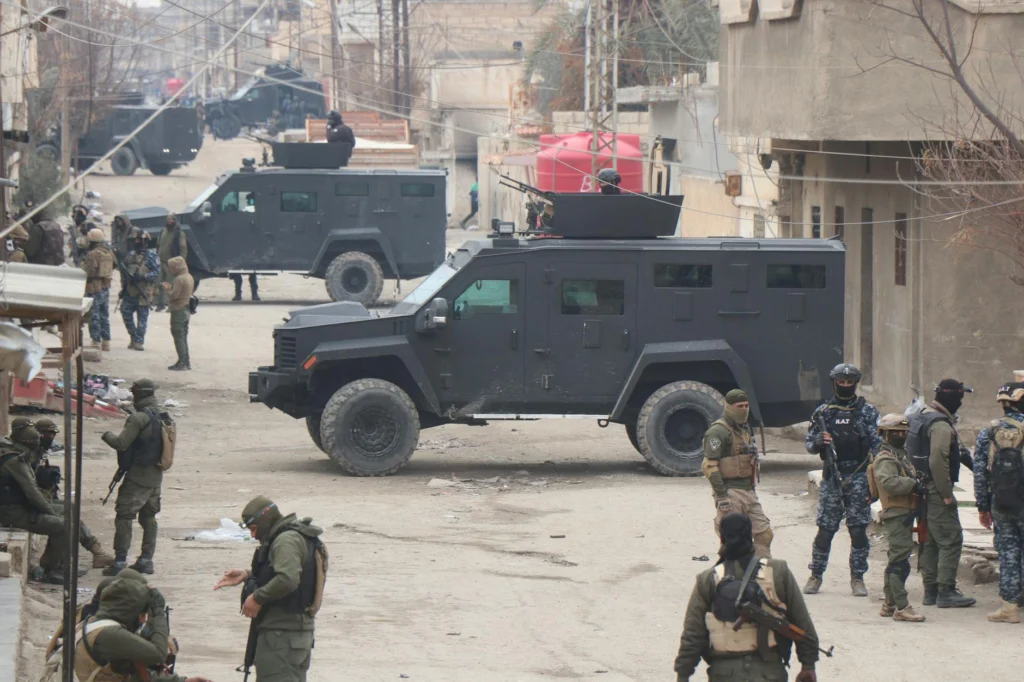
A landmine injures three soldiers. Artillery exchanges follow. Within weeks, half a million people flee their homes. Border conflict escalation rarely announces itself as the beginning of a war. It arrives disguised as an incident, a provocation, a necessary response.[s]
Understanding how minor skirmishes become regional conflicts is not academic. The Thailand-Cambodia border saw exactly this pattern in 2025, when sporadic clashes escalated into the most serious military confrontation between the two neighbors in years.[s] The same dynamics that turned a 1914 assassination into World War I continue to operate today, often with nuclear-armed states involved.
Stage 1: The Trigger Incident
Border conflict escalation typically begins with something small. A landmine explosion. A shot fired at a patrol. An incursion across a disputed line. These incidents happen constantly along contested borders without leading to war. What matters is context.
In July 1914, the assassination of Archduke Franz Ferdinand was one terrorist act in a region that had seen many. What made it different was Austria-Hungary’s determination to use it as justification for crushing Serbia once and for all.[s] The incident became a trigger because powerful actors decided to treat it as one.
Along the Afghanistan-Pakistan border, friction is structural. The Durand Line remains contested, producing recurring clashes over checkpoints, fencing, and customs revenues.[s] Most incidents stay local. But when domestic political conditions align, any one of them can become the spark.
Stage 2: The Defensive Overreaction
The spiral model in international relations explains what happens next. When one side uses or threatens force, even defensively, its opponent may read this as evidence of aggressive aims and choose to fight back.[s] Each defensive action looks offensive to the other side.
In the Thailand-Cambodia conflict, Thailand’s military leadership said its operations aimed to “degrade Cambodia’s military capabilities,” framing this as necessary deterrence. Cambodia portrayed its actions as defensive responses to encroachment. Both narratives were internally coherent. Both left little space for de-escalation.[s]
This dynamic accelerates border conflict escalation because neither side believes it started the fight. Each responds to what looks like aggression with what it considers proportional defense. The result is a cycle that feeds itself.
Stage 3: Alliance and External Actor Involvement
Local conflicts become regional when outside powers join. In 1914, Austria-Hungary’s conflict with Serbia drew in Russia, which saw itself as Serbia’s protector. Germany backed Austria. France was pulled in by its alliance with Russia. Britain entered when Germany violated Belgian neutrality.[s]
The same pattern operates today, though often through less formal mechanisms. In the Afghanistan-Pakistan escalation of February 2026, analysts watched how China, Russia, and Gulf states positioned themselves, each with interests in preventing wider destabilization but also in shaping any settlement.[s]
Stage 4: Domestic Politics Locks In Escalation
Both governments in a border conflict face domestic audiences that reward toughness. Pakistan’s leadership faces pressure to demonstrate control when attacks are attributed to Afghan-based actors. The Taliban’s legitimacy rests on sovereignty and resisting foreign coercion, creating strong incentives to respond visibly to Pakistani strikes.[s]
Austria-Hungary’s decision to issue an ultimatum to Serbia in 1914 stemmed partly from fears that backing down would cost credibility and prestige as a great power.[s] Once leaders commit publicly to a hard line, reversing course becomes politically costly. Escalation becomes the path of least domestic resistance.
Stage 5: The Point of No Return
The final stage of border conflict escalation comes when military planning overtakes political decision-making. Germany’s 1914 war plan required speed: knock out France before Russia could mobilize. Once Russia ordered mobilization, Germany’s generals insisted their plan had to begin immediately or not at all.[s]
Research on escalation dynamics confirms this pattern empirically. Interstate wars show a persistent risk of continual escalation, unlike civil wars which tend to de-escalate when they become large.[s] Once major combat begins between states, the internal logic of war tends to push toward expansion rather than containment.
What Stops Escalation
The good news: escalation is not inevitable. On May 10, 2025, as India-Pakistan tensions threatened to spiral into full-scale war, a single phone call between the two countries’ Directors General of Military Operations halted operations across land, air, and sea within 90 minutes.[s]
Crisis management mechanisms work when both sides want an off-ramp. The challenge is building them before they are needed and maintaining them through periods of tension. The Thailand-Cambodia ceasefire brokered in July 2025 collapsed by December precisely because it lacked robust monitoring or enforcement.[s]
Understanding the stages of border conflict escalation gives leaders more chances to interrupt the process. The alternative is discovering, like Europe in 1914, that a distant crisis has become a world war before anyone fully intended it.
Border conflict escalation follows identifiable patterns that have remained consistent from the July Crisis of 1914 through contemporary flashpoints in South and Southeast Asia. Empirical research confirms that escalation dynamics, defined as variations in fighting intensity within an armed conflict, play a fundamental role in producing large conflicts and are a generic feature of interstate wars.[s] Understanding these mechanisms is essential for risk assessment and crisis management.
Recent cases demonstrate the pattern’s persistence. The Thailand-Cambodia border conflict escalated from sporadic clashes to the most serious military confrontation in years by December 2025.[s] The India-Pakistan May 2025 crisis approached conventional war before being halted by direct military communication.[s] Afghanistan-Pakistan border clashes in February 2026 shifted from recurring skirmishes to state-on-state coercion with Pakistani airstrikes on Kabul and Kandahar.[s]
Stage 1: Trigger Events and Structural Friction
Border conflict escalation requires both a trigger and underlying structural conditions. The Durand Line between Afghanistan and Pakistan exemplifies structural friction: the border remains contested, repeatedly producing clashes over checkpoint construction, fencing, and customs revenues.[s] Most incidents remain localized. Escalation occurs when political conditions transform routine friction into casus belli.
The July 1914 crisis illustrates this dynamic. The assassination of Archduke Franz Ferdinand occurred in a context where Austria-Hungary had already determined to use any Serbian provocation as grounds for decisive action. The incident activated pre-existing strategic calculations rather than creating them.[s]
Stage 2: Spiral Dynamics and Misperception
The spiral model in conflict theory explains the second stage. When one side uses or threatens force, even defensively, its opponent may interpret this as evidence of aggressive intent and escalate in response.[s] Pre-WWI naval arms racing demonstrates this mechanism: Germany built up its navy to dissuade Britain from acting against German interests, but this prompted Britain to increase its own armaments and seek closer ties with France.[s]
In the Thailand-Cambodia conflict, this manifested as competing defensive narratives. Thailand’s military leadership characterized operations as degrading Cambodian military capabilities; Cambodia portrayed its actions as defensive responses to territorial encroachment. Both framings were internally coherent but mutually reinforcing, leaving no space for de-escalation.[s]
The challenge of border conflict escalation is that leaders on both sides genuinely believe they are responding proportionally to aggression. Without mechanisms to verify intentions, defensive actions appear offensive to the adversary.
Stage 3: Alliance Entrapment and Chain-Ganging
Local conflicts expand regionally through alliance activation. The canonical case remains July 1914: Austria-Hungary’s conflict with Serbia drew in Russia as Serbia’s protector. Germany backed Austria-Hungary under alliance obligations. France joined through its alliance with Russia. Britain entered when Germany violated Belgian neutrality.[s]
Contemporary alliance structures operate differently but produce similar dynamics. In the Afghanistan-Pakistan escalation, external actors including China, Russia, and Gulf states positioned themselves with stakes in both preventing destabilization and shaping any settlement.[s] The involvement of outside powers raises the stakes and complicates bilateral de-escalation.
Stage 4: Domestic Political Lock-In
Border conflict escalation becomes self-sustaining when domestic audiences reward confrontation. Both governments face publics that incentivize toughness: Pakistan’s leadership faces pressure to demonstrate control over border security when attacks are attributed to Afghan-based actors; the Taliban’s legitimacy rests on sovereignty and visible resistance to foreign coercion.[s]
Austria-Hungary’s 1914 ultimatum to Serbia reflected similar dynamics. Leadership feared that backing down would cost credibility and prestige as a great power.[s] Once public commitments are made, de-escalation carries domestic political costs that often exceed the costs of continued conflict.
Stage 5: Military Logic Overtakes Political Control
The final stage occurs when military planning constraints override political decision-making. Germany’s Schlieffen Plan required rapid execution: defeat France before Russia could fully mobilize. Once Russia ordered mobilization, German generals insisted their plan had to begin immediately.[s]
Quantitative research confirms that interstate wars exhibit persistent risk of continual escalation, unlike civil wars which tend to de-escalate when they become large.[s] The internal logic of interstate conflict pushes toward expansion. The May 2025 India-Pakistan crisis illustrated this: Operation Sindoor demonstrated India’s willingness to strike deep into Pakistani territory, targeting facilities across both Pakistan-Occupied Kashmir and mainland Pakistan, a qualitative shift from previous border-confined engagements.[s]
The Stability-Instability Paradox
Nuclear weapons complicate border conflict escalation through what theorists call the stability-instability paradox. Nuclear deterrence may prevent major conflict between nuclear-armed states while simultaneously increasing the amount of minor conflict.[s]
This creates space for conventional fighting. States can deter threats to vital interests through nuclear capabilities while fighting conventionally over lesser issues.[s] The Kargil War of 1999, occurring just one year after Pakistan’s nuclear tests, demonstrated this dynamic. Pakistan’s then-Foreign Secretary issued veiled nuclear threats after India escalated with massive infantry and artillery attacks.[s]
India and Pakistan each possess approximately 170 nuclear weapons.[s] The risk is not deliberate nuclear war but escalation through miscalculation. In March 2022, India accidentally fired a nuclear-capable cruise missile 124 kilometers into Pakistani territory; had this occurred during heightened tensions, it could have spiraled into serious conflict.[s]
De-Escalation Mechanisms
The primary danger in unresolved conflicts is not deliberate regional war but horizontal escalation driven by miscalculation. Limited strikes or retaliatory actions can spiral if political leaders feel compelled to reassert deterrence.[s]
Effective crisis management requires functioning communication channels. The May 10, 2025 India-Pakistan ceasefire demonstrated this: at 15:35 hours, Pakistan’s Director General of Military Operations contacted his Indian counterpart, halting operations across all domains by 17:00 hours.[s] Military-to-military communication maintained a professional focus on operational realities even during intense confrontation.
However, the Thailand-Cambodia case shows the limits of externally-brokered ceasefires without durable mechanisms. The July 2025 agreement collapsed by December because it lacked robust monitoring or enforcement and failed to resolve the core dispute over competing interpretations of the 1907 French colonial map defining their border.[s]
A sustainable resolution to border conflict escalation requires trust-building, neutral oversight, re-establishing communication through legal frameworks, and removing military forces from sensitive areas. Political restraint, currently lacking in most contested borders, remains essential.[s]