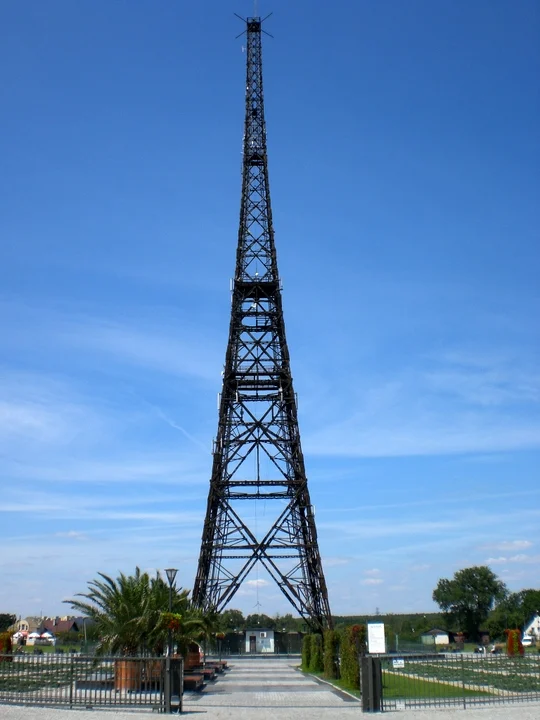
On the night of August 31, 1939, a small group of German SS operatives dressed in Polish military uniforms seized a radio station in the border town of Gleiwitz. They broadcast a short anti-German message in Polish, left behind the body of a murdered German farmer dressed as a Polish saboteur, and vanished into the night. Hours later, Adolf Hitler cited this fabricated “Polish aggression” to justify the invasion that would ignite World War II. The Gleiwitz incident represents one of the most consequential episodes in false flag history, a tactic that stretches back centuries and continues to evolve today.[s]
False Flag History: From Pirate Ships to Radio Towers
The term “false flag” originated in the 16th century as an expression describing intentional misrepresentation of allegiance.[s] Its roots lie in naval warfare, where vessels flew the flag of a neutral or enemy country to disguise their true identity. Pirates perfected this technique, flying friendly flags to lure merchant ships within striking distance before hoisting the Jolly Roger and attacking.[s]
This practice became so common that international maritime law eventually codified rules around it. Naval commanders could fly deceptive flags as a ruse of war, but they were required to raise their true colors before opening fire. The 1914 Battle of Trindade demonstrated the tactic’s continued use: the German auxiliary cruiser SMS Cap Trafalgar had been altered to look like the British HMS Carmania, only to encounter and fight the actual Carmania off the coast of Brazil.[s]
The Mukden Incident: Manufacturing a War in Manchuria
False flag history took a darker turn in the 20th century, when governments began staging elaborate deceptions to justify territorial conquest. On September 18, 1931, Lieutenant Suemori Kawamoto of the Japanese Imperial Army detonated a small quantity of dynamite near a railway line owned by Japan’s South Manchuria Railway near Mukden (now Shenyang).[s]
The explosion was so weak that it failed to destroy the track; a train passed over the damaged section minutes later.[s] Nevertheless, Japanese authorities blamed Chinese dissidents and responded with a full invasion. Within five months, Japan had occupied all of Manchuria and established the puppet state of Manchukuo.[s] The League of Nations investigated, exposed Japanese culpability, and Japan withdrew from the organization rather than face censure.
Operation Himmler: The Pretext for World War II
Hitler studied his predecessors. The Gleiwitz incident was actually one component of Operation Himmler, a series of more than two dozen staged provocations along the German-Polish border.[s] SS operatives under the command of Reinhard Heydrich and Heinrich Müller orchestrated these false flag operations to make Poland appear as the aggressor.
The murder victim at Gleiwitz was Franciszek Honiok, a 43-year-old Silesian farmer known for sympathizing with Poland. The Gestapo arrested him, drugged him, shot him, and left his body as “evidence” of a Polish attack.[s] Additional concentration camp prisoners were dressed in Polish uniforms, shot, and left at other staged incident sites. The Germans called these corpses “Konserve,” or canned goods.
International observers were skeptical from the start. American correspondents summoned to view the aftermath noticed inconsistencies. But Hitler did not need to convince the world; he needed a domestic narrative. “I will provide a propagandistic casus belli,” he had told his generals days earlier. “Its credibility doesn’t matter. The victor will not be asked whether he told the truth.”[s]
The Shelling of Mainila: Stalin’s Winter War Pretext
Just weeks after the Gleiwitz incident, the Soviet Union employed the same playbook. On November 26, 1939, Red Army forces shelled the village of Mainila, firing seven rounds that landed just 800 meters inside Soviet territory.[s] Soviet authorities immediately blamed Finland, claiming several casualties.
Finland offered to submit to a neutral investigation. Stalin refused. Four days later, Soviet forces invaded Finland, beginning the Winter War. Historians have since concluded that the shelling was fabricated by the Soviet NKVD state security agency.[s] Boris Yeltsin, the first President of the Russian Federation, finally admitted in 1994 that the Winter War had been a Soviet war of aggression.[s]
The Gulf of Tonkin: Escalating Through Misinformation
False flag history includes incidents where the fabrication was not the attack itself but its interpretation. On August 2, 1964, a genuine naval engagement occurred when the USS Maddox clashed with North Vietnamese torpedo boats in the Gulf of Tonkin. But two days later, the Maddox and USS Turner Joy reported a second attack that never happened.[s]
The commander on the scene, Captain John D. Herrick, quickly expressed doubts about the reality of the second engagement. Despite his reservations, Pacific Fleet commanders proceeded as if the attack were genuine.[s] The National Security Agency deliberately skewed intelligence to support the impression of an unprovoked assault.[s]
President Lyndon Johnson used both incidents to secure the Gulf of Tonkin Resolution from Congress, authorizing military action in Vietnam. In 1995, former Defense Secretary Robert McNamara met with North Vietnamese General Võ Nguyên Giáp and asked what happened on August 4, 1964. “Absolutely nothing,” Giáp replied.[s] Declassified documents released in 2005 confirmed that the second attack was based on misinterpreted intelligence.[s]
Operation Northwoods: The False Flag That Never Was
Not all false flag history involves operations that were carried out. In 1962, the U.S. Joint Chiefs of Staff drafted Operation Northwoods, a proposed series of false flag attacks to justify military intervention in Cuba.[s]
The proposals were chilling in their specificity: orchestrating terrorism in American cities, sinking boats of Cuban refugees, fabricating the shootdown of a U.S. Air Force fighter, and using remotely controlled civilian aircraft repainted as military planes.[s] The goal was to generate public support for war by blaming Cuba for attacks perpetrated by the U.S. government itself.
President John F. Kennedy rejected the proposals.[s] The documents remained classified until the Assassination Records Review Board declassified them in 1997, revealing how close the United States came to staging attacks on its own citizens as a pretext for war.
Olympic Destroyer: False Flags Enter the Digital Age
The 2018 Winter Olympics in Pyeongchang, South Korea became ground zero for a new chapter in false flag history. Minutes before the opening ceremony, malware dubbed “Olympic Destroyer” crippled the event’s IT infrastructure, shutting down Wi-Fi, ticket systems, and the official website.[s]
The attack’s attribution became perhaps the most convoluted forensic puzzle in cybersecurity history. Initial analysis pointed to North Korea: code signatures matched the Lazarus Group, Pyongyang’s notorious hacking team.[s] But when researchers at Kaspersky Lab dug deeper, they discovered these fingerprints were skillful imitations, “a so-called false flag.”[s]
Additional evidence pointed toward Russian-speaking hackers, specifically the APT28 group (also known as Fancy Bear or Sofacy).[s] Russia had motive: the country was banned from the Olympics over doping violations. But researchers cautioned that even these clues could be planted. “When it comes to top-level cyber espionage,” Kaspersky concluded, “you can never be 100% sure of anything.”
The Pattern Continues
False flag history shows no signs of ending. During Russia’s 2014 annexation of Crimea, soldiers appeared wearing Russian military equipment but without insignia, what locals called “little green men.” The Kremlin insisted they were local self-defense volunteers.[s] Similar tactics accompanied fabricated reports of attacks on Russian-speaking populations in eastern Ukraine.
Before the full-scale invasion of Ukraine in February 2022, intelligence agencies warned that Russia was preparing false flag operations to justify military action.[s] Russian state media promoted videos purporting to show Ukrainian attacks, many quickly debunked by mismatched metadata and staged evidence.[s]
From 16th-century pirates flying deceptive flags to state-sponsored hackers planting forensic breadcrumbs, false flag history reveals an uncomfortable truth: those seeking war have always been willing to manufacture justification for it. The methods evolve with technology, but the underlying logic remains constant. Understanding this pattern is not conspiracy thinking; it is recognizing a well-documented strategy that has shaped modern history and continues to influence geopolitics today.
The study of false flag history presents unique methodological challenges for historians. Unlike conventional military operations documented through official channels, false flags are designed to deceive, leaving fragmentary evidence that often surfaces only decades later through declassification, defector testimony, or post-war tribunals. The Gleiwitz incident of August 31, 1939, known primarily through the Nuremberg testimony of SS-Sturmbannführer Alfred Naujocks, illustrates how our understanding of these operations depends heavily on perpetrator confessions and archival discoveries.[s]
Terminological Origins and False Flag History
The etymology of “false flag” traces to 16th-century maritime practice. The term first appeared in polemical religious texts as a metaphor before acquiring its literal naval meaning in the 1800s.[s] In naval warfare, the practice was codified rather than prohibited: vessels could fly deceptive colors as a ruse de guerre, provided they raised their true flag before engaging in combat.[s]
Pirates pioneered the tactical application, flying friendly flags to approach merchant vessels before revealing their true intent.[s] The practice migrated into state warfare through auxiliary cruisers and Q-ships during both World Wars. The 1914 Battle of Trindade between SMS Cap Trafalgar (disguised as HMS Carmania) and the actual Carmania represents the tactic’s application in conventional naval combat.[s]
The Mukden Incident: Archival Evidence and Attribution
The September 18, 1931 Mukden incident demonstrates how false flag history often requires decades of historiographic revision. Japanese military planners Colonel Seishirō Itagaki and Lieutenant Colonel Kanji Ishiwara orchestrated the railway explosion without authorization from Tokyo. Lieutenant Suemori Kawamoto executed the sabotage, placing explosives that inflicted minimal damage; a train passed over the damaged track minutes later.[s]
The Kwantung Army’s subsequent occupation of Manchuria and establishment of Manchukuo proceeded on the manufactured pretext of Chinese aggression.[s] The League of Nations’ Lytton Commission exposed Japanese culpability in 1932, leading to Japan’s withdrawal from the organization. Contemporary sources already doubted the official narrative, but definitive archival confirmation came later through Japanese military records.
Operation Himmler: The Nuremberg Documentation
Our knowledge of the Gleiwitz incident derives primarily from Alfred Naujocks’ testimony at Nuremberg, where he described organizing the operation under orders from Reinhard Heydrich and Heinrich Müller.[s] The victim, Franciszek Honiok, a 43-year-old Upper Silesian farmer sympathetic to Poland, was arrested, drugged, and executed to serve as fabricated evidence.[s]
Hitler’s August 22, 1939 address to his generals, documented through Admiral Wilhelm Canaris’ diary, established intent: “I will provide a propagandistic casus belli. Its credibility doesn’t matter. The victor will not be asked whether he told the truth.”[s] The operation encompassed more than two dozen staged incidents under the collective designation Operation Himmler.[s]
The Mainila Shelling: Soviet Acknowledgment
The November 26, 1939 shelling of Mainila provides an unusual case of false flag history receiving official state acknowledgment. Seven artillery rounds landing 800 meters inside Soviet territory were attributed to Finnish forces, providing pretext for the Winter War four days later.[s]
Finland’s offer of neutral investigation was rejected. Historians subsequently attributed the incident to NKVD fabrication.[s] Boris Yeltsin’s 1994 acknowledgment that the Winter War constituted Soviet aggression represented rare official admission of false flag culpability.[s]
Gulf of Tonkin: Declassification and Reinterpretation
The August 1964 Gulf of Tonkin incidents present a complex historiographic case. The August 2 engagement occurred as documented; controversy centers on the August 4 report of a second attack that subsequent analysis revealed never happened.[s]
Captain John Herrick’s contemporaneous doubts about the second incident were overridden by Pacific Fleet commanders.[s] The 2005 declassification of NSA internal histories confirmed that intelligence was deliberately skewed to support the attack narrative.[s] Robert McNamara’s 1995 conversation with General Võ Nguyên Giáp, in which Giáp confirmed “absolutely nothing” occurred on August 4, provided additional corroboration.[s]
Operation Northwoods: The Archival Discovery
Operation Northwoods represents false flag history in proposed rather than executed form. The 1962 Joint Chiefs of Staff memorandum, declassified through the Assassination Records Review Board in 1997, documented proposals for fabricated terrorist attacks on American targets to justify Cuban intervention.[s]
The document specified remote-controlled aircraft, refugee boat sinkings, and manufactured Cuban terrorism in American cities.[s] President Kennedy’s rejection of the proposals terminated the planning phase. The document’s discovery required the comprehensive archival search conducted in relation to Kennedy assassination records, illustrating how false flag evidence often emerges through unrelated declassification efforts.
Olympic Destroyer: Attribution Challenges in Cyber Operations
The 2018 Pyeongchang Olympic Destroyer attack introduced new complexities into false flag history through digital forensics manipulation. Initial code analysis identified signatures associated with North Korea’s Lazarus Group.[s] Kaspersky Lab’s subsequent investigation revealed these indicators as deliberate false flags; additional evidence pointed toward Russian APT28 (Sofacy/Fancy Bear), though researchers acknowledged that this attribution could itself be manipulated.[s]
The incident demonstrated that state-sponsored cyber actors have developed sophisticated capabilities for planting misleading forensic evidence, complicating traditional attribution methodologies.[s]
Contemporary Applications and Methodological Implications
Russia’s 2014 Crimea annexation employed uniformed personnel without insignia whom the Kremlin initially denied were Russian forces.[s] The 2022 Ukraine invasion was preceded by fabricated attack reports promoted through state media, many rapidly debunked through metadata analysis and open-source investigation.[s]
The historiography of false flag history requires integrating multiple evidence types: tribunal testimony, declassified documents, diplomatic communications, and increasingly, digital forensics. Contemporary operations may leave evidence trails that enable faster exposure, but sophisticated actors continue developing counter-forensic techniques. The historical pattern suggests that false flag operations remain a persistent feature of state conflict, requiring ongoing methodological adaptation for accurate historical documentation.