When George W. Bush stood before Congress in January 2002 and branded Iran, Iraq, and North Korea an “axis of evil,”[s] the framing was simple: these were bad actors who threatened America for no good reason. What that framing conveniently omitted was roughly half a century of US Middle East interventions that had toppled governments, armed dictators, shot down civilian airliners, and killed hundreds of thousands of people across the region. The boss specifically asked for this one, and honestly, the timeline writes itself once you lay it out.
This is not a fringe conspiracy narrative. Every event described below is documented in declassified CIA files, official government records, and mainstream historical scholarship. The question is not whether these US Middle East interventions happened. The question is why so few Americans seem to know about them.
It Started Before the CIA Was Even a Decade Old
The earliest US Middle East interventions trace back to the very dawn of the Cold War. In March 1949, barely two years after the CIA was established, Syrian Army Chief of Staff Husni al-Zaim overthrew the country’s democratically elected president, Shukri al-Quwatli, in a bloodless coup. According to historian Douglas Little of Clark University, this was “one of the first covert actions that the CIA pulled off.”[s] Declassified records show that CIA operative Stephen Meade met secretly with al-Zaim at least six times in the months before the coup to discuss the possibility of “an army supported dictatorship.”
Four days after the coup, the new Syrian government ratified the Trans-Arabian Pipeline deal, which the previous government had blocked. The pipeline would carry Saudi oil to the Mediterranean across Syrian territory. Democracy was nice, but oil infrastructure was nicer. This would set the tone for US Middle East interventions for decades to come.
Iran, 1953: The Template for US Middle East Interventions
If Syria was the rehearsal, Iran was the debut performance. In August 1953, the CIA and Britain’s MI6 orchestrated Operation Ajax[s], overthrowing Iran’s democratically elected Prime Minister Mohammad Mosaddegh. His crime? Nationalizing Iran’s oil industry, which had been controlled by the Anglo-Iranian Oil Company (later BP) under a deal that gave Iran a pittance of its own oil revenues.
The CIA cajoled, threatened, and bribed its way into influence[s], financing street protests, paying off journalists and politicians, and coordinating with the Iranian military. Between 200 and 300 people were killed in the resulting violence. Mosaddegh was arrested and spent the rest of his life under house arrest. The Shah was reinstated and, as thanks for the American help, signed over 40 percent of Iran’s oil fields to US companies.
In August 2013, the US government formally acknowledged[s] its role in the coup by releasing previously classified documents. The Council on Foreign Relations ranked it among the worst US foreign policy decisions ever made, noting that “Iranian nationalists used the coup to fuel anti-Americanism in Iran” for generations. This was the CIA’s first overthrow of a democratically elected government. It would not be the last.
Iraq, 1963: Lists of People to Kill
In February 1963, the Iraqi branch of the Ba’ath Party overthrew and executed Prime Minister Abdul-Karim Qassim. The extent of CIA involvement remains debated among historians, but the evidence is substantial. Former US diplomat James E. Akins, who worked in the Baghdad Embassy at the time, personally witnessed contacts between Ba’ath Party members and CIA officials[s]. The CIA had been plotting to remove Qassim since at least mid-1962.
What is most chilling is what reportedly came next. It is widely believed, based on multiple accounts from former US officials, that the CIA provided the Ba’ath Party’s National Guard with lists of suspected communists and leftists. These individuals were then systematically arrested or killed. Among those who benefited from this US-assisted rise to power was a young Ba’ath Party operative named Saddam Hussein.
The Friend Who Became the Enemy
The US relationship with Saddam Hussein is perhaps the most instructive chapter in the history of US Middle East interventions. Throughout the 1980s, the Reagan administration backed Iraq in its war against Iran with arms, money, satellite intelligence, and diplomatic cover.
In December 1983, Donald Rumsfeld traveled to Baghdad as President Reagan’s special envoy and personally shook hands with Saddam Hussein[s], cementing the US tilt toward Iraq. This was not a casual handshake. The US was actively providing Iraq with battlefield intelligence, including satellite imagery showing Iranian troop positions.
The darkest dimension of this partnership involved chemical weapons. According to declassified CIA documents reported by Foreign Policy[s], the US had firm evidence of Iraqi chemical attacks beginning in 1983. By 1988, US intelligence officials were conveying the locations of Iranian troops to Iraq, “fully aware that Hussein’s military would attack with chemical weapons, including sarin, a lethal nerve agent.” As retired Air Force Colonel Rick Francona, who served as military attaché in Baghdad, put it: “The Iraqis never told us that they intended to use nerve gas. They didn’t have to. We already knew.”
When Iraq used those same chemical weapons against the Kurdish village of Halabja in March 1988, killing thousands of civilians, the US response was muted. The friend was still useful. This chapter alone encapsulates the moral contradictions at the heart of US Middle East interventions.
Flight 655: 290 Civilians, Zero Consequences
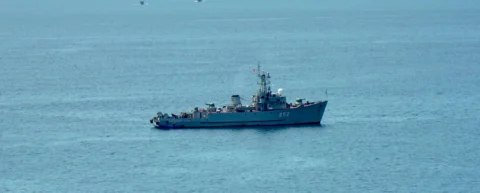
On July 3, 1988, the USS Vincennes, a US Navy warship operating in the Persian Gulf, shot down Iran Air Flight 655[s], a scheduled commercial flight from Tehran to Dubai. All 290 people on board were killed, including 66 children. The aircraft was in Iranian airspace, on a normal commercial flight path, ascending after takeoff.
The US initially claimed the aircraft had been descending toward the warship in an attack profile and had been misidentified as an Iranian F-14 fighter jet. Subsequent investigations showed the plane was actually ascending in its assigned airway. The US expressed “deep regret” but never formally apologized[s]. The captain of the Vincennes, William C. Rogers III, was later awarded the Legion of Merit. The US eventually paid $61.8 million in compensation to the victims’ families.
In the Middle East, Flight 655 is not a footnote. It is a defining memory.
Sanctions, Invasion, and the Price of Being “Worth It”
After the 1991 Gulf War, the US led a regime of crushing sanctions against Iraq that lasted over a decade. In a now-infamous 1996 interview on 60 Minutes, correspondent Lesley Stahl told then-UN Ambassador Madeleine Albright: “We have heard that a half million children have died. I mean, that’s more children than died in Hiroshima. And, you know, is the price worth it?” Albright’s response: “I think this is a very hard choice, but the price, we think, the price is worth it.”[s]
The exact death toll from sanctions remains contested. A 1999 UNICEF survey estimated approximately 500,000 excess deaths among Iraqi children under five, though later surveys conducted after the 2003 invasion produced significantly lower figures, and some researchers have suggested the earlier data may have been manipulated. What is not disputed is that the sanctions devastated Iraqi civilian life, crippling healthcare, water treatment, and basic infrastructure.
Then came the 2003 invasion. The case for war was built on false premises[s]: that Iraq had weapons of mass destruction, that it was developing more, and that it was failing to comply with UN disarmament obligations. As former IAEA inspector Robert Kelley wrote, “all of these premises were based on scraps of unreliable information. None of them was true.” The UN inspectors in the field knew this and said so. They were ignored. Secretary of State Colin Powell’s infamous February 2003 UN presentation relied partly on the claims of “Curveball,” an Iraqi defector who later admitted he had fabricated his testimony.
The war killed nearly 4,500 American soldiers and, according to various estimates, well over 100,000 Iraqi civilians. It destabilized the entire region and created the conditions for the rise of ISIS.
Afghanistan: Arming Tomorrow’s Enemy
Operation Cyclone[s], the CIA’s program to arm and finance Afghan mujahideen fighting the Soviet Union, ran from 1979 to 1992 and was one of the longest and most expensive covert operations in American history. Funding rose from $20 to $30 million per year in 1980 to $630 million per year in 1987, with a total cost to US taxpayers of some $3 billion. The program leaned heavily toward supporting militant Islamist groups favored by Pakistan’s military government, rather than less ideological Afghan resistance movements.
The Soviets withdrew from Afghanistan in 1989. The US largely disengaged from the country afterward, leaving behind a devastated nation awash in weapons and factional warfare. The Taliban rose to power in the vacuum. The rest is, as they say, recent history. It is also one of the clearest examples of how US Middle East interventions created the very threats they later claimed to fight.
US Middle East Interventions: The Pattern
Step back far enough and the pattern of US Middle East interventions becomes unmistakable. Overthrow a democratic government in Iran, get a revolution and a hostage crisis 26 years later. Arm Saddam Hussein against Iran, then fight two wars to remove him. Fund Islamist fighters in Afghanistan, then spend two decades and trillions of dollars fighting their ideological successors. Impose sanctions that devastate a civilian population, then wonder why the region seethes with anti-American sentiment.
None of this is to excuse terrorism, authoritarianism, or human rights abuses by governments in the region. But the “axis of evil” framing, the notion that certain countries simply woke up one morning and decided to hate America for its freedoms, requires a breathtaking amnesia about what the US actually did across the Middle East for the better part of a century.
As historians have noted[s], “although there were no direct links between Iraq, Iran and North Korea, the concept of an ‘axis of evil’ united in its desire to harm Americans proved useful to those making the case for a second invasion of Iraq.” Even the EU’s foreign policy chief, Chris Patten, called the speech[s] “unhelpful” and said it was “hard to believe” it represented “a well thought-through policy.”
So, yes. The “axis of evil” is just a collection of irrational bad guys who woke up one day and decided to hate America for absolutely no reason whatsoever. No coups, no chemical weapons, no shot-down airliners, no decades of sanctions. Just pure, inexplicable malice. Obviously.
US Middle East Interventions: A Chronological Record
What follows is a detailed chronological accounting of US Middle East interventions, drawn from declassified documents, government archives, and established historical scholarship. Every event listed below is a matter of public record. Together, they form a timeline of US Middle East interventions that most Americans never learned in school.
1949: Syria and the Pipeline
On March 30, 1949, Syrian Army Chief of Staff Husni al-Zaim overthrew President Shukri al-Quwatli. Declassified US records show that CIA operative Stephen Meade met secretly with al-Zaim at least six times[s] beginning in November 1948 to discuss an “army supported dictatorship.” Historian Douglas Little of Clark University has described this as “one of the first covert actions that the CIA pulled off.” The new government promptly ratified the Trans-Arabian Pipeline deal. The degree of direct CIA orchestration remains debated, but American foreknowledge and encouragement are documented. It was the opening act in a long series of US Middle East interventions.
1953: Operation Ajax in Iran
Prime Minister Mohammad Mosaddegh nationalized Iran’s oil industry in 1951, challenging the Anglo-Iranian Oil Company’s monopoly. Britain blockaded Iranian oil exports and lobbied Washington for intervention. The Eisenhower administration, persuaded by Cold War fears that Mosaddegh was creating an opening for communists[s], authorized Operation Ajax in June 1953. CIA officer Kermit Roosevelt, grandson of Theodore Roosevelt, ran the operation on the ground.
The operation involved paying journalists, mullahs, and politicians to attack Mosaddegh, financing street gangs to create instability, and coordinating with the Iranian military. After an initial failed attempt on August 15, the coup succeeded on August 19, 1953[s]. The Shah was reinstated and signed over 40 percent of Iran’s oil fields to US companies. Mosaddegh was sentenced to three years in prison, then placed under house arrest until his death in 1967.
The National Security Archive at George Washington University[s] published declassified CIA documents in 2013 confirming the agency’s central role. Operation Ajax became the template for subsequent US-backed regime changes in Guatemala (1954), Congo (1960), and Chile (1973), establishing US Middle East interventions as a permanent fixture of American foreign policy.
1963: The Ba’athist Coup in Iraq
In February 1963, Ba’ath Party members overthrew and executed Iraqi Prime Minister Abdul-Karim Qassim. The CIA had been cultivating relationships with Iraqi opposition groups, including the Ba’ath Party, since at least mid-1962. Former US diplomat James E. Akins, stationed at the Baghdad Embassy, witnessed direct contacts between Ba’athists and CIA officials[s]. Multiple sources report that the CIA provided lists of suspected communists to the Ba’ath Party’s National Guard, who used them to conduct mass arrests and killings. Among the young Ba’ath operatives who participated in this period’s political violence was Saddam Hussein, though his precise role remains a subject of historical debate.
1980-1988: Backing Saddam in the Iran-Iraq War
After the 1979 Iranian Revolution toppled the Shah, the Reagan administration adopted a policy of preventing an Iranian victory in the Iran-Iraq War at any cost. In December 1983, Donald Rumsfeld traveled to Baghdad as Reagan’s special envoy[s] and met personally with Saddam Hussein, solidifying the US-Iraq relationship.
The US provided Iraq with satellite imagery, battlefield intelligence, and diplomatic support. Declassified CIA documents[s] reveal that the US had firm evidence of Iraqi chemical weapons use beginning in 1983. By 1988, the US was providing “targeting packages” to the Iraqi air force while knowing Iraq would deploy sarin and mustard gas against Iranian positions. The CIA estimated casualties from chemical attacks at “hundreds” to “thousands” in each of four major offensives. President Reagan reportedly wrote a note stating: “An Iranian victory is unacceptable.”
When Iraq used chemical weapons against the Kurdish village of Halabja in March 1988, killing an estimated 3,200 to 5,000 civilians, the US response was minimal. The same chemicals and the same intelligence infrastructure that the US had tacitly supported were turned against Iraqi citizens. Among all US Middle East interventions, the partnership with Saddam may be the most damning in hindsight.
1988: Iran Air Flight 655
On July 3, 1988, the USS Vincennes shot down Iran Air Flight 655[s] over the Strait of Hormuz, killing all 290 passengers and crew. The aircraft was a scheduled commercial Airbus A300 flying from Bandar Abbas to Dubai. It was in Iranian airspace, ascending in its assigned airway, and transmitting the correct civilian transponder codes.
The US Navy initially claimed the aircraft was descending in an attack profile and had been misidentified as an F-14 fighter. Investigation revealed these claims were inaccurate. The US expressed “deep regret” and eventually paid $61.8 million to the victims’ families[s] in 1996, but never issued a formal apology. Captain William C. Rogers III received the Legion of Merit for his service during the period that included the shootdown.
1990s: Sanctions on Iraq
Following the 1991 Gulf War, comprehensive sanctions crippled Iraq’s economy and civilian infrastructure. A 1999 UNICEF survey estimated approximately 500,000 excess deaths among children under five, though this figure has been disputed by subsequent research. In a 1996 interview on 60 Minutes[s], UN Ambassador Madeleine Albright was asked whether the death of half a million children was “worth it.” She replied: “I think this is a very hard choice, but the price, we think, the price is worth it.” She later described her own answer as “a terrible mistake, hasty, clumsy and wrong.”
1979-1992: Operation Cyclone in Afghanistan
The CIA’s Operation Cyclone[s] armed and financed Afghan mujahideen fighting the Soviet occupation. Funding escalated from $20 to $30 million per year in 1980 to $630 million per year in 1987. The program channeled weapons through Pakistan’s Inter-Services Intelligence, which directed the bulk of support to militant Islamist factions rather than secular or moderate resistance groups. After the Soviet withdrawal in 1989, the US largely disengaged from Afghanistan, leaving a power vacuum that the Taliban eventually filled. Like other US Middle East interventions, the short-term strategic gain carried a catastrophic long-term cost.
2002: The “Axis of Evil”
On January 29, 2002, President Bush used his State of the Union address to label Iran, Iraq, and North Korea an “axis of evil.”[s] The phrase was coined by speechwriter David Frum. As historians have noted[s], “although there were no direct links between Iraq, Iran and North Korea, the concept proved useful to those making the case for a second invasion of Iraq.” EU foreign policy chief Chris Patten called it[s] “unhelpful” and “hard to believe” it was “a well thought-through policy.”
2003: The Iraq Invasion
The US invaded Iraq in March 2003 on the basis of false claims about weapons of mass destruction[s]. IAEA and UNMOVIC weapons inspectors in the field had found no evidence of active WMD programs and reported this to the UN Security Council. Former IAEA Deputy for Analysis Robert Kelley wrote that “all of these premises were based on scraps of unreliable information. None of them was true.” Key intelligence came from “Curveball,” an Iraqi defector who later admitted fabricating his claims.
Colin Powell’s February 2003 UN Security Council presentation, which he later called a “blot” on his record, was built on this faulty intelligence. The resulting war killed nearly 4,500 US troops and over 100,000 Iraqi civilians, destabilized the region, and created the conditions for the emergence of ISIS.
The Ledger
This is the documented record of US Middle East interventions, from 1949 to 2003. Coups against democratic governments in Syria and Iran. Alliance with a dictator who used chemical weapons. A civilian airliner shot down with no apology. Sanctions that devastated a population. An invasion launched on false intelligence. Billions funneled to Islamist militants who later turned their weapons in new directions.
Every one of these events is well-known in the Middle East. They are taught in schools, discussed in homes, and passed down through generations. When politicians in Washington frame the region’s hostility as irrational hatred born of nothing, they are asking an entire region to forget what US Middle East interventions did to it.
But yes, of course, the “axis of evil” was just a bunch of bad guys with no reason whatsoever to bear any grievance toward the United States. None at all. Absolutely none. Wink.