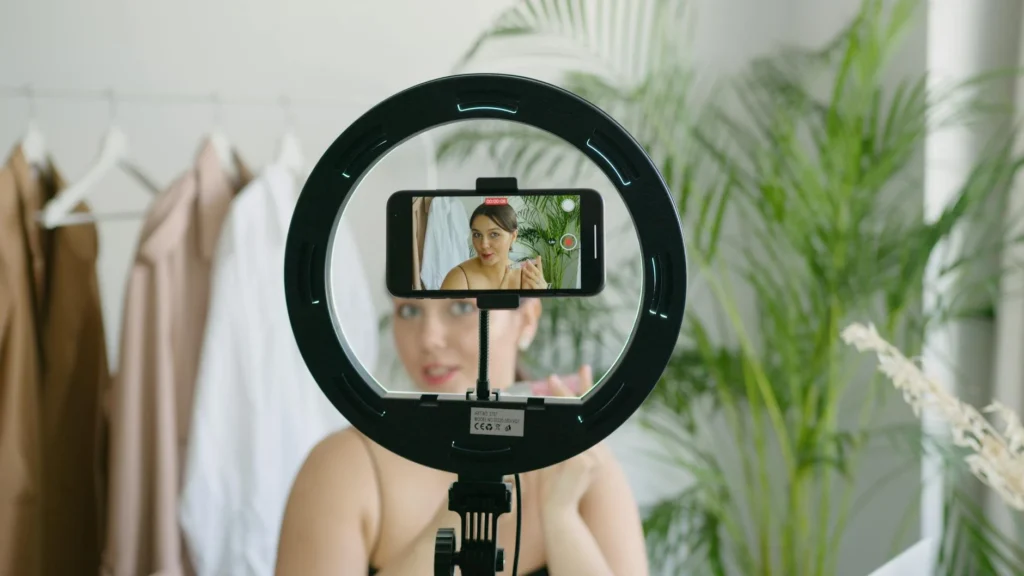
Influencer authenticity performance has become the defining contradiction of digital culture. We scroll through feeds filled with creators sharing their “real” moments, their “honest” opinions, their “unfiltered” lives, and we believe we’re seeing something genuine. We’re not. What we’re watching is the most sophisticated form of impression management in human history, dressed up in ring lights and relatable captions.
The numbers tell the story plainly. The influencer marketing industry has grown into a $24 billion enterprise[s], built entirely on the premise that these creators are more trustworthy than traditional advertising. Yet 88% of consumers say authenticity matters when deciding which brands to support, while nearly half believe most influencers are fake[s]. This is not a market inefficiency. It is the market itself: the demand for authenticity has created an industry dedicated to manufacturing it.
Goffman’s Stage, 67 Years Later
In 1959, sociologist Erving Goffman published “The Presentation of Self in Everyday Life,” arguing that all social interaction is performance. People operate on a “frontstage” where they project carefully managed impressions to their audience, while the “backstage” is where they prepare, rehearse, and drop the act[s]. Goffman was describing cocktail parties and job interviews. He could not have imagined TikTok, but his framework fits perfectly.
Social media has collapsed the distinction between frontstage and backstage. Or rather, it has turned the entire backstage into another frontstage. When an influencer films herself “just waking up,” that moment has been lit, framed, probably re-shot. When she shares a “real talk” about her struggles, that confession has been scripted for maximum engagement. The performance never stops because the audience is always present. Self-presentation theory explains exactly why: individuals are motivated to maximize rewards and minimize punishment through impression management[s]. For influencers, the rewards are sponsorships, followers, and income. The performance is the job.
Influencer Authenticity Performance as Product
Modern scholarship has given this phenomenon a name: the “influencer imaginary.” This concept explains how creators “experience and justify the commodification of the self and forms of knowledge as subject to valuation in markets”[s]. In plainer terms: influencers have learned to see their own personalities as products to be packaged and sold. Authenticity is not a quality they possess; it is a strategy they deploy.
The mechanisms are subtle but systematic. Researchers describe how “authenticity is mediated through digital tools and social media affordances to produce an ‘edited persona'”[s]. The casual photo was curated from dozens of attempts. The vulnerable caption was optimized for algorithm reach. The product recommendation, framed as honest advice, is a paid placement. When 84.6% of influencers surveyed describe their self-presentation as “authentic”[s], they are not lying. They have simply internalized the performance so completely that the distinction between performance and reality has dissolved.
The Algorithm Demands It
Platform architecture makes influencer authenticity performance not just profitable but mandatory. Social media algorithms prioritize engagement, not truth. They reward content that evokes strong emotions, pushing posts that feel intimate, authentic, or confessional to the top of feeds[s]. This creates what one analysis calls an inescapable paradox: “influencers must continuously perform authenticity to remain visible”[s].
The result is an arms race of seeming realness. If one creator shares her morning routine, another shares her bad skin days. If one admits to anxiety, another confesses to depression. Vulnerability becomes currency, and the market inflates. A 2021 study from the University of Michigan identified what researchers call the “online authenticity paradox”: people strive to achieve authentic self-presentation, but doing so requires sharing negative or sensitive experiences publicly, which is “out of reach for many, especially people with marginalized identities and difficult or stigmatized life experiences”[s].
The Audience Knows, and Doesn’t Care
Perhaps the strangest aspect of this system is that consumers are not actually fooled. Recent survey data shows that 76% of Americans follow influencers[s], and 51% say they value the “authenticity or relatability” of influencer content[s]. But 72% also believe influencer culture is not healthy[s]. These numbers are not contradictory. They reveal a population that has learned to enjoy the performance while recognizing it as performance.
The relationship has a clinical name: parasocial. Media scholars define parasocial relationships as “unilateral relationships formed by a media audience with a media character,” a “one-sided, nondialectical, solo-controlled relationship”[s]. Nearly 29% of influencer followers report experiencing such relationships[s]. They feel they know these creators, that the creators know them, that the relationship is mutual. It is not. What they have is a carefully calibrated illusion of intimacy, the direct product of influencer authenticity performance, worth $24 billion to the brands that pay for it.
The Deinfluencing Paradox
The backlash was inevitable. On TikTok, the hashtag #deinfluencing has accumulated more than a billion views[s]. Creators like Diana Wiebe urge followers to stop buying products they don’t need, to recognize that “it was all advertising, from paid promotional content to the creators sharing hauls”[s]. The movement frames itself as a rejection of influencer culture.
But deinfluencing is also, ultimately, influencing. These creators build followings, gain sponsorships, and monetize their platforms. Their message is “don’t buy things,” but their medium is the same influencer authenticity performance that made traditional creators powerful. They share their “real” stories of overconsumption and debt. They perform relatability. They are still working the frontstage. The form has changed; the structure has not.
The Problem of Stakeholder Misalignment
A 2025 study in the Journal of Marketing examined how consumers, influencers, brand managers, and agencies each perceive influencer authenticity differently[s]. Each group prioritizes different aspects: consumers want genuine recommendations, influencers want creative control, brands want reach, agencies want measurable returns. These priorities do not align, and the misalignments create systematic pressure toward performance over substance.
This is the crux of the problem. Influencer authenticity performance is not a failure of individual ethics. It is a structural outcome. When the business model requires appearing authentic while serving commercial interests, performance is the only possible result. Criticizing individual creators for being “fake” misses the point. The system manufactures fakeness at industrial scale.
What Would Real Authenticity Require?
Genuine authenticity would require influencers to say things that hurt their income. It would mean recommending against products that pay them, disclosing doubts about their own lifestyles, admitting when they don’t know something. It would mean accepting that true vulnerability, shared publicly, invites rejection and judgment. As researchers note, authentic self-presentation online is “possible only at great personal cost”[s].
Most influencers will not pay that cost, and we should not expect them to. They are workers in an attention economy, compensated precisely for their influencer authenticity performance, not for achieving the real thing. The question is not whether individual creators can be more genuine. The question is why we built a communication infrastructure that systematically punishes genuineness and rewards its imitation.
The $24 billion flows because we want to feel connected to real people. What we get instead is influencer authenticity performance at scale: a mirror reflecting back a carefully engineered image of what connection looks like. The performance is very good. It would have to be. At these prices, audiences expect quality production.