When investigators discover a body, one of the most critical questions is: when did this person die? Forensic entomology provides answers that other methods cannot, using the predictable life cycles of insects to establish a minimum time since death. The science traces its origins to 1235 China, and today it remains what Natural History Museum expert Dr. Martin Hall calls “the gold standard” for determining time of death[s].
The First Forensic Entomology Case
The documented history of forensic entomology begins with Song Ci, a Chinese lawyer and death investigator who served during the Song dynasty. In 1235, a Chinese villager was found murdered[s]. The investigator concluded the wound came from a sickle and ordered all villagers to lay their sickles on the ground. Under the afternoon sun, blow flies began swarming a single sickle, attracted to invisible traces of blood and tissue still adhering to the blade[s]. The owner confessed.
Song Ci compiled this case and others in his 1247 work “Xi yuan jilu” (The Washing Away of Wrongs), widely regarded as the earliest systematic treatise on forensic medicine[s]. Internationally renowned forensic biologist Mark Benecke traces modern forensic entomology directly to this 13th-century text[s].
Why Insects Arrive First
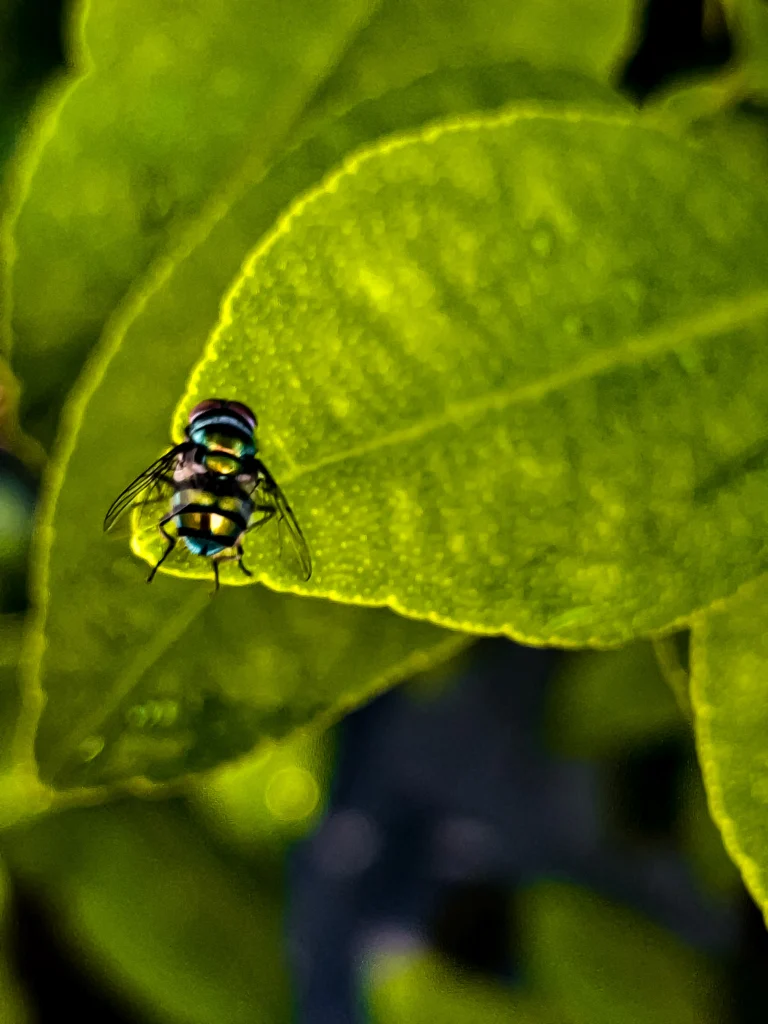
When a person dies, the body immediately begins releasing volatile organic compounds as decomposition starts from within[s]. These chemicals act like a dinner bell for necrophagous insects. Blow flies (family Calliphoridae) have an extraordinarily keen sense of smell; some species can detect a corpse from up to 16 kilometers away[s]. They arrive at bodies within as little as 10 minutes after death[s].
These flies seek out natural body openings and wounds to lay eggs because wetter environments are ideal for their larvae. The eggs incubate for 12 to 24 hours, after which maggots emerge[s]. The maggots feed, grow, and molt through developmental stages called instars until they eventually form a hardened case (puparium) and metamorphose into adult flies.
How Forensic Entomology Determines Time of Death
For Calliphora vicina, a common bluebottle species, the entire development from egg to adult fly takes approximately 19 days, with half that time spent in the puparium stage[s]. By identifying the species present and determining their developmental stage, forensic entomologists can work backward to estimate when the first insects colonized the body.
Temperature plays a crucial role. Warmer conditions accelerate insect development, while cold slows it. Forensic entomology practitioners combine species identification with local weather data to calculate what scientists call the minimum post-mortem interval: the earliest time that death could have occurred[s].
The Ruxton Case: Forensic Entomology Enters British Courts
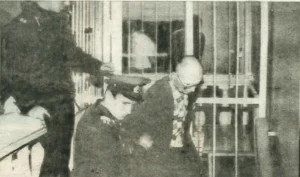
The first forensic entomology case in the United Kingdom occurred in 1935. Dr. Buck Ruxton, a Lancaster physician, murdered his wife Isabella and their housemaid Mary Rogerson, then drove 100 miles to dispose of their bodies in a ravine in the Scottish Borders[s].
When investigators recovered the bodies, a detective had the foresight to collect maggots found on the remains. Scientists identified these as bluebottle fly larvae (Calliphora vicina) and determined they were between 12 and 14 days old[s]. This provided a timeframe for when the bodies had been deposited, helping corroborate other evidence against Ruxton[s]. He was convicted and executed. Those maggots are now preserved in the Natural History Museum’s fly collection.
Beyond Time of Death
Forensic entomology reveals more than just when someone died. The absence of insects entirely suggests the body was frozen, sealed in a container, or buried deeply[s]. Finding species that prefer outdoor sunny locations on an indoor corpse indicates someone moved the body after death. The pattern of insect activity can even suggest trauma locations investigators might otherwise miss.
In cases involving prolonged abuse or neglect, specific flies attracted to fecal matter and urine can provide evidence about antemortem conditions[s]. The field has expanded to include toxicology; when a body decomposes too quickly for traditional tissue analysis, maggots that fed on the remains retain traces of any drugs or toxins present at death.
Forensic entomology is a routine practice for estimating the post-mortem interval (PMI) in death investigations[s]. The science relies on the predictable development of necrophagous insects, particularly Calliphoridae (blow flies), which Natural History Museum expert Dr. Martin Hall describes as “the gold standard” for determining time of death[s]. This technical overview examines the methodology, calculations, and evidentiary standards that make forensic entomology an essential forensic discipline.
Historical Foundation
The earliest documented forensic entomology case appears in Song Ci’s 1247 work “Xi yuan jilu” (The Washing Away of Wrongs), describing a 1235 Chinese murder investigation[s]. The investigator ordered villagers to present their sickles. Blow flies concentrated on a single blade due to invisible blood residue, compelling a confession. Forensic biologist Mark Benecke traces the discipline directly to this case[s].
Modern forensic entomology accelerated following Ken Smith’s 1986 “Manual of Forensic Entomology,” which consolidated scattered literature with taxonomic and ecological data on carrion fauna[s]. Research publications in the field have increased almost exponentially since.
Biological Basis: Calliphorid Development
Calliphorid flies are ectothermic insects that exhibit rapid oviposition on carrion, typically within minutes to hours post-mortem, attracted by putrefactive volatile organic compounds[s]. Some species detect corpses from 16 kilometers away and arrive within 10 minutes[s].
The blow fly life cycle proceeds through distinct stages:
- Eggs: Laid in batches of 50 to 100 at natural orifices or wounds; incubation period 12 to 24 hours[s]
- Larvae (maggots): Progress through three larval instars, reaching the third instar within approximately 4 to 5 days, after which they pupate[s]
- Post-feeding stage: Larvae leave the body and burrow into surrounding substrate
- Puparium: Hardened case forms; metamorphosis occurs. For Calliphora vicina, approximately 9.5 days (half of total 19-day development)[s]
- Adult emergence: Full cycle approximately 19 days for C. vicina at optimal temperatures
Accumulated Degree Hour Methodology
Forensic entomology practitioners employ accumulated degree hours (ADH) or accumulated degree days (ADD) to standardize development across varying temperatures. The principle: if temperature-development rate is linear, a given developmental milestone requires the same thermal summation regardless of temperature history[s].
The calculation requires two values:
- Growing Degree Day (GDD): Average daily temperature minus threshold temperature (typically 10°C for many Calliphoridae)
- ADH: GDD multiplied by time in hours[s]
Working backward: forensic entomologists determine species-specific reference ADH for complete development from published literature, subtract laboratory-accumulated ADH from rearing collected specimens, then correlate pre-collection ADH with historical temperature data from the recovery site to calculate minimum PMI.
Case Application: PMI Calculation
Consider a body recovered with third-instar Calliphorid larvae measuring up to 12mm. The forensic entomologist collects specimens, preserves some in 80% ethanol for measurement, and rears others to adulthood for species confirmation[s].
If the species is confirmed as Calliphora vicina and local temperature records show average daily temperatures of 17°C during the period in question (threshold 10°C), then GDD equals 7. For a 12-day period, total ADH equals 7 times 24 times 12, or 2,016 ADH. Published development data for C. vicina third instar at corresponding ADH allows estimation of minimum PMI[s].
The largest specimens provide the most accurate PMI estimate because they represent the earliest colonization wave[s].
Evidentiary Limitations and Confounds
Multiple factors complicate forensic entomology analysis:
- Access delay: Bodies indoors, wrapped, or suspended may experience delayed colonization
- Temperature microclimate: Maggot masses generate heat up to 14°C above ambient, accelerating central development[s]
- Toxicology: Narcotics in tissue can alter maggot development rates
- Body movement: Altered species succession (e.g., outdoor species on indoor body) indicates relocation[s]
- Freezing: Complete absence of expected insects suggests the body was frozen prior to disposal[s]
Expert Witness Standards
In the United States, fewer than 20 practitioners hold American Board of Forensic Entomology accreditation[s]. Court testimony requires species-specific developmental data, documented collection protocols, and chain-of-custody maintenance. As the 1935 Ruxton case demonstrated, where larvae aged 12 to 14 days corroborated the prosecution timeline[s], forensic entomology evidence often provides critical corroboration rather than standalone proof.
The Natural History Museum has contributed to advancing the field through micro-CT scanning of puparia at regular intervals throughout development, enabling non-destructive age determination of pupal specimens recovered from crime scenes[s].