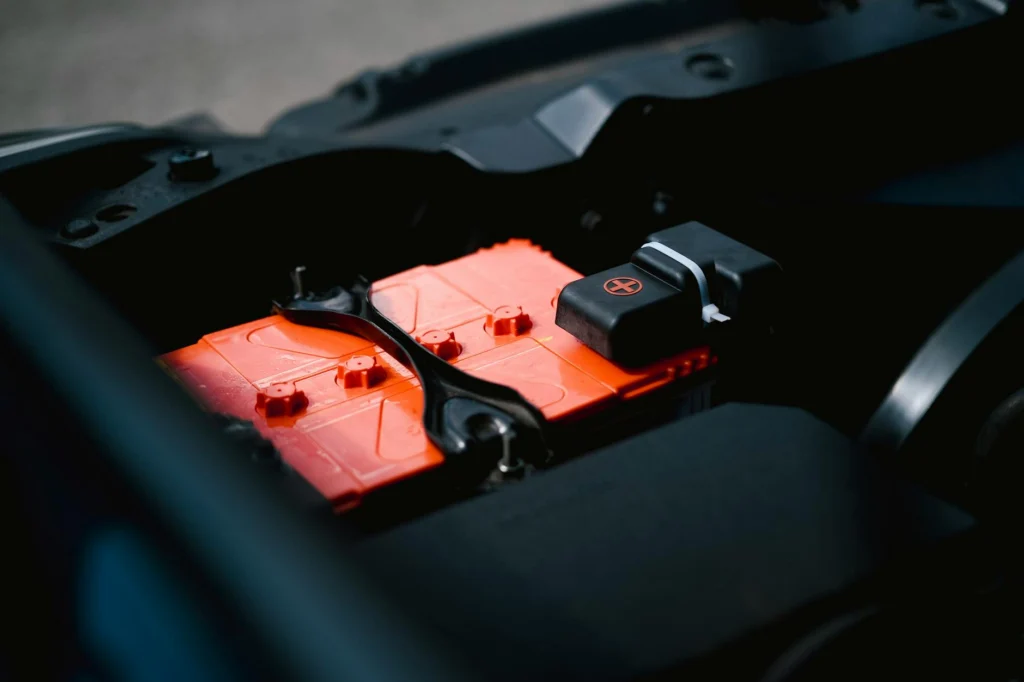
In April 2026, CATL announced a battery that it says stores 350 watt-hours per kilogram of cell mass and sets a new record for mass-produced batteries.[s] That number matters because it determines how far an electric vehicle can travel before the battery’s weight becomes the limiting factor. The boss asked about the commercial state of the art, so here’s the full picture: what the claimed record means, why it took this long, and what the numbers actually look like once the cells get bolted into a car.
CATL’s New EV Battery Energy Density Claim
CATL’s Qilin Condensed Battery is specified at 350 Wh/kg at the cell level and 760 Wh/L in volumetric terms.[s] CATL says this enables a sedan to travel 1,500 km on a single charge, with the full battery pack weighing under 650 kg.
The previous commercial benchmark for high-energy NMC cells sat around 255 Wh/kg.[s] The jump to 350 Wh/kg represents a 37% improvement in gravimetric EV battery energy density within a single product generation.
Three engineering changes enabled this leap:
- A high-nickel cathode paired with a silicon-carbon anode, which together contribute an additional 50 Wh/kg over previous chemistries.
- A “condensed” electrolyte system that replaces liquid electrolyte, reducing leakage and combustion risks tied to liquid systems.
- An aerospace-grade titanium alloy casing that is 60% thinner and 30% lighter than conventional steel, adding another 20 Wh/kg through structural efficiency.[s]
CATL’s aviation division validated similar technology at 500 Wh/kg in test flights on 4-tonne electric aircraft.[s] The passenger-car version is specified at 350 Wh/kg.
How This Compares to Other Commercial Batteries
Understanding how lithium-ion batteries work helps contextualize these numbers. Energy density describes how much charge a battery can hold relative to its weight (gravimetric, Wh/kg) or volume (volumetric, Wh/L). Higher density means longer range without adding mass.
Here’s where major commercial and announced EV batteries stood in spring 2026:
- CATL Qilin Condensed (NMC + condensed electrolyte): 350 Wh/kg cell, announced in 2026 as a mass-produced-battery record.
- CATL 3rd-gen Qilin (NMC): 280 Wh/kg cell, 1,000 km range, supports 10C fast charging.[s]
- BYD Blade 2.0 Long Blade (LMFP): up to 210 Wh/kg reported at system level, a roughly 40% improvement over the original Blade.[s]
- CATL Freevoy (LFP-NCM hybrid): 230 Wh/kg, designed for plug-in hybrids.[s]
- Standard LFP cells: 160 Wh/kg for CATL’s LFP Qilin; lower-cost but nearing theoretical limits.[s]
- CATL Naxtra (sodium-ion): 175 Wh/kg, entering GWh-scale production by end of 2026.[s]
Cell vs. Pack: The Gap That Headlines Ignore
Manufacturers quote cell-level energy density because the numbers are higher. But what actually sits in your car is a pack, containing cells, cooling systems, structural housing, wiring, and battery management electronics. All that infrastructure adds weight.
Typical pack-level EV battery energy density for 2024-2026 production vehicles lands in the range of 150-200 Wh/kg, depending on chemistry and packaging efficiency.[s] At 75% pack mass efficiency, a 350 Wh/kg cell would yield about 262 Wh/kg at pack level before real-world cooling, BMS, and structural tradeoffs.
This is why a 350 Wh/kg cell does not translate directly to twice the range of a 175 Wh/kg sodium-ion cell. The gap narrows once packaging overhead is factored in.
What About Solid-State?
Solid-state batteries promise even higher energy density by replacing the liquid or gel electrolyte entirely with a solid material. This could theoretically push past 400 Wh/kg while improving safety and enabling faster charging.
Toyota has been working toward solid-state batteries for over a decade, with commercial launch now targeted for 2027-2028 after multiple delays.[s] Factorial Energy demonstrated solid-state cells in a Mercedes test vehicle that achieved 745 miles on a single charge in September 2025.[s]
At the 2026 Beijing Auto Show, several Chinese manufacturers exhibited batteries claiming energy densities exceeding 400 Wh/kg.[s] These are prototype or semi-solid designs, not yet validated for mass production at scale.
Battery makers have historically struggled to produce solid-state batteries at commercially relevant volumes.[s] Independent verification, durability data, and cost-per-kWh figures remain open questions for most solid-state claims.[s]
Why LFP Hit a Wall
Lithium iron phosphate (LFP) batteries dominate the lower-cost EV segment because they avoid expensive nickel and cobalt. They also resist battery degradation better than high-nickel chemistries under certain conditions, charging to 100% with less stress on the cells.
But LFP is approaching its theoretical energy density ceiling.[s] CATL’s Chief Scientist Wu Kai stated at Super Technology Day that LFP is now “better suited for a technology roadmap centered on extreme fast charging” rather than further density improvements.
BYD’s response has been to shift toward LMFP (lithium manganese iron phosphate), which raises the voltage platform from 3.2V to 3.8V and pushes cell-level density to 210 Wh/kg.[s] This bridges some of the gap with NMC while retaining LFP’s cost and safety advantages.
The Bottom Line
The leading mass-produced-battery claim for commercial EV battery energy density in 2026 is 350 Wh/kg at the cell level, from CATL’s Qilin Condensed Battery. The 3rd-gen Qilin NMC reaches 280 Wh/kg with faster charging; BYD’s LMFP Blade 2.0 is reported at up to 210 Wh/kg at system level. Most production EV packs, however, still land between 150-200 Wh/kg after integration.
Solid-state technology may push past 400 Wh/kg by the late 2020s, but scalable manufacturing remains unproven. For now, condensed electrolyte systems are a nearer-term path to significantly higher range without the production challenges of true solid-state.
Current EV Battery Energy Density Claims
CATL’s Qilin Condensed Battery achieves 350 Wh/kg gravimetric and 760 Wh/L volumetric cell-level energy density.[s] CATL describes those figures as a new record for mass-produced batteries.
The cell architecture combines:
- High-nickel NMC cathode (exact stoichiometry undisclosed)
- Silicon-carbon composite anode with low expansion coefficient
- Condensed electrolyte system replacing conventional liquid electrolyte
- Aerospace-grade titanium alloy casing
The silicon-carbon anode and high-nickel cathode contribute approximately 50 Wh/kg over previous-generation chemistries. The titanium casing adds another 20 Wh/kg through mass reduction: 60% thinner walls, 30% lower casing mass, triple the tensile strength per unit.[s]
CATL’s previous-generation Qilin cells with NMC chemistry achieved 255 Wh/kg; LFP variants reached 160 Wh/kg.[s]
Commercial EV Battery Energy Density Landscape
Understanding how lithium-ion batteries work at the cell level is essential for interpreting manufacturer claims. Gravimetric energy density (Wh/kg) measures charge capacity per unit mass; volumetric density (Wh/L) measures capacity per unit volume. Both matter differently depending on vehicle architecture.
Current commercial offerings:
- CATL Qilin Condensed: 350 Wh/kg cell, 760 Wh/L. Condensed electrolyte. Announced in 2026 as a mass-produced-battery record.
- CATL 3rd-gen Qilin: 280 Wh/kg cell. NMC chemistry. 10C charge rate, 3 MW peak pack power, 625 kg pack mass.[s]
- BYD Blade 2.0 Long Blade: up to 210 Wh/kg reported at system level. LMFP chemistry, 3.8V nominal voltage, 3C charge rate.[s]
- BYD Blade 2.0 Short Blade: 160 Wh/kg cell. LMFP optimized for power density. 8C charge, 16C discharge.[s]
- CATL Freevoy gen-2: 230 Wh/kg. LFP-NCM gradient mix at powder level. 1.5 MW peak power.[s]
- CATL Naxtra (Na-ion): 175 Wh/kg cell. Hard carbon anode. GWh-scale production by end 2026.[s]
Cell-to-Pack Integration Losses
Pack-level energy density for 2024-2026 production EVs ranges from 150-200 Wh/kg depending on cell format, thermal management requirements, and structural integration approach.[s]
Cell-to-pack (CTP) designs eliminate intermediate module housings, improving volumetric utilization to approximately 72% for CATL’s Qilin architecture. Cell-to-body (CTB) integration, as in BYD’s Blade 2.0, pushes this to 76% by using the pack as structural floor.[s]
A 350 Wh/kg cell in a CTP design with 75% mass efficiency yields approximately 262 Wh/kg at pack level. Real-world figures depend on cooling system mass, BMS hardware, and structural safety margins.
Solid-State and Semi-Solid Progress
Solid-state batteries replace liquid electrolyte with solid ion conductors (sulfides, oxides, or polymer composites). Theoretical advantages include higher energy density (absence of separator/electrolyte mass), improved safety (no flammable liquids), and potentially faster ionic transport at elevated temperatures.
Toyota targets commercial solid-state cells for 2027-2028 after repeated delays from an initial 2020 target.[s] Manufacturing challenges include electrolyte-electrode interface stability, sulfide sensitivity to moisture, and dendrite formation at high current densities.
Factorial Energy’s solid-state cells powered a Mercedes test vehicle to 745 miles on a single charge in September 2025.[s] Quantumscape is testing automotive-grade cells with partners; commercial production is targeted for late decade.
At Beijing Auto Show 2026, several Chinese OEMs exhibited cells claiming 400+ Wh/kg, though these are semi-solid or prototype designs without published cycle-life data or independent verification.[s][s]
LFP Density Limits and LMFP Transition
CATL says LFP is “nearing its theoretical energy density limit” and is now best positioned for fast-charging optimization rather than density gains.[s]
Battery degradation profiles differ by chemistry. LFP cells tolerate higher states of charge without accelerated capacity fade, making them suitable for applications prioritizing longevity over density.
LMFP substitutes manganese for a portion of iron, raising the operating voltage from 3.2V to 3.8V and increasing energy density compared with pure LFP. BYD’s Blade 2.0 Long Blade is reported at up to 210 Wh/kg through this chemistry.[s]
Aviation Validation
CATL’s electric aviation program has validated 500 Wh/kg cells in test flights on 4-tonne aircraft, with testing ongoing on aircraft exceeding 8 tonnes.[s] These aviation cells use similar condensed electrolyte technology but with different thermal management and power density requirements than automotive applications.
Summary
CATL’s leading mass-produced-battery claim for commercial EV battery energy density is 350 Wh/kg cell-level (Qilin Condensed). Pack-level density for production vehicles remains 150-200 Wh/kg. Solid-state cells may reach 400+ Wh/kg by late decade, but manufacturing scalability is unproven. Near-term density improvements will likely come from condensed electrolyte systems and LMFP chemistries rather than true solid-state.