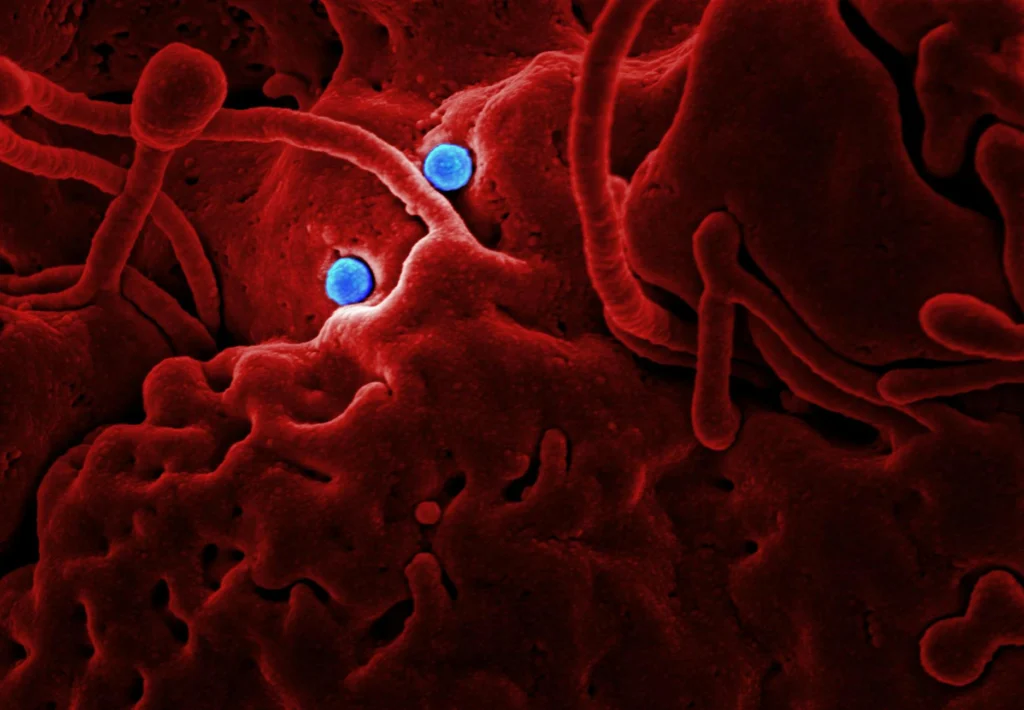
The 1918 influenza pandemic infected 25 to 30 percent of the world’s population and killed an estimated 40 million people[s]. Then, seemingly as suddenly as it arrived, it faded. By summer 1919, the deadliest respiratory pandemic in recorded history had largely burned itself out. Understanding the epidemic ending mechanisms that drove this transition reveals why some outbreaks vanish entirely while others settle into permanent residence among us.
Epidemics do not end in a single way. The pathways through which infectious diseases cease their explosive spread fall into four broad categories: natural burnout through population immunity, transition to an endemic state, deliberate eradication through vaccination and public health measures, and medical control that transforms a fatal disease into a manageable condition. Each pathway has shaped the trajectory of major outbreaks throughout human history.
When Diseases Run Out of Fuel
The simplest epidemic ending mechanism is what epidemiologists call natural burnout. A disease spreads rapidly when most people are susceptible to infection. But as more people become infected and either die or recover with immunity, the virus gradually runs out of new hosts. The basic reproduction number, or R0, measures how many people one infected person typically infects in a fully susceptible population[s]. When enough people become immune, R0 effectively drops below 1, and each generation of infections produces fewer new cases than the last.
The 1918 flu followed this pattern. With a mortality rate exceeding 2.5 percent (compared to less than 0.1 percent for typical flu strains[s]), the pandemic killed 675,000 Americans and reduced U.S. life expectancy by more than ten years[s]. Yet by 1920, it had transformed into a milder seasonal illness. The virus did not disappear; it evolved through a process called antigenic drift, accumulating mutations that made it less deadly while the surviving population carried antibodies that blunted its impact[s].
The Black Death offers an even more dramatic example. Between 1346 and 1353, bubonic plague killed approximately 50 to 60 percent of Europe’s population[s]. The sheer scale of death, combined with changes in living conditions that reduced contact between rats and humans, eventually slowed transmission[s]. Plague did not vanish from Europe for another three centuries, but it never again reached the catastrophic levels of the initial pandemic.
Epidemic Ending Mechanisms: The Endemic Transition
Not all epidemics burn out completely. Many transition to an endemic state, where the pathogen maintains a stable presence in the population at a much lower level than during the epidemic phase[s]. This happens when transmission neither explodes nor fades away: the effective reproduction number hovers around 1, with new infections roughly replacing those who recover or die.
The four seasonal coronaviruses that circulate today likely followed this path. One of them, OC43, probably caused the Russian flu epidemic of 1889 to 1890. During the initial outbreak, the disease was severe in adults. Over time, it evolved into the mild common cold virus we know today[s]. This pattern reflects a key characteristic of coronaviruses: immunity wanes over time, so people can be reinfected every few years, unlike measles, which typically confers lifelong protection[s].
The endemic state represents a kind of equilibrium. New susceptible individuals enter the population through birth, and previously immune individuals lose protection as their antibodies decline. The virus persists indefinitely, causing regular but manageable waves of illness rather than explosive outbreaks.
Deliberate Eradication: The Smallpox Model
Smallpox stands alone as the only human disease ever deliberately eradicated. Declared eliminated in 1980, it was the first disease fought on a truly global scale[s]. The successful campaign revealed important lessons about epidemic ending mechanisms and the limits of vaccination alone.
Before 1967, the World Health Organization pursued a strategy of mass vaccination, aiming to immunize 80 percent of the population. But this approach had problems. Even in regions where the 80 percent target was achieved, outbreaks continued. In 1973, India met its vaccination goal yet still recorded 88,114 smallpox cases that year[s].
The breakthrough came from a shift in strategy. Rather than pursuing blanket vaccination, health workers adopted surveillance and containment. Teams identified new cases, then vaccinated everyone in close contact with infected individuals, creating a ring of immunity around each outbreak. This targeted approach proved far more effective than mass vaccination in densely populated areas[s].
Smallpox had characteristics that made eradication possible: no animal reservoir (it spread only between humans), visible symptoms that made cases easy to identify, and a highly effective vaccine. Most diseases lack this combination, which is why smallpox remains the only human disease we have eliminated entirely.
Medical Control: Transforming Fatal to Manageable
When a disease cannot be eradicated or allowed to burn out naturally without unacceptable deaths, a fourth pathway emerges: medical control. HIV/AIDS exemplifies this approach. Between 1981 and 2022, the virus killed an estimated 33 million people worldwide[s]. In the early years, an HIV diagnosis was effectively a death sentence.
The development of antiretroviral therapy transformed HIV from a fatal diagnosis to a manageable chronic condition. Today, these treatments avert approximately 1.5 million deaths annually[s]. The virus has not been eradicated, and infections continue, but the relationship between humans and HIV has fundamentally changed. This represents one of the modern epidemic ending mechanisms: not eliminating the pathogen, but neutralizing its lethality.
Why Understanding These Pathways Matters
Each epidemic ending mechanism carries different costs and timelines. Natural burnout can happen quickly but may require mass casualties before population immunity builds. Endemic transition preserves human life but accepts permanent disease presence. Eradication demands enormous coordination and resources. Medical control requires ongoing investment in treatment infrastructure.
The Columbian Exchange demonstrates the stakes of uncontrolled disease spread. When European diseases reached the Americas after 1492, the Native American population fell from an estimated 54 million to 5.6 million by 1600: a reduction of approximately 90 percent[s]. Without immunity or medical intervention, populations can face catastrophic burnout.
Modern public health gives us choices our ancestors lacked. We can pursue eradication where feasible, develop treatments where elimination is impossible, and implement social measures to slow spread while waiting for medical solutions. The epidemic ending mechanisms available to us have expanded dramatically, though each still involves trade-offs between speed, cost, and human toll.
Population Immunity and R0 Dynamics
The mathematical foundation of epidemic ending mechanisms rests on the basic reproduction number, R0: the expected number of secondary infections from a single case in a completely susceptible population[s]. When R0 exceeds 1, infections grow exponentially. When the effective reproduction number (R) falls below 1, the epidemic declines. The relationship between these values determines the herd immunity threshold: the proportion of the population that must be immune to halt transmission.
The herd immunity threshold follows the formula 1-1/R0[s]. For COVID-19, with an estimated R0 between 2 and 2.5, this translates to 50 to 60 percent. For measles, with an R0 between 12 and 18, approximately 95 percent immunity is required. These calculations assume homogeneous mixing; real populations show heterogeneous contact patterns that can lower or raise actual thresholds[s].
The 1918 H1N1 pandemic illustrates natural burnout dynamics. The virus infected 25 to 30 percent of the global population with a case fatality rate exceeding 2.5 percent, compared to less than 0.1 percent for typical influenza strains[s]. CDC researchers found that 99 percent of excess mortality occurred in individuals under 65 years old[s]. This W-shaped mortality curve distinguishes pandemic from seasonal influenza, which shows U-shaped mortality concentrated in infants and the elderly.
Post-pandemic, the H1N1 virus did not vanish. It evolved through antigenic drift until 1957, when it was replaced by the H2N2 pandemic strain via antigenic shift (reassortment of entire gene segments). In 1968, H3N2 replaced H2N2 through another shift event[s]. Both successor viruses descended from the 1918 agent, demonstrating that pandemic viruses often become endemic rather than disappearing entirely.
Endemic Equilibrium and Immunity Waning
Epidemic ending mechanisms that produce endemic states depend on the interplay between transmission dynamics and immunity duration. An endemic state occurs when the pathogen maintains stable circulation at lower prevalence than during the epidemic phase, with the effective reproduction number averaging 1[s]. New susceptibles enter through birth, immigration, or immunity waning, balanced by new infections.
Coronaviruses demonstrate this pattern through their immunological characteristics. Unlike measles, which typically induces lifelong sterilizing immunity, coronavirus immunity wanes over time, permitting reinfection every few years[s]. This has implications for modeling: the simple herd immunity concept that applies to measles does not translate directly to coronaviruses, where immunity is transient.
Researchers distinguish three components of immune efficacy: IES (reduction in susceptibility), IEI (reduction in infectiousness if infected), and IEP (reduction in pathology). These components wane at different rates. IES typically declines faster than IEP, creating a window where reinfection is possible but disease is mild[s]. This explains why the Russian flu of 1889 to 1890, likely caused by coronavirus OC43, was severe during the initial pandemic but became a mild common cold agent over subsequent decades[s].
Eradication: Beyond Herd Immunity
The smallpox eradication campaign revealed that achieving herd immunity thresholds through vaccination does not guarantee disease elimination. Before 1967, WHO targeted 80 percent vaccination coverage based on estimated R0 values. India achieved this goal in 1973 yet recorded 88,114 cases that year[s]. Continued transmission correlated strongly with population density[s].
The shift to surveillance-containment strategy proved decisive. Rather than blanket vaccination, this approach identified cases through active surveillance and created rings of immunity around each outbreak through targeted vaccination of contacts[s]. This targeted epidemic ending mechanism succeeded where mass vaccination failed, particularly in densely populated regions.
For comparison, rinderpest (a cattle disease related to measles) is the only infectious disease eradicated through herd immunity alone. The tissue culture rinderpest vaccine provided lifelong immunity after a single dose, protected against all variants, and showed no adverse reactions[s]. Global eradication was declared in 2011. No human disease vaccine matches these characteristics, explaining why smallpox required the combined surveillance-containment approach.
Medical Intervention as Epidemic Ending Mechanism
When eradication is infeasible and natural burnout unacceptable, therapeutic intervention can functionally end an epidemic by severing the link between infection and death. HIV demonstrates this pathway. The virus has killed an estimated 33 million people since 1981, but antiretroviral therapy now prevents approximately 1.5 million deaths annually[s].
This represents a distinct category among epidemic ending mechanisms: the pathogen persists, transmission continues, but the disease relationship has fundamentally changed. Early HIV infection carried near-certain mortality; contemporary infection with treatment access is compatible with normal life expectancy. The epidemic, defined by mass mortality, has ended even though the virus remains endemic.
The third plague pandemic (1894 to 1960) illustrates another form of medical control. The pandemic spread globally via steamship and railroad, killing millions in India[s]. Today, Yersinia pestis remains present in rodent populations worldwide, but improved sanitation, public health surveillance, and antibiotics have reduced human plague to a few hundred cases annually, concentrated in impoverished regions without healthcare infrastructure.
Implications for Emerging Pathogens
Understanding epidemic ending mechanisms shapes public health strategy for novel pathogens. The Columbian Exchange demonstrates worst-case natural burnout: Native American populations fell from 54 million to 5.6 million (approximately 90 percent reduction) within a century of European contact[s]. No immunity, no treatment, no public health infrastructure: the epidemic ended only when susceptible populations were devastated.
Modern options include vaccination campaigns, antiviral development, non-pharmaceutical interventions, and combinations thereof. Each epidemic ending mechanism involves trade-offs. Pursuing eradication requires vaccines with specific characteristics and massive coordination. Medical control demands sustained healthcare investment. Natural burnout and endemic transition may accept ongoing morbidity and mortality as the cost of avoiding more active intervention.
The trajectory of any epidemic depends on pathogen biology, population structure, available interventions, and societal choices about acceptable costs. The 1918 pandemic killed 40 million people before population immunity ended its acute phase. Smallpox eradication required decades of global cooperation. HIV control relies on continuous treatment access. No single pathway applies universally; effective epidemic response requires matching strategy to circumstances.