In 1941, audiences watched Humphrey Bogart play a career criminal seeking redemption in High Sierra, and something shifted. They weren’t supposed to root for him, but they did anyway. This moment marked a turning point in the anti-hero film evolution, a transformation that would unfold over 85 years and fundamentally alter our relationship with morally grey protagonists. Today, we eagerly follow drug lords, mob bosses, and killer clowns through their descents into darkness, and the question worth asking is: how did we get here?
What Defines the Anti-Hero Film Evolution
An anti-hero is a narrative protagonist who lacks the qualities of a conventional hero[s]. They may lack the strong morals, courage, or selflessness that we associate with heroes. Anti-heroes often feel rejected by society, and veer down a self-destructive path that results in isolation or death. The history of the anti-hero can be traced all the way back to the 2nd millennium B.C. with the Epic of Gilgamesh[s], but cinema transformed the archetype into something audiences actively cheered for rather than merely observed.
In the early days of cinema, audiences were presented with clear-cut heroes who embodied ideal traits such as courage, morality, and a sense of justice[s]. Characters like George Bailey from It’s a Wonderful Life or Atticus Finch in To Kill a Mockingbird were moral beacons, unwavering in their principles. The anti-hero film evolution would dismantle this formula piece by piece.
Film Noir and the Cynical Detective
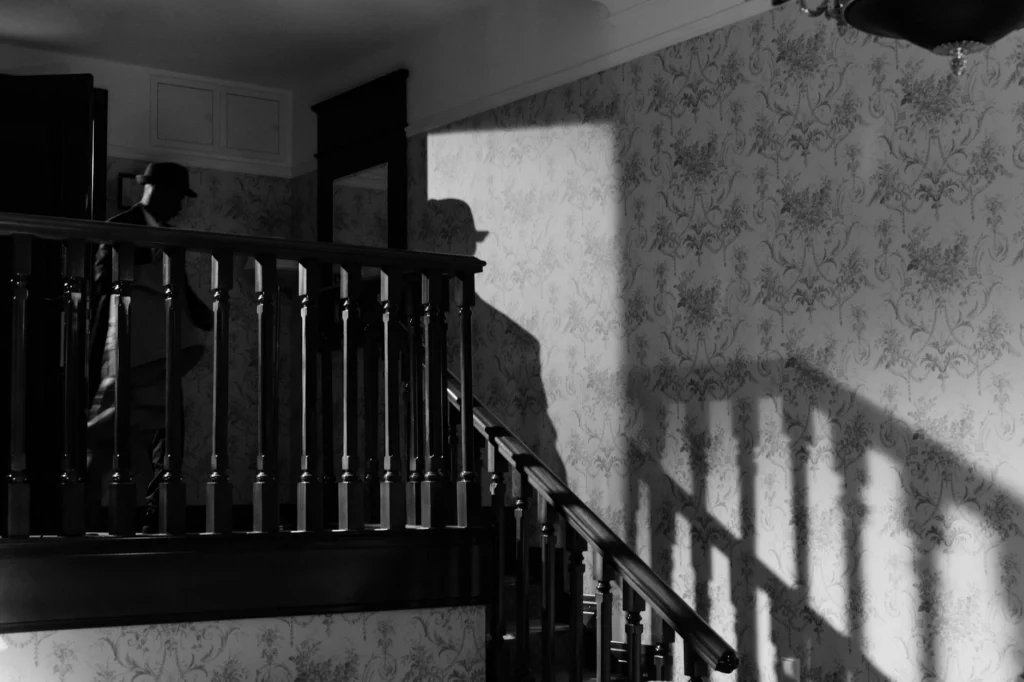
The 1940s birthed film noir, and with it came a new kind of protagonist. Bogart’s coolly cynical demeanour meant he was the perfect fit for film noir, so it’s apt that the peak years of his career (1941 to 1957) span almost the entirety of noir’s golden era[s]. The Maltese Falcon introduced the quintessential Bogart persona: a cynical detective who has seen it all and trusts no one, but holds out just a little bit of hope that there’s still some good to be found in a world he knows is rotten to the core[s].
High Sierra heralds the end of the gangster picture, with its black and white, Hays Code-adherent morality, and the rise of the trickier film noir anti-hero, pulled from the shadows and into the service of good[s]. The film’s inescapable ending, in which Bogart’s “Mad Dog” must pay for his crime, only serves to enhance our sympathy for him, and compound the tragedy of his demise[s]. This paradox would become central to the anti-hero film evolution: enforced punishment making audiences sympathize more, not less.
New Hollywood and the Pathology of Loneliness
The 1970s brought a seismic shift. Directors rejected traditional heroes and embraced complicated, morally compromised characters navigating systems designed to destroy them. No film captures this transformation better than Taxi Driver (1976).
Screenwriter Paul Schrader conceived Travis Bickle as an inexorable force: “He is a raw male force, driving forward; toward what, one cannot tell… The clock spring cannot be wound continually tighter. As the Earth moves towards the Sun, Travis Bickle moves towards violence”[s]. Schrader drew from his own breakdown to create the character, describing his central metaphor: “The man who will take anybody any place for money; the man who moves through the city like a rat through the sewer; the man who is constantly surrounded by people, yet has no friends. The absolute symbol of urban loneliness”[s].
What began as a story about loneliness revealed itself to be something darker. “What I learned while writing the script is that this was about a man who suffered from the pathology of loneliness. He wasn’t lonely by nature, he was lonely as a defense mechanism”[s]. This anti-hero film evolution insight, that isolation could be a psychological strategy rather than a circumstance, would influence every damaged protagonist who followed.
Television’s Golden Age: The Sopranos Effect
When The Sopranos premiered in 1999, television transformed overnight. Before Tony Soprano walked down his driveway to fetch the newest issue of The Star-Ledger, TV was a place where audiences went for reliable low-stakes stories, where the good guys delivered their heroic moments week in and week out, while the bad guys stayed in their predictable bad-guy lanes[s].
James Gandolfini’s performance changed everything. With every dastardly deed Tony committed on screen, Gandolfini offset his evil with a flawed sense of hopeful humanity that audiences could relate to. His performance, as villainous as it was empathetic, flipped the script on the small-screen formula of how dramas could work[s]. This was the anti-hero film evolution brought to the living room, stretched across multiple seasons, allowing audiences unprecedented time to develop complicated feelings for complicated people.
Every antihero who has graced TV in the last 20 years can find commonality with Tony Soprano in one way or another[s]. Don Draper, Dexter Morgan, Walter White: they all carry pieces of that mob boss seeking therapy.
Breaking Bad: Engineering Complicity
Breaking Bad refined the anti-hero formula into something approaching science. The show’s genius lay in how it manipulated audience sympathy over time. As the series progressed, this sympathy evolved into a more critical perspective. Audiences grappled with conflicting emotions as Walter’s actions became increasingly unethical. His transformation from a mild-mannered family man to a ruthless drug lord forced viewers to question their initial support[s].
The psychological mechanics were deliberate. The show presented Walter’s motivations and inner conflicts, allowing audiences to understand his choices even as they disagreed with them. This psychological insight fostered a sense of complicity, as viewers found themselves rooting for Walter’s success in illegal ventures[s].
Breaking Bad’s impact on television storytelling cannot be overstated. It paved the way for more shows featuring morally ambiguous lead characters, proving that audiences could handle, and even prefer, narratives that explore the ethical gray areas of human behavior[s]. The anti-hero film evolution had demonstrated that complexity sells.
Joker and the Contemporary Anti-Hero
Todd Phillips’ Joker (2019) brought the anti-hero film evolution full circle, explicitly drawing from the same 1970s New Hollywood tradition that birthed Travis Bickle. Phillips and his co-screenwriter Scott Silver have taken as their inspiration gritty ’70s dramas by the likes of Sidney Lumet and Martin Scorsese, whose urban parables of crime and corruption elevated characters like Al Pacino’s Sonny in Dog Day Afternoon and Robert De Niro’s Travis Bickle in Taxi Driver to mythic status[s].
Arthur Fleck stands before us not as a grand villain but as a pathetic specimen of raw human damage. Even as we’re drinking in his screw-loose antics with shock and dismay, there’s no denying that we feel something for him, a twinge of sympathy, or at least understanding[s]. The film creates a dazzlingly disturbed psycho morality play, one that speaks to the age of incels and mass shooters and no-hope politics, of the kind of hate that emerges from crushed dreams[s].
The 1970s anti-heroes who railed against a broken system or societal defects rallied audiences despite their crimes. They sought to make themselves larger in a world where they felt otherwise crushed[s]. Phoenix’s Arthur Fleck similarly feels crushed by a society in which violence and nihilism reign, but unlike those ’70s anti-heroes, Fleck isn’t attracted to defeating forces of violence and nihilism[s]. He becomes them.
Why We Connect with Morally Grey Characters
Academic research confirms what 85 years of anti-hero film evolution suggests: we’re increasingly drawn to moral ambiguity. A longitudinal study of American action films over 50 years found a strong positive correlation between the immoral actions of hero-type characters throughout the period[s]. The grey areas of morality point to characters having a more ambiguous nature, commonly called anti-heroes[s].
The popularity of the antihero isn’t merely a trend; it’s a reflection of our evolving attitudes towards heroes and villains. As society grows more complex, so too do our stories. We seek characters who mirror the multifaceted nature of being human[s].
What the Anti-Hero Film Evolution Reveals
From Bogart’s fedora to Walter White’s pork pie hat, the anti-hero film evolution tracks something more significant than shifting fashion. It documents our collective reckoning with moral absolutism. The clear-cut heroes of early cinema reflected a society that believed, or wanted to believe, in uncomplicated virtue. Each subsequent wave of anti-heroes, from film noir detectives through New Hollywood loners to prestige TV kingpins, revealed audiences increasingly skeptical of simple morality.
We haven’t abandoned heroes entirely. But we’ve stopped believing they need to be good to be worth following. That shift, accumulated over 85 years of cinema, says as much about us as it does about the characters we’ve made famous.