The Qatar LNG crisis is now Europe’s problem. Iranian missile and drone strikes have knocked out 17 percent of Qatar’s liquefied natural gas export capacity, forced the world’s largest LNG producer to declare force majeure on contracts supplying Europe and Asia, and sent European benchmark gas prices to their highest level in over three years. Repairs will take three to five years. Europe, which replaced Russian pipeline gas with seaborne LNG after 2022, is now discovering what happens when that replacement supply sits within range of Iranian ballistic missiles.
What Happened
The strikes came in two waves. On March 2, Iranian drones hit Qatar’s Ras Laffan Industrial City and a power plant in Mesaieed, prompting QatarEnergy to halt all LNG production as a precaution. On March 18, following an Israeli strike on Iran’s South Pars gasfield, Tehran launched a larger missile attack on Ras Laffan, causing what QatarEnergy described as “extensive damage” and “sizeable fires” across multiple facilities.
The second wave was the one that mattered. Two of Qatar’s 14 LNG processing trains and one of its two gas-to-liquids plants were destroyed, removing 12.8 million tonnes of annual LNG production from the market. QatarEnergy’s CEO, Saad al-Kaabi, put the revenue loss at $20 billion per year and the replacement cost at $26 billion. For context, Ras Laffan produces roughly 20 percent of the world’s LNG supply.
Why the Qatar LNG Crisis Hits Europe Hardest
When Russia cut pipeline gas deliveries in 2022, Europe pivoted hard to LNG imports. That pivot worked: by 2024, the EU’s fossil fuel import bill had fallen from its 2022 peak of €693 billion back to €376 billion. But it left the continent dependent on seaborne gas for roughly 40 percent of its supply, much of it transiting the Strait of Hormuz.
Qatar supplies about 10 percent of the EU’s LNG imports. That sounds manageable until you look at which countries are most exposed. Italy sources 36 percent of its LNG from Qatar. Belgium sources 24 percent. Both are now covered by QatarEnergy’s force majeure declaration, meaning contracted deliveries are legally suspended indefinitely.
The TTF benchmark, Europe’s main gas price indicator, tells the story in numbers. Before the conflict, it sat around €31 per megawatt hour. After the March 2 strikes, it averaged €45. After the March 18 attack, it hit €68. That is more than double the pre-crisis price, and analysts project it could reach €80 if outages extend beyond 12 weeks.
The Wider Energy War
Qatar’s LNG hub is not the only target. Iran has struck energy infrastructure across the Gulf, including the UAE’s Fujairah port, which was designed as an oil export route bypassing the Strait of Hormuz. Saudi Arabia intercepted four ballistic missiles aimed at Riyadh and two toward its eastern oil region. The UAE dealt with 13 ballistic missiles and 27 drones.
The Strait of Hormuz itself, through which roughly one-fifth of global oil and LNG transits, is effectively blocked. The combination of direct infrastructure damage and shipping disruption has created a supply squeeze with no near-term solution.
Who Benefits
American LNG exporters. Cheniere Energy’s stock rose 5.5 percent after the first strikes. US firms including ExxonMobil, Chevron, and Venture Global LNG are positioned to fill the gap, alongside Australia’s Woodside Energy and European majors Shell and TotalEnergies. The crisis has accelerated a market shift that was already underway: buyers diversifying away from Middle Eastern suppliers toward US Gulf Coast terminals.
What Comes Next
Even if hostilities ended today, Europe would face a difficult spring and summer. The continent needs to inject roughly 60 billion cubic meters of gas during the refill season to meet winter storage targets. With Qatari supply offline and Hormuz shipping disrupted, that gas will have to come from US exports, Norwegian pipelines, and whatever spot cargoes can be diverted from Asian buyers willing to be outbid.
The oil price shock adds a second layer of pain. Brent crude briefly touched $119 per barrel before settling lower after Israeli Prime Minister Netanyahu said Israel would help reopen the strait. Whether that amounts to more than rhetoric remains to be seen.
In the first ten days of the conflict alone, the rise in fossil fuel prices cost European consumers an estimated €2.5 billion, according to the energy think tank Ember. If the pattern of the 2022 crisis repeats, that number will compound through higher electricity bills, industrial input costs, and inflationary pressure on everything from fertilizer to food.
Europe spent three years and hundreds of billions of euros weaning itself off Russian gas. It succeeded. But the replacement supply chain runs through one of the most volatile regions on Earth, past a chokepoint Iran can threaten, and into facilities that have now been proven vulnerable to missile attack. The infrastructure diversified. The risk did not.
The Strikes: Timeline and Damage Assessment
The US-Israeli military campaign against Iran began on February 28, 2026. The Qatar LNG crisis that followed stems from Iran’s retaliatory strikes on energy infrastructure across the Gulf, delivered in two distinct waves.
March 2: Two Iranian drones struck Qatar. One targeted a water tank at a power plant in Mesaieed; the other hit an energy facility at Ras Laffan Industrial City. No casualties were reported. QatarEnergy, the world’s largest LNG producer, immediately ceased all production at both sites as a precautionary measure. The same day, Saudi Arabia reported two drones “attempted to attack” its Ras Tanura refinery, causing limited damage after interception.
The market reaction was immediate. The Dutch TTF natural gas benchmark surged nearly 50 percent. Asian LNG prices jumped approximately 39 percent. Oil prices rose as much as 13 percent intraday, climbing above $82 per barrel. The S&P Global Energy Japan Korea Marker sat at $15.068 per million British thermal units.
March 18: Following an Israeli strike on Iran’s South Pars gasfield, Tehran launched a significantly larger missile attack on Ras Laffan. Qatar’s Ministry of Foreign Affairs reported “fires resulting in significant damage.” QatarEnergy subsequently confirmed that “several other LNG facilities had also been attacked, causing sizeable fires and extensive further damage.”
The damage toll from the second wave: two of Qatar’s 14 LNG trains and one of two gas-to-liquids facilities destroyed. Annual production loss: 12.8 million tonnes, roughly 17 percent of Qatar’s total LNG export capacity. QatarEnergy CEO Saad al-Kaabi estimated the annual revenue loss at $20 billion, with unit replacement costs of $26 billion. Repairs will take three to five years. Al-Kaabi noted: “For production to restart, first we need hostilities to cease.”
QatarEnergy declared force majeure on long-term LNG contracts serving Italy, Belgium, South Korea, and China. Qatar expelled Iranian military and security attachés, declaring them persona non grata.
Across the wider region on March 18, Saudi Arabia intercepted four ballistic missiles toward Riyadh and two toward its eastern oil province. The UAE’s defense systems engaged 13 ballistic missiles and 27 drones from Iran. France’s President Macron called for “a moratorium on strikes targeting civilian infrastructure, particularly energy and water supply facilities.”
Why Ras Laffan Matters: The Geography of Global Gas
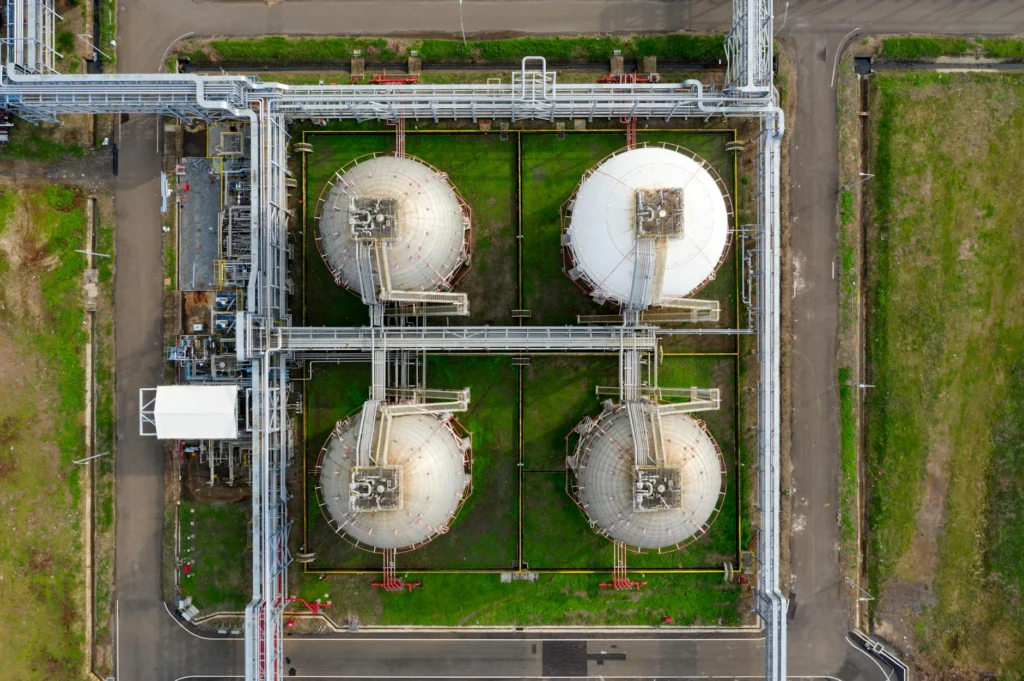
Ras Laffan Industrial City, 80 kilometers northeast of Doha, is the world’s largest LNG production facility. It processes gas from the North Field, Qatar’s portion of a reservoir it shares with Iran (where the Iranian side is called South Pars). The combined field spans 9,700 square kilometers and is the largest natural gas deposit on Earth.
Ras Laffan produces approximately 20 percent of global LNG supply. It is the anchor of a market that has grown increasingly critical since the 2022 Russian gas cutoff forced Europe to pivot from pipeline gas to seaborne LNG. Understanding how energy commodity markets actually work helps explain why damage to a single facility can ripple across continents: LNG is a global market where cargoes are diverted to the highest bidder, meaning a supply shock in Qatar is felt simultaneously in Rotterdam, Tokyo, and Mumbai.
The irony is structural. Iran and Qatar extract gas from the same geological reservoir. Iran consumes most of its South Pars output domestically (the field provides 80 percent of Iran’s natural gas needs) and exports roughly a third of Iraq’s gas requirements. Qatar, by contrast, built a global export empire on its share. When Israel struck South Pars, the direct impact on global supply was limited. When Iran struck Ras Laffan in retaliation, it hit the nerve center of global LNG trade.
Europe’s LNG Dependency: The Post-2022 Vulnerability
Europe’s energy architecture was redesigned after Russia’s invasion of Ukraine. Russian pipeline gas, once supplying roughly 40 percent of EU demand, was replaced primarily by LNG imports, pipeline flows from Norway, and demand reduction. The strategy worked financially: the EU’s fossil fuel import bill peaked at €693 billion in 2022 (up from €313 billion in 2021) and fell to €376 billion by 2024.
But it created a new dependency. LNG now accounts for approximately 40 percent of Europe’s gas supply. Qatar provides about 10 percent of EU LNG imports, equivalent to roughly 5 percent of all EU fossil gas consumption. The aggregate figure obscures acute national exposures: Italy sources 36 percent of its LNG from Qatar, Belgium 24 percent, according to first-half 2025 trade data cited by the energy think tank Ember.
The price transmission is not uniform across Europe. In Italy, gas-fired power plants set the electricity price in 89 percent of trading hours. In Spain, the figure is 15 percent. When gas prices double, Italian electricity bills respond almost one-to-one. Spanish bills barely move. This structural divergence means the crisis will hit southern and central European economies hardest.
Ember estimates the first ten days of the conflict added €2.5 billion to EU fossil fuel import costs. For comparison, the 2022 crisis saw import costs more than double over the full year. The trajectory is familiar.
The Strait of Hormuz: Chokepoint Under Pressure
The strikes on Ras Laffan are compounded by disruption to the Strait of Hormuz, through which approximately one-fifth of global oil and LNG transits. Iran has effectively restricted passage, adding a shipping disruption to the direct infrastructure damage.
This creates a dual supply squeeze. Even undamaged Qatari LNG trains cannot export if tankers cannot safely transit the strait. The UAE’s Fujairah port, built specifically as a Hormuz bypass for oil exports, was itself struck by Iran, closing that workaround.
Oil markets are responding accordingly. Brent crude briefly touched $119 per barrel on March 19 before pulling back after Israeli Prime Minister Netanyahu suggested Israel would help reopen the strait. The practical timeline for reopening remains unclear.
Winners and Losers
The immediate beneficiaries are non-Gulf LNG exporters. US firms are positioned to capture market share: Cheniere Energy shares rose 5.5 percent following the initial disruption. Venture Global LNG, Sempra Infrastructure (operating the Cameron LNG terminal in Louisiana), and Freeport LNG in Texas all stand to gain from redirected demand. Australia’s Woodside Energy and European majors Shell and TotalEnergies are similarly positioned.
The geopolitical implications of the Qatar LNG crisis are significant. As energy analyst Ed Cox noted, it “starkly highlights to LNG buyers the value of having supply diversified away from the Middle East.” This accelerates a trend already underway: long-term contract diversification toward US Gulf Coast and Australian suppliers. For Europe, it also raises uncomfortable questions about whether the sanctions architecture built to punish Russia has left the continent more vulnerable to a different energy shock.
The losers, beyond European consumers, include downstream economies in South and Southeast Asia. India, Pakistan, and Bangladesh have already experienced curtailments from diverted cargoes. Countries that depend on spot LNG purchases rather than long-term contracts are the most exposed.
The Storage Problem
Europe enters this crisis in a worse position than 2022 in one critical respect: timing. The continent needs to inject roughly 60 billion cubic meters of gas during the spring and summer refill season to meet winter storage targets. With Qatari supply offline, Hormuz traffic disrupted, and Asian buyers competing for the same alternative cargoes, meeting those targets will require a combination of higher prices (to attract diverted supply), reduced industrial demand, and favorable weather.
Gas-fired power cost increases of over 50 percent within the first ten days, as Ember documented, will feed through to industrial competitiveness. European manufacturers in chemicals, fertilizers, and heavy industry, already under pressure from higher energy costs since 2022, face another round of margin compression. The political consequences of the Qatar LNG crisis compounding into a second energy-driven cost-of-living crisis, barely four years after the first, are difficult to overstate.
The Structural Lesson of the Qatar LNG Crisis
Europe replaced a pipeline dependency on an adversary with a seaborne dependency on a conflict zone. The 2022 playbook (diversify suppliers, build LNG terminals, reduce demand) was sound as far as it went. But it assumed the new supply chain would be more resilient than the old one. That assumption rested on Ras Laffan being untouchable and the Strait of Hormuz remaining open. Both assumptions failed within the same month.
The deeper problem is that LNG infrastructure concentrates risk. A pipeline network has many entry points and can be rerouted. A single LNG mega-facility is a target. Qatar’s expansion plans (the North Field expansion was set to increase capacity by 85 percent by 2030) now look like they were adding concentration risk rather than reducing it.
The only genuine hedge against this kind of shock is reduced gas consumption: renewables, efficiency, electrification, and storage. Europe knows this. Whether the Qatar LNG crisis will accelerate that transition faster than 2022 did is the question that will define the continent’s energy security for the next decade.