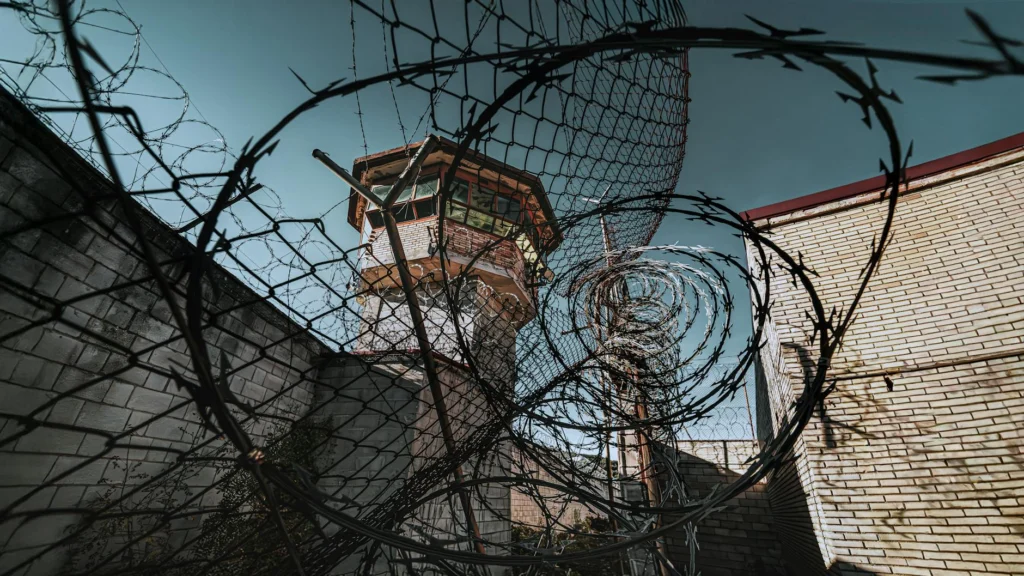
The Department of Homeland Security is putting billions into a secondary “Smart Wall” border project that blends physical barriers with surveillance technology. Reporting by KJZZ says the federal government has spent $8 billion on the secondary wall project so far, even as internal memos reveal that more than 30% of existing camera towers were inoperable in 2024 and government-funded studies show the technology may actually be hurting apprehension rates.[s][s]
In October 2025, DHS and Customs and Border Protection announced 10 contracts awarded in September 2025 totaling $4.5 billion for what they call the “Smart Wall,” a system that combines steel barriers with cameras, sensors, and artificial intelligence.[s] The contracts will add 230 miles of physical barriers and nearly 400 miles of border surveillance technology, making the pivot from concrete and steel to silicon and algorithms official policy.
What the Smart Wall Actually Is
CBP describes the Smart Wall as “a border security system that combines steel barriers, waterborne barriers, patrol roads, lights, cameras, and advanced detection technology.”[s] The emphasis on “advanced detection technology” reflects a significant shift in spending priorities.
In Arizona, a $1.4 billion contract awarded to Fisher Sand and Gravel covers 19 miles of physical wall alongside 136 miles of detection technology[s]: a roughly seven-to-one ratio of surveillance infrastructure to barriers. The federal government has spent $8 billion on the secondary wall project so far, with substantially more allocated through ongoing appropriations.[s]
The Funding Pipeline for Border Surveillance Technology
Defense One reported that the “One Big Beautiful Bill Act,” passed in July 2025, directed $2.7 billion to upgrade border surveillance technology along the northern, southern, and maritime borders.[s] The enacted H.R. 1 text also appropriated $6.168 billion for border security, technology, and screening, including upgrades to border surveillance technologies.[s]
The White House’s FY2027 budget proposal requests $96.6 million to support a network of 890 autonomous surveillance towers, with 95 expected to be built in the coming year.[s] Four vendors have passed CBP’s “autonomy test” for these systems, according to Commissioner Rodney Scott’s congressional testimony.[s]
The major contractors include Anduril, which received more than $360 million in December 2025[s], and General Dynamics Information Technology (GDIT), which holds a seat on a $1.8 billion contract to modernize the Integrated Surveillance Tower program.[s] These privatized security systems represent a fundamental shift in how the government approaches border enforcement.
The Track Record: 30% Inoperable, Negative Impact on Apprehensions
Internal Border Patrol memos revealed that more than 30% of camera towers were inoperable in 2024.[s] A DHS-funded study found “strong evidence” that the Integrated Fixed Towers program was actually having a negative impact on apprehension levels at the border.[s]
A 2020 RAND Corporation study found that the placement of towers in certain locations “actually hindered the ability of agents to apprehend people, as crossers would go out of their way to avoid them.”[s] RAND cautioned that interpretation was ambiguous, noting strong evidence that some migrants were deterred from crossing surveilled areas — meaning lower observed apprehensions in deployment zones may partly reflect displacement rather than worse enforcement capability.
“I have noticed a cycle,” said Dave Maass, director of investigations at the Electronic Frontier Foundation. “The Department of Homeland Security or CBP will announce a program, give it a cool title like America’s Shield Initiative or the Secure Border Initiative and then a few years later, an inspector general report, a House Oversight report, or a Government Accountability Office report will come out saying the whole thing was a waste of money.”[s]
585 Towers and Counting
The Electronic Frontier Foundation has documented at least 585 autonomous surveillance towers along the U.S.-Mexico border, including many in Arizona.[s] Dave Maass told AZFamily that Border Patrol had announced plans to install 1,500 more over the next few years. DHS plans to install AI upgrades in 148 existing towers this year and add another 50 next-generation ones.[s]
Reports describe newer towers ranging from 80 to 180 feet tall and monitoring 6 to 10 miles of terrain. Some newer GDIT systems run on solar power, while the San Diego deployment uses 5G and Starlink satellite communications; the systems are designed to operate with minimal human oversight. The AI systems can distinguish humans from animals and identify people carrying backpacks or rifles.[s][s]
GDIT has deployed 203 of its own towers along both borders, surveilling 566 miles. In San Diego, roughly two dozen autonomous towers line the boundary from the Pacific coast to Rancho del Campo.[s]
Biometric Expansion: Smart Glasses and Mobile Identification
The surveillance buildout extends beyond towers. The DHS Science and Technology Directorate’s FY2027 budget includes plans to “develop an operational prototype of smart glasses that enables biometric identification of illegal aliens.”[s]
The Border Security and Immigration section of the S&T budget requests $16 million for Biometrics and Identity Management, $6 million for Biometric Emerging Concepts, and $10 million for Biometrics and Identity Screening.[s]
What emerges from the FY2027 budget is “not a series of isolated pilot programs, but a department-wide effort to make biometric identification more mobile, more routine, and more deeply embedded in the everyday mechanics of security screening, border management, and immigration enforcement.”[s]
The agency’s plans also include a $1 billion blanket purchase agreement with Palantir, alongside investments in mobile tracking systems and tools from vendors like Cellebrite and Paragon Solutions.[s]
Privacy Concerns: Watching Border Communities
For privacy advocates, the towers represent pervasive tracking systems that monitor American residents rather than border crossers.
“The government has sold out American citizens and made us a product that they get for free,” Maass said. “We’re actually paying Anduril for the privilege of them taking our data.”[s]
Maass said the towers are located in public parks, next to communities, and over neighborhoods. He said AI systems can lead to people being stopped, detained, or having their possessions seized based on what the technology identifies as suspicious patterns.[s]
“Living at the border is not a crime,” Maass said. “Technology is not going to lessen civil liberties abuses. It’s only going to enhance them.”[s]
The License Plate Reader Dragnet
Beyond the towers and border surveillance technology, the U.S. Border Patrol has built what the ACLU characterizes as “a nationwide dragnet driver-surveillance system.”[s] The agency uses automated license plate readers to track vehicles across highways from the southern border to Illinois and Michigan.
A former CBP official told the Associated Press that the agency develops pattern-of-life analysis about people to detect when they deviate from their normal routines in suspicious ways.[s] This surveillance technique, originally developed for aerial mass surveillance during the Iraq war, has been brought home.
Former officials told the Associated Press that the Border Patrol has hidden details of its license plate reader program for years, even proposing to drop charges rather than risk revealing program details.[s]
Oversight Collapse
DHS is ramping up surveillance spending while oversight mechanisms deteriorate. Privacy Impact Assessment filings dropped to just eight in 2025 after a 2024 peak of 24, with none filed so far in 2026.[s]
The DHS inspector general has accused the agency of obstructing audits of biometric data management and immigration enforcement activities.[s] This mirrors the historical pattern of surveillance state infrastructure expanding faster than the accountability mechanisms meant to constrain it.
What Comes Next
The September 2025 border surveillance technology contracts were “the very first to be funded by President Trump’s One Big Beautiful Bill.”[s] Billions more are in the pipeline. As enacted in July 2025, the law bars Section 90004 funds from buying or deploying surveillance towers along the southwest and northern borders unless CBP has tested and accepted them for autonomous capabilities. It defines “autonomous” as a system designed to “apply artificial intelligence, machine learning, computer vision, or other algorithms to accurately detect, identify, classify, and track items of interest in real time.”[s]
Whether the next generation of AI-enabled towers will perform better than the 30% of camera towers that broke down in 2024 remains an open question. Government reports and studies suggest skepticism is warranted. What is certain is that border surveillance technology has become a multi-billion-dollar industry with powerful constituencies invested in its continuation, regardless of whether it achieves its stated goals.