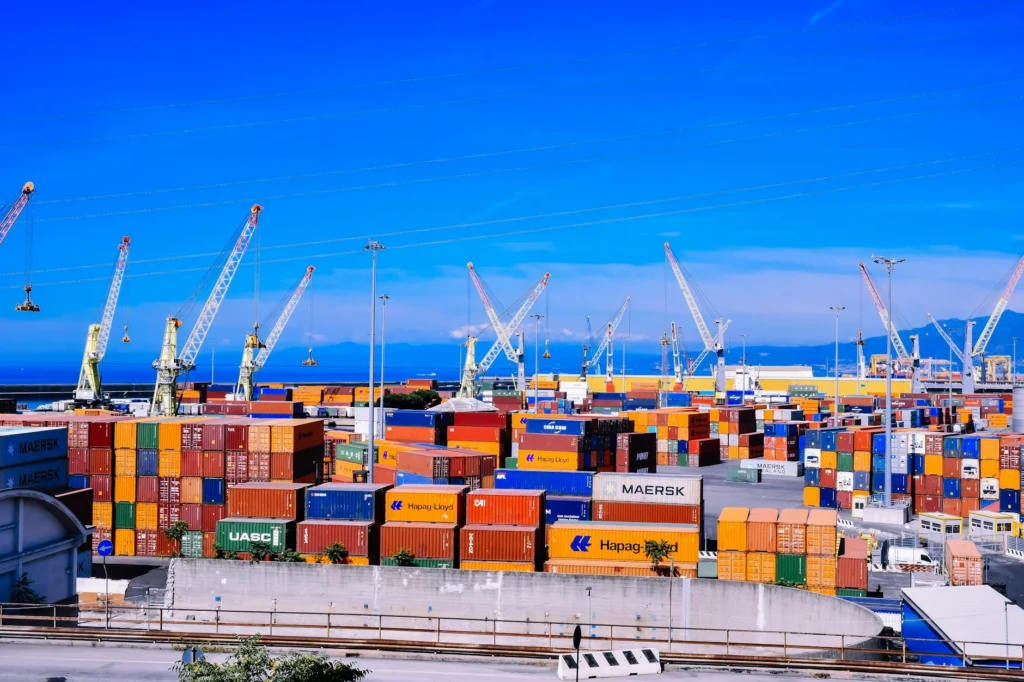
During the Smoot-Hawley era, world trade declined by some 66% between 1929 and 1934.[s] The year was 1930. The legislation was Smoot-Hawley. The result was a tariff war collapse that worsened the Great Depression-era trade contraction. In 2025, U.S. tariff collections and rates reached postwar highs, reviving the parallel.[s]
This is not hyperbole. By September 2025, the average statutory tariff rate in the United States had climbed to between 18% and 20%, while the effective rate reached 9.7%.[s] The Smoot-Hawley Act of 1930 produced an effective rate of 19.8%.[s] In August 2025, economist Paul Krugman called Trump’s trade policy “the second coming of the 1930 Smoot-Hawley tariff, effectively reversing the results of 90 years of trade liberalization.”[s]
By May 2026, however, the legal footing had shifted. The Supreme Court had ruled that the administration could not use the International Emergency Economic Powers Act to impose reciprocal tariffs, and the Tax Foundation estimated that the temporary replacement tariffs and sector-specific tariffs left the weighted average applied tariff rate at 11.7% while the temporary Section 122 tariff remained in effect.[s] On May 7, 2026, a U.S. Court of International Trade panel also ruled the 10% across-the-board tariff illegal as applied to the plaintiffs, while those tariffs remained in place for other importers through July and the administration was expected to appeal.[s]
The danger is not merely historical rhyme. The modern global economy is more interconnected, more fragile, and more dependent on supply chain infrastructure than the trading system of the 1930s. A tariff war collapse today would cascade through logistics networks that did not exist in 1930, touching every sector from semiconductors to pharmaceuticals to food.
What Smoot-Hawley Actually Did
The Smoot-Hawley Tariff Act was not designed to trigger a global depression. It was pork-barrel politics dressed as economic policy. Senator Reed Smoot and Representative Willis Hawley championed tariff increases to help struggling farmers, but once the legislative process began, every industry lobbied for protection. The result was higher tariffs across thousands of product categories.[s]
Harvard economist Richard Cooper later called it “the most disastrous single mistake any U.S. president has made in international relations.”[s] Sir Arthur Salter, writing in 1932 as the damage unfolded, declared it “a turning point in world history” for unleashing the protectionism that destroyed world trade.[s]
The numbers tell the story. U.S. imports from Europe fell from $1,334 million in 1929 to $390 million by 1932. U.S. exports to Europe dropped from $2,341 million to $784 million.[s] U.S. total exports collapsed from $5.2 billion in 1929 to $1.7 billion by 1933, devastating agriculture and manufacturing. Farm prices dropped nearly 50%, pushing thousands of family farms into foreclosure.[s]
The mechanism was retaliation. Within two years, some two dozen countries adopted similar “beggar-thy-neighbour” duties.[s] Research on French bilateral tariff data shows that retaliatory penalties against trading partners added an additional 7.5 percentage points to tariffs, reducing imports from targeted countries by roughly 20%.[s] Contemporary newspapers documented a shift in public discourse as retaliatory sentiment gained momentum, marking what historian Haim Shamir called the “Franco-British trade war.”[s]
Smoot-Hawley became the symbol of beggar-thy-neighbor policies precisely because it demonstrated how unilateral protectionism spirals into multilateral collapse.[s] Each country’s attempt to protect its own industries made every other country worse off, which prompted further retaliation, which made everyone worse off again. The tariff war collapse fed on itself.
The 2025 Parallel
The escalation since January 2025 has followed a disturbingly similar script. Tariffs began with targeted measures against China, adding 20 percentage points, then expanded to Canada and Mexico. Steel, aluminum, automobiles, copper, and hundreds of other products faced successive increases. “Reciprocal tariffs” hit nearly all trading partners.[s]
By April 2025, tariffs on Chinese goods reached 145%, while China imposed 125% tariffs on American imports.[s] U.S. imports and exports with China fell more than 25% by the end of 2025.[s] China’s share of U.S. imports, which peaked at 21% in 2017, had fallen to approximately 9% by late 2025, a level last seen when China joined the WTO in 2001.[s]
The Banque de France noted that “the increase in US tariffs since the beginning of 2025 has put an end to a long period of falling barriers to trade that began at the end of the Second World War.”[s] Tariff revenues surged to $24.2 billion in May 2025, contributing to inflationary pressure on consumers.[s]
Trade policy researchers at Harvard and Dartmouth concluded that “US trade policies in the past eight years have thus effectively unwound the preceding two decades of deepening US-China trade ties.”[s] The comparison to Smoot-Hawley is “not just academic,” as one legal analysis put it, “it is urgent.”[s]
Why Modern Logistics Make Collapse Worse
The 1930s trading system moved raw materials and finished goods. The modern system moves components through supply chains so complex that a single product may cross borders dozens of times before reaching consumers. This interconnection creates efficiency, but it also creates fragility. The tariff war collapse of the 1930s disrupted bilateral trade flows. A modern tariff war collapse would shatter supply networks that took decades to build.
Consider that global shipping and logistics “remain the physical backbone of international trade,” but have “moved from being a background function to becoming a strategic boardroom issue.”[s] Maritime chokepoints that already strain global logistics, from the Suez Canal to the Strait of Malacca, add geographic vulnerability to policy-induced disruption. Any U.S. decoupling from China “could reach its limits in the next decade since the two economies are still greatly interdependent.”[s]
The World Trade Organization’s March 2026 outlook revised that picture. It estimated that merchandise trade volume grew 4.6% in 2025, above the WTO’s October forecast of 2.4%, and projected growth to slow to 1.9% in 2026 before picking up to 2.6% in 2027.[s] The reason was not that tariffs stopped mattering: the WTO said surging demand for AI-related goods offset the negative effects of higher tariffs and trade policy uncertainty in 2025, while North American imports were marked by frontloading ahead of anticipated tariff increases.[s]
This is not a clean resilience story; it is a delayed adjustment. The WTO’s March 2026 report said the one-off push from frontloading “will likely not be reproduced,” even though trade policy uncertainty remained historically high.[s] Sourcing decisions made by firms today “are poised to reshape global supply chain activity for years to come.”[s]
The Distributional Trap
The 1930s tariff war collapse hurt everyone, but it did not hurt everyone equally. Farmers, who were supposed to benefit from Smoot-Hawley, saw prices collapse as export markets vanished. The same asymmetry characterizes the current moment.
Krugman argues that modern tariffs constitute “mostly a class war against middle- and lower-income Americans rather than a trade war against other countries. The hit from his tariffs to the typical family is much bigger than the hit to GDP.”[s] Tariffs function as a consumption tax that falls hardest on those who spend the largest share of income on goods. And once prices rise, they rarely fall; the “ratchet effect” in pricing means tariff-induced increases tend to persist even if the tariffs are later removed.
The structural vulnerability extends beyond prices. Trade analyst Entellus International observes that “while global trade has expanded in value, it has also become increasingly vulnerable in structure. That is the real story of 2025.”[s] The world “has not entered a new golden age of trade. It has entered a new age of trade complexity, a structural transition.”[s]
The Counterargument
Defenders of the policy argue that China specifically needed to be confronted, that the trade relationship was exploitative, and that some short-term pain is necessary to rebalance global production. There is merit to the concern that China has flouted WTO commitments and used industrial policy in ways that disadvantaged competitors.
But Smoot-Hawley was also justified as necessary medicine. Its sponsors promised protection for workers and farmers. What they delivered was a tariff war collapse that devastated the very industries protectionism was meant to save. The mechanism of retaliation does not care about the original justification. Once tariffs escalate, trading partners respond in kind, and the spiral becomes self-sustaining.
The Carnegie Endowment argued in 2024 that “both China and the United States have an interest in preserving much of their economic relationship.”[s] That interest has not prevented either side from imposing triple-digit tariffs. Stated interests and revealed behavior are diverging, which is exactly what happened in 1930.
What Should Change
The tariff war collapse of the 1930s ended only when the policy framework changed. The Reciprocal Trade Agreements Act of 1934 transferred tariff-setting authority from Congress to the executive branch, enabling bilateral negotiations that gradually lowered barriers. The postwar multilateral system, GATT and then the WTO, institutionalized the principle that trade disputes should be resolved through negotiation rather than unilateral escalation.
That framework is now under strain. The current approach has relied heavily on bilateral pressure and tariff leverage, even as courts have narrowed parts of the tariff program and negotiations have produced truces rather than a stable settlement.[s] Without a return to coordinated policy, the retaliation spiral has no natural stopping point.
The 1930s offer a warning, not a prediction. A tariff war collapse is not inevitable, but the conditions that produce one are accumulating. Tariff rates reached postwar highs in 2025 and remain elevated in 2026.[s] Retaliation and export controls have not disappeared.[s] Supply chains are fracturing.[s] Logistics networks that enable modern trade are under stress. The frontloading that boosted 2025 trade is unlikely to be repeated.[s]
When historians assess this moment, they will ask why policymakers who could see the parallel did not act to prevent it. The answer, if current trends continue, will be the same one that explained Smoot-Hawley: politics made it easier to escalate than to coordinate.
This article is for informational purposes only and does not constitute professional advice.