Soap chemistry explains why a substance invented thousands of years ago remains an important defense against the spread of disease. The mechanism is elegant: soap molecules have split personalities, attracted to both water and oil simultaneously. This dual nature lets them do something neither water nor oil can do alone.
Understanding soap chemistry starts with a single molecule. Each soap molecule is pin-shaped, with a head that loves water (hydrophilic) and a tail that hates it (hydrophobic)[s]. The head bonds eagerly with water molecules; the tail shuns water and prefers to link up with oils and fats. This amphiphilic structure, present in all surfactants, is what makes soap work.
How Soap Chemistry Destroys Pathogens
When you wash your hands, soap performs two distinct jobs. The first is mechanical removal: soap molecules surround dirt, oil, and pathogens, lifting them off your skin so water can rinse them away. The second is chemical destruction: soap tears apart the protective membranes of certain bacteria and viruses[s].
Many dangerous pathogens, including coronaviruses, HIV, hepatitis B and C, herpes, Ebola, and Zika, are wrapped in lipid envelopes[s]. These fatty outer layers are the virus’s armor. But they’re also its weakness. The hydrophobic tails of soap molecules wedge themselves into these lipid envelopes, prying them apart. “They act like crowbars and destabilize the whole system,” explained Prof. Pall Thordarson, acting head of chemistry at the University of New South Wales[s].
Once the envelope ruptures, essential viral proteins spill out, and the virus can no longer infect cells.
Micelles: Soap’s Molecular Cages
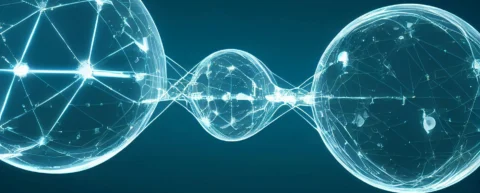
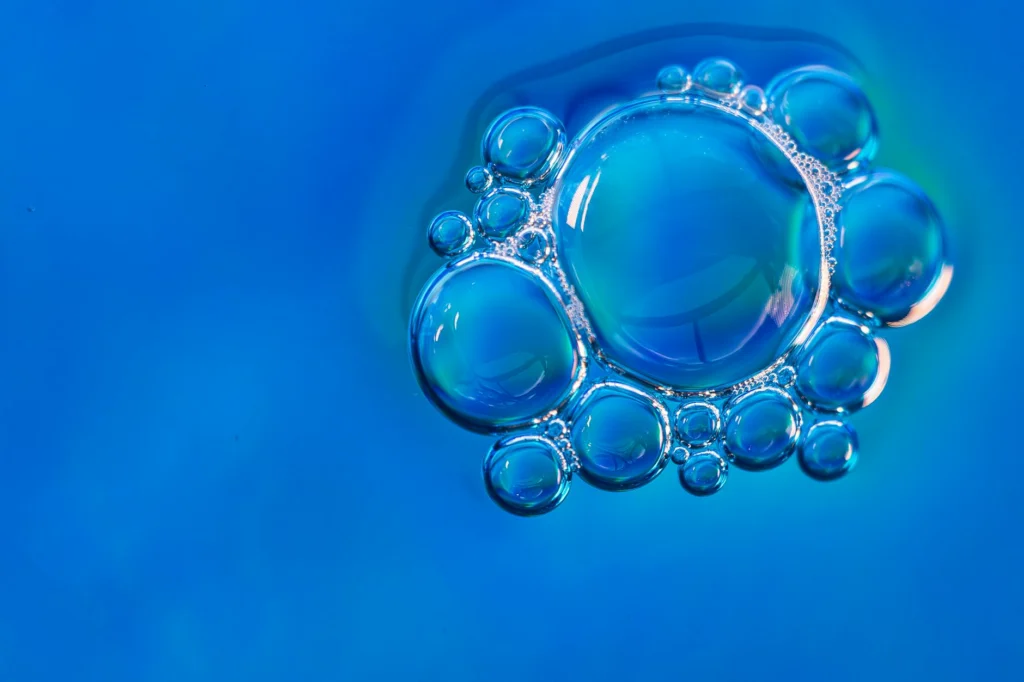
In water, soap molecules don’t stay isolated for long. Their water-fearing tails cluster together to avoid contact with water, while their water-loving heads face outward. The result is a tiny sphere called a micelle, with tails tucked inside and heads forming the outer shell[s].
Micelles act as molecular cages. Dirt, oil, and fragments of destroyed pathogens get trapped inside, suspended in the water until you rinse them away[s]. This encapsulation is why rinsing matters: the micelles carry away what soap has captured.
Why 20 Seconds Matters
Public health guidance calls for at least 20 seconds of handwashing[s]. This isn’t arbitrary. Soap chemistry takes time: lathering, solvation, micelle formation, scrubbing, and rinsing all contribute to removing contamination[s]. Shorter washes can leave more contamination behind.
Soap Beats Hand Sanitizer
Alcohol-based sanitizers work similarly to soap, destabilizing lipid membranes. But they can’t mechanically remove pathogens from skin, and they are less reliable against certain resilient microbes, including organisms associated with meningitis, pneumonia, and the common cold[s]. Soap, through vigorous scrubbing and rinsing, can help expel even these resistant organisms.
The Antibacterial Soap Myth
For decades, manufacturers added antibacterial agents like triclosan to soap, promising extra protection. Studies found no additional sanitizing benefit[s]. Worse, triclosan promoted bacterial resistance. In 2016, the FDA issued a final rule under which 19 active ingredients, including triclosan, could no longer be marketed in nonprescription consumer antiseptic wash products[s]. Plain soap’s amphiphilic chemistry was already doing the job.
Soap chemistry describes the behavior of amphiphilic surfactant molecules at interfaces between polar and nonpolar phases. The mechanism of pathogen inactivation operates through two orthogonal pathways: physical displacement via micelle encapsulation, and chemical disruption of lipid bilayer membranes[s].
Amphiphilic Molecular Structure
Soap molecules are carboxylate salts of long-chain fatty acids, produced through saponification: the base-catalyzed hydrolysis of triglycerides. The reaction proceeds as: Triglyceride + 3 NaOH → Glycerol + 3 Soap Molecules[s]. Sodium hydroxide yields hard bar soaps; potassium hydroxide produces softer, more water-soluble formulations suitable for liquid products[s].
Each resulting molecule contains a polar carboxylate head (hydrophilic) and a nonpolar hydrocarbon tail (hydrophobic). The soap chemistry that enables cleaning depends on this amphiphilic architecture. The balance between hydrophilic and hydrophobic portions is described by the Hydrophile-Lipophile Balance (HLB) value, which relates to a surfactant’s solubility and behavior[s].
Surface Tension and the Critical Micelle Concentration
At low concentrations, surfactant molecules migrate to the air-water interface, disrupting the strong cohesive forces between water molecules. The intermolecular forces between surfactant and water are weaker than the forces between water molecules, reducing surface tension[s]. This reduction in surface tension allows water to wet surfaces more effectively, penetrating crevices in skin texture.
Above a threshold concentration called the Critical Micelle Concentration (CMC), the interface saturates. Additional surfactant molecules aggregate into micelles rather than further reducing surface tension[s]. The CMC represents the concentration at which soap transitions from surface activity to bulk encapsulation behavior.
Pathogen Inactivation via Membrane Disruption
Enveloped viruses, including SARS-CoV-2, influenza, HIV, and Ebola, possess lipid bilayer membranes derived from host cells. These membranes are structurally similar to micelles: two layers of amphiphilic phospholipids with hydrophobic tails facing inward[s]. Embedded glycoproteins enable receptor binding and cell entry.
Soap chemistry exploits this structural vulnerability. Hydrophobic tails of free soap molecules intercalate into the viral lipid envelope, disrupting bilayer continuity. The soap effectively dissolves the envelope within and among soap micelles[s].
When envelope integrity fails, receptor-binding proteins lose their structural context. The virus can no longer initiate infection. Enveloped viruses are, in fact, the most susceptible class of microorganisms to chemical inactivation[s].
Dual Mechanism: Removal and Inactivation
Hand washing with soap and water operates through orthogonal pathways[s]. Mechanical removal displaces pathogens, dirt, and organic load from skin. Chemical inactivation destroys the infectivity of enveloped viruses. The 20-second minimum contact time recommended by public health guidance reflects the time needed for lathering, solvation, rubbing, and rinsing[s][s].
Limitations: Non-Enveloped Pathogens and Sanitizer Comparison
Soap chemistry is less effective against non-enveloped viruses and certain bacteria protected by protein-sugar capsules. Rhinoviruses, adenoviruses, poliovirus, and hepatitis A lack lipid envelopes and resist surfactant-mediated lysis[s]. Against these organisms, mechanical removal through vigorous scrubbing and rinsing remains the primary defense.
Alcohol-based sanitizers (≥60% ethanol) destabilize lipid membranes similarly to soap but cannot mechanically remove pathogens. CDC guidance says soap and water is the best way to get rid of germs in most situations, and notes that hand sanitizer does not kill Clostridioides difficile spores[s][s].
The Triclosan Failure
Triclosan, an antibacterial agent once present in 93% of liquid, gel, or foam soaps sold in the U.S., inhibits the bacterial enzyme enoyl-acyl carrier protein reductase (FabI). Studies demonstrated no additional sanitizing benefit over plain soap[s]. Triclosan also induced bacterial resistance via target site modification. The FDA published a final rule in September 2016 under which 19 active ingredients, including triclosan, were ineligible for inclusion in over-the-counter consumer antiseptic wash products[s]. The soap chemistry of amphiphilic disruption was the active mechanism; the additive did not add demonstrated skin-sanitizing benefit.