The Trump administration issued a 30-day Russia oil sanctions waiverTemporary authorization to conduct transactions or commerce normally prohibited under economic sanctions, issued by a government agency. on March 12 authorizing the sale of Russian crude oil and petroleum products loaded onto vessels before that date. The license, issued by the Treasury Department’s Office of Foreign Assets Control, runs through April 11. The stated purpose: stabilize energy markets sent into chaos by the US-Israeli war on Iran, which has shut down the Strait of Hormuz and removed roughly 10 million barrels per day from global supply.
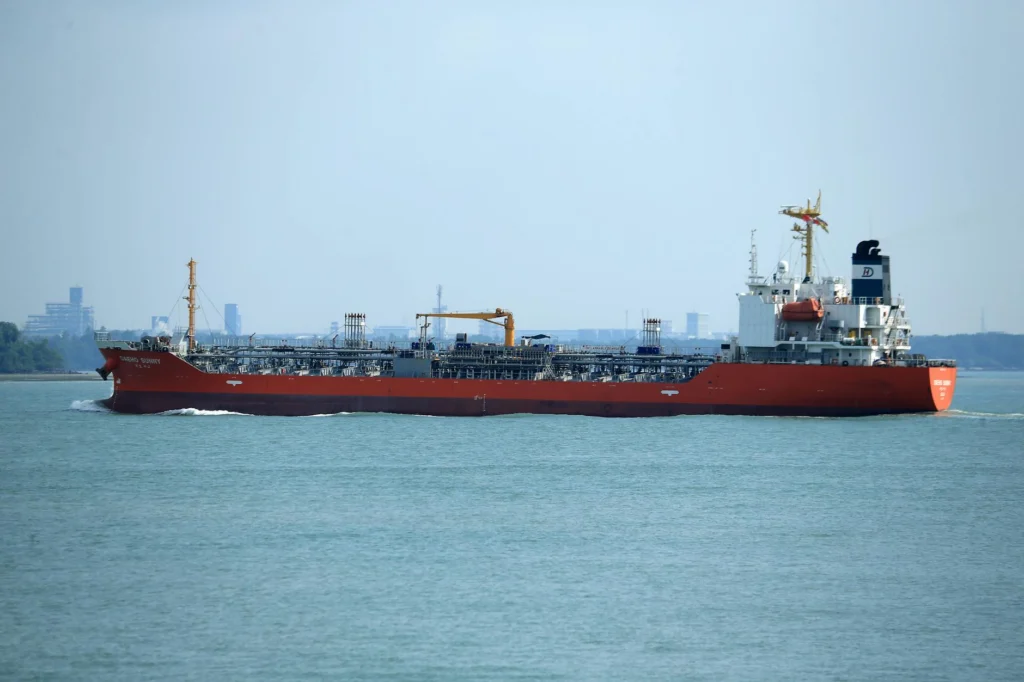
The Russia oil sanctions waiver covers an estimated 124 to 128 million barrels of Russian oil currently stranded at sea on sanctioned vessels, including Russia’s so-called shadow fleetOlder, uninsured tankers used to evade international sanctions by operating outside official shipping registries and insurance markets. of older, uninsured tankers that have been evading Western sanctions since 2022. Any country may now purchase those cargoes without penalty for the next 30 days.
The decision arrived less than 24 hours after Putin’s economic envoy Kirill Dmitriev met with White House special envoy Steve Witkoff, Trump’s son-in-law Jared Kushner, and Federal Acquisition Service Commissioner Josh Gruenbaum in Florida. Dmitriev, who also serves as CEO of Russia’s Direct Investment Fund, called the discussion “productive.” Witkoff confirmed the meeting and said “the teams discussed a variety of topics and agreed to stay in touch.”
Russia Was Already Winning Before the Waiver
The Iran war’s effect on oil prices had already handed Moscow an economic windfall before Washington signed the license. Russian Urals crudeRussian crude oil benchmark and pricing reference; a standard grade used in international commodity markets to set prices and terms. has risen by more than $30 per barrel since the conflict began on February 28, generating an estimated additional $150 million per day in revenue, according to Financial Times reporting cited by multiple outlets. In the first 12 days of the war alone, Russia is estimated to have earned between $1.3 billion and $1.9 billion in extra tax revenue from oil exports.
Ukrainian President Volodymyr Zelensky, speaking at a joint press conference with French President Emmanuel Macron in Paris on March 13, put the potential cost higher. He estimated the Russia oil sanctions waiver could add $10 billion to the Russian budget. “I believe that lifting sanctions will, in any case, lead to a strengthening of Russia’s position,” Zelensky said. “It spends the money from energy sales on weapons, and all of this is then used against us.”
The Russia oil sanctions waiver does not merely allow Russia to sell oil it was already selling through back channels. It legitimizes the shadow fleet operations, gives buyers legal cover to purchase cargoes that were previously sanctioned, and removes the risk premium that had been keeping some buyers away from Russian crude entirely.
Europe Pushed Back Within Hours
The response from US allies was immediate and unusually blunt. German Chancellor Friedrich Merz said that six out of seven G7 countries opposed the decision. “We were a little bit surprised that we heard this morning that the American government decided differently,” Merz said after a G7 video call.
French President Macron stated that the Strait of Hormuz closure “in no way” justified lifting sanctions on Russia, and emphasized that European sanctions against Moscow remained in place. “The consensus was that we should not change our position on Russia and should maintain our efforts on Ukraine,” Macron said.
German Defence Minister Boris Pistorius was more direct about the strategic implications. “The only thing at the end to really force Putin at the negotiation table is to make clear that his revenues out of export of oil and gas will find an end,” Pistorius told Euronews. “This is the opposite of that. It’s just a real disadvantage [for Ukraine].”
Canadian Prime Minister Mark Carney confirmed that Canada would maintain its own sanctions on Russia and its shadow fleet, despite the US pause. The leaders of Germany, Canada, and Norway said they would use their channels with the White House to try to reverse the decision.
Moscow Called It “Inevitable”
The Kremlin’s response was the diplomatic equivalent of a victory lap. Dmitriev said further easing of sanctions was “increasingly inevitable,” adding: “The United States is effectively acknowledging the obvious: without Russian oil, the global energy market cannot remain stable.”
This framing is strategically significant. Moscow is not treating the waiver as a temporary, emergency measure. It is positioning it as the beginning of a broader sanctions rollback, and it is doing so publicly, in a way designed to make any reversal politically costly for Washington.
The timing reinforces this reading. The Dmitriev-Witkoff-Kushner meeting in Florida preceded the waiver announcement by less than a day. Whether the waiver was discussed at that meeting is not confirmed, but the sequence creates an optics problem for the administration: it looks like a concession made during direct negotiations with Moscow.
The Strategic Math
The administration’s logic is not unreasonable in isolation. Oil prices have surged past $100 per barrel for the first time since 2022. The Strait of Hormuz blockade has removed a significant share of global supply. American consumers are seeing gasoline prices climb. Freeing up 124 million barrels of stranded Russian crude is a direct, immediate supply-side intervention.
But the math cuts both ways. The Centre for Research on Energy and Clean Air estimates that if Urals crude averages $70 to $80 per barrel through March, the Russian government could earn an additional $3.3 billion to $4.9 billion in extra tax revenue for the month alone. That money funds the same military operation in Ukraine that the original sanctions were designed to constrain.
The Russia oil sanctions waiver also creates a precedent problem. A 30-day license can be extended. Dmitriev’s public framing of further relief as “inevitable” is a negotiating tactic designed to make extension the path of least resistance. If oil prices remain elevated when April 11 arrives (and with the Strait of Hormuz still contested, they almost certainly will), the pressure to renew or expand the waiver will be significant.
What the Russia Oil Sanctions Waiver Does Not Do
Treasury Secretary Scott Bessent has emphasized that the waiver is limited and temporary. The broader sanctions architecture against Russia remains in place. European sanctions are unaffected. The waiver applies only to cargoes already loaded before March 12, not to new Russian oil production or exports.
These distinctions matter legally but may matter less economically. The 124 million barrels now cleared for sale represent real revenue for Moscow. The signal to markets is that Russian oil is becoming more available, not less. And the diplomatic signal to Moscow is that Washington is willing to trade sanctions enforcement for energy price stability, a trade Russia will seek to exploit.
India and China, already the largest buyers of Russian crude after Western sanctions were imposed in 2022, have increased purchases further during the crisis. The waiver removes the remaining legal risk for other buyers who were hesitant. The practical effect is to widen the market for Russian oil at a moment when Russia’s leverage is at its highest since the full-scale invasion of Ukraine began in 2022.
The Russia Oil Sanctions Waiver Bottom Line
The Trump administration started a war with Iran to, among other stated objectives, reshape the Middle East’s security architecture. That war shut down the Strait of Hormuz. The resulting oil crisis forced Washington to ease sanctions on the country whose invasion of Ukraine those sanctions were supposed to punish. Russia is now earning an additional $150 million per day from the energy chaos the Iran war created, and its chief negotiator is publicly calling for more.
Six of seven G7 nations oppose the move. The broader question of whether European alliances can hold under the pressure of a war they did not choose remains open. Ukraine says the money will buy weapons used against it. Canada, Germany, and Norway are lobbying Washington to reverse course. Moscow is treating the waiver as proof that sanctions are collapsing.
The 30-day clock started on March 12. What happens on April 11 will say more about US Russia policy than any diplomatic statement issued between now and then.
Sources
- Washington Post: Trump administration allows for Russian oil sales as energy prices soar (March 12, 2026)
- CNN: Oil prices stay high despite US temporarily lifting sanctions on Russian oil stranded at sea (March 13, 2026)
- NBC News: Trump eases Russian oil sanctions as Iran war sends prices spiking (March 13, 2026)
- Al Jazeera: Ukraine, EU allies slam US decision to roll back Russia oil sanctions (March 13, 2026)
- Kyiv Post: US Easing of Russian Oil Sanctions Could Give Moscow $10B, Zelensky Says (March 13, 2026)
- The Moscow Times: Moscow Piles Pressure on U.S. Over Oil Sanctions (March 13, 2026)
- Euronews: NATO leaders call on Trump to reverse Russian oil sanctions suspension (March 13, 2026)
- CBC News: As Trump pauses Russian shadow fleet sanctions, Carney says Canada holding firm (March 13, 2026)
- Business Standard: How the Iran war‘s oil shock is giving Russia a $150 million daily boost (March 13, 2026)
- Centre for Research on Energy and Clean Air: February 2026 Monthly Analysis of Russian Fossil Fuel Exports and Sanctions