The batteries powering our phones, e-bikes, and electric cars have a problem: they keep getting better at storing energy, but the rules meant to keep us safe from fires cannot keep pace. Since 2011, an estimated 198,000 lithium battery fire safety incidents have occurred in US structures alone[s], and the numbers are climbing as battery technology advances faster than regulators can respond.
Why Batteries Keep Getting More Dangerous
When Sony commercialized the first lithium-ion battery in 1991, it stored about 80 watt-hours per kilogram. Today’s batteries pack around 300 Wh/kg, nearly four times as much energy in the same weight[s]. Researchers have already built prototype batteries exceeding 700 Wh/kg[s]. By 2030, industry forecasts predict top-tier batteries will reach 600 to 800 Wh/kg[s].
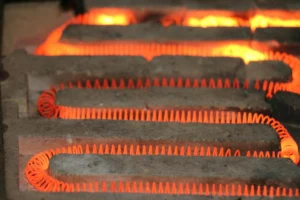
More energy density means longer phone battery life and greater electric vehicle range. It also means more energy available to release catastrophically if something goes wrong. When a lithium-ion battery fails, it can enter “thermal runaway,” a self-reinforcing chemical reaction where the battery rapidly overheats. These fires burn at roughly 5,000 degrees Fahrenheit, three times hotter than a gasoline fire[s].
The Numbers Tell The Story
UK fire brigades now respond to at least three lithium-ion battery fires every day, a 93% increase between 2022 and 2024[s]. E-bike fires specifically doubled in that period, with services responding to one almost every day[s].
In New York City, lithium battery fire safety became a deadly crisis. In 2023, e-bike and e-scooter battery fires killed 18 people and injured over 150[s]. The city responded by requiring all e-mobility devices to meet UL safety standards. Two years later, deaths dropped to just one[s].
Aviation faces its own challenges. In 2024, an average of two flights per week experienced a thermal runaway incident[s]. Cargo shipments are even worse: reported incidents rose 40% between 2021 and 2025[s].
Lithium Battery Fire Safety Standards Cannot Keep Up
Safety standards work on multi-year revision cycles. NFPA 855, the main US standard for battery energy storage, operates on a three-year update schedule[s]. Battery technology advances faster than that. By the time a standard addresses current battery chemistry, manufacturers have already moved to the next generation.
The problem extends beyond timing. Testing a new battery design against UL 9540A, the thermal runaway test method for energy storage systems, requires specialized facilities and significant resources[s]. Many cheaper products, especially those sold online from overseas, never undergo proper lithium battery fire safety certification.
What Works: Lessons From NYC
New York’s success offers a blueprint. When the city mandated UL certification for e-bikes and e-scooters, deaths plummeted. The key was enforcement: the law banned sales, leases, and distribution of uncertified devices[s]. Trade-in programs helped delivery workers replace dangerous batteries with certified ones.
Fire testing by NFPA, the Fire Safety Research Institute, and FDNY revealed another important finding: residential sprinklers effectively prevent flashover from e-scooter battery fires[s]. Without sprinklers, these fires can reach flashover in under one minute, compared to three to five minutes for a typical upholstered furniture fire[s].
The gap between lithium battery fire safety standards and battery technology will likely persist as long as energy density keeps climbing. The question is whether regulators can move fast enough to prevent the next generation of fires, or whether they will always be responding to the last one.
The fundamental tension in lithium battery fire safety stems from electrochemistry: higher energy density batteries concentrate more reactive potential in less volume, while safety standards develop through consensus processes measured in years. Since 2011, NIST estimates 198,000 lithium-ion battery fires have occurred in US structures[s], with plugin electric vehicle fires growing at approximately 45% annually[s].
Energy Density Versus Thermal Stability
Commercial lithium-ion cells have progressed from 80 Wh/kg at market introduction in 1991 to approximately 300 Wh/kg today[s]. Researchers at the Chinese Academy of Sciences have demonstrated pouch cells achieving 711.3 Wh/kg gravimetric and 1653.65 Wh/L volumetric energy density using lithium-rich manganese-based cathodes (Li1.2Ni0.13Co0.13Mn0.54O2) paired with ultrathin lithium metal anodes[s].
RMI projects top-tier cell density reaching 600 to 800 Wh/kg by 2030, with costs declining to $32 to $54 per kWh[s]. This trajectory creates a moving target for lithium battery fire safety engineering: each generation of batteries presents novel failure modes that existing test protocols may not capture.
Thermal runaway in high-density cells exhibits characteristic behavior. Heat generation exceeds dissipation capacity, triggering exothermic decomposition of the solid-electrolyte interphase, electrolyte vaporization, and cathode oxygen release. The resulting fires reach approximately 5,000°F, roughly three times the temperature of hydrocarbon combustion[s]. In residential settings, flashover from an e-scooter battery fire occurs in under one minute, compared to three to five minutes from ignition of upholstered furniture[s].
Standards Development Lag
NFPA 855, the primary US standard for stationary energy storage installation, operates on a three-year revision cycle[s]. The 2026 edition includes significant changes reflecting lessons from incidents like the 2019 McMicken ESS explosion in Arizona, where four firefighters were injured when opening a door allowed oxygen into an enclosure filled with flammable gases from suppressed thermal runaway[s].
The 2026 NFPA 855 edition explicitly acknowledges that fire suppression is rarely effective with lithium-ion batteries, instead prioritizing explosion prevention per NFPA 69[s]. The standard now requires large-scale fire testing (LSFT) to verify that complete combustion of one enclosure will not propagate thermal runaway to adjacent units at manufacturer-specified spacing.
For lithium battery fire safety testing, UL 9540A provides the referenced test method for evaluating thermal runaway fire propagation in battery energy storage systems[s]. Testing proceeds through escalating levels: cell, module, unit, and installation[s]. Each level assesses whether thermal runaway containment fails at that scale. UL Solutions maintains testing facilities in the US, China, Korea, Taiwan, and Germany[s].
Incident Data: Aviation and Ground Transport
UL Standards & Engagement’s Thermal Runaway Incident Program (TRIP) reported an average of two passenger flights per week experiencing thermal runaway incidents in 2024[s]. Of these, 18% resulted in diverted landing, gate return, emergency evacuation, or unplanned deplaning[s]. Cargo incidents increased 40% between 2021 and 2025[s].
UK fire services recorded a 93% increase in lithium-ion battery fires between 2022 and 2024, responding to over three incidents daily by year-end[s]. E-bike fires specifically doubled, from 181 in 2022 to 362 in 2024[s]. London accounted for 49% of national e-bike fire incidents.
Regulatory Response: The NYC Model
New York City’s experience demonstrates the effectiveness of mandatory certification. Following 18 e-mobility fire deaths in 2023[s], the city enacted legislation requiring all e-bikes and e-scooters to meet UL 2849 (e-bike electrical systems), UL 2272 (personal e-mobility electrical systems), and UL 2271 (light electric vehicle batteries)[s]. Deaths fell to one in 2025.
NFPA/FSRI/FDNY collaborative testing established that residential automatic sprinklers effectively prevent flashover from micromobility battery fires[s]. This finding has implications for building code revisions, particularly in jurisdictions with high e-mobility adoption and limited sprinkler penetration in residential buildings.
The structural challenge for lithium battery fire safety regulation persists: technology follows exponential improvement curves while standards development follows linear, consensus-driven processes. Federal legislation (S.389/H.R.973) proposing nationwide UL certification requirements remains pending[s]. Without proactive harmonization between energy density advancement and safety certification, the regulatory gap will likely widen before it narrows.