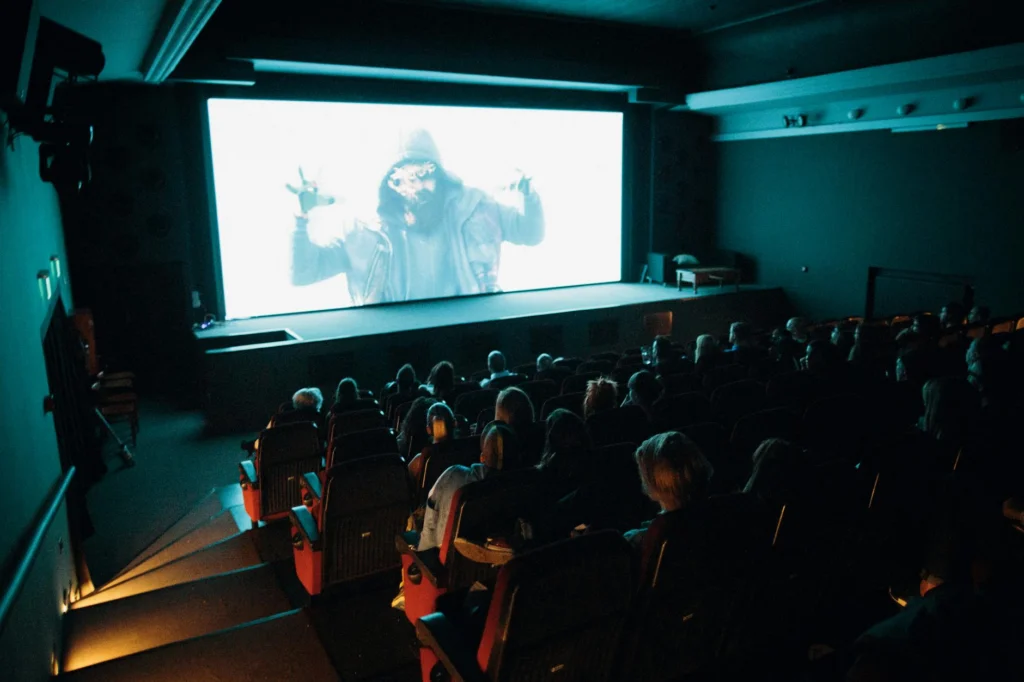
Fear of darkness is hardwired into human biology. Researchers have found that lion attacks in Tanzania are 60 percent more likely to occur after 6 p.m. than during daylight hours[s], suggesting our ancestors who feared the dark survived to pass on their genes. Horror film lighting exploits this primal vulnerability with surgical precision, using shadow and illumination to bypass rational thought and speak directly to the fear center of the brain.
Why Darkness Scares Us
The darkness impairs our vision, which is essential to understanding and managing our surroundings. It blinds one of our most important senses and leaves us feeling vulnerable and out of control[s]. Horror filmmakers know this instinctively. As cinematographer Roy H. Wagner puts it: “In a movie, where the shadows are is where the audience doesn’t want to be. What kind of person walks into a dark room and doesn’t reach for a light?”[s]
The genius of horror film lighting lies in a paradox: light is the weapon filmmakers use to make us afraid of the dark[s]. By controlling exactly what we see and, more importantly, what we cannot see, directors trigger anxiety that no amount of rational thinking can dismiss.
The Birth of Horror Film Lighting
The visual language of cinematic fear emerged from a traumatized nation. German Expressionism appeared in film around 1920, in the aftermath of World War I. It visualized the country’s collective anxiety through distorted and nightmarish imagery[s]. German film critic Lotte Eisner called this aesthetic “helldunkel,” which she defined as “a sort of twilight of the German soul, expressing itself in shadowy, enigmatic interiors”[s].
The technique that defined this era was chiaroscuro, the dramatic contrast between light and dark borrowed from painters like Caravaggio and Rembrandt[s]. One of the most iconic examples appears in F.W. Murnau’s Nosferatu (1922): Count Orlok’s silhouette gliding up a flight of stairs to his victim’s bedroom door. The vampire himself never appears in the shot. His shadow alone creates existential terror[s].
When German directors fled to Hollywood in the 1930s, they brought chiaroscuro with them. The technique became entwined with film noir in the 1940s and 1950s[s] before evolving into the horror film lighting we recognize today.
7 Techniques Directors Use to Trigger Fear
1. Low-Key Lighting
Low-key lighting uses minimal illumination to create deep shadows and high contrast between light and dark areas. By keeping significant portions of the screen in darkness, filmmakers let audiences’ imaginations run wild[s]. The human brain automatically populates empty shadows with threats, and those imagined threats are always worse than anything a filmmaker could actually show[s].
2. Silhouetting and Backlighting
Placing a light behind a subject creates a halo effect around their silhouette, isolating them from their environment and making them appear almost supernatural[s]. In the opening of John Carpenter’s Halloween (1978), young Michael Myers appears backlit by a streetlight, creating immediate unease before he has done anything threatening[s].
3. Partial Visibility
Cinematographer Roy Wagner learned a crucial lesson on A Nightmare on Elm Street 3: “The biggest mandate I had with Freddy Krueger was to not let the audience see him fully. If you reveal him completely, the audience can relax a little. But if they can’t figure him out, he’s scarier”[s]. What you cannot see frightens you more than what you can[s].
4. Color Temperature Shifts
Modern horror often uses color temperature to create emotional dissonance. Cool blues and desaturated tones evoke lifelessness and isolation, while sudden splashes of saturated red trigger primal associations with blood and danger[s]. In The Exorcist (1973), this technique signals danger through architecture: “In the downstairs part of the house, everything looks nice and normal. But when you go up the stairs, it gets a bit darker, and when you go into Regan’s bedroom, that cold, green-blue color immediately tells you it’s not safe in there”[s].
5. Practical Lighting
Using real light sources within the scene, such as lamps, candles, or chandeliers, creates authenticity that heightens fear. For The Shining (1980), cinematographer John Alcott wired the Overlook Hotel’s chandeliers with 1000-watt lamps, treating them as functional fixtures rather than props[s]. This approach made the hotel feel like a real, inhabited space, which made its horrors more disturbing.
6. Light as Character
In The Others (2001), light becomes an active presence in the story. Wagner describes it as “one of the best examples I’ve ever seen of filmmakers using light to scare the audience. The movie wouldn’t really work if it was lit normally, but by lighting for shadows, the cinematographer creates the inference that something’s not right. It’s unsettling for the audience, and it’s unrelenting”[s].
7. Denied Visual Access
Contemporary horror film lighting often works by refusing to show what we desperately want to see. In Hereditary (2018), cinematographer Pawel Pogorzelski frequently denies access to terrifying sights beyond the frame[s]. When a character registers disturbance, the camera holds on their frightened expression rather than cutting to show the threat. Dread sets in because what we cannot see scares us most.
Case Study: The Exorcist’s Frozen Terror
The Exorcist (1973) demonstrates how far filmmakers will go to achieve authentic horror film lighting. Director William Friedkin wanted audiences to see the characters’ breath during the exorcism scenes. The only way to accomplish this was to refrigerate the set to 20 degrees below zero[s].
This created a lighting nightmare. Cinematographer Owen Roizman had to backlight the breath while keeping everything else in darkness: “The challenge was to get backlight on the breath while keeping everything else dark”[s]. Working primarily with inkies, the smallest studio lights, the crew hid units throughout the set since low-angle shots exposed nearly the entire ceiling and three walls at once[s].
The Evolution: Daylight Horror
Director Ari Aster proved that horror film lighting does not require darkness. His Midsommar (2019) unfolds almost entirely in bright Scandinavian daylight, yet remains deeply unsettling. Film scholar writing for Bright Lights Film Journal observed: “One film shrouded in darkness, the other bathed in light, it’s not what we necessarily see that disturbs us, but what we sense”[s].
In Midsommar, the visual field overflows with information rather than hiding it. There is nowhere to hide within the frame. The horror lives at the center of every shot, not lurking in shadows. This inversion demonstrates that the principles underlying horror film lighting extend beyond darkness itself: control of visual information is what generates fear.
Why This Visual Language Persists
Horror films live and die by what is seen and, more importantly, by what is not. Unlike most genres, horror cinematography is about controlling what the audience feels through shadow, space, and anticipation[s]. These techniques work because they exploit biological responses that evolved long before cinema existed.
From the expressionist shadows of 1920s Germany to the fluorescent dread of modern elevated horror, the visual language has evolved while its core principle remains unchanged. Shadows become characters themselves, suggesting movement and threat without showing it[s]. The imagination, properly manipulated, will always conjure terrors worse than anything a filmmaker could render on screen.
The Evolutionary Basis of Scotophobia
Darkness impairs vision, our dominant sense for spatial orientation and threat detection. This sensory deprivation triggers vulnerability responses rooted in predator avoidance behaviors[s]. Horror film lighting exploits these hardwired responses through deliberate manipulation of luminance ratios, color temperature, and negative space. As cinematographer Roy H. Wagner explains: “In a movie, where the shadows are is where the audience doesn’t want to be”[s].
The paradox of horror cinematography is that light, not darkness, is the primary tool. Filmmakers use light to define what remains invisible, controlling exactly where the audience’s attention falls and where it cannot penetrate[s].
German Expressionism and the Origins of Horror Film Lighting
The visual grammar of cinematic fear crystallized in Weimar Germany. German Expressionism emerged in film around 1920, visualizing collective post-war anxiety through distorted, nightmarish imagery[s]. Film critic Lotte Eisner termed this aesthetic “helldunkel,” literally light-dark, describing it as “a sort of twilight of the German soul, expressing itself in shadowy, enigmatic interiors”[s].
The defining technique was chiaroscuro: high-contrast lighting derived from Baroque painting, particularly Caravaggio’s tenebrism[s]. The visual style of German Expressionist films combined shadowy and surreal atmospheres, chiaroscuro lighting, grotesque characters, and nightmarish sets, itself a dark mirror of the German psyche[s].
Nosferatu (1922) demonstrates shadow as narrative element: Count Orlok’s silhouette ascending a staircase creates existential terror without showing the vampire himself[s]. German directors emigrating to Hollywood carried chiaroscuro into film noir and subsequently into horror[s], establishing the foundation of modern horror film lighting.
7 Technical Approaches to Triggering Fear
1. Low-Key Lighting Ratios
Low-key setups minimize fill, creating deep shadows and high key-to-fill ratios. This technique heightens mystery by keeping significant portions of the frame in darkness[s]. The neurological basis: the human brain automatically populates empty shadows with threats, and those imagined threats are always worse than anything a filmmaker could actually show[s]. Low-key setups, hard contrast, and chiaroscuro turn the frame into a psychological space where shadows become characters themselves[s].
2. Silhouetting via Backlighting
Placing the key behind the subject creates rim separation while obscuring facial detail. This isolates the subject and produces an almost supernatural appearance[s]. Halloween (1978) opens with Michael Myers backlit by a streetlight, establishing threat through anonymity[s].
3. Controlled Exposure for Partial Visibility
Underexposing portions of the frame obscures character detail strategically. Roy Wagner on A Nightmare on Elm Street 3: “Exposure was critically important on that character, because we didn’t want the audience to be able to identify too much of who he was. If you reveal him completely, the audience can relax a little”[s]. What cannot be seen frightens more than what can[s].
4. Color Temperature as Emotional Architecture
Modern horror manipulates color temperature to create emotional dissonance. Cool blues and desaturated tones evoke lifelessness; saturated reds trigger primal associations with blood and danger[s]. The Exorcist demonstrates spatial color coding: neutral tones downstairs transition to progressively cooler temperatures ascending to Regan’s bedroom, where “that cold, green-blue color immediately tells you it’s not safe in there”[s].
5. Practical Source Integration
Motivated lighting from diegetic sources creates believable space, which heightens the impact of unrealistic events within it. For The Shining, cinematographer John Alcott wired the Overlook Hotel’s 25-light chandeliers with FEP 1000-watt, 240-volt lamps, each connected to dimmers controllable via walkie-talkie[s]. This allowed dynamic adjustment during Steadicam moves: “I could change the light settings of the chandeliers as the Steadicam was traveling about the set simply by talking to the control room”[s].
6. Light as Diegetic Character
In The Others (2001), light functions narratively. Wagner: “The movie wouldn’t really work if it was lit normally, but by lighting for shadows, the cinematographer creates the inference that something’s not right. It’s unsettling for the audience, and it’s unrelenting”[s]. The lighting scheme becomes inseparable from the story’s logic.
7. Peripheral Horror and Denied Visual Access
Hereditary (2018) draws attention to the visual field’s periphery. The most startling elements slip imperceptibly in and out of shots[s]. Cinematographer Pawel Pogorzelski often denies access to terrifying sights beyond the frame, holding on a character’s frightened expression rather than reverse-cutting to the threat[s]. Negative space, darkness or emptiness around the subject, creates subconscious anxiety as eyes search for movement in voids[s].
Technical Case Study: The Exorcist’s Refrigerated Set
The Exorcist (1973) required visible breath during the exorcism sequence. Friedkin’s solution: refrigerate the set to 20 degrees below zero Fahrenheit[s]. This created complex lighting constraints.
Breath required backlighting to register on film, but the scene’s motivated source, a bedside lamp, faced the actors. Cinematographer Owen Roizman: “The challenge was to get backlight on the breath while keeping everything else dark”[s]. The refrigerated set required hidden inkies, since low-angle framing exposed the ceiling and three walls at once. Gaffer Dick Quinlan and a crew member rode four dimmers between them, continuously adjusting exposure “like playing a musical instrument”[s].
For the sequence’s ethereal conclusion, Friedkin requested a different visual register. Roizman: “He wanted it to have an ethereal quality, a very soft, glowing, cool sort of thing. We tried, at that point, to work with absolutely no shadows in the room, using just bounce light”[s]. The absence of shadows signaled resolution.
Inversion: Daylight Horror in Midsommar
Ari Aster’s Midsommar (2019) demonstrates that horror film lighting principles extend beyond darkness. The film unfolds almost entirely in bright Scandinavian daylight. As Bright Lights Film Journal observes: “One film shrouded in darkness, the other bathed in light, it’s not what we necessarily see that disturbs us, but what we sense”[s].
Where Hereditary draws attention outward to peripheral threat, Midsommar pulls it inward. The visual field overflows with information. Nowhere to hide within the frame. This centripetal approach replaces concealment with overwhelming disclosure, proving that control of visual information, not darkness per se, generates cinematic fear.
Persistence of the Visual Language
Horror films live and die by what is seen and by what is not. Horror cinematography controls what the audience feels through shadow, space, and anticipation[s]. German Expressionism’s chiaroscuro evolved into film noir and horror film lighting[s], building the visual foundation on which the entire genre rests.
The techniques persist because they exploit pre-conscious biological responses. Shadows become characters, suggesting movement and threat without showing it[s]. From Nosferatu’s silhouette to Hereditary’s peripheral apparitions, the imagination, properly manipulated, conjures terrors worse than anything rendered on screen.