For more than a century, forensic ballistics evidence has helped send thousands of people to prison. The premise sounds scientific enough: every gun leaves unique marks on the bullets it fires, and trained examiners can match those marks to identify the weapon used in a crime. Juries have long trusted this testimony as near certainty. That trust is now crumbling.
A series of damning reports, court rulings, and exonerations has exposed what critics call a fundamental problem: forensic ballistics evidence was never properly validated as a science, and the error rates are far higher than anyone admitted.
How Forensic Ballistics Evidence Works
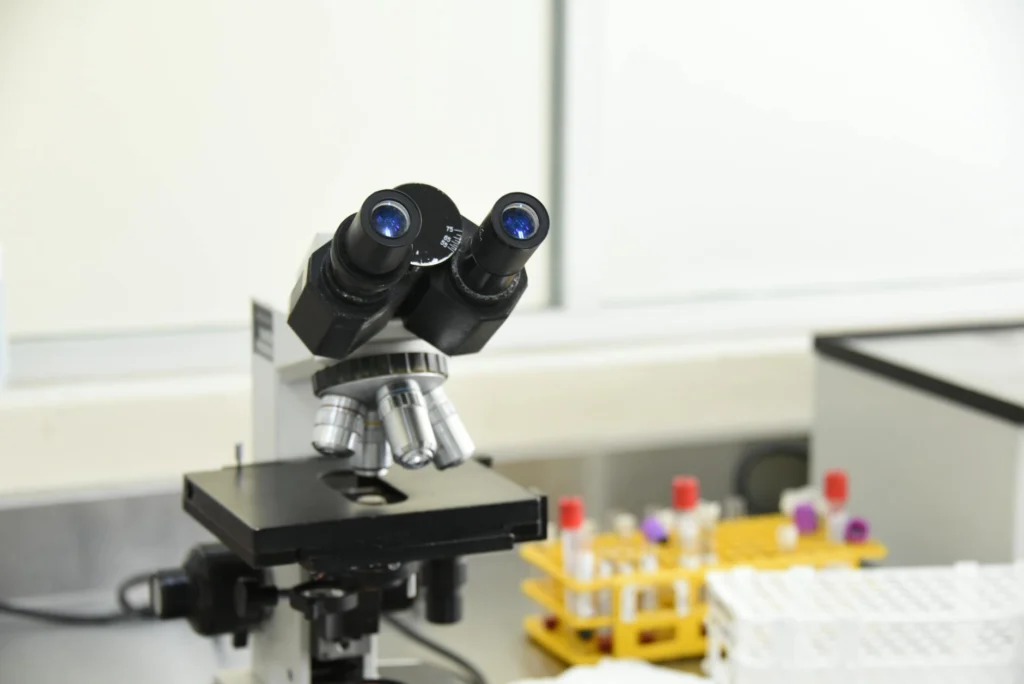
The theory behind firearm and tool mark examination dates back over 100 years[s]. When a gun fires, the bullet spins through the barrel and picks up microscopic marks from imperfections in the metal. Similarly, the firing mechanism leaves marks on the cartridge case. Examiners use comparison microscopes to view a crime scene bullet alongside test bullets fired from a suspected weapon, looking for patterns that match.
If they see what they consider “sufficient agreement” in the markings, they conclude the bullets came from the same gun. For decades, many examiners testified they could make this match “to the exclusion of all other firearms in the world.”
When the Science Was Questioned
The first major blow came in 2009. The National Academy of Sciences released a sweeping report on forensic science in criminal courts. The conclusion was stark: except for nuclear DNA analysis, many commonly used forensic techniques had not undergone the necessary testing to establish sufficient validity and reliability to support claims made in court[s].
The report specifically flagged firearms and tool mark examinations as lacking scientific foundations. Seven years later, a presidential advisory council reinforced the finding, stating that “the current evidence still falls short of the scientific criteria for foundational validity”[s].
Courts Begin to Restrict Testimony
These criticisms eventually reached courtrooms. In June 2023, the Supreme Court of Maryland issued a landmark ruling in a murder case. The court held that firearms identification methodology “did not provide a reliable basis” for an expert’s unqualified opinion that bullets from a crime scene were fired from a specific gun[s].
The Maryland ruling did not ban forensic ballistics evidence entirely. Examiners can still testify that bullet patterns are “consistent” or “inconsistent” with a particular firearm. They simply cannot claim absolute identification anymore.
The Human Cost of Flawed Evidence
Behind the legal debates are real people who lost decades of their lives. Anthony Ray Hinton spent 30 years on Alabama’s death row, convicted of two murders based solely on a state examiner’s claim that bullets matched a gun from his mother’s home[s]. Three independent firearms experts later testified that the bullets could not be matched to that gun at all. In 2015, Hinton was exonerated and released[s].
Patrick Pursley served nearly 24 years in Illinois for a murder he did not commit. A state examiner had testified that bullets and casings matched a gun from his home “to the exclusion of all other guns.” Two independent examiners later concluded neither the bullets nor the casings came from that weapon[s].
What Comes Next
The forensic science community is working to address these problems. The National Institute of Standards and Technology has developed a database of 3D bullet and cartridge scans, moving away from subjective visual comparisons toward quantifiable measurements[s]. The goal is to eventually provide statistical statements similar to DNA evidence.
For now, forensic ballistics evidence remains admissible in most jurisdictions, though often with restrictions on how strongly examiners can state their conclusions. The field that once claimed absolute certainty is learning to acknowledge its limits.
Forensic ballistics evidence has anchored criminal prosecutions for over a century[s]. The discipline rests on a premise that sounds intuitively scientific: microscopic imperfections in gun barrels leave distinctive marks on bullets, and these marks can identify the specific weapon that fired them. But scientific validation of this premise has always been lacking, and recent research has exposed error rates that call the entire field into question.
The Methodology Behind Forensic Ballistics Evidence
The Association of Firearm and Tool Mark Examiners describes the examination process as “pattern matching”[s]. Examiners first compare “class characteristics” like caliber and the number of grooves in the barrel. If these match, they move to comparing “individual characteristics,” the random microscopic marks theorized to be unique to each firearm.
The AFTE standard for a positive identification requires that agreement between two samples “exceeds the best agreement demonstrated between two toolmarks known to have been produced by different tools”[s]. The AFTE itself acknowledges that “the interpretation of individualization/identification is subjective in nature.”
The 2009 NAS Report
The National Academy of Sciences issued its forensic science report after a Congressional mandate to examine the field. The findings were devastating. The report concluded that “except for nuclear DNA analysis, many commonly used forensic techniques had not undergone the necessary testing to establish sufficient validity and reliability to support claims made in court”[s].
For firearms examination specifically, the NAS found that “sufficient studies have not been done to understand the reliability and reproducibility of the methods”[s]. The report identified no objective criteria for determining what constitutes “sufficient agreement” between toolmarks.
PCAST 2016: Foundational Validity Still Missing
The President’s Council of Advisors on Science and Technology examined whether the field had improved in the seven years following the NAS report. Their conclusion: “the current evidence still falls short of the scientific criteria for foundational validity”[s].
PCAST identified two critical gaps: the need for clarity about scientific standards for validity and reliability, and the need to evaluate whether specific forensic methods have been scientifically established[s]. For firearms analysis, PCAST found only one “appropriately designed study” existed, and it reported an error rate “estimated at one in 66, with a 95 percent confidence limit of one in 46”[s].
The Ames Studies: What Error Rates Really Look Like
The FBI and Ames Laboratory conducted two major studies attempting to measure examiner accuracy. In Ames I, 218 examiners compared cartridge cases from 25 identical Ruger handguns. In Ames II, 173 examiners analyzed both cartridge cases and bullets across three phases.
The reported error rates appeared low, in the single digits. But the Maryland Supreme Court identified a critical flaw: “inconclusive” answers were not counted as errors. In Ames II, examiners answered “inconclusive” in more than 65% of comparisons where bullets came from different sources[s].
If those “inconclusive” answers on non-matching samples were counted as errors (the examiner nearly made a false identification), the error rate jumped from 0.7% to 10.13%[s].
Reproducibility Problems
The Ames II study also tested whether different examiners would reach the same conclusion on identical samples. When the second examiner was not informed of the first examiner’s results, agreement rates were troubling: less than 70% for matching sets, and less than 41% for non-matching sets[s].
The Houston Blind Testing Program
Most proficiency testing suffers from the Hawthorne effect: examiners behave differently when they know they are being observed[s]. The Houston Forensic Science Center addressed this by integrating blind samples into normal casework. By 2018, the lab planned to conduct 800 blind tests annually, representing 5% of workload[s].
The results were alarming. For sensitivity tests (determining if two bullets came from the same gun), examiners had an error rate of 24%. For specificity tests (determining if bullets came from different guns), the error rate reached 66%[s].
Court Rulings Restricting Testimony
In February 2023, Cook County Judge William Hooks became the first American judge to entirely bar a firearms examiner from testifying about bullet matching. His ruling noted that the field’s core premise, that every gun leaves unique marks, had never been scientifically proven[s]. That ruling was later vacated after a change of judges.
The Maryland Supreme Court’s June 2023 ruling in Abruquah v. State proved more durable. The court held that “firearms identification has not been shown to reach reliable results linking a particular unknown bullet to a particular known firearm”[s]. Examiners may testify that patterns are “consistent” with a firearm, but not that they constitute a definitive match.
A 2020 federal case in Washington, D.C. set similar limits. The judge ordered that the firearms expert “will not use terms such as ‘match'” and “will not state his expert opinion with any level of statistical certainty”[s].
Exonerations: The Evidence in Practice
Anthony Ray Hinton was convicted of two 1985 murders in Birmingham, Alabama. The prosecution’s only evidence was a state examiner’s testimony that bullets matched a revolver from his mother’s home[s]. His original defense attorney mistakenly believed he could only spend $1,000 on an expert, resulting in testimony from a civil engineer who admitted difficulty operating the comparison microscope.
Three independent firearms examiners, including the former chief of the FBI’s firearm and toolmarks unit, testified in 2002 that the bullets could not be matched to Hinton’s gun[s]. Alabama prosecutors refused to reexamine the case for another 12 years. The U.S. Supreme Court unanimously reversed his conviction in 2014, and he was released in 2015 as the 152nd person exonerated from death row since 1973[s].
Patrick Pursley spent nearly 24 years in Illinois prisons after a state examiner testified that bullets and casings matched a gun from his home “to the exclusion of all other firearms”[s]. When the evidence was entered into the National Integrated Ballistics Identification Network database, no digital match was found. Two leading independent examiners then concluded that neither the bullets nor the casings came from Pursley’s gun. He was acquitted in January 2019[s].
The Inconclusive Problem
One rarely discussed issue is how crime labs use “inconclusive” findings. At the Illinois state crime lab, it is a matter of policy to never “exclude” a given bullet from a given gun[s]. Examiners either find a match or declare the evidence inconclusive. They will not exonerate.
This asymmetry means forensic ballistics evidence can only hurt defendants, never help them. The system is structurally biased toward prosecution.
The Path Toward Objectivity
NIST has developed the Ballistics Toolmark Research Database, using high-resolution 3D microscopes to create virtual models of bullet and cartridge surfaces[s]. Unlike traditional 2D imaging, 3D scans are not affected by lighting conditions, allowing more consistent comparisons.
The ultimate goal is to develop statistical models that can generate quantitative measures, such as likelihood ratios, that summarize the strength of comparison results. This would bring forensic ballistics evidence closer to the evidentiary standards of DNA testing.
For now, forensic ballistics evidence remains admissible in most courts, though increasingly with restrictions on testimony. The discipline is being forced to acknowledge what it long denied: that “to the exclusion of all other firearms” was never a scientific statement. It was an expression of confidence that the evidence did not support.