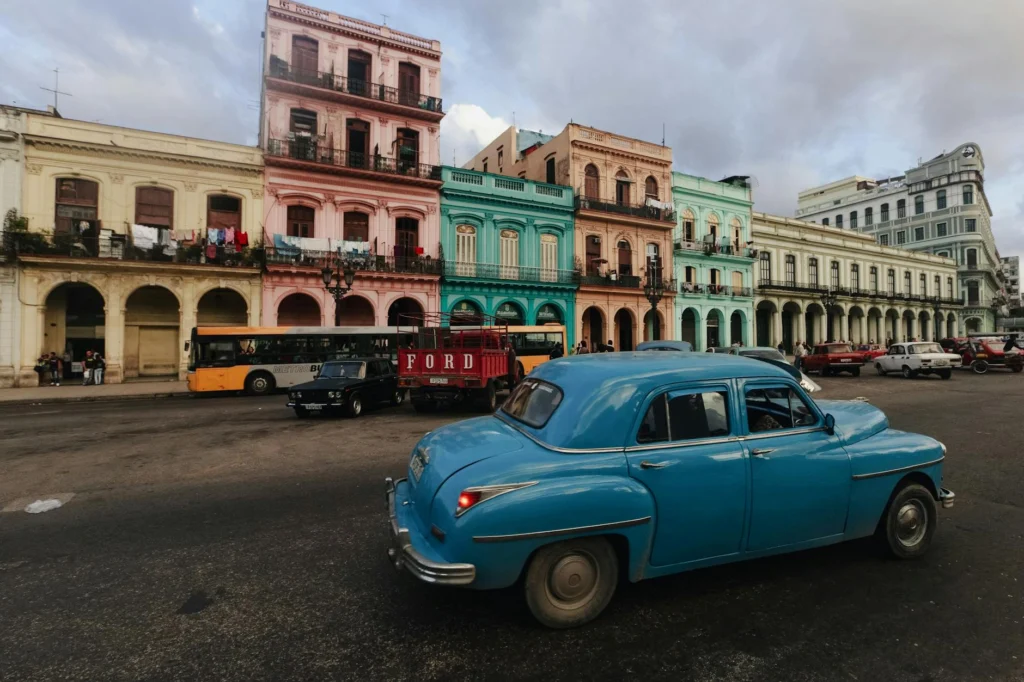
The Cuba US talks are now official. Cuban President Miguel Díaz-Canel confirmed on Friday that his government has held discussions with the Trump administration, the first time Havana has acknowledged bilateral negotiations that Washington has been publicly claiming for weeks. The admission came via state television, after three months of an American fuel blockade that has left 64% of the island without electricity and pushed Cuba closer to humanitarian collapse than at any point since the Soviet withdrawal.
“These talks have been aimed at finding solutions through dialogue to the bilateral differences we have between the two nations,” Díaz-Canel said. He described the conversations as preliminary, focused on identifying problems “according to their level of gravity” and finding solutions. He warned that any agreement remains far off.
The acknowledgment follows months of official denial. As recently as January 12, Díaz-Canel had dismissed reports of Cuba US talks, limiting contact to “technical contacts in the migratory field.” The reversal suggests the pressure campaign has worked, at least in getting Cuba to the table.
The Fuel Blockade Behind the Cuba US Talks
The immediate catalyst is fuel. On January 29, Trump signed an executive order invoking the International Emergency Economic Powers Act, threatening tariffs on any country that supplies oil to Cuba directly or indirectly. This followed the capture of Venezuelan President Nicolás Maduro on January 3, which severed Cuba’s primary oil lifeline. Venezuela had been shipping roughly 35,000 barrels per day on average to the island. The last tanker arrived in December.
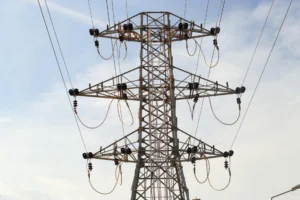
The effect was swift. Cuba relies on oil for over 90% of its energy needs, according to the United Nations. By early February, the eastern provinces of Guantánamo, Santiago de Cuba, Holguín, and Granma suffered total blackouts. By March, Cuba’s National Electric System reported a deficit exceeding 2,000 megawatts. Eight of the country’s 16 thermoelectric plants went offline. Rolling blackoutsScheduled or unplanned temporary interruptions of electrical service distributed across regions to manage supply shortages during peak demand periods. lasted up to 20 hours a day in some regions, and on March 3, UPI reported that 64% of the island was in the dark.
The humanitarian consequences have been severe. The UN warned of potential “collapse” unless a humanitarian carve-outAn exemption or exception from economic sanctions that allows essential goods, medicine, food, and disaster relief to reach affected populations despite broader trade restrictions. for oil and aid is established. Approximately five million Cubans with chronic illnesses face disrupted medical care. Over 32,000 pregnant women requiring ongoing treatment are at risk. Eighty-four percent of Cuba’s water pumping equipment depends on electricity, and nearly one million residents rely entirely on tanker truck deliveries for drinking water. Hospitals lack fuel for ambulances. Doctors described conditions as making their work “virtually impossible,” Foreign Policy reported. The crisis compounds an already volatile global energy picture: the oil price shock driven by the Iran war has pushed prices past $100 per barrel, making alternative suppliers even harder for Havana to find.
What the US Wants From the Cuba US Talks
The Trump administration’s stated objective is regime changeThe deliberate replacement of a government through military, diplomatic, or economic intervention, typically by external actors.. Secretary of State Marco Rubio, a Cuban-American who has spent his career advocating for a harder line on Havana, has said so explicitly. Trump himself has been less precise but more colorful. On February 27, boarding Marine One, he told reporters: “Maybe we’ll have a friendly takeover of Cuba. We could very well end up having a friendly takeover of Cuba.” He described the island as having “no money,” “no oil,” and “no food,” calling it “a failing nation.”
On March 10, Trump repeated the threat with an added edge: “It may be a friendly takeover. It may not be a friendly takeover. It wouldn’t matter because they are down to, as they say, fumes.”
A senior Trump administration official offered a more measured framing to reporters: “I wouldn’t call these ‘negotiations’ as much as ‘discussions’ about the future.” The distinction matters. Washington is positioning itself not as a negotiating partner but as a party dictating terms to a state it considers on the verge of failure.
The Back Channel: Rubio and Castro’s Grandson
The Cuba US talks have not followed traditional diplomatic channels. Axios reported in February that Rubio has been in direct contact with Raúl Guillermo Rodríguez Castro, the 41-year-old grandson of former president Raúl Castro. Known as “El Cangrejo,” Rodríguez Castro is a colonel in Cuba’s military and formerly served as chief of personal security for his grandfather.
His presence is significant. Raúl Castro, now 94, remains Cuba’s most powerful figure despite officially stepping down from the presidency in 2018 and from the Communist Party leadership in 2021. Díaz-Canel acknowledged on Friday that the talks were “prompted by” Raúl Castro, confirming the CiberCuba report that Cuba’s actual decision-making authority remains with the Castro family rather than the sitting president.
Rodríguez Castro appeared prominently at Díaz-Canel’s televised speech, a visual signal that the family endorses the diplomatic opening.
What Cuba Wants
Díaz-Canel framed Cuba’s position as seeking “the willingness of both parties to take concrete actions for the benefit of the people of both countries” and identifying “areas of cooperation to confront threats and guarantee the security and peace of both nations, as well as in the region.” He insisted on negotiations “on the basis of equality and respect for both countries’ political systems, sovereignty, and self-determination.”
In practical terms, Cuba needs oil. It needs the blockade lifted or eased. It needs the threat of secondary tariffsTrade penalties imposed on countries or companies that sell goods to or trade with a sanctioned entity, extending an embargo's reach to third parties. on potential suppliers removed. The 51-prisoner release announced Thursday, brokered through the Vatican and timed for Holy Week, is a goodwill gesture designed to demonstrate willingness to engage without conceding on the core demand of political transition.
Whether any of the 51 are political prisoners remains unclear. The nonprofit Prisoners Defenders counted 1,214 political prisoners in Cuba as of February 2026. The Vatican-brokered release echoes a similar deal under Joe Biden, who removed Cuba from the state sponsors of terrorism list in exchange for the release of 553 prisoners in early 2025. Trump reversed that delisting shortly after taking office.
The Gap Between the Two Positions
The distance between what Washington wants and what Havana is willing to offer is vast. The US is seeking, at minimum, fundamental political reform and, at maximum, the end of Communist Party rule. Cuba is offering prisoner releases and dialogue while insisting its political system is non-negotiable.
Díaz-Canel’s own language acknowledged this: he said an agreement is “still far off.” The word “agreement” may be generous. What is happening so far looks more like the opening of a pressure valve than the beginning of a negotiation between equals.
Analysts at Foreign Policy have warned that manufacturing state collapse carries its own risks for Washington: internal conflict, mass migration toward Florida, expanded trafficking routes through the Florida Strait, and regional destabilization. The Venezuela precedent, where US sanctions contributed to what researchers documented as “the largest economic collapse outside of war in modern history” while political leadership survived, suggests that maximum pressure does not guarantee the political outcome the US seeks. As the Strait of Hormuz crisis continues to reshape global shipping routes, Cuba’s geographic position in the Caribbean adds another variable to an already strained logistics map.
What is clear is that the blockade has forced Cuba into a public posture it spent months resisting. Whether the Cuba US talks produce substantive concessions, or simply buy time while Havana searches for alternative fuel sources, is the question that will define the coming weeks. For the 11 million people on the island currently enduring blackouts measured in days rather than hours, the diplomatic timeline is a secondary concern.
Sources
- Al Jazeera: Cuban President Diaz-Canel says talks held with US amid Trump threats, March 13, 2026
- NBC News: Cuban President Díaz-Canel confirms talks with the U.S., March 13, 2026
- Al Jazeera: Trump suggests a friendly takeover of Cuba amid US fuel blockade, February 27, 2026
- Al Jazeera: Trump threatens Cuba again with friendly takeover, March 10, 2026
- UN News: Humanitarian pressures grow as Cuba continues to struggle with energy shortages, February 2026
- Foreign Policy: Why Trump Should Be Careful What He Wishes for in Cuba, March 10, 2026
- UPI: Cuba begins March with 64% of island in the dark, March 3, 2026
- Vatican News: Cuba to release 51 prisoners during Holy Week following talks with Holy See, March 2026
- Axios: Rubio’s secret squeeze on Raul Castro’s Cuba, February 18, 2026