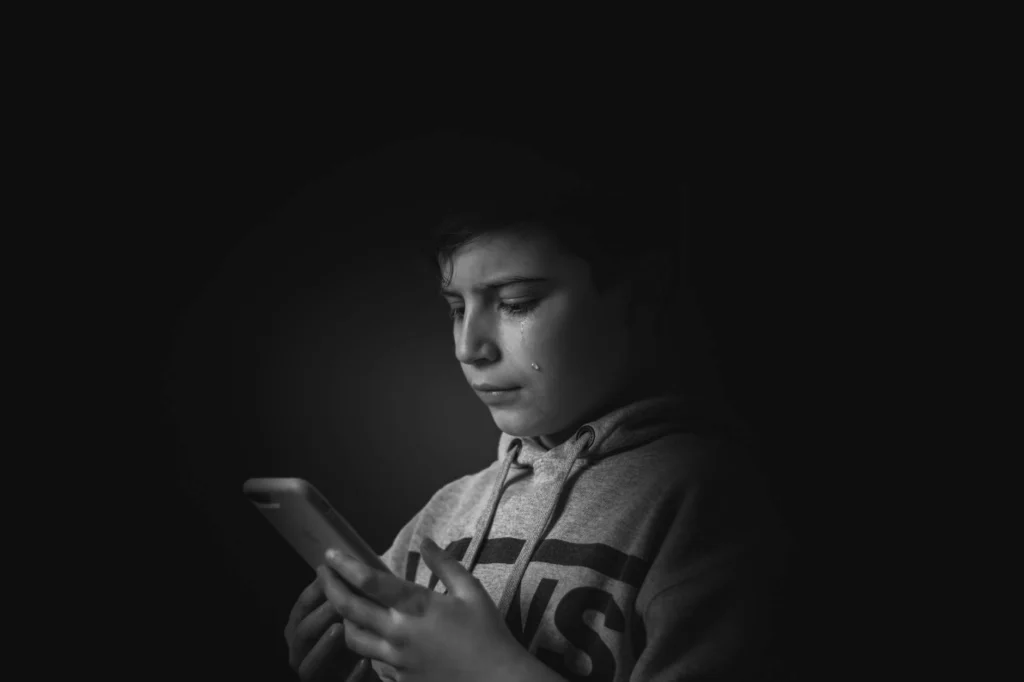
The debate over adolescent social media harm has become a clash of absolutes. On one side: concerned parents, legislators, and researchers warning that Instagram, TikTok, and Snapchat are rewiring teenage brains and fueling an epidemic of depression and anxiety. On the other: tech companies insisting their platforms mostly help young people feel connected and supported. Both camps claim the research supports them. Both are being selective with the evidence.
The truth is messier. Independent studies consistently find that the effects of social media on adolescent mental health are real but small for most teenagers. Platforms have publicly emphasized findings that make them look good while internally acknowledging more troubling patterns. And the research we actually need, rigorous longitudinal studies establishing causation, largely does not exist. This is not a story of clear heroes and villains; it’s a story of motivated reasoning on all sides and a generation caught in the middle.
What Platforms Say Their Research Shows
When the Wall Street Journal published leaked internal documents in 2021 suggesting Instagram harms teenage girls, Meta‘s response was swift and specific. The company’s head of research wrote that “on 11 of 12 well-being issues, teenage girls who said they struggled with those difficult issues also said that Instagram made them better rather than worse.”[s] Body image was the sole exception, but even there, Meta noted that “the majority of teenage girls who experienced body image issues still reported Instagram either made it better or had no impact.”
This framing technically describes the data. But it obscures a critical point: the surveys asked teens who already had body image problems whether Instagram made those problems better or worse. The question of whether Instagram contributed to those problems in the first place was not what the research measured. Meta’s public response treated correlation as exoneration.
TikTok has similarly positioned itself as part of the solution. A company spokesperson dismissed a 2026 study on mental health misinformation as “flawed” and emphasized that TikTok “removes harmful health misinformation and provides access to reliable information from the WHO.” The company points to its screen time tools and parental controls as evidence of its commitment to adolescent wellbeing.
What Independent Research Actually Finds
Academic research on adolescent social media harm presents a more complicated picture. A 2025 scoping review analyzing studies from 2020 to 2024 found that “the majority of studies linked social media use to adverse mental health outcomes, particularly depression and anxiety.”[s] The same review emphasized that “problematic use and passive consumption of social media were most strongly associated with adverse effects,” while active, purposeful engagement sometimes showed benefits like “enhanced social support and reduced isolation.”
The World Health Organization documented a sharp rise in problematic social media use among adolescents, with rates increasing from 7% in 2018 to 11% in 2022.[s] Girls showed higher rates (13% vs 9% for boys). But even here, the WHO acknowledged nuance: “Adolescents who are heavy but non-problematic users reported stronger peer support and social connections.”
The latest Pew Research Center data shows teens themselves are growing more skeptical. In 2025, 48% of teens said social media have a “mostly negative effect” on people their age, up from 32% in 2022.[s] Yet only 14% believed these platforms negatively affected them personally. This gap between perceived harm to peers and perceived harm to self has persisted for years.
The Causation Problem
Here’s where the debate gets contentious. Jonathan Haidt’s “The Anxious Generation” argues that social media is a primary driver of the teen mental health crisis. But Candice Odgers, a psychologist at UC Irvine and Duke University, wrote in Nature that “the book’s repeated suggestion that digital technologies are rewiring our children’s brains and causing an epidemic of mental illness is not supported by science.”[s]
Odgers and colleagues have found that “most data are correlative” and that “when associations over time are found, they suggest not that social-media use predicts or causes depression, but that young people who already have mental-health problems use such platforms more often or in different ways from their healthy peers.” An analysis across 72 countries found “no consistent or measurable associations between well-being and the roll-out of social media globally.”
This does not mean adolescent social media harm is imaginary. It means the effects may be smaller than headlines suggest, concentrated in specific vulnerable populations, and bidirectional: teens who struggle may turn to social media more often, which may then amplify their struggles. The relationship is not a simple cause-effect arrow.
What Internal Documents Reveal
The most damning evidence against platforms comes not from academic studies but from their own internal communications. A 2025 lawsuit unsealed documents showing Meta researchers wrote “IG is a drug … we’re basically pushers” in internal chats.[s] An internal TikTok report acknowledged that “minors do not have executive mental function to control their screen time.”
Most striking is what happened to research that found negative results. Court documents allege that when Meta’s 2019 “Project Mercury” study found that people who paused Facebook for a week “reported lower feelings of depression, anxiety, loneliness, and social comparison,” the company stopped the research rather than publish it. One Meta employee reportedly warned: “If the results are bad and we don’t publish and they leak, is it going to look like tobacco companies doing research and knowing cigs were bad and then keeping that info to themselves?”
That internal concern proved prescient. The gap between what platforms told the public and what they discussed internally is the real scandal. Whether adolescent social media harm is large or small in aggregate, the companies knew it existed and chose strategic silence over transparency.
Who Is Actually at Risk
Recent research suggests that aggregate statistics obscure important differences. A 2025 study in Nature Human Behaviour found that “adolescents with mental health conditions reported spending more time on social media and were less happy about the number of online friends than adolescents without conditions.”[s] Those with internalizing conditions (anxiety, depression) showed the strongest patterns: more social comparison, greater sensitivity to feedback, and less honest self-disclosure online.
Gender matters too. Pew found that teen girls are more likely than boys to say social media hurt their mental health (25% vs 14%), their confidence (20% vs 10%), and their sleep (50% vs 40%).[s] The U.S. Surgeon General’s 2023 advisory noted that teens using social media more than three hours daily face double the risk of depression and anxiety symptoms.[s]
The Surgeon General also acknowledged a fundamental problem: “Despite this widespread use among children and adolescents, robust independent safety analyses on the impact of social media on youth have not yet been conducted.” We are 15 years into the smartphone era without the longitudinal data needed to settle basic questions.
What Should Change
Neither banning social media for all teenagers nor accepting the status quo makes sense given the evidence. What the research actually supports:
- Platforms should be required to share their internal research with independent academics. The asymmetry of information is untenable.
- Default settings for minors should minimize features known to be problematic: autoplay, infinite scroll, beauty filters, and algorithmic amplification of appearance-focused content.
- Mental health services need to be accessible to the teenagers who struggle most, whether or not social media is the primary cause of their struggles.
- Parents need realistic guidance, not panic. Most teens use social media without developing problems. Heavy use, passive scrolling, and social comparison predict worse outcomes more than time spent alone.
The framing of adolescent social media harm as an all-or-nothing question has distracted from what we actually know. Effects exist. They are not apocalyptic for most teens. They are concentrated in vulnerable groups. Platforms have known more than they’ve said. And we still lack the research needed to make confident causal claims. That last point should concern everyone, including the companies that have the data to answer these questions and have chosen not to.
The scientific debate over adolescent social media harm has become a case study in motivated reasoning, methodological limitations, and institutional conflicts of interest. On one side, researchers like Jonathan Haidt argue that social media has caused an “epidemic of mental illness” in young people. On the other, researchers like Andrew Przybylski and Candice Odgers contend that observed effect sizes are too small to warrant the causal claims being made. Both camps cite peer-reviewed studies. Both accuse the other of misinterpreting evidence. And both largely talk past each other because they’re asking different questions.
The fundamental disagreement is not about whether associations exist between social media use and mental health symptoms in adolescents. Multiple meta-analyses confirm they do. The disagreement is about (1) whether these associations are causal, (2) whether the effect sizes are meaningful at a population level, and (3) whether platforms bear responsibility for harms they may have known about but downplayed publicly. On this last point, recently unsealed internal documents provide evidence that platforms’ public claims have not matched their private assessments.
The Effect Size Controversy
A 2025 scoping review of 43 systematic reviews and meta-analyses covering 2020-2024 found that “most research points to social media use as a contributing factor to mental health declines in adolescents.”[s] The review noted associations between social media use and “severity of depression and anxiety,” with specific mechanisms including “online discrimination, self-comparison, reliance on social media for social approval, and cyberbullying.”
Critics argue these associations are small. Przybylski’s specification curve analyses, which test thousands of analytical specifications to reduce researcher degrees of freedom, have found that associations between screen time and mental health are comparable in magnitude to the association between eating potatoes and mental health. His 72-country analysis found “no consistent or measurable associations between well-being and the roll-out of social media globally.”[s]
Haidt and colleagues have countered that specification curve methods can obscure meaningful effects by averaging across populations where effects differ, and that Przybylski’s research has received funding linked to social media companies. The methodological debate remains unresolved, with researchers disagreeing about what constitutes a “meaningful” effect size when the exposed population numbers in the billions.
The Causation Gap
Most studies of adolescent social media harm are cross-sectional or use short-term longitudinal designs that cannot establish causation. As Odgers noted in her Nature commentary, “when associations over time are found, they suggest not that social-media use predicts or causes depression, but that young people who already have mental-health problems use such platforms more often or in different ways from their healthy peers.”[s]
The Adolescent Brain Cognitive Development (ABCD) study, the largest long-term study of adolescent brain development in the United States, “has found no evidence of drastic changes associated with digital-technology use.” This directly contradicts claims that social media is “rewiring” children’s brains.
However, absence of evidence of large population-level effects is not evidence of absence of effects in specific subpopulations. A 2025 Nature Human Behaviour study using clinical diagnostic assessments found significant differences in social media use patterns between adolescents with and without mental health conditions.[s] Critically, “adolescents with internalizing conditions reported spending more time on social media, engaging in more social comparison and experiencing greater impact of feedback on mood.”
Platform Claims vs. Internal Knowledge
Meta’s public response to the 2021 Wall Street Journal leak emphasized that “on 11 of 12 well-being issues, teenage girls who said they struggled with those difficult issues also said that Instagram made them better rather than worse.”[s] The company characterized its internal research as showing that Instagram “helps many teens who are struggling with some of the hardest issues they experience.”
NPR’s analysis at the time noted methodological limitations: “The leaked Facebook research consists of opinion surveys and interviews. Facebook asked teens about their impressions of Instagram’s effect on their body image, mental health and other issues. That reliance on self-reporting as a single indicator of harm is a problem.”[s] Researchers also noted that some widely reported statistics came from very small samples: the “6% of US teens and 13% of UK teens blamed Instagram for suicidal thoughts” finding derived from 16 total respondents out of more than 2,500 surveyed.
More damaging are internal communications revealed in 2025 litigation. Meta researchers wrote “IG is a drug … we’re basically pushers” in internal chats.[s] TikTok’s internal research acknowledged “minors do not have executive mental function to control their screen time.” When Meta’s “Project Mercury” study found that users who paused Facebook for one week “reported lower feelings of depression, anxiety, loneliness, and social comparison,” the company allegedly discontinued the research.
This is the clearest evidence of adolescent social media harm: not in effect sizes or causal mechanisms, but in institutional behavior. Platforms conducted internal research, found unfavorable results, and either reframed or buried them while making public claims their research did not support.
Epidemiological Context
The WHO documented rising rates of problematic social media use: from 7% in 2018 to 11% in 2022, with girls at 13% versus 9% for boys.[s] Pew found that 45% of teens say they spend too much time on social media, up from 36% in 2022.[s] Girls report higher rates of negative experiences: 25% say social media hurt their mental health versus 14% of boys.
The U.S. Surgeon General’s 2023 advisory stated that “teens who use social media for more than three hours a day face double the risk of depression and anxiety symptoms” but also acknowledged that “robust independent safety analyses on the impact of social media on youth have not yet been conducted.”[s] Up to 95% of youth ages 13-17 use social media, with more than a third using it “almost constantly.”
Implications for Research and Policy
The evidence base on adolescent social media harm supports several conclusions:
- Associations exist between heavy social media use and mental health symptoms, particularly for girls and for those with pre-existing conditions.
- Effect sizes are small to modest at the population level, though this may obscure larger effects in vulnerable subgroups.
- Causation remains unestablished due to reliance on cross-sectional designs and the difficulty of conducting randomized experiments at scale.
- Platforms have internal data that could answer many open questions but have not made it available to independent researchers.
- Platform public claims have diverged significantly from internal assessments, representing a failure of corporate transparency.
The appropriate policy response is not panic-driven bans but mandated transparency. Platforms should be required to share data with researchers under appropriate privacy protections. Default settings for minors should be designed with safety rather than engagement as the optimization target. And future research should prioritize within-person longitudinal designs, clinical populations, and heterogeneity of effects rather than population-level averages that may obscure the adolescents most at risk.
The question is not whether adolescent social media harm is “real” in some absolute sense. The question is who bears responsibility for answering that question honestly, and what we should do while uncertainty remains. On both counts, platforms have failed to meet a reasonable standard.