The co-founder of Super Micro Computer and two others have been indicted for allegedly smuggling $2.5 billion worth of Nvidia-powered AI servers to China, in one of the largest export control violations ever prosecuted. The case, unsealed in Manhattan federal court on March 19, 2026, lays bare a sophisticated transshipment scheme that exploited a shell company in Southeast Asia to route restricted technology past U.S. controls.
What Happened
Federal prosecutors charged three men[s] with conspiring to violate the Export Controls Reform Act, smuggling goods from the United States, and conspiring to defraud the U.S. government. The defendants are Yih-Shyan “Wally” Liaw, 71, who co-founded Super Micro Computer in 1993 and served as senior vice president and board member; Ruei-Tsang “Steven” Chang, 53, a sales manager in Supermicro’s Taiwan office; and Ting-Wei “Willy” Sun, 44, a third-party broker described in the indictment as a “fixer.”
Liaw was arrested in California and released on bail. Sun, a Taiwanese national, was also taken into custody and is awaiting a detention hearing. Chang remains a fugitive.
The Scheme
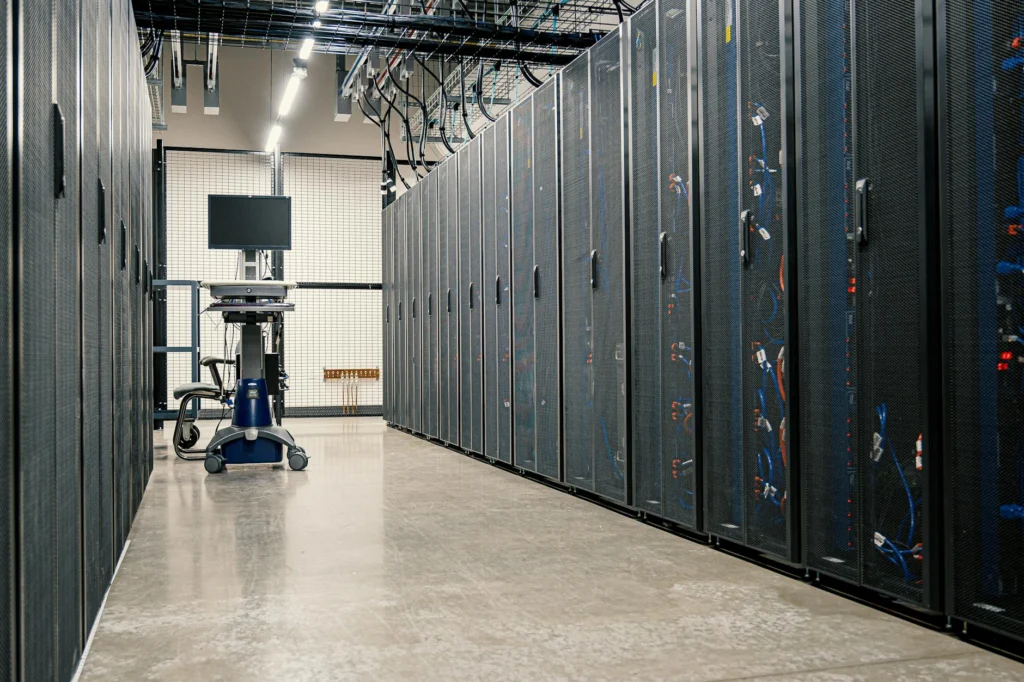
The operation worked like this: Liaw and Chang allegedly directed executives at an unnamed Southeast Asian company to place purchase orders with Supermicro[s] as though the servers were destined for that company’s own operations. The servers, packed with Nvidia’s restricted B200 and H200 GPUs, were assembled in the U.S., shipped to Supermicro’s Taiwan facilities, then delivered to the Southeast Asian intermediary. From there, a logistics company repackaged them into unmarked boxes and shipped them to their real destination: China.
To dodge Supermicro’s own compliance checks, the defendants allegedly staged thousands of nonworking “dummy” servers at the Southeast Asian company’s warehouses. Workers used hair dryers to peel serial number stickers off real servers and reapply them[s] to the fakes, a process captured on surveillance cameras.
The Southeast Asian company grew to become Supermicro’s 11th-largest customer globally[s] in fiscal 2024, with $99.7 million in reported revenue. By the time prosecutors intervened, the total value of server sales through this channel had reached $2.5 billion.
The Fallout
Supermicro’s stock crashed 33% on March 20[s], erasing billions in market value. Short sellers collected an estimated $860 million in single-day gains, according to financial data firm S3 Partners. Liaw resigned from Supermicro’s board, Chang was placed on administrative leave, and Sun was fired.
Supermicro itself is not named as a defendant. The company said the alleged conduct “is a contravention of the Company’s policies and compliance controls” and that it is cooperating fully with the investigation.
Each defendant faces up to 20 years in prison[s] on the most serious charge.
Why It Matters
Since October 2022, the U.S. has banned the export of advanced AI chips to China without a license, citing national security concerns. The controls specifically target chips like Nvidia’s B200 and H200 GPUs[s], which are among the most powerful processors used for training and running AI models.
But this case demonstrates the limits of those controls. A Financial Times investigation last July estimated that China was able to secure about $1 billion in advanced [s]AI processors[s] in just three months after tightened restrictions took effect. Chris McGuire, a senior fellow at the Council on Foreign Relations, said the Supermicro indictment reveals “glaring loopholes” in the Southeast Asian transshipment route.
This is also not Supermicro’s first brush with export controls. In 2006, the company pleaded guilty to illegally exporting computer equipment to Iran[s] through a distributor in Dubai, paying roughly $455,000 in combined penalties. The pattern is strikingly similar: find a neighboring country, hide the real buyer, route the restricted technology through a middleman.
The co-founder of Super Micro Computer and two others have been indicted for allegedly operating a multi-year, $2.5 billion smuggling operation that funneled Nvidia’s most advanced AI chips to China through a Southeast Asian shell company. The indictment, unsealed in Manhattan federal court[s] on March 19, 2026, details one of the largest export control prosecutions in U.S. history and raises fundamental questions about whether Washington’s chip blockade can actually hold.
The Defendants
Three men face federal charges: Yih-Shyan “Wally” Liaw, 71, a U.S. citizen who co-founded Supermicro in 1993 and served as its senior vice president of business development and a member of its board of directors; Ruei-Tsang “Steven” Chang, 53, a Taiwanese national working as a sales manager in Supermicro’s Taiwan office; and Ting-Wei “Willy” Sun, 44, also Taiwanese, described in the indictment as a third-party broker and “fixer” who coordinated logistics between the parties.
Liaw was arrested in California[s] and released on bail. Sun was also taken into custody and is being held pending a detention hearing. Chang remains a fugitive. All three are charged with conspiring to violate the Export Controls Reform Act (carrying up to 20 years in prison), conspiring to smuggle goods from the U.S. (up to five years), and conspiring to defraud the United States (up to five years).
The Pipeline
The mechanics of the alleged scheme are detailed in the indictment and reported extensively by Fortune[s]. The pipeline worked in stages:
Liaw and Chang allegedly directed executives at an unnamed Southeast Asian company to place purchase orders with Supermicro, making it appear the servers were destined for that company’s own use. The servers, fitted with Nvidia’s restricted B200 and H200 GPUs[s], were assembled in the United States. From there, they were shipped to Supermicro’s facilities in Taiwan, then forwarded to the Southeast Asian company at a different location. A separate shipping and logistics company then repackaged the servers into unmarked boxes, stripping all identifying labels and packaging, before the systems were shipped to their true destination: buyers in China.
The defendants and the Southeast Asian company’s executives allegedly created false documents and communications designed to ensure Supermicro’s compliance team approved the sales allocations. The Southeast Asian company grew from $99.7 million in fiscal 2024 revenue to become Supermicro’s 11th-largest global customer[s]. By the time the indictment was unsealed, total server sales through this channel had allegedly reached $2.5 billion.
Dummy Servers and Hair Dryers
The most operationally audacious element of the alleged scheme was how the defendants dealt with audits.
Supermicro’s compliance team launched an audit of the Southeast Asian company in late 2024. According to the indictment, Chang arranged for a “friendly” auditor employed by Supermicro[s] to conduct the inspection. When a more rigorous second audit was scheduled for August 2025, the defendants allegedly went further. Sun and Chang staged hundreds of nonworking “dummy” servers at the Southeast Asian company’s warehouses so auditors could physically confirm that servers were present and accounted for. In reality, the actual servers had already been shipped to China.
Sun estimated the staging operation would need about 100 workers, forklift operators, arranged meals, and a “20-person shuttle bus”[s] for transport between the hotel and warehouse. During the actual audit, however, Supermicro’s compliance worker was “off-site enjoying entertainment paid for”[s] by the Southeast Asian company, according to the indictment. Sun sent photos and videos of the staged servers instead.
After the audit, Sun texted Liaw to say it had gone smoothly, covering 2,107 units across three warehouses[s]. Liaw replied: “That’s spectacular!”
In December 2025, the Bureau of Industry and Security (BIS) sent its own inspector for a post-shipment verification check. The indictment alleges Sun set up the dummy servers again, this time using a hair dryer to peel off serial number stickers from real servers and reapply them[s] to the fakes. Surveillance cameras captured the entire process. Sun allegedly introduced himself to the BIS inspector as “Michael” and claimed he worked at the Southeast Asian company’s law firm[s].
“We Need to Speed These Up”
The indictment paints a picture of defendants who were well aware of the legal risks but pressed on anyway. Encrypted messaging apps[s] were used throughout to coordinate shipments and discuss delivery locations in China.
In January 2025, when the Trump Administration announced new AI export restrictions set to take effect on May 13, Liaw texted an executive at the Southeast Asian company: “We need to speed these up before May 13!”[s] A few days later, he followed up: “We can ship all your 512 x B200 by Feb. Let us run fast before May 13!”
The urgency paid off for the conspirators, at least temporarily. Prosecutors allege that in a three-week window from late April to mid-May 2025, $510 million worth of servers[s] were shipped to the Southeast Asian company and forwarded to China.
In March 2025, the Southeast Asian company executive sent Liaw a news article about other smugglers being caught routing Nvidia chips to China, writing: “I’m very concerned Wally.”[s] Liaw tried to calm him down and continued processing orders. In August 2025, a broker involved in the scheme sent Liaw a DOJ press release about more arrests for AI chip smuggling. Liaw responded with a string of sobbing-face emojis, then kept working.
A Company That Has Been Here Before
This is not Supermicro’s first encounter with export control enforcement. In 2006, the company pleaded guilty in federal court to illegally exporting computer equipment to Iran[s]. The Iran shipments, which took place between September 2001 and March 2003, were routed through a distributor in Dubai on six separate occasions without required OFAC licenses. Supermicro paid a combined $454,727 in penalties to the DOJ, the Bureau of Industry and Security, and the Treasury Department’s OFAC.
The structural similarity between the two cases, separated by two decades, is striking. Both involved finding a neighboring country where sales were legal, hiding the identity of the real buyer, and routing restricted technology through a pass-through intermediary. In the Iran case, it was the UAE. In the China case, it was an unnamed Southeast Asian nation.
Supermicro’s governance troubles extend beyond export controls. The company was delisted from Nasdaq in 2019[s] over accounting issues. Its auditor Ernst & Young resigned abruptly in October 2024, stating it could “no longer rely on management’s and the Audit Committee’s representations.” The SEC had previously fined the company $17.5 million in 2020 for accounting irregularities. Liaw himself had left the company after the 2018 accounting scandal, only to return as an adviser in May 2021[s], rejoin as a full-time executive in August 2022, and reclaim his board seat in December 2023.
The Market Response
Supermicro’s stock plummeted 33% on March 20[s], the day after the indictment was unsealed. Short sellers who had collectively bet $2.6 billion against the company reaped an estimated $860 million in single-day profits, according to financial data firm S3 Partners. Their March gains pushed close to $1 billion.
Supermicro itself is not named as a defendant in the indictment. The company issued a statement saying it has placed Liaw and Chang on administrative leave and terminated its relationship with Sun. Liaw subsequently resigned his board seat[s]. Supermicro appointed DeAnna Luna, who joined the company in 2024 as vice president of global trade and sanctions compliance, as its acting chief compliance officer.
Nvidia, which manufactures the chips at the center of the case but is not a target of the investigation, said that “strict compliance is a top priority”[s] and that “unlawful diversion of controlled U.S. computers to China is a losing proposition across the board.”
The Bigger Picture
The Supermicro case is the most significant prosecution to date under the export controls framework that has been in place since October 2022, when the Biden Administration first banned the sale of advanced AI chips to China without a license. The Trump Administration subsequently tightened those restrictions further.
But even as prosecutions escalate, the scale of the leakage remains substantial. A Financial Times investigation last July[s] estimated that China secured roughly $1 billion in advanced AI processors in just three months after Trump’s tighter controls took effect. Chris McGuire, a senior fellow for China and emerging technologies at the Council on Foreign Relations, said the Supermicro indictment exposes “glaring loopholes” in the Southeast Asian transshipment route.
“This operation is further evidence that China is aggressively stealing U.S. technology to help power its AI industry,” McGuire told NBC News[s], “which is unsurprising, given U.S. AI chips are far superior to any chips the Chinese can make.”
The policy tension is real. The U.S. government simultaneously wants to prevent China from acquiring the most advanced AI hardware and to allow American chipmakers to profit from the enormous Chinese market. In August 2025, the White House agreed to let Nvidia sell its more limited H20 chips to China[s], on the condition that Nvidia share 15% of chip sales revenue with the U.S. government.
Jay Clayton, the U.S. Attorney for the Southern District of New York, framed the case as a test of American credibility: “Crimes involving sensitive technology must be met with swift action otherwise the law is meaningless.”[s]
The FBI’s James C. Barnacle Jr. was blunter: “The FBI will hold accountable individuals who use American companies to provide export-controlled technology to our adversaries.”[s]
Whether this prosecution deters the next transshipment operation or simply demonstrates the difficulty of enforcing controls against determined insiders remains the open question. The $454,727 in penalties from Supermicro’s 2006 Iran case, which a sentencing memo stated would be “sufficient to deter other companies from committing similar crimes,” clearly was not.