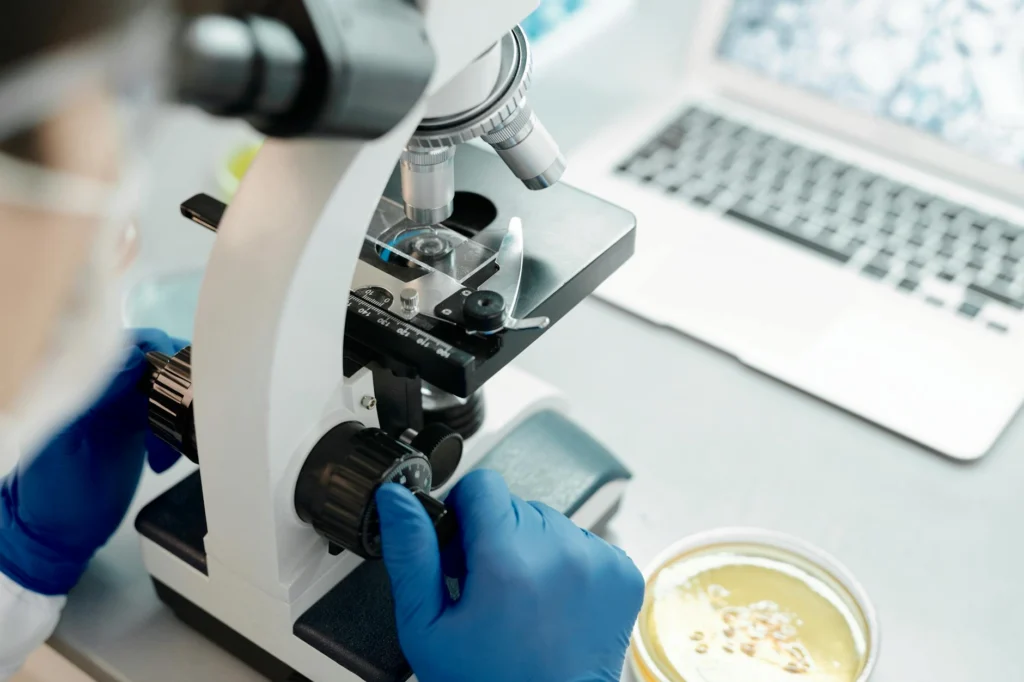
The global probiotics market was valued at USD 76.59 billion in 2025, yet sales figures say little about what happens after someone swallows a capsule.[s] The gap between supplement industry health claims and demonstrated biology is striking: gut microbiome probiotics work through specific, measurable mechanisms, but those mechanisms often fail to translate into the benefits printed on labels. Understanding what actually happens at the molecular level reveals both the genuine potential and the persistent limitations of these interventions.
In 2026, the International Scientific Association for Probiotics and Prebiotics published a consensus definition of gut health: “a state of normal gastrointestinal function without active gastrointestinal disease and gut-related symptoms that affect quality of life.”[s] That definition places diet as a major driver of gut health based on its effects on metabolism and the gut microbiome.[s] Probiotics enter this picture by attempting to shift the microbial community toward beneficial outcomes.
How Gut Microbiome Probiotics Work
Three core mechanisms are common across multiple probiotic taxa: pathogen inhibition, enhancement of epithelial barrier function, and immunomodulation.[s] These mechanisms provide the scientific foundation for probiotic commercialization, though their effects vary by strain, dose, and individual.
Short-Chain Fatty Acid Production
Gut bacteria ferment dietary fiber into short-chain fatty acids (SCFAs), primarily acetate, propionate, and butyrate. The proportions are roughly 60%, 20%, and 20% respectively, produced through fermentation of resistant starch and plant cell wall polysaccharides.[s]
Butyrate deserves particular attention. It serves as the primary energy source for colonocytes, strengthens epithelial integrity, modulates both local and systemic immune functions, and suppresses pro-inflammatory cytokines.[s] Major butyrate-producing gut bacteria include Faecalibacterium prausnitzii, Roseburia species, and Eubacterium rectale; probiotic strategies that increase SCFA production are biologically plausible but still strain- and context-dependent.[s]
These SCFAs signal through Free Fatty Acid Receptors 2 and 3 (FFAR2 and FFAR3), G protein-coupled receptors expressed in neurons, colonocytes, and adipocytes.[s] Slow-transit constipation research reports that microbiota-derived butyrate can promote serotonin synthesis through upregulation of tryptophan hydroxylase-1, linking microbial metabolism to gut motility.[s]
Barrier Function and Immune Modulation
The intestinal epithelium is a single-cell layer separating gut contents from the bloodstream. Tight junction proteins hold these cells together. Effective gut microbiome probiotics can strengthen this barrier by influencing tight junction protein expression and reducing intestinal permeability.[s]
Immune modulation occurs through direct interaction with gut-associated lymphoid tissue. Certain strains shift the balance between pro-inflammatory and regulatory immune cells.[s] In preterm infants, probiotic supplementation with Bifidobacterium significantly reduced antibiotic resistance gene prevalence, multidrug-resistant pathogen load, and restored typical early-life microbiota profiles.[s] The gut microbiomes of non-supplemented infants were characterized by pathobionts including Klebsiella, Enterobacter, Escherichia, Enterococcus, and Staphylococcus, while supplemented infants showed Bifidobacterium dominance.[s]
The 89-Fold Mouse Colonization Result
Stable gut colonization is essential for sustained therapeutic effects, but traditional oral probiotic supplements often fail to adapt to the gut environment.[s] Swallowed bacteria face gastric acid, bile salts, and competition from established residents, so many pass through without establishing durable residence.
New delivery approaches address this. When researchers encapsulated multicellular probiotic microcolonies in stress-relaxing hydrogel microspheres, the bacteria showed remarkable resistance to gastric acid, bile salts, and antibiotics compared to standard planktonic probiotics.[s] The result: 89-fold and 52-fold higher colonization rates in the cecum and colon of mice compared to conventional oral probiotics.[s]
This mouse result illustrates a broader delivery problem: if probiotic strains pass through without durable engraftment, mechanistic potential may not translate into lasting effects.
Why Clinical Trials Often Fail
A pervasive limitation in probiotic trials is reliance on descriptive microbial metrics, such as alpha diversity and taxonomic shifts, as surrogate indicators of therapeutic success.[s] A trial might show that a supplement changed gut bacteria composition, but that change does not necessarily translate to better health outcomes.
Reported benefits are not uniform across trials or populations. Effect sizes are often modest, highly strain-specific, and influenced by background diet and host factors.[s] These limitations are not inevitable consequences of biological complexity but reflect modifiable choices in study design and interpretation.[s]
Dosing and Strain Selection
Probiotic efficacy is measured in colony-forming units (CFU), with typical daily doses ranging from 1 billion to 10 billion CFU. Clinical benefits depend heavily on the specific strain or combination of strains, not just the species.[s] Evidence for well-studied strains such as Lactobacillus rhamnosus GG or Escherichia coli Nissle 1917 does not automatically transfer to other strains in the same genus.
Next-Generation Approaches
In inflammatory bowel disease research, traditional probiotics are limited by functional singularity and non-targeted mechanisms. Engineered probiotics, achieved through genetic modification and synthetic biology, can enable microenvironment responsiveness and more precise therapeutic targeting.[s] Gene-editing approaches and synthetic biology can help researchers design bacteria that respond to inflammation markers or deliver therapeutic compounds at disease sites.
Postbiotics offer another avenue. These non-viable microbial derivatives include SCFAs, bacteriocins, exopolysaccharides, and bacterial lysates, each exerting distinct biological effects.[s] Because they do not require living bacteria, postbiotics avoid live-bacteria engraftment requirements, though clinical data remain limited.
What This Means for You
Gut microbiome probiotics are not magic. They work through specific biochemical pathways: SCFA production, barrier reinforcement, immune modulation, and pathogen competition. Whether they help depends on the strain, the dose, the delivery mechanism, your existing microbiome, and your diet. A cautious assessment is that some strains help some people with some conditions, but broad generalizations remain premature.
If you choose to use probiotics, select products with strains that have clinical evidence for your specific concern. Accept that colonization may be temporary. Consider that dietary fiber, the substrate for SCFA production, may matter as much as the bacteria themselves.
This article is for informational purposes only and does not constitute professional advice.
The global probiotics market was valued at USD 76.59 billion in 2025.[s] Yet the mechanistic basis for many product claims remains poorly validated, and trials often fail to convert microbiome shifts into reproducible clinical outcomes.[s] The gap between supplement industry health claims and demonstrated biology reflects fundamental challenges in microbiome science: colonization resistance, strain-specificity, and the disconnect between compositional shifts and functional outcomes. Understanding the molecular pathways through which gut microbiome probiotics operate reveals both their therapeutic potential and the translational obstacles that limit clinical reproducibility.
The 2026 ISAPP consensus defined gut health as “a state of normal gastrointestinal function without active gastrointestinal disease and gut-related symptoms that affect quality of life.”[s] This definition explicitly foregrounds diet as a major driver based on known effects on metabolism and the gut microbiome.[s] Probiotic interventions attempt to modulate this system through introduction of exogenous microbial populations.
Molecular Mechanisms of Gut Microbiome Probiotics
Three core mechanisms are conserved across multiple probiotic taxa: pathogen inhibition through competitive exclusion and bacteriocin production, enhancement of epithelial barrier function via tight junction protein modulation, and immunomodulation through interaction with pattern recognition receptors.[s]
SCFA Production and Receptor Signaling
Anaerobic fermentation of dietary fiber yields short-chain fatty acids in the proportions of approximately 60% acetate, 20% propionate, and 20% butyrate, produced primarily from resistant starch and plant cell wall polysaccharides.[s] The metabolic fate of each SCFA differs: butyrate serves as the primary oxidative substrate for colonocytes, propionate participates in glucose metabolism and receptor signaling, and acetate enters systemic circulation for peripheral tissue metabolism.
Butyrate exerts pleiotropic effects: it serves as an essential energy source for colonocytes, strengthens epithelial integrity through claudin and occludin expression, modulates local and systemic immune functions, and suppresses pro-inflammatory cytokines including TNF-alpha and IL-6.[s]
SCFA signaling is mediated through Free Fatty Acid Receptors 2 and 3, G protein-coupled transmembrane receptors expressed in neurons, colonocytes, adipocytes, and enteroendocrine cells.[s] Acetate preferentially activates FFAR2; propionate shows higher affinity for FFAR3. The downstream effects include modulation of GLP-1 secretion, inflammatory pathway regulation, and enteric nervous system signaling.
Major butyrate-producing gut bacteria include Faecalibacterium prausnitzii, Roseburia species, and Eubacterium rectale.[s] Microbiota-derived butyrate rescues motility deficits by promoting 5-hydroxytryptamine synthesis through upregulation of tryptophan hydroxylase-1, establishing a molecular pathway from microbial metabolism to gut motility via the serotonergic system in slow-transit constipation research.[s]
Barrier Integrity and Immunological Crosstalk
Epithelial barrier function depends on tight junction protein complexes including ZO-1, occludin, and claudins. Probiotic strains can modulate barrier integrity through multiple pathways: direct effects on tight junction assembly, mucin secretion stimulation, and suppression of barrier-disrupting inflammatory cascades.[s]
Clinical evidence from preterm infant cohorts demonstrates meaningful microbiome-level effects. Probiotic supplementation significantly reduced antibiotic resistance gene prevalence, multidrug-resistant pathogen load, and restored typical early-life microbiota profiles.[s] Shotgun metagenomic analysis revealed that non-supplemented infant gut microbiomes were characterized by early-life pathobionts including Klebsiella, Enterobacter, Escherichia, Enterococcus, and Staphylococcus, while supplemented cohorts showed Bifidobacterium dominance with active replication (Index of Replication greater than 1.5).[s]
The Colonization Barrier
Stable gut colonization is essential for sustained therapeutic effects, yet traditional oral probiotic supplements often fail to adapt to the gut environment.[s] Colonization resistance, the phenomenon by which established microbiota exclude invading species, presents a fundamental obstacle to probiotic engraftment.
Transcriptomic analysis comparing planktonic bacteria to multicellular microcolonies reveals differential expression of biofilm formation genes, quorum sensing pathways, and stress response factors. Microcolonies show upregulation of curli fimbriae, type I flagella, acid resistance genes (gadA, gadB, gadC), and heat shock proteins, all of which enhance colonization competence.
An engineered delivery system encapsulating multicellular probiotic microcolonies in covalent-ionic crosslinked alginate hydrogel microspheres demonstrated remarkable resistance to gastric acid, bile salts, and antibiotics compared with planktonic probiotics.[s] The result: 89-fold and 52-fold higher colonization rates in the cecum and colon of mice, respectively, compared to conventional oral probiotics.[s]
This mouse colonization differential illustrates why delivery can matter: transient luminal passage does not equate to functional integration, and poor engraftment can limit durable effects.
Translational Limitations in Clinical Evidence
A pervasive limitation in microbiome-focused probiotic trials is reliance on descriptive microbial metrics, such as alpha diversity and taxonomic shifts, as surrogate indicators of therapeutic success.[s] These compositional endpoints lack direct correlation with host physiology: statistically significant microbiome changes may occur without corresponding clinical benefit.
Reported benefits are not uniform across trials or populations. Effect sizes are often modest, highly strain-specific, and influenced by background diet and host factors.[s] Critically, many of the shortcomings observed in probiotic and microbiome-focused clinical trials are not inevitable consequences of biological complexity but rather reflect modifiable choices in study design and interpretation.[s]
Specific design flaws include: inadequate control of dietary confounders, endpoint overload with multiple uncorrected comparisons, reliance on symptom-based outcomes in settings with substantial placebo responsiveness, and misalignment between prespecified endpoints and claims ultimately advanced.
Dosing Pharmacokinetics
Probiotic efficacy is measured in colony-forming units, with typical daily doses ranging from 1 × 10⁹ to 1 × 10¹⁰ CFU. Clinical benefits are highly dependent on the specific strain or combination of strains.[s] This strain-specificity means that evidence for Lactobacillus rhamnosus GG does not transfer to other Lactobacillus rhamnosus strains, let alone other species within the genus.
Next-Generation Probiotics and Engineered Therapeutics
In inflammatory bowel disease research, traditional probiotics are limited by functional singularity and non-targeted mechanisms. Engineered probiotics, achieved through genetic modification and synthetic biology, have enabled microenvironment responsiveness and more precise therapeutic targeting.[s] Gene-editing approaches and synthetic biology enable construction of bacteria with inflammation-sensing circuits, localized therapeutic payload release, and optimized delivery systems.
Postbiotics represent a complementary approach. These non-viable microbial derivatives encompass diverse bioactive compounds: SCFAs, exopolysaccharides, bacteriocins, antioxidant enzymes, surface layer proteins, and bacterial lysates, each exerting distinct biological effects.[s] Postbiotics avoid live-bacteria engraftment requirements and offer advantages in chemical stability and safety for vulnerable populations, though clinical data remain limited.
Synthesis
Gut microbiome probiotics operate through well-characterized biochemical pathways: SCFA production and receptor signaling, barrier reinforcement through tight junction modulation, immune crosstalk via pattern recognition receptor engagement, and competitive exclusion of pathogens. The primary translational obstacles are colonization failure, strain-specificity that precludes generalization, and trial designs that conflate compositional change with clinical benefit. Future developments in engineered delivery systems, genetically modified strains, and postbiotic formulations may overcome some of these limitations.
This article is for informational purposes only and does not constitute professional advice.