Every time you open a door, use scissors, or ride a bicycle, you are using physics humans have studied for more than 2,200 years. Simple machines mechanical advantage allows a small input force to accomplish work that would otherwise require brute strength far beyond human capability. Archimedes is commonly credited with saying that, given a place to stand, he could move the earth.[s] The lever principle behind the boast is real: with a sufficiently long, idealized lever, a person could theoretically balance a thousand-pound load with less than a pound of force.[s]
This seems impossible. Where does the extra force come from? The answer lies in understanding what simple machines mechanical advantage actually means, and why it does not violate the laws of physics.
The Six Simple Machines
Many complex mechanisms, from construction cranes to automobile systems, combine six fundamental devices: the lever, wheel and axle, pulley, inclined plane, wedge, and screw.[s] All six have been used for thousands of years, and Archimedes quantified the physics behind several of them in the third century BCE.[s]
Wedges have deep prehistoric roots: Homo erectus used wedge-shaped stone tools at least 1.2 million years ago.[s] The lever appeared as balance scales around 5000 BCE.[s] These are not primitive technologies; they are the physical principles underlying force multiplication.
Simple Machines Mechanical Advantage Explained
Mechanical advantage is a number that tells you how many times a machine multiplies your effort force.[s] A crowbar with a mechanical advantage of 10 lets you lift 100 pounds by pushing down with only 10 pounds of effort. A pulley system with a mechanical advantage of 4 lets you hoist a 200-pound load using only 50 pounds of pull.
But there is a catch. A simple machine can change the amount of force you apply, but it cannot change the total amount of work you do.[s] If you reduce the force required by a factor of four, you must move your end of the machine four times as far. You are trading a small force acting through a large distance for a large force acting through a small distance.[s]
This is the force-distance trade-off, and it governs every simple machine. Force and displacement are inversely related: increasing one decreases the other by the same factor.[s]
How Each Machine Works
The Lever. A rigid bar pivoting on a fulcrum. Archimedes proved that if you push down far from the fulcrum, you can lift a heavy load placed near it. The law he discovered: effort multiplied by the length of the effort arm equals load multiplied by the length of the load arm.[s] Longer crowbar, less effort needed.
The Wheel and Axle. A large wheel attached to a smaller axle. Force applied to the wheel edge produces greater force at the axle. Doorknobs, steering wheels, and hand-cranked winches all exploit this principle.
The Pulley. A wheel with a groove supporting a rope. A single fixed pulley only changes the direction of force, but compound pulley systems multiply it. The mechanical advantage equals the number of rope segments supporting the load. To raise something one meter, you pull that many meters of rope.[s]
The Inclined Plane. A ramp. Walking a longer, gentler slope requires less force than climbing straight up, though you cover more distance.
The Wedge. Two inclined planes joined at their bases, used to split objects apart. Axes, knives, and door stops are wedges. The force you apply to the thick end gets concentrated along the thin edge.
The Screw. An inclined plane wrapped around a cylinder.[s] Rotating the screw translates circular motion into linear force. The Archimedes screw, used for lifting water, remains in use today as a simple pump.
Why This Works: Conservation of Energy
People sometimes ask: where does the extra force come from?[s] The intuition that force should be conserved is understandable, but incorrect. Energy is conserved, not force.
With a lever, you can obtain a multiplication of force, but not a multiplication of energy.[s] The work you put in equals the work the machine puts out. Work equals force times distance, so if the output force increases, the output distance must decrease proportionally. The fulcrum provides the reaction force, but no new energy appears.
This is the same principle governing the physics of flight: forces and energies must balance according to physical laws, with no free lunch hiding anywhere in the system.
Simple Machines Mechanical Advantage in Practice
Real machines are never perfect. Friction between moving parts converts some input work into heat, meaning the actual mechanical advantage is always less than the ideal.[s] Efficiency measures how close a machine gets to its theoretical maximum.
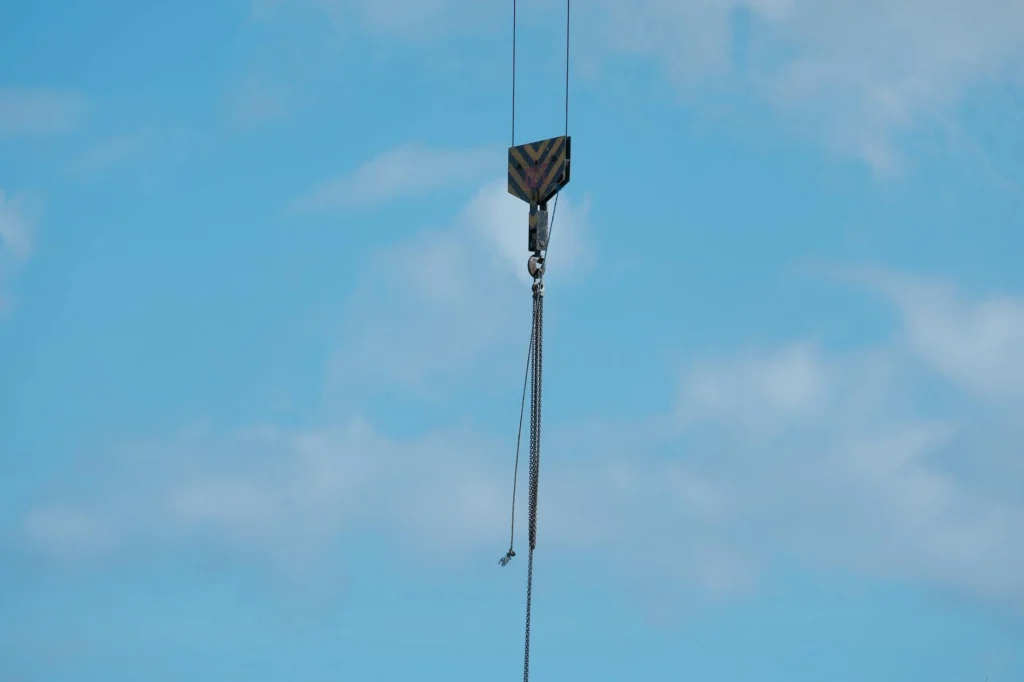
Despite these losses, simple machines mechanical advantage transforms what humans can accomplish. Construction cranes combine pulleys and levers to lift tons of steel. Bicycles use wheel-and-axle systems to convert leg power into speed. Car jacks employ screws to lift vehicles weighing thousands of pounds.
Understanding these six machines means understanding the physical logic behind many mechanical tools.
The Six Classical Simple Machines
Mechanical engineering recognizes six fundamental mechanisms: lever, wheel and axle, pulley, inclined plane, wedge, and screw.[s] Archimedes quantified the physics of several in the third century BCE.[s] Wedges have prehistoric roots, with wedge-shaped stone tools dated at least as far back as 1.2 million years ago.[s]
Defining Simple Machines Mechanical Advantage
Mechanical advantage (MA) is the ratio of output force to input force. The ideal mechanical advantage (IMA) assumes a frictionless system with no energy losses.[s] For any simple machine:
IMA = Foutput / Finput = dinput / doutput
This equality follows from conservation of energy: work in equals work out. Since W = F × d, increasing output force requires proportionally decreasing output distance.[s] Force and displacement are inversely related.[s]
Machine-Specific Formulas
Lever. Archimedes proved that the mechanical advantage depends on the fulcrum position.[s] The law of the lever states:
Feffort × Leffort = Fload × Lload
Therefore: MAlever = Leffort / Lload[s]
The longer the effort arm relative to the load arm, the greater the force multiplication.
Wheel and Axle. MA = rwheel / raxle
A wheel six times the axle radius provides MA = 6.[s]
Pulley Systems. The mechanical advantage of a moveable pulley equals the number of rope segments supporting the load.[s] For a system with N supporting ropes: MA = N, and lifting 1 meter requires pulling N meters of rope.[s]
Inclined Plane. MA = length / height
A 4-meter ramp rising 1 meter provides MA = 4.[s]
Wedge. MA = slope length / base width
Screw. A screw is an inclined plane wrapped helically around a shaft.[s]
MA = circumference / pitch (thread spacing)
Torque and the Lever: Derivation
The lever law derives from torque equilibrium. Torque magnitude equals force multiplied by the perpendicular lever arm. At equilibrium:
τeffort = τload
Feffort × Leffort = Fload × Lload
This formulation is the lever version of the same force-distance trade-off that appears in pulley systems.[s]
Simple Machines Mechanical Advantage and Energy Conservation
The common misconception asks: where does the extra force come from?[s] Force is not a conserved quantity; energy is.
With a lever, one can obtain a multiplication of force, but not a multiplication of energy.[s] The constraint is that the small input force must be exerted through a larger distance so that work input equals work output.[s]
This energy-based analysis underpins the physics of flight and other mechanical systems: forces obey Newton’s laws while energy remains conserved throughout transformations.
Efficiency and Actual Mechanical Advantage
Real machines lose energy to friction. The actual mechanical advantage (AMA) is measured empirically:
AMA = Foutput / Finput (measured)
Efficiency = AMA / IMA × 100%
Efficiency is always less than 100%.[s] Inclined planes and wedges typically have lower efficiencies than pulleys and levers because their large contact surfaces generate more friction.
Engineering Applications
Understanding simple machines mechanical advantage remains essential in modern engineering. Block-and-tackle systems lift heavy construction loads. Screw jacks raise buildings for foundation repair. Lever-based linkages control aircraft control surfaces. Compound machines combine multiple simple machines for multiplicative advantage.
The principles Archimedes helped formalize roughly 2,300 years ago continue to govern mechanical design.