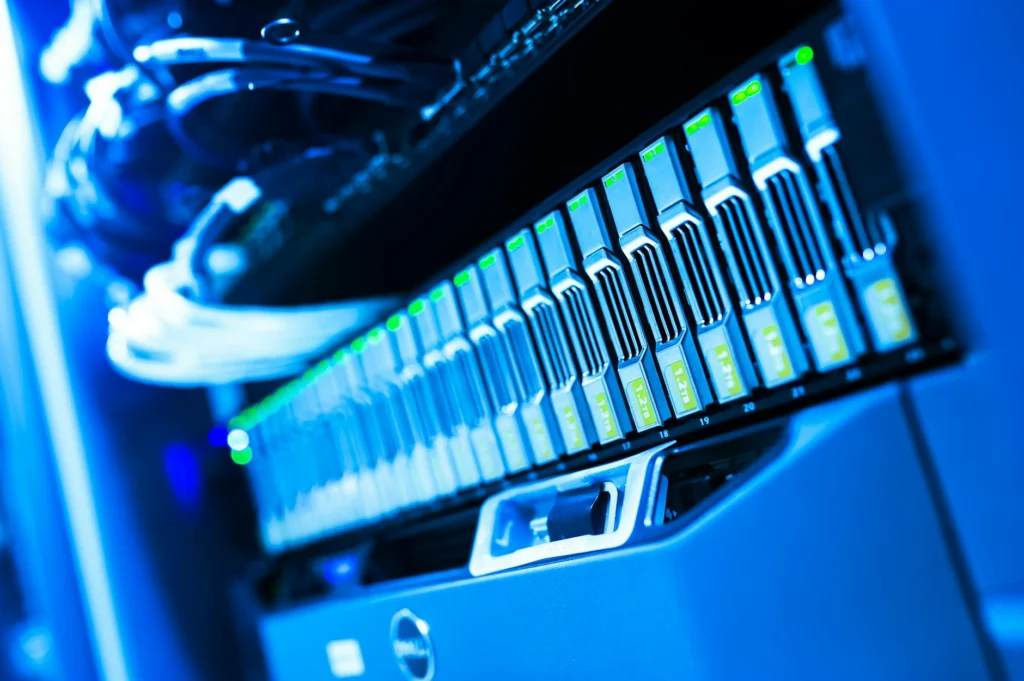
Sovereign AI infrastructure has become the defining obsession of global technology policy. From Paris to Abu Dhabi, governments are pouring hundreds of billions into GPU clusters, nuclear-powered data centers, and homegrown cloud platforms, all in pursuit of escape from American tech dependency. The pitch is seductive: build your own AI stack, and you control your digital destiny.
By 2026, global spending on sovereign AI systems is projected to surpass $100 billion[s]. Governments are on track to spend more than $1 trillion by 2030 chasing what analysts call a “sovereign stack”: the full range of hardware and software necessary to deploy AI infrastructure independently[s]. But there’s a problem with this trillion-dollar bet. The United States and China together control more than 90 percent of global AI data center capacity[s]. For most nations, true sovereignty may be structurally impossible.
The Sovereign AI Infrastructure Race
France has positioned itself at the forefront of Europe’s sovereign AI infrastructure push. President Emmanuel Macron has announced €109 billion in AI infrastructure and project investments, declaring: “This is our fight for sovereignty, for strategic autonomy. We want our cloud, we want our data centres, we want our computing capacities.”[s]
The French strategy leverages nuclear energy, a comparative advantage. France announced a €10 billion partnership with UK-based Fluidstack for a decarbonized AI supercomputer designed to host 500,000 next-generation chips,[s] but Fluidstack pulled out of the project in March 2026 to refocus on US contracts, leaving local authorities to seek alternative operators.[s] Mistral AI, backed by €1.7 billion in funding including €1.3 billion from Dutch semiconductor leader ASML, is building out Mistral Compute around a 40 MW data center in Essonne with a planned initial deployment of 18,000 Nvidia Grace Blackwell and Blackwell Ultra GPUs[s]. Major French enterprises including BNP Paribas, Orange, and Thales use this infrastructure precisely because it guarantees data residency within French borders[s].
The market is responding. Managed services in France experienced 142% year-on-year growth in Q2 2025 as regulated industries shifted to sovereign solutions[s]. SecNumCloud 3.2, a French government security certification for cloud services, remains out of reach for American hyperscalers unless they partner with local firms.
The EU Framework: Measuring Sovereignty
In April 2026, the European Commission awarded four sovereign cloud contracts to providers including Post Telecom/OVHCloud, STACKIT, Scaleway, and Proximus/S3NS[s]. The significance lies not in the contracts themselves but in what they represent: a concrete attempt to make sovereignty measurable.
The Commission developed a Cloud Sovereignty Framework introducing “Sovereignty Effectiveness Assurance Levels” from SEAL-0 (complete lack of sovereignty) to SEAL-4 (full EU supply chain from chips to software). Most awarded providers reached SEAL-3, meaning a provider’s service, technology, or operations are immune from supply chain disruption from non-EU third parties[s]. Before this framework existed, sovereignty was an abstract principle. Now it has concrete metrics.
But abstract or measured, sovereignty faces the same structural constraints. European firms still depend on the same chips, the same architectures, the same learning curves that concentrate power elsewhere.
The UAE: Sovereignty for the 30% That Matters
The United Arab Emirates has taken a different approach to sovereign AI infrastructure, one that acknowledges limits while protecting essentials. Eric Leandri, CEO of UAE sovereign AI company Aleria, frames the challenge bluntly: “Intelligence in the cloud … is the intelligence of somebody else.”[s]
Aleria announced plans to deploy 8,640 Nvidia Blackwell Ultra GPUs in the US, with plans to expand to 16,000[s]. The project is a significant sovereign AI infrastructure deployment. The company is backed by International Holding Company, chaired by Sheikh Tahnoon bin Zayed. But Leandri rejects the idea of total independence.
“Seventy per cent of what you’re doing does not need sovereignty,” Leandri argues. Shopping, delivery apps, routine services can run on global platforms without concern. The focus is on “the most sensitive 30 per cent”: healthcare, financial systems, government operations, and personal data. “Sovereignty first is not nice to have. It’s a must have.”[s]
This 70/30 model represents a realistic approach: acknowledging that full-stack sovereignty is impossible while protecting what cannot be compromised.
The Illusion Problem
Critics argue that sovereign AI infrastructure investments may create what researchers call “sovereignty simulacrum”: the appearance of technological independence while leaving countries vulnerable to deeper dependencies[s].
Consider the numbers. Deloitte, citing Oxford Internet Institute research, reported that only 34 countries host any public AI compute and only 24 have access to training-level compute; most rely on cloud or chip infrastructure controlled by a small number of foreign actors[s]. Even Singapore, hosting 60 percent of Southeast Asia’s data center capacity with 87 facilities, cannot escape structural dependency on foreign-owned AI development tools[s].
The US-backed TSMC Arizona project illustrates the problem: it seeks to bring Taiwanese advanced chip production onto American soil. But by the time all fabs are operational, they will produce chips a generation behind TSMC’s Taiwan facilities. As one Foreign Policy analysis observes: “Even when you can move the factories, you cannot move the learning curves.”[s]
The most advanced EUV lithography systems are manufactured exclusively by ASML in the Netherlands, at roughly $380 million each[s]. China has spent $150 billion attempting to replicate Dutch lithography technology; Chinese firms remain several generations behind. If China, with its centralized capital and vast domestic market, cannot achieve full-stack independence, what hope do middle powers have?
Sovereignty as a Service: The New Dependency
One uncomfortable critique comes from researchers who see “Sovereignty as a Service” as a new form of colonial relationship. Nvidia’s CEO has declared that “every country needs sovereign AI,” and the company is deploying chips and hardware from Denmark to Thailand to New Zealand[s].
But this creates dangerous dependency on tools that remain controlled by a single American company. Governmental lock-in to Nvidia infrastructure means residents bear both the costs of national AI production and the costs of the company’s operations[s]. Nations buy the hardware, build the data centers, consume the energy, and call it sovereignty. Yet Nvidia retains control over architectures, software stacks, and the pace of technological advancement.
Researchers writing in TechPolicy.Press argue that this “represents a modern incarnation of colonial build-operate-transfer schemes, where traditional institutional sites of power are preserved as facades but hollowed out”[s]. The language of sovereignty obscures continued dependence.
Strategic Agency, Not Autarky
The Tony Blair Institute offers a framework for thinking about this differently. Full self-sufficiency, they argue, “is too expensive, too slow and, for most countries, simply impossible. More importantly, it misrepresents what sovereignty really means in a digital, global and interconnected world.”[s]
True sovereignty, in this view, is not independence from all others but “the ability to act strategically, with agency and choice, in a world that is irreversibly interdependent.” Countries should identify narrow domains where they can become indispensable rather than attempting to replicate the entire stack.
The Netherlands provides the model. The Dutch do not design chips, fabricate semiconductors, or train frontier AI models. But ASML’s production gives them more influence over the global AI ecosystem than many countries pursuing far larger industrial strategies. This is power through indispensability, not independence.[s]
Japan’s Rapidus consortium focuses on high-velocity customized production rather than volume. The UAE and Singapore develop culturally optimized language models that global providers overlook. India’s digital public infrastructure demonstrates how population scale and identity systems can become assets that are difficult to duplicate[s]. Historical parallels exist: Japan’s rapid industrialization during the Meiji era succeeded by strategic technology adoption and domestic adaptation, not by reinventing everything from scratch.
The Real Sovereignty Threat
Perhaps counterintuitively, the greatest threat to sovereignty may be avoiding AI entirely. “Failing to access and apply the best systems is itself one of the greatest threats to sovereignty today,” the Tony Blair Institute report warns. “Countries that cannot use these tools will become dependent on those that can.”[s]
This creates a dilemma. Nations face reliability engineering challenges in deploying AI systems at scale, but deploying imperfect systems may be better than deploying none. Sovereign AI infrastructure that works is better than sovereign AI infrastructure that exists only on paper.
France’s previous sovereign cloud initiatives illustrate the risk. Despite extensive state support, they “never achieved meaningful scale”[s]. The result was “political reassurance without competitive advantage and a widening gap between European firms and their global peers.” Nations that pursue sovereignty without competitiveness may find they have built products designed to fail in global markets while protecting citizens from nothing.
Sovereign AI Infrastructure Beyond the Headlines
The sovereign AI infrastructure race will continue. Governments have legitimate concerns about data residency, supply chain resilience, and technological dependency. The EU’s SEAL framework represents genuine progress in making abstract principles concrete. France’s nuclear-powered AI ambitions leverage real comparative advantages. The UAE’s 70/30 approach acknowledges limits while protecting essentials.
But the trillion-dollar question remains: can any nation outside the US-China duopoly achieve meaningful sovereignty in a technological ecosystem designed around concentration and interdependence? The honest answer is probably not, at least not in the way sovereignty is usually understood.
What nations can achieve is strategic agency: the ability to negotiate their place in global systems, to specialize where they have advantages, to protect critical infrastructure without pretending to control everything. For most countries, that may have to be enough.
Sovereign AI infrastructure has become the central axis of global technology policy debate. Governments worldwide are committing hundreds of billions to GPU clusters, domestic cloud platforms, and localized training capacity, framing these investments as strategic autonomy from American hyperscaler dependency. The thesis appears straightforward: control your compute, control your digital future.
The spending trajectory validates the urgency. By 2026, global sovereign AI investment is projected to exceed $100 billion[s]. Governments are collectively on track to spend more than $1 trillion by 2030 chasing a “sovereign stack”: the complete hardware and software architecture necessary to deploy AI infrastructure without external dependencies[s]. Yet the structural economics present a problem. The United States and China control more than 90 percent of global AI data center capacity[s]. The supply chain bottlenecks that matter most, EUV lithography, advanced semiconductor fabrication, and GPU architectures, remain concentrated in a handful of firms.
France: The Nuclear-Powered Sovereign AI Infrastructure Model
France has announced €109 billion in AI infrastructure and project investments, positioning nuclear energy as its competitive advantage for compute-intensive workloads. President Macron has framed this explicitly as a sovereignty project: “This is our fight for sovereignty, for strategic autonomy. We want our cloud, we want our data centres, we want our computing capacities.”[s]
The technical architecture originally centered on Fluidstack’s €10 billion decarbonized supercomputer, with Phase 1 planned for 2026 at 1 GW of compute capacity, expanding to host 500,000 next-generation AI chips.[s] Fluidstack withdrew from the French project in March 2026, pivoting to the US, and the site is now seeking alternative operators.[s] EDF has identified four potential sites with 2 GW of power for data center development. Mistral AI’s €1.7 billion Series C, led by ASML’s €1.3 billion investment for an 11% stake, supports a 40 MW facility in Essonne with a planned initial deployment of 18,000 Nvidia Grace Blackwell and Blackwell Ultra GPUs. Planned expansion targets 100 MW capacity[s].
The regulatory moat is equally significant. SecNumCloud 3.2 certification, a key requirement for sensitive French public-sector and regulated workloads, requires architectural compliance that US hyperscalers cannot achieve without local joint ventures. This has driven 142% year-on-year growth in French managed services as of Q2 2025[s].
SEAL Framework: Quantifying Sovereignty
The European Commission’s April 2026 sovereign cloud procurement introduced the Cloud Sovereignty Framework with Sovereignty Effectiveness Assurance Levels (SEAL-0 through SEAL-4). SEAL-2 represents data sovereignty: compliance with EU law without requiring additional technical measures. SEAL-3 represents digital resilience: immunity from supply chain disruption by non-EU entities. SEAL-4 requires a full EU supply chain from silicon to software[s].
The four awarded providers (a Post Telecom/OVHCloud/CleverCloud partnership, STACKIT, Scaleway, and a Proximus-led partnership using S3NS, Clarence, and Mistral) achieved SEAL-2 or SEAL-3 ratings. Notably, Proximus leverages Google Cloud technology through S3NS, a Thales joint venture, demonstrating that non-European technologies can achieve SEAL-2 when operated within appropriate frameworks[s].
The framework’s contribution is conceptual: transforming sovereignty from political abstraction to procurement criterion. “Before the Sovereign Cloud Framework was developed, it was not possible to measure digital sovereignty.”[s]
UAE: The 70/30 Sovereignty Partition
The UAE’s Aleria, backed by Sheikh Tahnoon bin Zayed’s International Holding Company, represents a different approach to sovereign AI infrastructure: protecting critical workloads while accepting interdependence elsewhere. Aleria announced that it will deploy 8,640 Nvidia Blackwell Ultra GPUs in the US with expansion to 16,000 planned, plus early access to Nvidia’s DGX Vera Rubin systems for the UAE[s].
CEO Eric Leandri articulates the partition explicitly: “Seventy per cent of what you’re doing does not need sovereignty.” Consumer applications, routine services, and non-sensitive workloads can run on global infrastructure. Sovereignty focus applies to “the most sensitive 30 per cent: health care, financial systems, government operations and personal data.”[s]
The core insight: “Intelligence in the cloud … is the intelligence of somebody else.”[s] Model weights, training data, and inference patterns constitute intellectual property. Running sensitive inference on external infrastructure exposes that IP to the infrastructure provider. For the 30% that matters, local control is non-negotiable.
The Stack Dependencies That Sovereignty Cannot Solve
The sovereign AI infrastructure thesis faces structural constraints at multiple stack layers. Deloitte, citing Oxford Internet Institute research, reported that only 34 countries host any public AI compute and only 24 have access to training-level compute; most rely on cloud or chip infrastructure controlled by a small number of foreign actors[s]. Singapore, hosting 87 data centers comprising 60% of Southeast Asian capacity, still depends on foreign-owned AI development tools and architectures[s]. Data localization achieves “sovereignty simulacrum”: the appearance of independence while computation and model control remain foreign-held.
The silicon layer presents even harder constraints. ASML’s EUV lithography systems, at approximately $380 million each, are manufactured exclusively in the Netherlands[s]. China has invested $150 billion attempting to replicate this capability; domestic alternatives remain generations behind. TSMC and Samsung dominate advanced fabrication. Nvidia controls GPU architectures. The stack co-evolves: ASML improvements enable new chip designs; TSMC fabrication advances unlock new AI architectures; those architectures demand faster memory from SK Hynix and Samsung.
“Even when you can move the factories, you cannot move the learning curves,” as Foreign Policy observed of TSMC Arizona. The US-backed Arizona project will produce chips a generation behind TSMC Taiwan by the time all fabs are operational[s].
Sovereignty as a Service: Lock-in Dynamics
Nvidia’s global expansion creates a specific form of dependence that sovereign AI infrastructure spending may reinforce rather than escape. The company has declared “every country needs sovereign AI” while deploying hardware infrastructure from Denmark to Thailand to New Zealand[s].
The lock-in mechanism operates across multiple layers: hardware architectures, CUDA software stack, networking interconnects, and cloud services. “Governmental lock-in to NVIDIA’s infrastructure could mean that residents not only bear the costs of national AI production, but also that they bear costs of the company’s operations.”[s]
Researchers characterize this as “Sovereignty as a Service,” a pattern where “traditional institutional sites of power are preserved as facades but hollowed out”[s]. The parallel to 19th-century build-operate-transfer colonial infrastructure schemes is explicit: nations provide territory, energy, and capital while the technology provider retains architectural control. This represents a dangerous dependency on tools that govern everything from training efficiency to inference latency.
The Agency Framework: Sovereignty as Strategic Positioning
The Tony Blair Institute’s analysis reframes the problem. “Full self-sufficiency is too expensive, too slow and, for most countries, simply impossible. More importantly, it misrepresents what sovereignty really means in a digital, global and interconnected world.”[s]
The alternative: sovereignty as strategic agency rather than autarky. This requires managing tradeoffs across three dimensions simultaneously: investing in domestic capability where it creates leverage; securing access to frontier capability through global systems; maintaining coherence across regulatory, industrial, and diplomatic strategy. Seven specific levers emerge: frontier access, deployment diffusion, demand signaling, interoperability, national models, talent, and energy planning.
The Netherlands demonstrates the model. ASML gives a small country veto power over semiconductor production despite building no chips itself. Japan’s Rapidus consortium focuses on high-velocity customized fabrication rather than volume competition. India’s digital public infrastructure creates assets difficult to replicate[s]. Historical precedent supports this approach: Japan’s rapid industrialization during the Meiji era succeeded through strategic technology adoption and institutional adaptation, not by rebuilding foreign innovations from scratch.
The Deployment Imperative
The inverse risk deserves attention: sovereignty-focused strategies that sacrifice competitiveness. “Failing to access and apply the best systems is itself one of the greatest threats to sovereignty today. Countries that cannot use these tools will become dependent on those that can.”[s]
France’s previous sovereign cloud efforts illustrate the trap. Despite substantial state support, they “never achieved meaningful scale”[s]. The outcome: “political reassurance without competitive advantage and a widening gap between European firms and their global peers.” Sovereignty theater that produces products designed to fail in competitive markets protects nothing.
Real-world sovereign AI infrastructure must navigate reliability engineering challenges: achieving production stability while maintaining security boundaries. Sovereign systems that work imperfectly may serve national interests better than sovereign systems that exist only as policy announcements.
Assessment
The sovereign AI infrastructure investment wave reflects legitimate concerns: data residency, supply chain resilience, technological dependency, and strategic autonomy. The EU’s SEAL framework advances the field by making sovereignty measurable. France’s nuclear-powered compute strategy leverages genuine comparative advantage. The UAE’s 70/30 partition acknowledges structural limits while protecting essentials.
But the $1 trillion question persists: can any nation outside the US-China duopoly achieve meaningful stack independence when EUV lithography, advanced fabrication, and GPU architectures remain concentrated? Probably not, at least not by conventional sovereignty definitions.
What remains achievable is strategic agency: negotiating position within interdependent systems, specializing where comparative advantage exists, protecting infrastructure that cannot be compromised, and deploying AI at scale regardless of origin. For most nations, that may constitute the practical ceiling of sovereignty in the AI era.