Shadow fleet tankers now transport nearly 70% of Russia’s seaborne crude oil, generating an estimated $85 billion annually for the Kremlin’s war chest[s]. This parallel shipping network, built specifically to evade Western sanctions, has grown into one of the largest maritime operations in modern history, and Western governments are struggling to contain it.
What Shadow Fleet Tankers Are
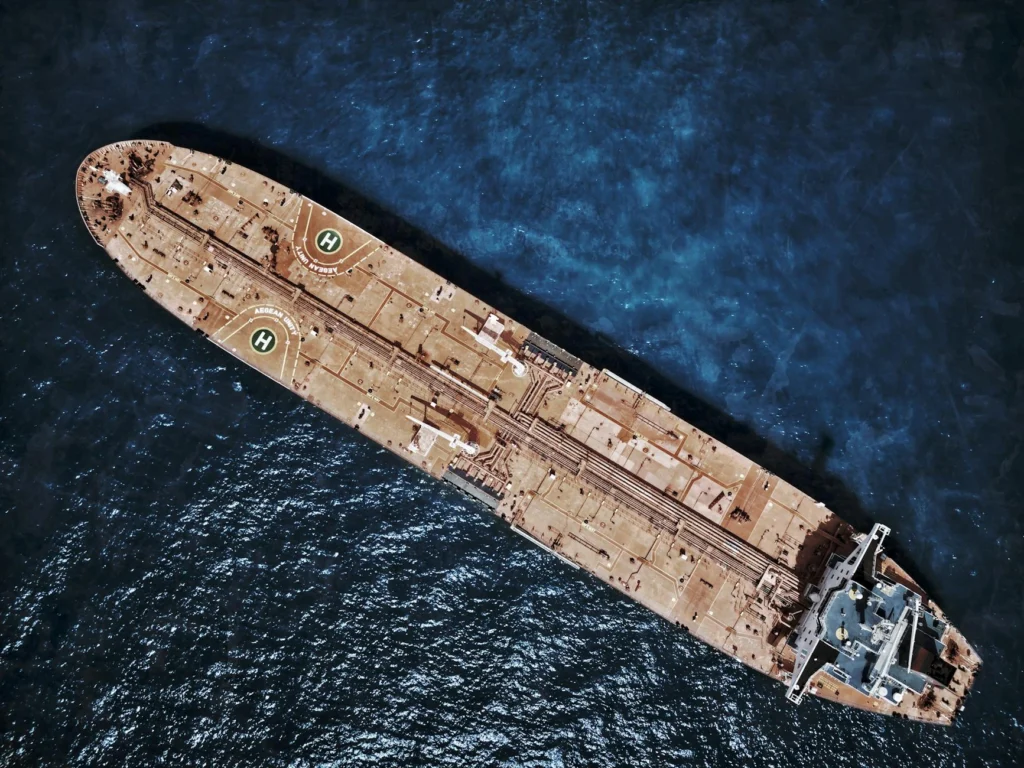
The shadow fleet refers to ships that transport sanctioned cargo outside the official shipping system. These vessels share common characteristics: opaque ownership through shell companies, flags from countries with minimal oversight, missing or inadequate insurance, and ages that would normally consign them to scrapyards[s].
The fleet exploded in size after Western governments introduced a $60 per barrel price cap on Russian oil in December 2022. By August 2025, broker BRS estimated that 1,140 shadow oil tankers were operating, representing more than 18% of the global oil tanker fleet[s]. France has since estimated the total shadow fleet at between 1,000 and 1,200 ships[s].
Russia reportedly spent $10 billion between 2022 and 2025 buying hundreds of aging vessels secondhand[s]. Other estimates suggest the fleet cost $14 billion to assemble[s].
The Environmental Time Bomb
These aging vessels represent a mounting environmental threat. Greenpeace research found that shadow fleet tankers passing Germany’s Baltic coast are now 70% more numerous than before the war, and nearly twice as old[s]. The average age has climbed to 16.6 years, up from 8.9 years before the conflict, and two thirds lack protection and indemnity insurance[s].
The danger became tangible on Christmas Day 2024, when the Cook Islands-flagged shadow tanker Eagle S allegedly dragged its anchor for approximately 90 kilometers along the seabed between Finland and Estonia, severing four data cables and one power interconnector[s]. Operators estimated repair costs at about €60 million[s]. Finnish prosecutors charged the captain and two officers with aggravated sabotage[s].
Western Response and Russian Countermeasures
The EU’s 20th sanctions package, adopted in April 2026, added 46 vessels to port access bans, bringing the total number of sanctioned ships to 632[s]. The package also banned transactions with Russian ports at Murmansk and Tuapse, and introduced insurance restrictions on LNG tankers serving Russia[s].
Enforcement has intensified. In March 2026, Belgian special forces supported by French helicopters boarded and seized the tanker Ethera in the North Sea, suspecting it of carrying false documents and a fraudulent flag[s].
Russia has responded by deploying its navy. In January 2026, the Russian government’s maritime board announced measures to protect merchant ships linked to Russia, and shadow fleet tankers began receiving naval escorts through the Baltic and English Channel[s].
Some vessels have taken the unusual step of registering directly under the Russian flag, abandoning the pretense of operating through third-party registries[s]. Four LNG tankers switched to Russian registration in March and April 2026 and headed toward Arctic ports[s].
Why It Matters
The shadow fleet has become Russia’s financial lifeline. The closure of the Strait of Hormuz during the U.S.-Israeli war with Iran sent Russian oil revenues surging 115% month-on-month in March 2026, with nearly half transported by shadow fleet tankers[s]. Urals crude hit a 13-year high of $116 per barrel[s].
Whether sanctions can ultimately strangle this revenue stream remains uncertain. Western enforcement has raised costs and narrowed Russia’s options, but as long as buyers in India and China need oil, shadow fleet tankers will keep sailing.
Shadow fleet tankers now transport nearly 70% of Russia’s seaborne crude oil, generating an estimated $85 billion annually for the Kremlin[s]. This parallel shipping infrastructure, constructed specifically to circumvent the G7 oil price cap and associated maritime sanctions, has emerged as the central battleground in the economic pressure campaign against Russia.
Scale and Structure of Shadow Fleet Tankers
The shadow fleet refers to vessels transporting sanctioned cargo outside the official shipping system. These ships typically feature opaque beneficial ownership structures routed through shell companies, registration with flags of convenience or false flag documentation, absence of International Group P&I Club insurance, and ages that exceed normal market thresholds for scrapping[s].
The fleet expanded dramatically following the December 2022 introduction of the G7’s $60 per barrel price cap, which required coalition-jurisdiction service providers to verify cargoes were sold below the cap. By August 2025, broker BRS estimated 1,140 shadow oil tankers were operational, representing 18% of the global oil tanker fleet[s]. France’s current estimate places the total shadow fleet between 1,000 and 1,200 vessels, with more than half now subject to sanctions[s].
Russia’s investment in this infrastructure has been substantial. Estimates range from $10 billion spent between 2022 and 2025 acquiring aging tankers secondhand[s] to $14 billion for the complete fleet assembly and operational establishment[s].
Environmental and Infrastructure Risks
Shadow fleet tankers present compounding risks to maritime safety and undersea infrastructure. Greenpeace documented a 70% increase in Russian oil tankers transiting Germany’s Baltic coast compared to pre-war levels, with vessel age nearly doubling[s]. The average age of these tankers has risen to 16.6 years from 8.9 years, while two thirds operate without P&I coverage from recognized clubs[s].
The Eagle S incident demonstrated the dual-use threat. On Christmas Day 2024, the Cook Islands-flagged tanker allegedly dragged its anchor approximately 90 kilometers through the Gulf of Finland, severing four data cables and the EstLink 2 interconnector[s]. Operators estimated repair costs at about €60 million[s]. Finnish prosecutors subsequently charged the vessel’s captain and two officers with aggravated sabotage[s].
The current operational picture is complicated by Ukrainian strikes on Russian port infrastructure. Between 30 and 40 shadow fleet tankers are currently idling in the Gulf of Finland awaiting repairs to terminals at Ust-Luga and Primorsk[s], creating concentrated environmental and security vulnerabilities in Baltic shipping lanes.
Sanctions Architecture and Enforcement
The EU’s 20th sanctions package, adopted April 2026, expanded the shadow fleet regime by designating 46 additional vessels, bringing total EU-listed ships to 632[s]. The package established the legal basis for a future full maritime services ban on Russian crude and petroleum products, though implementation remains pending G7 coordination[s].
Key measures include transaction bans on Russian ports at Murmansk and Tuapse, designation of the Karimun oil terminal in Indonesia as a circumvention node, and phased restrictions on LNG tanker services: Russian-owned or flagged vessels from April 2026, all others operating in Russian trade from January 2027[s].
Enforcement operations have intensified. In March 2026, Belgian special forces with French helicopter support boarded and seized the tanker Ethera in the North Sea, suspecting false flag registration under Guinea and fraudulent documentation[s]. NATO’s Operation Baltic Sentry, launched January 2025 to monitor suspicious shipping after Baltic cable incidents, continues operating in the region[s].
Russian Adaptation Strategies
Russia has responded to enforcement pressure through several mechanisms. In January 2026, the Russian Maritime Board formally announced measures to protect merchant ships linked to Russia, operationalizing naval escorts for shadow fleet tankers transiting the Baltic and English Channel[s].
A notable trend involves direct Russian flag registration. Since late 2025, some shadow fleet vessels have abandoned third-party registries entirely, obtaining Russian registration[s]. This accelerated after intensive Western boarding operations but subsequently slowed, suggesting Russia remains reluctant to assume full flag state liability for the aging fleet. However, four LNG tankers, Kosmos, Luch, Orion, and Merkuriy, switched to Russian registration in March and April 2026 and headed toward Arctic ports near the US-sanctioned Arctic LNG 2 project[s].
Revenue Implications and Strategic Assessment
The shadow fleet remains Russia’s primary mechanism for monetizing oil exports. The effective closure of the Strait of Hormuz during the U.S.-Israeli war with Iran generated a 115% month-on-month surge in Russian seaborne crude export revenue in March 2026, with nearly half transported via shadow fleet tankers[s]. Urals crude reached $116 per barrel, a 13-year high[s].
Western sanctions have raised operational costs and legal risks for the shadow fleet ecosystem, but structural limitations constrain enforcement efficacy. The G7 price cap architecture assumed continued Russian reliance on Western maritime services; the parallel infrastructure Russia constructed has fundamentally undermined that premise. Until a coordinated full services ban materializes, or until buyer nations reduce demand, shadow fleet tankers will remain the critical node in Russia’s sanctions circumvention network.