In a Livermore, California fire station, a light bulb has been burning since 1901.[s] The Centennial Light, manufactured by the Shelby Electric Company, has outlasted every modern bulb on the market. It proves that durable products are technically possible. The question is why we don’t make them anymore.
The answer lies in planned obsolescence economics, a business model where durability becomes a liability rather than an asset. When products last too long, customers stop buying replacements. For manufacturers, the math is simple: a phone that lasts ten years generates one sale, while a phone that lasts two years generates five.
The Cartel That Started It All
On December 23, 1924, executives from the world’s major light bulb manufacturers gathered in Geneva.[s] Representatives from Osram, Philips, General Electric, and others formed the Phoebus cartel. Their goal was to standardize light bulb lifespans at 1,000 hours, down from the 1,500 to 2,000 hours that bulbs had previously lasted.
The cartel enforced this standard through fines. Factories that produced longer-lasting bulbs were penalized.[s] By 1933, the average bulb lifespan had dropped by a third, from 1,800 hours to just 1,205 hours. This was not technical regression. This was planned obsolescence economics in action: engineering products to fail so that customers must buy more.
From Light Bulbs to Smartphones
The same logic now governs the electronics industry. In December 2017, Apple admitted to deliberately slowing down older iPhones as their batteries degraded.[s] The company claimed this prevented unexpected shutdowns. Critics called it a scheme to push customers toward buying new phones.
The legal consequences were significant. Apple paid $113 million to settle claims with 34 U.S. states,[s] plus $500 million in a separate class action lawsuit. A UK lawsuit is seeking £1.6 billion more.[s] Apple denied wrongdoing but agreed to provide clearer information about battery performance going forward.
The Environmental Cost
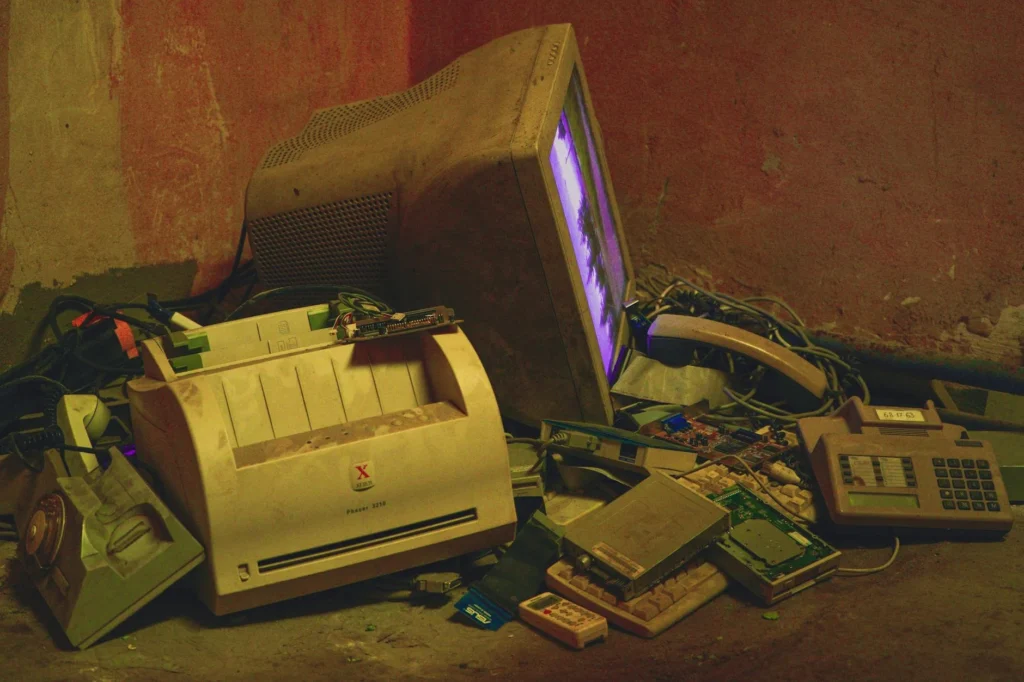
Planned obsolescence economics has global consequences. In 2022, the world produced 62 million tonnes of electronic waste, an 82% increase from 2010.[s] Only 22.3% was properly recycled, leaving $62 billion worth of recoverable resources unaccounted for.
The UN report identifies shorter product life cycles as a key driver of this crisis.[s] E-waste is projected to reach 82 million tonnes by 2030. The business model that enriches manufacturers is burying the planet in discarded devices.
The Pushback Begins
Governments are starting to respond. In 2015, France became the first country to criminalize deliberate product failure, with fines up to €300,000 and prison terms up to two years.[s] In January 2021, France introduced a repairability index requiring manufacturers to score products on how easy they are to fix.[s]
The European Union followed. The Right to Repair Directive, adopted in June 2024, requires manufacturers to repair products at reasonable prices and bans hardware or software techniques that impede repair.[s] Sweden offers tax rebates covering 50% of repair labor costs.[s]
The Choice We Face
The Centennial Light proves that products can be built to last. The Phoebus cartel proves that manufacturers chose not to build them that way. Planned obsolescence economics is not a law of nature. It is a business decision, and business decisions can be regulated.
The question is whether we value short-term corporate profits over long-term environmental sustainability. France, Sweden, and the EU have begun to answer that question. The United States has moved more slowly: by 2025, only five states (New York, California, Minnesota, Colorado, and Oregon) had enacted electronics right-to-repair laws, though bills have now been filed in all 50.[s]
Every discarded phone, every appliance that dies just after its warranty expires, every device with proprietary screws that no consumer tool can open is a monument to planned obsolescence economics. We have the technology to build things that last. We simply lack the political will to demand it.
A carbon-filament light bulb manufactured by the Shelby Electric Company in the 1890s has been burning continuously since 1901 at a Livermore, California fire station.[s] The Centennial Light, as it is known, demonstrates that incandescent bulbs could be engineered for exceptional durability. That manufacturers chose not to pursue this path reveals the core tension in planned obsolescence economics: durability undermines revenue.
This tension is not accidental. It is the predictable outcome of market structures where manufacturers profit from replacement cycles rather than product longevity. Understanding planned obsolescence economics requires examining both its historical origins and its contemporary manifestations.
Planned Obsolescence Economics: The Phoebus Cartel
The formalization of planned obsolescence as corporate strategy dates to December 23, 1924, when representatives from Osram, Philips, General Electric, and other major manufacturers formed the Phoebus cartel in Geneva.[s] The cartel’s stated purpose was standardization and quality improvement. Its actual function was to reduce light bulb lifespans from the 1,500 to 2,000 hours common at the time to a mandated 1,000 hours.
The enforcement mechanism was sophisticated. Every factory in the cartel network was required to send bulb samples to a central testing laboratory in Switzerland. Factories producing bulbs that lasted longer than the standard faced financial penalties.[s] The result was systematic: average bulb lifespan fell from 1,800 hours in 1926 to 1,205 hours by 1933-34, a decline of one-third.
The cartel collapsed during World War II, but its legacy persists. The term “planned obsolescence” itself was coined by Bernard London, a real estate broker who argued during the Great Depression that building products with artificial expiration dates would stimulate consumer spending.[s] What began as Depression-era economic theory became standard corporate practice.
Contemporary Manifestations: The Apple Case
Modern planned obsolescence economics operates through software as much as hardware. In December 2017, Apple confirmed what many users had suspected: the company had deliberately throttled the processing performance of older iPhones through software updates.[s] Apple’s justification was that aging lithium-ion batteries could not provide sufficient voltage, causing unexpected shutdowns. Performance throttling, the company argued, extended phone lifespan.
Regulators disagreed with the framing. California Attorney General Xavier Becerra, joined by 33 other states, characterized Apple’s actions as misrepresentation that limited consumers’ ability to make informed purchasing decisions.[s] The complaint alleged that iPhone 6 and 7 generation phones were equipped with batteries particularly susceptible to performance loss, and that Apple misrepresented software updates as “improving power management” rather than reducing performance.
The settlements were substantial: $113 million to the multistate coalition, $500 million in a separate consumer class action. Ongoing UK litigation seeks £1.6 billion.[s] Apple denied wrongdoing but agreed to injunctive terms requiring transparent communication about battery performance management.
Aggregate Consequences: The E-Waste Crisis
The individual transactions of planned obsolescence economics aggregate into a global environmental crisis. The UN’s Global E-waste Monitor 2024 documents the scale: 62 million tonnes of electronic waste generated in 2022, an 82% increase from 2010, with projections of 82 million tonnes by 2030.[s]
The recycling rate is stagnant. Only 22.3% of 2022’s e-waste was documented as properly collected and recycled, leaving $62 billion worth of recoverable natural resources unaccounted for.[s] The UN report explicitly identifies “shorter product life cycles” and “limited repair options” among the key drivers of this widening gap.
The externalities fall disproportionately on lower-income countries. An estimated 18 million tonnes of e-waste is managed by informal sectors in low and lower-middle income countries, where material recovery comes at high health and environmental costs.[s]
Regulatory Responses: The European Model
France has pioneered regulatory intervention against planned obsolescence economics. In 2015, the French National Assembly established criminal penalties for deliberate product failure: fines up to €300,000 and imprisonment up to two years.[s] In January 2021, France became the first European country to implement a mandatory repairability index covering smartphones, laptops, televisions, washing machines, and lawnmowers.[s]
The EU’s Right to Repair Directive, adopted June 2024 and applicable from July 2026, extends this approach across the bloc.[s] The directive requires manufacturers to repair products within reasonable time and at reasonable price. Critically, it prohibits “contractual clauses, hardware or software techniques that impede the repair of goods” unless justified by legitimate and objective factors. An online European Repair Platform will help consumers locate repair services.
Sweden’s approach uses fiscal policy rather than mandates, offering income tax reimbursement of up to 50% of labor costs for household appliance repairs.[s] This incentivizes repair behavior without imposing direct obligations on manufacturers.
The American Lag
The United States presents a contrasting regulatory landscape. Massachusetts passed the first Motor Vehicle Owners’ Right to Repair Act in 2012, but progress on broader electronics legislation has been uneven. By 2025, right-to-repair bills had been introduced in all 50 states, yet only five (New York, California, Minnesota, Colorado, and Oregon) had enacted electronics right-to-repair laws.[s] The gap between legislative activity and enacted policy reflects the lobbying power of industries that benefit from planned obsolescence economics.
The counterargument from industry is familiar: planned replacement cycles drive innovation, make technology accessible through lower initial costs, and support employment in manufacturing sectors. These claims merit scrutiny. The Centennial Light’s carbon filament technology was available in the 1890s; the Phoebus cartel’s members chose lower quality, not higher innovation. The “accessibility” argument ignores lifecycle costs: consumers who buy cheaper but less durable products pay more over time.
Conclusion: A Political Choice
Planned obsolescence economics is not a technical constraint. It is a business model that treats durability as a threat to revenue. The Phoebus cartel understood this a century ago. Apple’s battery throttling settlement demonstrates that contemporary manufacturers operate under the same logic.
The choice between disposable and durable economies is political. France, Sweden, and the European Union have decided that environmental sustainability and consumer rights outweigh manufacturer preferences. The United States has moved more slowly, though the momentum has shifted: bills are now filed in every state.
The 62 million tonnes of e-waste generated annually, the $62 billion in recoverable resources unaccounted for, the health costs borne by communities processing discarded electronics, these are the true costs of planned obsolescence economics. They are externalized from corporate balance sheets onto the environment and future generations. Whether that continues is not a question of technology. It is a question of political will.