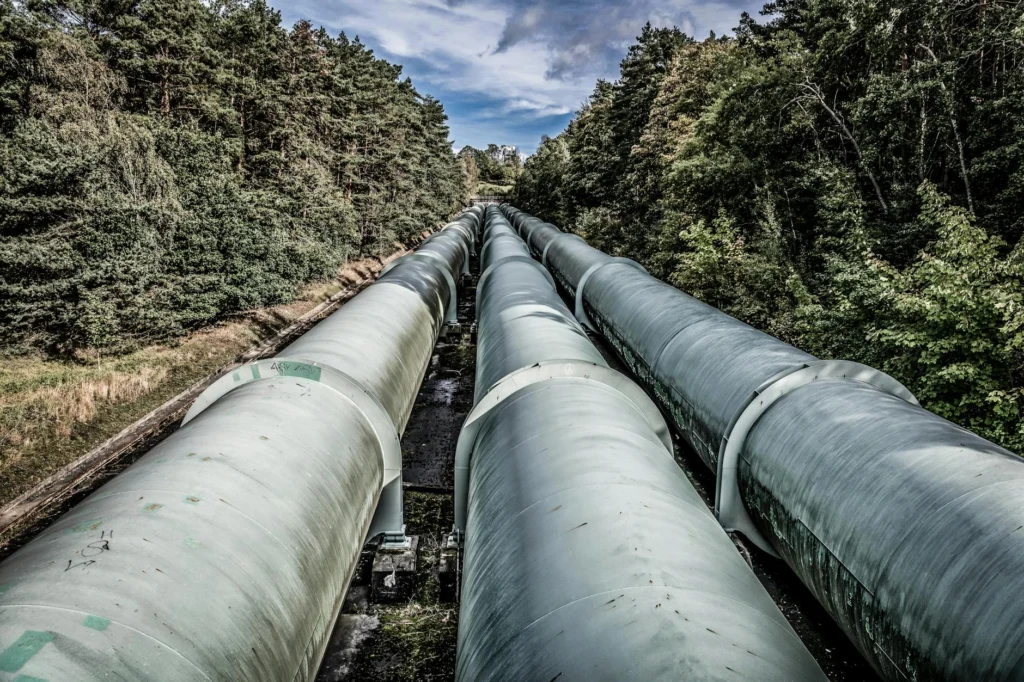
Pipeline infrastructure sabotage has emerged as one of the defining features of modern geopolitical conflict. On September 26, 2022, explosions ripped through three of four Nord Stream pipelines in the Baltic Sea, causing what researchers later determined was the largest single human-created methane release in history[s]. Three years later, no country has claimed responsibility, and the investigation remains open.
The attack marked a turning point. Pipeline infrastructure sabotage transformed from a theoretical risk into an operational reality that European governments could no longer ignore[s].
Why Pipelines Make Attractive Targets
Energy pipelines represent uniquely vulnerable infrastructure. They span thousands of kilometers, often through remote terrain or deep underwater. They cannot be moved, cannot be hidden, and are difficult to patrol. A simple explosive device can disable a critical section for weeks or months.
This vulnerability is not new. During the Iraq War from 2003 to 2005, insurgents carried out nearly 200 attacks on oil pipelines, primarily targeting the line from Kirkuk to the Turkish port of Ceyhan[s]. In Colombia, guerrilla groups attacked the Cano Limon-Covenas pipeline so frequently that it became known as “the flute”[s].
What changed after Nord Stream is scale and context. Pipeline infrastructure sabotage moved from insurgent tactics in conflict zones to a tool of great power competition in peacetime.
The Baltic Sea Becomes Ground Zero
Since 2022, the Baltic Sea has become the world’s most active zone for suspected infrastructure attacks. In November 2024, two telecommunications cables connecting Finland, Germany, Lithuania and Sweden were severed within hours of each other[s]. German Defense Minister Boris Pistorius called it “hybrid action” and stated bluntly: “Nobody believes that these cables were accidentally severed”[s].
One month later, the Eagle S tanker severed the EstLink 2 power cable linking Finland and Estonia. Finnish authorities found military-grade detection equipment in the vessel’s hull, suggesting a premeditated attack rather than an accident[s].
These undersea cables and pipelines carry more than energy. Fiber optic lines beneath the ocean floor transmit 97 percent of intercontinental data and facilitate over 80 percent of American military communications[s]. Pipeline infrastructure sabotage, in other words, threatens not just energy security but the entire digital backbone of modern economies and militaries.
Russia’s Shadow Fleet
Western intelligence agencies have documented Russia’s deliberate strategy of targeting critical infrastructure. Since 2000, Moscow has rebuilt its navy with explicit doctrine to “threaten the critical undersea infrastructure on which the West relies”[s].
The tool of choice is what analysts call the “shadow fleet”: over 1,000 vessels that operate with dubious registration, often with transponders switched off, carrying out tasks ranging from sanctions evasion to infrastructure attacks[s]. Against this armada, NATO’s Joint Expeditionary Force defending Baltic infrastructure numbered just 28 vessels as of mid-2024.
The strategy exploits a gap between peace and war. Rod Thornton of King’s College London explains that Russia uses sabotage “as an alternative to a full-on war with NATO, which would be disastrous for Russia”[s]. The goal is disruption without triggering Article 5, NATO’s collective defense clause.
The Expanding Threat
Russia is not alone in developing these capabilities. China has unveiled a deep-sea cable cutting submersible with no apparent purpose other than severing undersea infrastructure[s]. Chinese vessels have been implicated in at least three Baltic cable incidents over the past two years.
The threat extends to cyber attacks as well. In May 2021, the Colonial Pipeline ransomware attack shut down the largest fuel pipeline on the US East Coast, causing panic buying and fuel shortages across multiple states[s]. US intelligence has warned that China “almost certainly is capable of launching cyber-attacks that could disrupt critical infrastructure services within the United States, including against oil and gas pipelines”[s].
In April 2026, Serbian President Aleksandar Vucic announced that explosives with “devastating power” had been discovered just a few hundred meters from the TurkStream pipeline near the Hungarian border[s]. No perpetrator has been identified.
What Comes Next
The trajectory of pipeline infrastructure sabotage points toward escalation. European governments face a stark infrastructure deficit. The continent’s electricity grid averages 40 years old. Meeting renewable energy targets will require 54,000 kilometers of new transmission lines and over 1.2 trillion euros in investment by 2040[s]. All of this must be built while protecting existing infrastructure from deliberate attack.
International law offers limited protection. Legal experts note “a distinct absence of provision in the law of armed conflict dealing specifically with pipelines”[s]. The Nord Stream attack raised fundamental questions about state responsibility and attribution that remain unresolved.
Pipeline infrastructure sabotage will likely intensify before it fades. The economics favor attackers: a small team with modest explosives can cause billions in damage and months of disruption. As the EU Institute for Security Studies concluded, Europe’s energy infrastructure is already “under attack” and must be put “on a war footing”[s].
Pipeline infrastructure sabotage represents a structural vulnerability in global energy security that has moved from theoretical concern to operational reality. The September 2022 destruction of three Nord Stream pipeline sections in the Baltic Sea produced the largest anthropogenic methane release ever recorded[s]. The damaged sections contained 778 million cubic meters of natural gas at the time of detonation[s].
This event catalyzed a fundamental reassessment of how transatlantic policymakers approach physical infrastructure protection. Pipeline infrastructure sabotage joined the existing toolkit of Russian energy statecraft, which over the preceding 15 years had encompassed supply cutoff threats, monopolistic market practices, and elite capture through strategic corruption[s].
Attack Surface Analysis: Pipeline Infrastructure Sabotage
Energy transmission infrastructure presents an asymmetric attack surface. Pipelines and submarine cables span distances measured in thousands of kilometers through unpatrolled maritime zones and remote terrestrial corridors. The fixed nature of this infrastructure negates mobility as a defensive option.
Historical precedent demonstrates the tactical viability of pipeline attacks. During coalition operations in Iraq from 2003 to 2005, approximately 200 attacks targeted the Kirkuk-Ceyhan pipeline corridor, costing the Iraqi government an estimated $10 billion in lost revenue[s]. In Colombia, the FARC and ELN conducted so many attacks on the 480-mile Cano Limon-Covenas line that it became known as “the flute”[s]. These attacks added an estimated $10-per-barrel “fear premium” to global oil prices.
The post-2022 shift involves state-level actors targeting peer adversary infrastructure during nominal peacetime, a qualitative change in the threat environment.
Baltic Sea: Operational Environment Assessment
The Baltic Sea has emerged as the primary theater for undersea infrastructure attacks. On November 17-18, 2024, the BCS East-West Interlink and C-Lion1 fiber optic cables were severed within hours and approximately 100 kilometers of each other[s]. German Federal Defense Minister Boris Pistorius characterized the incident as “hybrid action” and explicitly rejected the accident hypothesis[s].
The December 2024 EstLink 2 severance demonstrated increased sophistication. Finnish authorities recovered the Eagle S tanker, which contained military-grade hull-mounted detection equipment inconsistent with commercial operations[s]. This suggests premeditated target acquisition rather than opportunistic damage.
The strategic significance of Baltic infrastructure extends beyond regional energy flows. Submarine fiber optic cables carry 97 percent of intercontinental data traffic and more than 80 percent of US military communications globally[s]. Pipeline infrastructure sabotage and cable cutting threaten the command-and-control backbone of NATO operations.
Russian Doctrine and Shadow Fleet Capabilities
Russian naval doctrine, formalized post-2000, explicitly incorporates undersea infrastructure targeting. Moscow’s strategy employs “surface and sub-surface assets to threaten, and appear to threaten, the critical undersea infrastructure on which the West relies”[s]. Johannes Peters of the Kiel University Center for Maritime Strategy has noted that “disrupting these cables would be one of Russia’s main tactics” in early-stage conflict.
Implementation relies on the “shadow fleet”: a network exceeding 1,000 vessels operating with falsified registration, intermittent AIS transmission, and dual-use capabilities[s]. NATO’s defensive countermeasure, the Joint Expeditionary Force, deployed 28 vessels in mid-2024: a ratio exceeding 35:1 in the adversary’s favor.
This approach exploits what King’s College London’s Rod Thornton identifies as sub-threshold aggression: “sabotage as an alternative to a full-on war with NATO”[s]. Operations remain below the Article 5 trigger while inflicting cumulative economic and operational damage.
Emerging State Actors and Multi-Domain Threats
China has developed dedicated infrastructure-attack capabilities, including a recently unveiled deep-sea cable cutting submersible with no plausible civilian application[s]. Chinese-flagged or Chinese-owned vessels have been implicated in multiple Baltic incidents, including the 2023 Balticconnector damage.
Cyber vectors compound physical vulnerabilities. The May 2021 Colonial Pipeline ransomware attack by DarkSide demonstrated that digital intrusion could achieve physical disruption of critical energy infrastructure, causing fuel shortages across the US East Coast[s]. US intelligence assessments indicate China possesses capabilities to “launch cyber-attacks that could disrupt critical infrastructure services within the United States, including against oil and gas pipelines”[s].
Physical attack vectors continue to proliferate. In April 2026, Serbian authorities discovered explosive devices of “devastating power” positioned within meters of the TurkStream pipeline near the Hungarian border[s]. Attribution remains pending.
Infrastructure Deficit and Legal Vacuum
European energy infrastructure faces compounding vulnerabilities. The continental grid averages 40 years of age. Offshore Grid Development Plan projections require 54,000 kilometers of new transmission capacity to integrate 500 GW of renewable generation, with total investment exceeding €1.2 trillion by 2040[s]. Each kilometer of new infrastructure expands the attack surface.
International legal frameworks provide minimal protection. The San Remo Manual stipulates only that “belligerents shall take care to avoid damage to pipelines laid on the sea-bed which do not exclusively serve the belligerents”[s]. Legal scholars note “a distinct absence of provision in the law of armed conflict dealing specifically with pipelines”[s]. Attribution difficulties further complicate state responsibility determinations.
The asymmetric economics of pipeline infrastructure sabotage favor sustained aggression. Modest investment in explosive devices or anchor-dragging operations yields disproportionate disruption costs. The EU Institute for Security Studies assessment is direct: European energy infrastructure requires “a war footing” posture[s].