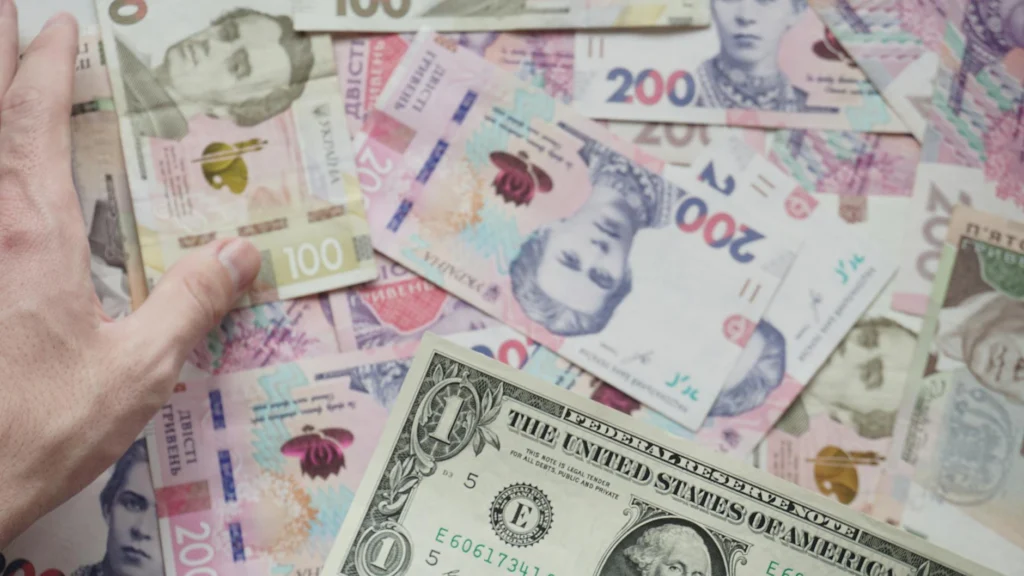
Every few months, a new headline announces the imminent collapse of dollar dominance. BRICS nations meet to discuss alternatives. China’s payment system breaks transaction records. Russia settles oil in yuan. Yet when you examine the actual plumbing of global trade, a stubborn reality emerges: the greenback’s grip on international finance has, if anything, tightened over the past five years.
The gap between de-dollarization rhetoric and infrastructure reality reveals one of the most misunderstood dynamics in international economics. Politicians may declare independence from the dollar, but their banks, corporations, and central banks keep routing transactions through New York.
Dollar Dominance by the Numbers
Start with foreign exchange markets, where currencies are actually traded. The dollar appeared on one side of 89% of all global FX transactions in 2025, according to the Bank for International Settlements[s]. The euro came second at 29%. The Chinese yuan, despite China’s status as the world’s largest trading nation, managed just 7%[s].
The picture in trade invoicing is equally stark. When businesses around the world write contracts for goods crossing borders, they overwhelmingly choose dollars or euros. Together, these two currencies account for over 80% of global trade invoicing[s]. The yuan’s share remains below 2%.
Perhaps most telling: the dollar’s share of international payments through SWIFT, the messaging system that underpins cross-border transactions, has actually risen from 39% to approximately 50% over the past five years[s]. That increase came during the very period when de-dollarization supposedly accelerated.
The BRICS Contradiction
Consider the countries most vocal about escaping the dollar. India, a founding BRICS member, denominates 86% of its exports in dollars despite sending only 15% of those exports to the United States[s]. When Indian rupees trade against other currencies, the dollar sits on the other side of the transaction 97% of the time.
India’s government has been remarkably candid about this. External Affairs Minister Subrahmanyam Jaishankar stated in March 2025 that “the dollar as the reserve currency is the source of international economic stability, and right now, what we want in the world is more economic stability, not less”[s]. Commerce Minister Piyush Goyal was blunter: “Imagine us having a currency shared with China. We have no plans. It is impossible to think of a BRICS currency.”
This matters because there has never been a formal proposal at BRICS for de-dollarization[s]. The bloc’s founding declaration in 2009 called vaguely for a “more diversified international monetary system.” Seventeen years later, that diversification remains aspirational.
What About China’s Alternative?
China’s Cross-Border Interbank Payment System (CIPS) generates the most excitement among de-dollarization advocates. In March 2026, CIPS processed a record 1.22 trillion yuan (roughly $178 billion) in a single day[s]. The system now connects banks across 190 countries.
These numbers sound impressive until you learn that CIPS relies on SWIFT’s messaging service for over 80% of its transactions[s]. The two systems remain more complementary than adversarial. SWIFT connects over 11,500 institutions across 235 countries and territories[s]. Even at record volumes, CIPS processes a fraction of global payment traffic.
Where De-Dollarization Is Real
This is not to say nothing has changed. Russian officials report that 99.1% of Russia-China bilateral trade now settles in rubles and yuan[s]. Western sanctions left them little choice. The dollar’s share of central bank reserves has slipped to 56.9%, the lowest since 1994[s].
But context matters. That 57% still represents $7.4 trillion in dollar assets held by foreign central banks. The euro, in second place, holds just 20%. And the reserve decline largely reflects diversification into a basket of smaller currencies, not a coordinated shift toward any single alternative.
Why Dollar Dominance Persists
The dollar’s staying power stems from something economists call network effects. The more people use a particular currency, the more valuable it becomes to use that currency. Dollar-based payment rails, legal conventions, and accounting standards are deeply embedded in global commerce[s].
Multinationals issue debt in dollars because investors prefer dollar assets. Investors prefer dollar assets because multinationals issue in dollars. Breaking this cycle requires not just alternative currencies but also the deep, liquid financial markets and legal institutions that took decades to build.
Jim O’Neill, the economist who coined the term “BRICS,” has been characteristically direct about the bloc’s currency ambitions: “Like many conventional international economists, I have generally dismissed the idea” that BRICS could challenge dollar dominance[s].
The Bottom Line
De-dollarization is real at the margins. Countries under sanctions have found workarounds. Central banks have diversified their reserves. Bilateral trade between geopolitical adversaries increasingly bypasses the dollar.
But the infrastructure that moves global trade, the payment systems and invoicing conventions and FX markets, remains anchored to the greenback. Until someone builds a genuine alternative to that infrastructure, talk of dollar dominance ending will remain premature.
The de-dollarization thesis rests on a category error: confusing reserve allocation decisions with the operational infrastructure of global trade. While central banks have indeed diversified their holdings away from dollar assets, the transactional architecture of international commerce has moved in the opposite direction. Dollar dominance in the plumbing of global finance has strengthened over the past five years, even as its share of central bank portfolios has declined.
Understanding this divergence requires examining three distinct dimensions of currency usage: reserves, transactions, and invoicing. Each tells a different story about the dollar’s international role.
The Transactional Reality of Dollar Dominance
Foreign exchange markets provide the clearest window into actual currency usage. According to the Bank for International Settlements, the dollar appeared on one side of 89% of global FX transactions in 2025[s]. This share has remained remarkably stable over two decades, hovering near 88% since the early 2000s[s].
The dollar’s share of international payments through SWIFT has actually increased, rising from 39% to approximately 50% over five years[s]. When intra-eurozone payments are excluded, the dollar’s share climbs to roughly 60%[s].
Trade invoicing patterns reinforce this picture. ECB and IMF data covering 120 countries through 2023 show the dollar and euro together accounting for over 80% of global trade invoicing[s]. The renminbi’s share remains below 2%, despite China’s position as the world’s largest exporter. Regional patterns are even more stark: the dollar accounts for 96% of trade invoicing in the Americas and 74% in Asia-Pacific[s].
The BRICS Structural Dependency
The structural dependency on the dollar extends to the very countries most vocal about de-dollarization. Carnegie Endowment research documents that 86% of India’s exports are dollar-denominated, despite only 15% of Indian exports going to the United States[s]. The dollar appears on one side of 97% of rupee FX transactions, 95% of real transactions, and 94% of renminbi transactions.
This dependency reflects the absence of efficient non-dollar clearing infrastructure. Payment-versus-payment arrangements, which reduce settlement risk in currency exchanges, remain overwhelmingly dollar-centric. The South African rand is the only BRICS currency eligible for settlement through the dominant global PvP arrangement[s]. For the rupee and real, local PvP systems exist only for dollar pairs.
Indian policymakers have acknowledged this reality. External Affairs Minister Jaishankar stated in March 2025 that “the dollar as the reserve currency is the source of international economic stability”[s]. Commerce Minister Goyal declared a shared BRICS currency “impossible.” Critically, there has never been a formal BRICS proposal for de-dollarization; the bloc’s founding 2009 declaration mentioned only a “more diversified international monetary system.”
CIPS: Growth Without Independence
China’s Cross-Border Interbank Payment System represents the most serious infrastructure alternative. CIPS processed a record 1.22 trillion yuan ($178 billion) in a single day in March 2026, with average daily volumes rising 50% month-over-month[s]. The system now connects banks across 190 countries with 193 direct and 1,573 indirect participants.
However, CIPS remains dependent on the infrastructure it purportedly challenges. Over 80% of CIPS transactions rely on SWIFT’s messaging service[s]. SWIFT connects over 11,500 institutions across 235 countries[s]. The yuan accounts for just 3% of SWIFT payment currency share, versus 48% for the dollar.
Beijing’s February 2026 updates to CIPS business rules signal ambitions to handle multi-currency settlements and integrate with other payment channels. Whether this represents genuine independence or merely reduced SWIFT dependency remains unclear.
Where De-Dollarization Has Occurred
Sanctions have forced genuine de-dollarization in specific bilateral corridors. Russian officials report that 99.1% of Russia-China trade now settles in rubles and yuan[s]. The dollar’s share of global central bank reserves has declined to 56.9%, the lowest since 1994[s], down from 72% at its 2001 peak.
The Federal Reserve’s analysis of this decline is instructive. Most reserve diversification has flowed not to the renminbi (which holds just 2% of reserves) but to a basket of smaller “non-traditional reserve currencies”[s]. The dollar’s reserve share, notably, has been “basically unchanged since 2022” when Russia sanctions were imposed, “suggesting that U.S. sanctions on Russia following the invasion of Ukraine have not led to fears of dollar ‘weaponization’ causing a notable reallocation of reserves out of dollars.”
Network Effects and Path Dependency
The persistence of dollar dominance reflects classic network economics. Once a medium becomes dominant, switching costs lock users in[s]. Dollar-based payment rails, legal conventions, and accounting standards are deeply embedded. Multinationals issue dollar debt because investors prefer dollar assets; investors prefer them because corporations issue in dollars. The circularity is self-sustaining.
Breaking this cycle requires not merely alternative currencies but comparable depth in financial markets, legal infrastructure, and institutional credibility. Jim O’Neill, who coined “BRICS,” has dismissed the bloc’s currency ambitions: “Like many conventional international economists, I have generally dismissed the idea”[s].
Assessment
Dollar dominance is eroding in reserve allocation while strengthening in transactional infrastructure. This divergence matters because reserves are a policy choice while transactions reflect market structure. Central banks can decide to hold fewer dollars; corporations and banks face switching costs that make dollar usage economically rational regardless of political preferences.
The de-dollarization thesis conflates these phenomena. Gradual reserve diversification is real and likely to continue. The emergence of genuine alternative payment infrastructure capable of displacing the dollar’s transactional role remains a multi-decade project, if it happens at all. Dollar dominance may be evolving, but reports of its demise remain greatly exaggerated.