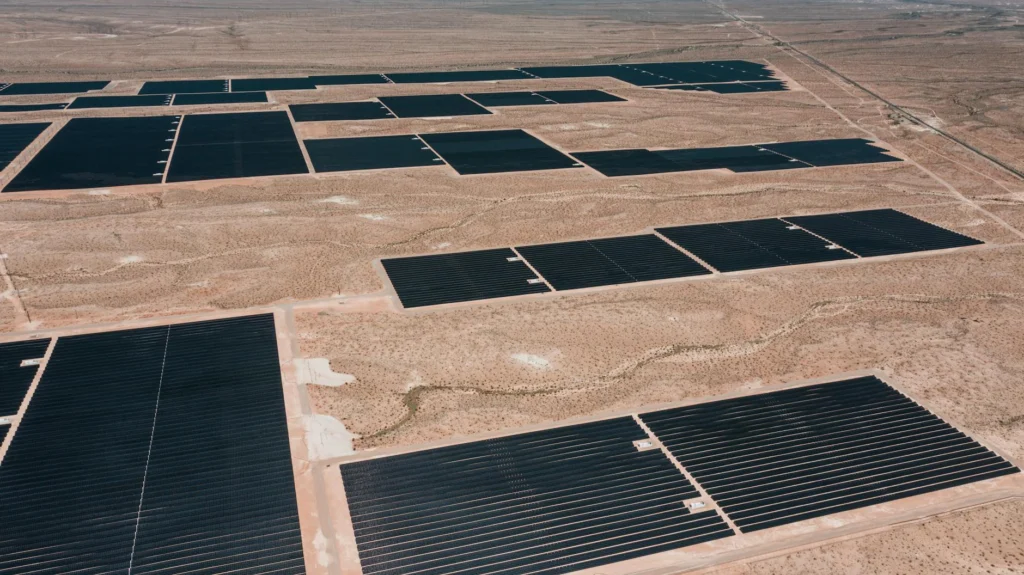
The world’s largest fossil fuel exporters are making a surprising move: investing billions in the very technologies meant to replace their core product. Gulf sovereign wealth funds alone poured $82 billion into global markets in 2023, with clean energy taking an increasingly large share of that capital[s]. Far from contradiction, this represents calculated hedging against an uncertain future.
Why Fossil Fuel Exporters Are Diversifying
The math is straightforward. More than 90 percent of new renewable energy projects now cost less than fossil fuel alternatives[s]. China, which drove global oil demand growth for over a decade, is expected to see its consumption peak in the coming years. Electric vehicles are displacing millions of barrels of oil per day. These trends give fossil fuel exporters strong reasons to diversify before their primary revenue source faces structural decline.
The strategy is not about abandoning hydrocarbons. Saudi Arabia and the UAE continue to pump oil while simultaneously investing in renewables, battery storage, carbon capture, nuclear energy, and green hydrogen[s]. The kingdom’s renewable capacity is expected to jump to 12.7 GW by the end of 2025, nearly doubling from current levels. Saudi Arabia has set a goal to source 50 percent of its power from renewables by 2030, targeting 130 GW of total capacity[s].
The Gulf’s Clean Energy Bet
Gulf Cooperation Council sovereign wealth funds are projected to control $18 trillion in assets by 2030[s]. These funds are deploying capital into renewable energy, hydrogen, critical minerals, and green industrial manufacturing. The NEOM Green Hydrogen project in Saudi Arabia, now 90 percent complete, will produce 600 tonnes of green hydrogen daily once operational later this year[s].
The UAE has taken a different path with nuclear power. Its Barakah plant now provides about 25 percent of the country’s electricity needs, making the UAE the only Arab nation with an operational civilian nuclear facility[s].
Norway’s Paradox
Norway presents the starkest example of this contradiction among fossil fuel exporters. The country prides itself as a climate leader, with 98 percent of domestic electricity from renewables. Yet petroleum accounted for 28 percent of GDP and 58 percent of exports in 2022, supporting around 200,000 jobs[s].
Norway’s massive sovereign wealth fund, worth roughly $1.8 trillion, rests entirely on oil revenues. The paradox is clear: a fund praised for ethical investing is funded by the combustion that drives climate damage[s]. Even as Norway positions itself as a climate champion, it continues awarding new exploration licenses. In January 2025, Equinor received 27 new production licenses, with more scheduled for 2026 including 76 new blocks in the Barents and Norwegian Seas.
Qatar’s Natural Gas Gamble
Qatar is betting that natural gas will serve as the transition fuel of choice. The country is doubling its LNG production capacity from 77 million to 142 million tons per year by 2030[s]. The first phase of the North Field East expansion comes online mid-2026, though 75 percent of the new output remains uncontracted.
Qatar’s approach to renewables has been more cautious than its Gulf neighbors. By 2030, the country’s solar capacity is projected to reach 4 GW, contributing nearly 30 percent of power generation[s]. The country is also building what it calls the largest carbon capture facility in the LNG industry, designed to sequester up to 11 million tonnes of carbon annually.
A Summit Without the Biggest Players
The politics of this transition remain fractured. Forty-six countries, including fossil fuel exporters like Canada, Australia, Brazil, and Norway, confirmed attendance at the April 2026 fossil fuel phase-out summit in Colombia[s]. The United States, Saudi Arabia, and Russia, which together account for nearly half of global oil production, are notably absent.
This absence underscores a fundamental reality. Major fossil fuel exporters are hedging, not abandoning. They are preparing for multiple futures simultaneously: one where oil remains dominant, and another where clean energy takes over. The $82 billion flowing from Gulf wealth funds suggests they are not waiting to find out which scenario wins.
The strategic calculus facing fossil fuel exporters has shifted fundamentally. Gulf sovereign wealth funds deployed $82 billion in 2023 and $55 billion in the first nine months of 2024, accounting for nearly two-thirds of all sovereign wealth deployment globally[s]. Clean energy, hydrogen, and critical minerals are claiming an increasing share of these flows. This is not ideological conversion; it is portfolio hedging against stranded asset risk.
The Strategic Logic Behind Fossil Fuel Exporters Going Green
Three structural forces are driving diversification among fossil fuel exporters. First, cost curves have crossed: more than 90 percent of new renewable projects are cheaper than fossil fuel alternatives, with average battery storage costs falling by more than half in just two years[s]. Second, China’s anticipated oil demand peak in the coming years removes the largest growth driver of the past decade. Third, electric vehicle adoption is accelerating faster than most projections anticipated.
Saudi Arabia and the UAE have adopted a dual-track strategy: maximize hydrocarbon revenues in the near term while building positions in the clean energy value chain[s]. Saudi renewable capacity is projected to reach 12.7 GW by end of 2025, with a 2030 target of 130 GW, including 58.7 GW from solar and 40 GW from wind[s].
GCC Sovereign Wealth as Transition Infrastructure
Gulf SWFs have evolved from passive wealth preservation into active engines of industrial transformation. GCC sovereign wealth funds are projected to control $18 trillion by 2030, a 50 percent increase from current levels[s]. By absorbing first-mover risk in commercially immature sectors, these funds de-risk the transition for private capital while creating investable ecosystems aligned with national diversification objectives.
The NEOM Green Hydrogen project exemplifies this approach. At 90 percent construction completion, the facility will deploy 2.2 GW of electrolyzers powered by 4 GW of solar and wind capacity, producing 600 tonnes of green hydrogen daily for conversion into 1.2 million tonnes of green ammonia annually[s]. Air Products has a 30-year exclusive offtake agreement, providing commercial certainty.
The UAE’s nuclear strategy adds another dimension. Barakah provides 25 percent of national electricity needs[s], and Emirates Nuclear Energy Company leadership has signaled interest in building plants domestically and abroad, positioning the UAE as a potential nuclear technology exporter.
The China Variable
Saudi Arabia’s renewable partnerships with China introduce significant geopolitical complexity. Chinese companies are involved in major solar projects including the Layla plant, and this alignment extends beyond project finance[s]. Saudi localization efforts, supported by Chinese partnerships, could alter global clean energy supply chains, potentially positioning the Gulf as a manufacturing hub for renewable components.
This poses challenges for American strategic interests. China already dominates critical mineral processing. Russia holds 40 percent of uranium conversion capacity and 46 percent of enrichment capacity[s]. If fossil fuel exporters align with Beijing on clean energy manufacturing, the transition could reinforce rather than reduce dependencies.
Norway: The Limits of Hedging
Norway represents the contradictions inherent in any hedging strategy. Petroleum accounted for 28 percent of GDP and 58 percent of exports in 2022, with 200,000 linked jobs[s]. The Government Pension Fund Global, worth $1.8 trillion, is entirely oil-funded. Research characterizes Norway as the “worst of all five North Sea countries” in Paris alignment.
Norwegian policy reflects economic reality over climate rhetoric. Equinor received 27 new production licenses in January 2025, with 76 additional blocks in the Barents and Norwegian Seas scheduled for awards in 2026[s]. Officials cite energy security and supply predictability. The fund’s 2019 divestment from oil exploration companies was driven by financial risk management, not ethics, and major integrated companies like Shell, BP, and ExxonMobil remain in the portfolio.
Qatar’s Transition Fuel Thesis
Qatar’s strategy rests on positioning natural gas as the bridge fuel of choice. The North Field expansion will increase LNG capacity from 77 to 142 million tonnes per year by 2030[s], with mid-2026 first production. Commercial uncertainty persists: 75 percent of new output remains uncontracted.
Qatar differentiates on carbon intensity. The North Field project includes the largest CCS facility in the LNG industry, designed to capture 11 million tonnes annually[s]. This positioning targets EU sustainability regulations requiring methane performance profiles from LNG suppliers. Qatar’s relatively low domestic demand, unlike Saudi Arabia’s, means export capacity remains unaffected by domestic energy transition pressures.
Renewable ambitions remain modest by comparison. Solar capacity targets 4 GW by 2030, contributing 30 percent of power generation[s]. Qatar’s approach reflects awareness that gas, too, will eventually face decarbonization pressure as climate discourse tightens.
Political Fragmentation
The April 2026 Santa Marta summit reveals the limits of multilateral coordination. Forty-six countries confirmed attendance, including fossil fuel exporters Canada, Australia, Brazil, and Norway[s]. The United States, Saudi Arabia, and Russia, together accounting for nearly half of global oil production, are absent.
This fracture reflects competing incentives. Countries attending seek to build a “coalition of the willing” outside UN consensus constraints. Absent producers prefer preserving optionality. The current energy shock from the Iran conflict provides additional justification for continued production from those who argue for supply security.
The $82 billion annual investment from Gulf wealth funds represents neither capitulation nor conversion among fossil fuel exporters. It reflects rational actors managing tail risk in a world where both peak demand and continued dependence remain plausible. Those who dismiss this as greenwashing miss the strategic logic; those who see it as genuine transition miss the continued expansion of hydrocarbon production. The hedge is the strategy.