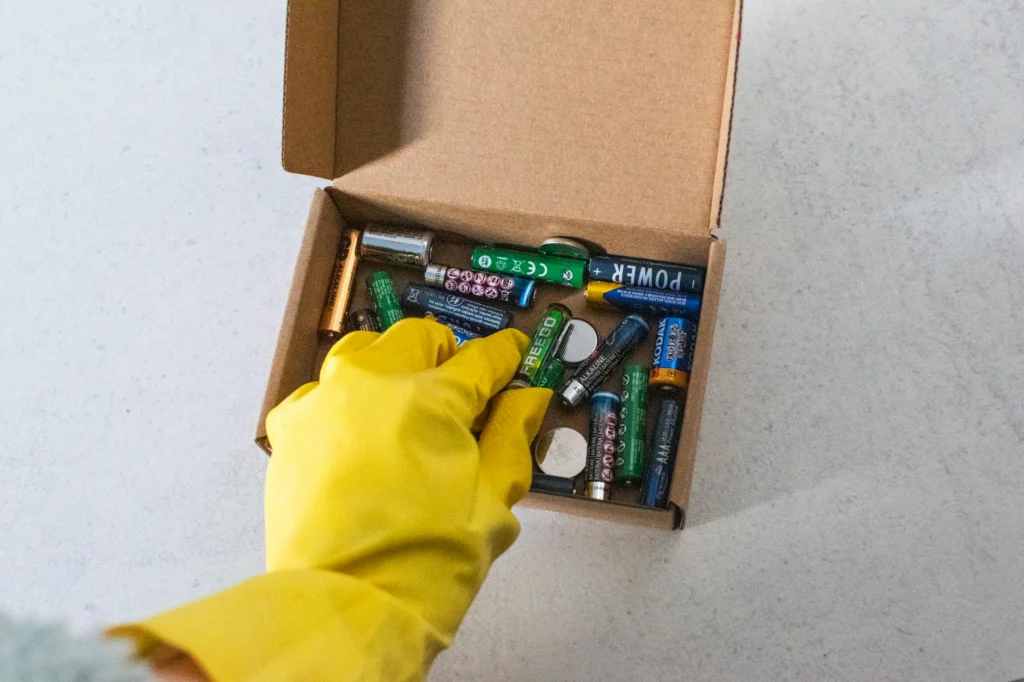
The world is building electric vehicles at an unprecedented rate. By 2030, over 240 million EVs will be on the road[s]. Each one contains a lithium-ion battery packed with valuable metals: lithium, cobalt, nickel, manganese. These same materials are finite, concentrated in a handful of countries, and increasingly difficult to mine. The obvious solution is recycling. The problem? A massive battery recycling bottleneck is preventing us from recovering most of these critical minerals.
The Scale of What We’re Losing
By 2030, the world will generate more than 5 million tons of spent lithium-ion batteries annually[s]. These batteries contain hazardous materials that can contaminate soil and groundwater if landfilled. They also contain metals worth billions of dollars. Yet current recycling systems recover only a fraction of this value.
The U.S. Environmental Protection Agency classifies most lithium-ion batteries as hazardous waste because they can catch fire or explode if mishandled[s]. This creates a paradox: materials too dangerous to throw away, too valuable to waste, and too difficult to recover at scale.
Consider lithium itself. Current industrial recycling methods recover only about 20% of available lithium[s]. The remaining 80% ends up in slag, waste streams, or simply never reaches a recycling facility at all. This is the battery recycling bottleneck in its starkest form: we know these materials are there, we know we need them, and we’re watching most of them disappear.
Why Collection Fails First
Before a battery can be recycled, someone must collect it. This sounds simple. It is not.
In the United States, collection rates for lithium-ion batteries in consumer electronics hover around 5%[s]. In developing economies across Asia and Latin America, rates are similar or lower. In Africa, just 1% of batteries are collected for recycling, with little improvement since 2010[s].
Japan and Korea perform better at around 30%. Europe and North America reach 40-50% for some battery types[s]. But even these rates mean half or more of recyclable batteries never enter the system.
The reasons vary: lack of convenient drop-off points, consumer confusion about what to do with old devices, inadequate labeling, and weak economic incentives for proper disposal. For larger EV batteries, the challenge shifts to logistics and liability. Who is responsible for a 500-kilogram battery pack that can spontaneously combust?
One Country Holds the Keys
Even when batteries are collected, where do they go? This question reveals another dimension of the battery recycling bottleneck. Increasingly, the answer is China.
China processes 78% of global battery scrap and controls 89% of black mass refining capacity[s]. Black mass is the granular material produced when batteries are shredded, containing the valuable metals that need further processing. By 2025, China’s refining capacity reached 2.5 million tonnes, up from 895,000 tonnes in 2022[s].
North America, by contrast, has just 21,000 tonnes of refining capacity. Europe has 28,000 tonnes[s]. This concentration creates supply chain vulnerabilities and means that solving the battery recycling bottleneck in the West depends heavily on Chinese infrastructure.
What Gets Lost in the Process
The dominant industrial recycling method, pyrometallurgy, involves heating shredded batteries to 800-1200°C. This recovers cobalt, nickel, and copper effectively. But lithium and aluminum typically end up in the slag, difficult and expensive to extract further[s].
The alternative, hydrometallurgy, dissolves battery materials in acid to extract metals. It operates at lower temperatures and can recover lithium. But it generates large volumes of acidic wastewater requiring treatment[s]. Neither method is perfect; both are energy-intensive; neither fully closes the loop on critical materials.
What This Means for You
If current trends continue, the materials needed to build tomorrow’s EVs and grid storage systems will come primarily from new mines rather than recycled sources. Mining requires significant investment, carries environmental costs, and depends on geographically concentrated deposits. More than half of cobalt comes from the Democratic Republic of Congo; 80% of lithium is controlled by Australia and Chile[s].
Successful recycling could reduce the need for new mining by 25-40% by 2050[s]. Recycled minerals produce 80% fewer greenhouse gas emissions than mined alternatives[s]. Full recovery of lithium, cobalt, and nickel from end-of-life batteries could save $25 billion annually and avoid 16 megatons of CO2 emissions by 2040[s].
But realizing these benefits requires fixing the battery recycling bottleneck: better collection systems, more diverse processing infrastructure, and recycling technologies that recover lithium as effectively as they recover cobalt.
The lithium-ion battery recycling industry faces a fundamental throughput constraint. Global recycling facility capacity stands at approximately 1.6 million tons per year, with planned facilities potentially increasing this to over 3 million tons[s]. Meanwhile, end-of-life battery volumes are projected to exceed 5 million tons annually by 2030[s], with over 14 million EV batteries retiring each year by 2040[s]. This supply-capacity mismatch constitutes a significant battery recycling bottleneck that threatens critical mineral supply chains.
The Disassembly Constraint
Battery pack architecture prioritizes energy density and structural integrity during operation, not end-of-life handling. Cells are embedded in robust modules with mechanical reinforcements, active thermal management systems, and integrated electronics[s]. This design philosophy creates a critical bottleneck at the disassembly stage.
Packs often retain high residual charge, posing risks of short circuits, thermal runaway, or toxic emissions during dismantling[s]. The heterogeneity of pack designs renders manual disassembly labor-intensive and costly. Automation remains limited because no standardized pack architectures exist, and designing robots that adapt to diverse formats presents unresolved engineering challenges[s].
This disassembly constraint uniquely limits overall throughput. Even with perfect collection rates and advanced recovery technologies, the battery recycling bottleneck at disassembly prevents scaling. Current processing is dominated by manufacturing scrap rather than true end-of-life batteries, with production waste accounting for two-thirds of available recycling feedstock through 2030[s].
Process Efficiency and Material Recovery
Pyrometallurgical recycling operates at 800-1200°C under inert or vacuum conditions, producing mixed metal alloys containing cobalt, nickel, copper, and iron[s]. The process is capital-intensive partly because of required treatment of toxic fluorine compounds released during smelting. Critical limitations include high energy demand, hazardous gaseous emissions, and the loss of lithium and aluminum to slag phases. Recovery rates for lithium via pyrometallurgy are poor; the material must be extracted from slag through additional processing steps that often prove uneconomical[s].
Hydrometallurgical approaches use strong inorganic acids (H₂SO₄, HCl, HNO₃) to leach cathode materials[s]. Sequential purification via solvent extraction, ion exchange, and selective precipitation can recover individual high-purity metal species including lithium. Operating at lower temperatures than pyrometallurgy, hydrometallurgy offers reduced energy consumption. However, it generates large volumes of acidic, metal-rich liquid waste requiring neutralization and further treatment. The chemical reagent costs and wastewater management requirements raise questions about process economics and environmental sustainability[s].
Direct recycling aims to preserve the cathode’s functional structure and chemical composition, reducing energy and environmental costs. However, this approach is critically constrained by feedstock heterogeneity. Variations in chemistry (LCO, LFP, NMC111, NMC811, NCA) and cell form factors require chemistry-specific regeneration pathways. Recovering intact cathode powder without contamination remains unresolved at industrial scale[s].
Geographic Concentration of Processing Capacity
China dominates both pre-treatment and material recovery stages. By 2025, China’s pre-treatment capacity reached 3.6 million tonnes, representing 78% of global capacity[s]. Black mass refining capacity is even more concentrated: China controls 89% globally, with 2.5 million tonnes of capacity versus 21,000 tonnes in North America and 28,000 tonnes in Europe[s].
This geographic concentration compounds the battery recycling bottleneck. Analysis of project pipelines indicates China will retain approximately 75% of global pretreatment capacity and 70% of material recovery capacity through 2030[s]. The formation of China Resources Recycling Group Ltd., a state-owned enterprise dedicated to end-of-life battery recycling, signals continued strategic investment[s].
Even within China, formal recycling channels capture only 25% of retired EV batteries[s]. The remainder flows through informal channels with inconsistent quality control and material recovery, or exits the system entirely.
Regulatory Frameworks and Recovery Targets
The EU Battery Regulation (2023/1542) establishes binding recovery targets: 90% for cobalt, copper, lead, and nickel by December 2027, increasing to 95% by 2031. Lithium recovery targets are 50% by 2027 and 80% by 2031[s]. These targets apply to authorized treatment and recycling facilities, creating compliance pressure that may drive infrastructure investment.
The regulation also mandates minimum recycled content in new batteries, theoretically creating demand pull for recycled materials. However, whether sufficient feedstock will reach recyclers to meet these targets remains uncertain given current collection rate disparities.
Supply-Demand Implications
Battery recycling could theoretically meet 20-30% of lithium, nickel, and cobalt demand by 2050, depending on collection rate improvements[s]. In Europe specifically, secondary supply from batteries could cover about 30% of regional lithium and nickel demand by 2050[s].
However, announced recycling capacity in Europe and the United States covers only 30% of projected feedstock by 2040[s]. This reveals the battery recycling bottleneck as a dual challenge: insufficient collection to feed existing capacity in the near term, and insufficient capacity to process collected materials in the medium term.
LIB production accounts for 40-60% of total emissions from EV manufacturing[s]. Recycled minerals generate 80% fewer emissions than primary production[s]. Addressing the battery recycling bottleneck therefore has implications beyond material security: it represents a significant decarbonization pathway for the automotive supply chain.
The core challenge is not technological impossibility but systemic coordination failure: collection infrastructure, processing capacity, and end-market demand for recycled materials must scale together. Currently, they are not.