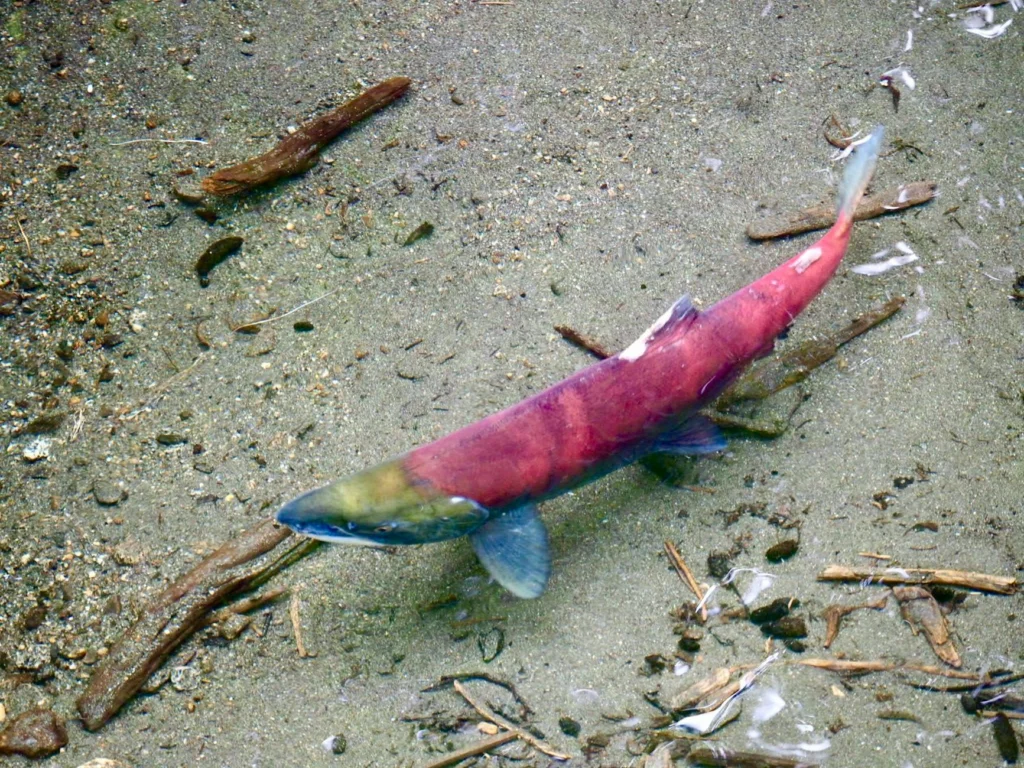
A reader asked us to write about salmon: farmed salmon versus wild, the nutrition, the contamination, the fraud. This is the kind of request that sounds simple until you start pulling threads, because the salmon industry sits at the intersection of nutrition science, environmental policy, industrial agriculture, and consumer deception. Every thread leads somewhere uncomfortable.
Here is what the research actually says, what the industry would prefer you not think too hard about, and what you can do with that information at the grocery store.
The Nutritional Case for Salmon Is Real
Start with the straightforward part. Salmon is one of the best dietary sources of the long-chain omega-3 fatty acids EPA (eicosapentaenoic acid) and DHA (docosahexaenoic acid). These are not the same as the omega-3s in flaxseed or walnuts, which contain ALA (alpha-linolenic acid), a precursor your body converts to EPA and DHA at a rate of roughly 5-10%. Eating salmon skips the conversion bottleneck entirely.
EPA and DHA reduce inflammation, lower triglycerides, and are associated with reduced cardiovascular mortality. Meta-analyses of clinical trials have found that marine omega-3 supplementation is associated with reduced risk of heart attack and coronary heart disease death. The American Heart Association recommends two servings of fatty fish per week, and salmon is the poster species.
Salmon also provides high-quality complete protein (about 20-25g per 100g serving), vitamin D (one of the few significant dietary sources), vitamin B12, selenium, and potassium. Nutritionally, the case for eating salmon is not controversial. (If you are interested in other common nutrient gaps, our piece on magnesium deficiency covers similar ground.) The controversy starts when you ask which salmon, and how it got to your plate.
Wild vs. Farmed: The Nutritional Difference Is Not What You Think
The common assumption is simple: wild salmon is healthier than farmed salmon. The reality is more specific than that.
Farmed Atlantic salmon contains as many total grams of omega-3 fatty acids as wild salmon, sometimes more, because farmed salmon is significantly fattier. A farmed Atlantic fillet has roughly twice the total fat of a wild sockeye fillet. But here is where the “total omega-3” number becomes misleading: the proportion of those fats that are the beneficial marine omega-3s (EPA and DHA) is substantially lower in farmed salmon.
A Canadian study published in the Journal of Agriculture and Food Research measured this directly. Wild sockeye contained 81mg of combined DHA and EPA per gram of fat, wild chinook contained 79mg per gram, and farmed Atlantic salmon contained just 20mg per gram. The farmed fish has more total fat, so the absolute numbers can look comparable, but the fat itself is a different composition.
The omega-6 to omega-3 ratio tells the rest of the story. In wild salmon, the ratio is approximately 0.05. In farmed salmon, it is around 0.7, roughly fourteen times higher. This matters because omega-6 fatty acids compete with omega-3s for the same metabolic pathways, and high omega-6 intake can blunt the anti-inflammatory effects of omega-3s. Most Western diets already have far too much omega-6 relative to omega-3, and farmed salmon adds to the imbalance rather than correcting it.
Why the difference? Feed composition. Wild salmon eat krill, smaller fish, and marine organisms rich in EPA and DHA. Farmed salmon increasingly eat feed made from soy, canola, and other vegetable oils, with just enough fishmeal to keep the omega-3 content from dropping to zero. The industry shifted to plant-based feed partly for cost, partly because there are not enough small fish in the ocean to feed all the farmed salmon we are producing. The feed changed. The fat profile followed.
The Contaminant Question Has Changed
In 2004, a landmark study published in Science by Hites et al. found that farmed salmon contained significantly higher levels of PCBs (polychlorinated biphenyls), dioxins, and organochlorine pesticides than wild salmon. The numbers were striking: farmed salmon had 16 times the dioxin-like PCBs of wild salmon. European farmed salmon was worse than North and South American farmed salmon.
That study shaped public perception for two decades. But the contaminant picture has shifted considerably since 2004, and repeating 2004 findings as if they describe today’s industry is itself a form of misinformation.
A 2020 study by Jensen et al. in the journal Foods, analyzing Norwegian farmed, escaped, and wild Atlantic salmon, found that concentrations of dioxins, dioxin-like PCBs, mercury, and arsenic were actually three times higher in wild salmon than in farmed. All levels were well below EU maximum limits for contaminants in food. A separate longitudinal study tracking Norwegian farmed salmon fillet composition from 2006 to 2021 confirmed that contaminant levels in farmed salmon have been declining steadily, driven by the same feed changes that reduced omega-3 content. When the industry replaced marine-based feed with plant-based alternatives, the persistent organic pollutants that accumulate through the marine food chain came down too.
The trade-off is worth understanding clearly. The feed changes that made farmed salmon less nutritionally distinctive also made it cleaner. You cannot have it both ways: a farmed salmon eating marine-rich feed will have higher omega-3s and higher contaminant levels. A farmed salmon eating soy-based feed will have lower contaminants and a less impressive fatty acid profile.
Regional differences still matter. Chilean and Scottish farmed salmon may have different contaminant profiles than Norwegian, depending on local feed sourcing and regulations. But the blanket statement that “farmed salmon is full of toxins” no longer reflects the evidence.
What Farmed Salmon Does to the Ocean
If the health picture has become more nuanced, the environmental picture has not. Open-net salmon farming creates problems that the industry has spent decades failing to solve.
Sea Lice
Sea lice (Lepeophtheirus salmonis) are parasitic crustaceans that feed on salmon skin, mucus, and blood. In wild populations, sea lice exist at manageable levels because salmon are dispersed. In dense net pens holding tens of thousands of fish, lice populations explode. The lice then spread to wild salmon and sea trout migrating past the farms.
A 2025 study published in the Journal of Animal Ecology found that salmon lice from aquaculture reduce the marine survival of wild Atlantic salmon. This is not a theoretical concern. Norway, which produces roughly half of the world’s farmed salmon (approximately 1.56 million tonnes in 2025), monitors lice levels in over 200 rivers annually.
The industry treats sea lice with chemical baths and in-feed medications, primarily emamectin benzoate. But resistance is developing. In British Columbia, sea lice have evolved resistance to emamectin benzoate, the primary chemotherapeutant used there. The pattern is familiar from antibiotic resistance in human medicine: a chemical solution that works until it does not.
Antibiotics
Dense fish populations breed disease. The industry’s response, predictably, is antibiotics. Chile’s salmon industry used 351.1 tonnes of antimicrobials in 2024, largely to combat Piscirickettsia salmonis, a bacterial pathogen endemic to Chilean farms. A 2024 study in Frontiers in Microbiology found that bacterial communities near Chilean salmon farms showed higher frequencies of antibiotic-resistant colonies and a greater proportion of multi-resistant bacteria compared to undisturbed areas.
Norwegian farms use far less antibiotics than Chilean ones, having driven usage down dramatically since the 1990s through vaccination programs. But the global industry average remains a concern. Anti-lice drugs and antibiotics have been detected in sediments up to 1.5 km from cage sites, with the majority of samples containing at least two different pharmaceutical compounds.
Escapes and Genetic Contamination
An average of 200,000 farmed salmon escape from Norwegian net pens every year into a wild population of roughly 500,000. Escaped farmed salmon breed with wild fish, and the genetic consequences are measurable. Studies analyzing decades of genetic data have found that introgression (the transfer of farmed genetics into wild populations) has been detected in a substantial proportion of Norwegian wild salmon populations, with some rivers showing particularly high levels of farmed genetic influence.
Farmed salmon have been selectively bred for rapid growth, late maturity, and docility: traits that are actively disadvantageous in the wild. When these genetics enter wild populations, the offspring are less fit for survival. The majority of wild Norwegian salmon population structure has been retained so far, but “so far” is doing a lot of work in that sentence. The escapes continue every year.
The Lies: What the Labels Do Not Tell You
The Colour Problem
Wild salmon is pink because it eats krill and shrimp containing natural astaxanthin, a carotenoid pigment. Farmed salmon, eating pellets of soy and fish meal, would be grey without intervention. The industry adds synthetic astaxanthin to the feed, and the fish turn pink.
The synthetic astaxanthin used in approximately 95% of salmon aquaculture is derived from petrochemicals. It is not chemically identical to natural astaxanthin: natural sources contain a mixture of isomers in free, monoester, and diester form, while synthetic astaxanthin consists entirely of free molecules. In vitro studies have found natural astaxanthin to be significantly more effective than synthetic astaxanthin at quenching singlet oxygen and eliminating free radicals, though the magnitude varies across studies and conditions.
The industry calls synthetic astaxanthin “nature identical,” which is marketing language that obscures a genuine chemical difference. The FDA requires labeling: farmed salmon treated with colour additives must carry the phrases “Color Added” or “Artificial Color Added.” But this labeling often appears in small print, and in restaurants, it is rarely disclosed at all.
The Mislabeling Problem
In 2015, Oceana conducted DNA testing on 82 salmon samples from US restaurants and grocery stores. They found that 43% were mislabeled. The majority of the fraud (69% of mislabeled samples) consisted of farmed Atlantic salmon being sold as wild-caught product. You pay the wild-caught premium. You eat farmed fish.
This is not a minor regulatory quirk. Wild chinook can sell for three to four times the price of farmed Atlantic. A 2024 study examining sushi restaurants in Seattle confirmed that salmon mislabeling remains widespread. The FDA’s naming guidance for seafood has been described by researchers as “neither clear nor consistent,” which creates the ambiguity that fraud thrives in. (The labeling gap is reminiscent of how quinoa’s “gluten-free” label simplifies away complications that matter to the people most affected.)
The “Sustainable” Label
Multiple certification schemes (ASC, GlobalG.A.P., BAP) certify farmed salmon as “responsibly sourced” or “sustainable.” These certifications have real criteria, but they operate on a spectrum of rigour, and the word “sustainable” on a package of farmed salmon does not mean the environmental problems described above have been solved. It means a set of standards has been met, and those standards are defined partly by the industry itself. This does not make the certifications worthless, but it does mean that “certified sustainable” is not a synonym for “environmentally harmless.” The pattern is familiar: when experts disagree on the same data, industry has room to pick whichever conclusion suits the marketing.
Practical Advice: What to Actually Do at the Store
None of the above means you should stop eating salmon. It means you should eat it with your eyes open.
If you can afford wild, buy wild. Wild Alaskan sockeye and chinook (king) salmon are the highest in omega-3s, the lowest in omega-6, and carry no antibiotic or synthetic astaxanthin concerns. Alaskan wild salmon fisheries are among the best-managed in the world. Canned wild Alaskan salmon is significantly cheaper than fresh and nutritionally comparable.
If you buy farmed, buy Norwegian or Scottish over Chilean. Norway uses dramatically fewer antibiotics and has stricter environmental monitoring. This is not a guarantee that Norwegian farming is harmless, but it does reflect meaningful differences in practice.
Check the label for “Color Added.” If you see it, the salmon is farmed. If the salmon is sold as “wild” and the label says “Color Added,” something is wrong. In restaurants, ask. If the server does not know whether the salmon is wild or farmed, assume farmed.
Frozen wild salmon is fine. Most wild Alaskan salmon is flash-frozen on the boat or at the processing facility within hours of catch. The quality difference between “fresh” (which may have traveled for days) and frozen-at-source is negligible and often favours the frozen product.
Canned salmon is underrated. Canned wild salmon (typically sockeye or pink) retains its omega-3 content, is widely available, costs a fraction of fresh fillets, and has a shelf life measured in years. The bones in canned salmon are soft and edible, adding a significant calcium boost.
Twice a week is the target, not the minimum. Two servings of fatty fish per week is the American Heart Association’s recommendation. If you are eating salmon four times a week, the marginal benefit of the additional servings is smaller than the first two, and the contaminant exposure (from any source, wild or farmed) is cumulative.
Disclaimer: This article is for informational purposes only and does not constitute medical or dietary advice. Consult a healthcare professional before making significant changes to your diet, particularly if you are pregnant, nursing, immunocompromised, or managing a chronic condition.