The boss asked for the big one, so here it is. The Epstein files investigation has produced what may be the most consequential document release in modern American legal history: 3.5 million pages[s] of emails, financial records, flight logs, FBI interview summaries, and photographs, all now searchable on the Department of Justice website. After years of legal battles, congressional votes, and conspiracy theories, the public can finally read the paper trail for itself. The picture it reveals is damning, complicated, and in many places, still incomplete.
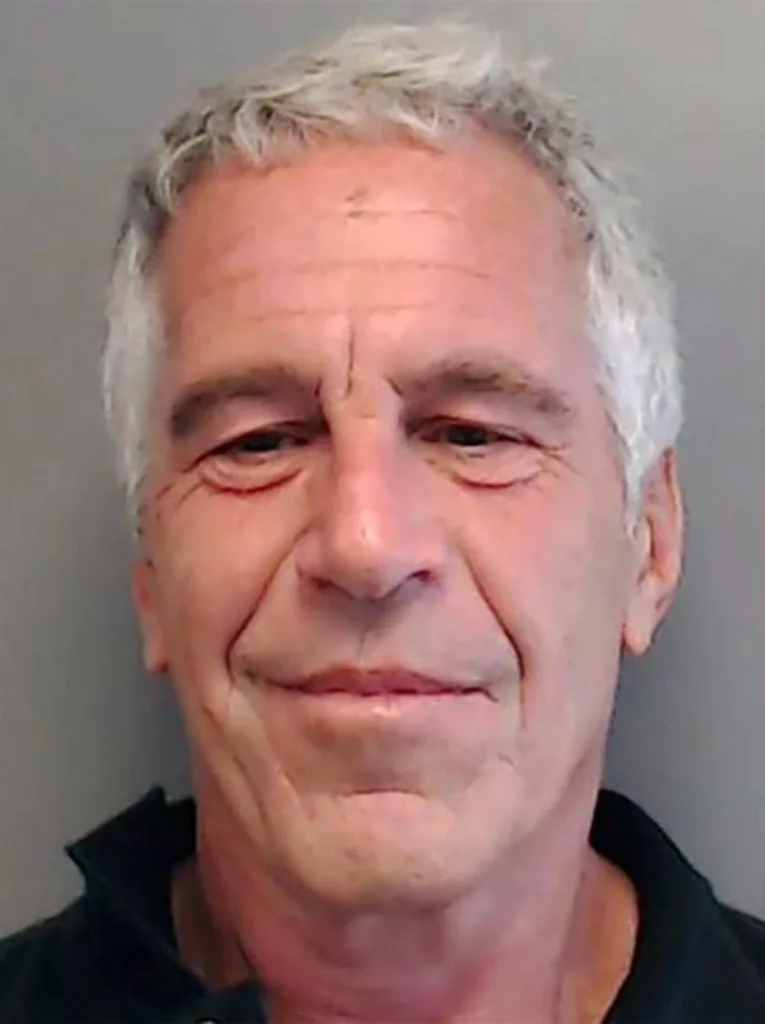
Jeffrey Epstein was a financier who built a network of wealthy and powerful contacts while running what federal prosecutors described as a vast sex trafficking operation targeting underage girls. He pleaded guilty in 2008[s] to state-level solicitation charges under a widely criticized plea deal, served 13 months with work release, and then continued socializing with some of the most prominent people on the planet. In July 2019, he was arrested again on federal sex trafficking charges. He was found dead in his Manhattan jail cell on August 10, 2019, in what was ruled a suicide[s] by the New York City medical examiner.
The Epstein Files Investigation: From Secrecy to Transparency
For years, the core frustration was simple: how did a convicted sex offender avoid serious prison time, maintain relationships with billionaires and heads of state, and die under circumstances that strained credulity, all while the government kept its investigative files locked away?
In July 2025, the Justice Department initially said Epstein did not maintain a “client list”[s] and declined to release further files. That position became politically untenable. Congress passed the Epstein Files Transparency Act with a 427-to-1 House vote[s], and President Trump signed it into law on November 19, 2025. The DOJ began releasing documents in December 2025, with the largest batch of over 3 million pages arriving on January 30, 2026.
What followed was a media frenzy as journalists, researchers, and the public combed through emails, photographs, and internal reports. None of the prominent individuals named in the files have been charged with crimes connected to the investigation.[s] But the documents revealed far more than many expected about the depth and persistence of Epstein’s relationships.
The Powerful Names
Elon Musk
Musk had long said he barely knew Epstein and had refused invitations to visit his private Caribbean island. The released files told a more nuanced story. At least 16 emails[s] between the two men from 2012 and 2013 showed Musk actively discussing visits. In one November 2012 email, Musk wrote: “What day/night will be the wildest party on your island?” It remains unclear whether a visit ever took place. Musk has denied attending any Epstein parties and has called for prosecution of those who committed crimes with Epstein.
Separately, documents revealed[s] that Epstein used Elon’s brother Kimbal as a pathway to get closer to the Tesla CEO, pairing Kimbal with a woman under Epstein’s control and monitoring the resulting relationship for months.
Bill Gates
Gates met with Epstein repeatedly from 2010 through 2014, well after Epstein’s 2008 conviction. He has called the meetings a “huge mistake,” saying he was pursuing philanthropic funding. The newly released files showed extensive coordination[s] between the two on Gates Foundation strategy, with Gates responding seriously to Epstein’s advice on charitable giving.
The files also contained two draft emails Epstein wrote to himself in 2013, making graphic, unverified claims[s] about facilitating sexual encounters for Gates. These drafts were never sent and are uncorroborated. Gates has called them “absolutely absurd and completely false,” arguing they demonstrate only Epstein’s frustration at not having an ongoing relationship. The Epstein connection was reportedly a factor in the Gates divorce[s].
Prince Andrew
The man formerly known as Prince Andrew has faced the most direct legal consequences of any Epstein associate. Virginia Giuffre alleged she was trafficked by Epstein and Maxwell and forced to have sexual encounters with Andrew when she was 17. Andrew denied the allegations but settled Giuffre’s civil lawsuit in February 2022[s] for an estimated $16 million without admitting liability.
In October 2025, King Charles III stripped Andrew of all royal titles[s] and evicted him from his royal residence. Andrew is now known simply as Andrew Mountbatten-Windsor. The Epstein files revealed further correspondence, including an invitation for Epstein to dine at Buckingham Palace[s] and Epstein’s offer to introduce Andrew to a young Russian woman.
Other Notable Names
Commerce Secretary Howard Lutnick visited Epstein’s island[s] with his family in December 2012, arriving by yacht. Billionaire Richard Branson invited Epstein to his own Caribbean island[s], writing “As long as you bring your harem!” New York Giants co-owner Steven Tisch appeared over 400 times[s] in the files, including an email exchange with the subject line “Ukrainian girl.” All have denied wrongdoing.
How Epstein Died, and Why Many Don’t Believe It
The official conclusion, reached by the New York City medical examiner and corroborated by the DOJ Inspector General’s 2023 report, is that Epstein died by suicide. But the circumstances have fueled skepticism that shows no signs of fading.
The Inspector General found that guards were sleeping and shopping online[s] instead of making required 30-minute checks. Half the security cameras in the facility were non-functional.[s] Epstein’s cellmate had been removed the day before, leaving him alone. He had excess linens in his cell. Newly released files also revealed that one guard Googled “latest on epstein in jail”[s] less than an hour before his body was found.
The Inspector General found no physical evidence of foul play. But a combination of institutional failures, destroyed or missing video footage, and the sheer number of powerful people who stood to be implicated has kept public doubt alive.
Ghislaine Maxwell and the Survivors
Epstein’s longtime associate Ghislaine Maxwell was convicted in December 2021[s] of sex trafficking and conspiracy and sentenced to 20 years in federal prison. She remains the only person to face criminal accountability for the trafficking operation.
Virginia Giuffre, the most prominent survivor and accuser, died by suicide in April 2025[s] at age 41 in Western Australia. Her family said the toll of the abuse had become “unbearable.” Her posthumous memoir was published in October 2025.
What We Still Don’t Know
The released files are vast but not complete. About half of the 6 million documents reviewed by the DOJ were withheld, including material the department said contained child sexual abuse imagery, attorney-client privileged information, and duplicates. Victim privacy remains a concern: attorneys for some survivors have said that unredacted identities of victims[s] appeared in some released batches.
The fundamental question that animated the conspiracy theories remains unanswered: why was Epstein able to operate for so long with apparent impunity? The 2008 plea deal, which the DOJ’s own Office of Professional Responsibility characterized as “poor judgment”[s] by then-U.S. Attorney Alexander Acosta, granted immunity to unnamed co-conspirators. To this day, no one besides Maxwell has been prosecuted for participating in the trafficking ring.
Being named in the Epstein files is not evidence of criminality. Many people appear in the documents as passing acquaintances, business contacts, or recipients of Epstein’s relentless networking. The challenge is distinguishing proximity from complicity, and on that question, the files offer more threads than conclusions.
Reader discretion: this version includes detailed descriptions of alleged trafficking tactics, exploitation, and institutional failures.
The boss asked for the big one, so here it is. The Epstein files investigation has produced the most consequential government document release in recent American history: 3.5 million pages[s] of emails, bank statements, wire transfer records, flight logs, FBI interview summaries, internal investigative reports, and photographs. The scale is staggering. The content is often disturbing. And after years of promises, legal battles, and conspiracy theories, the paper trail is finally available for public scrutiny. What it reveals is a system of exploitation that touched the highest levels of wealth and power, protected by institutional failure at every turn.
The Epstein Files Investigation: How a Predator Operated
Jeffrey Epstein’s operation was, at its core, a recruitment pipeline. Starting as early as 2001[s], he and Ghislaine Maxwell built a network to identify, groom, and exploit underage girls, primarily in New York and Palm Beach, Florida. Victims were recruited with promises of modeling opportunities or legitimate employment, then subjected to escalating sexual abuse. Some were paid small amounts of cash and encouraged to recruit additional girls, creating a self-perpetuating cycle.
The operation relied on properties in multiple jurisdictions: a Manhattan townhouse, a Palm Beach estate, a ranch in New Mexico, and a private island in the U.S. Virgin Islands known as Little St. James. Each location served as both a site of abuse and a stage for entertaining the wealthy contacts who gave Epstein social credibility and, allegedly, a sense of impunity.
The 2008 Plea Deal
When Palm Beach police began investigating Epstein in March 2005[s], they identified 36 girls between ages 14 and 17 with accounts of sexual abuse. The FBI opened its own investigation in 2006. Federal prosecutors prepared an indictment.
What happened next remains one of the most scrutinized prosecutorial decisions in modern American law. U.S. Attorney Alexander Acosta negotiated a non-prosecution agreement[s] that allowed Epstein to plead guilty to two state charges: one count of soliciting prostitution and one count of soliciting prostitution from a minor. He was sentenced to 18 months in county jail with a work release program that let him leave the facility for 12 hours a day, six days a week. The federal deal also granted immunity to unnamed co-conspirators and was kept secret from the victims, in violation of the Crime Victims’ Rights Act, as a federal judge later ruled[s].
The DOJ’s Office of Professional Responsibility concluded in 2020 that Acosta had exercised “poor judgment” but had not committed professional misconduct. Acosta, who by then was serving as Trump’s Secretary of Labor, resigned in July 2019, days after Epstein’s arrest on new federal charges.
The 2019 Arrest and Death
On July 6, 2019, federal agents in New York arrested Epstein on charges of sex trafficking of minors and conspiracy. Prosecutors in the Southern District of New York concluded they were not bound by the Florida non-prosecution agreement[s].
Epstein was held at the Metropolitan Correctional Center in Manhattan. On July 23, he was found with marks on his neck in what officials described as a suicide attempt, though Epstein initially accused his cellmate of attacking him before recanting. He was placed on suicide watch for 31 hours, then removed.
On August 10, 2019, he was found dead in his cell. The medical examiner ruled it a suicide by hanging. The circumstances, however, were extraordinary. According to the DOJ Inspector General’s 2023 report[s]:
- The two guards assigned to his unit were sleeping and shopping online instead of conducting required 30-minute checks. Both later admitted to falsifying records.
- Epstein’s cellmate had been transferred the day before and was not replaced, leaving him alone in his cell.
- Half the security cameras in the facility were non-functional.[s] No camera captured the interior of Epstein’s cell.
- He had excess bed linens, which he used in the hanging.
- One guard was working a fifth straight day of overtime. The other was on a mandatory double shift.
Newly released files from 2026 added further unsettling details. Guard Tova Noel searched Google for “latest on epstein in jail”[s] less than an hour before his body was found at 6:30 a.m. The files also included an allegation from another inmate that prison officials shredded documents[s] relating to Epstein in the days after his death. The Inspector General found no physical evidence of foul play and no evidence of payments to guards, but the cascade of failures has sustained public doubt. Only two guards were prosecuted; both avoided prison time.
The Network: Who Knew What
Elon Musk: The Island Emails
For years, Musk characterized his relationship with Epstein as minimal, telling Vanity Fair in 2019 that Epstein was a “creep” who “tried repeatedly to get me to visit his island.” He said he refused.
The January 2026 document release complicated that narrative. At least 16 emails[s] between the two from 2012 and 2013 showed Musk actively pursuing visits to the Caribbean. In November 2012, Musk wrote: “What day/night will be the wildest party on your island?” On Christmas Day 2012, he emailed Epstein again: “I’ve been working to the edge of sanity this year and so, once my kids head home after Christmas, I really want to hit the party scene in St Barts or elsewhere and let loose.”
The emails also showed Epstein toured SpaceX on February 25, 2013, with three women. Epstein wrote to Musk the next day: “thanks for the tour… you would have had fun at xmas.” Musk replied: “I see :)” Musk had previously denied in a 2020 post on X that Epstein had ever toured SpaceX.
The relationship went deeper than direct emails. A Fortune investigation[s] of the files revealed that Epstein orchestrated what amounted to a honey trap aimed at Elon through his brother Kimbal. In September 2012, Epstein and associate Boris Nikolic handpicked a woman from Epstein’s circle for Kimbal. They coordinated a birthday party, club reservations, and a lunch at Epstein’s Manhattan mansion for both Musk brothers. Kimbal and the woman dated for months, with Epstein receiving detailed updates on her schedule and travel. Epstein directed when she could visit Kimbal and when she should return to his island. Two weeks after the birthday party, Kimbal emailed Epstein and Nikolic thanking them for “connecting” him with the woman.
Musk has not been accused of any wrongdoing connected to the Epstein investigation. He has called for prosecution of those who committed crimes with Epstein.
Bill Gates: Philanthropy, Draft Emails, and Divorce
Gates’ relationship with Epstein is among the most extensively documented in the files. A CNN review found several hundred references to Gates[s] in the released documents, including emails coordinating meetings and dinners from 2010 through at least 2014. All documented interactions occurred after Epstein’s 2008 conviction.
The meetings covered philanthropy, with Epstein offering detailed advice[s] on Gates Foundation strategy. In a December 2014 email, Gates wrote to Epstein: “I enjoyed the breakfast a lot. All of the attendees were interesting people.” Epstein replied recommending another meeting and extending an invitation to his island. Gates has maintained he never visited the island.
The most explosive material consisted of two draft emails Epstein wrote to himself in July 2013. In these rambling, typo-filled notes, Epstein claimed he had facilitated sexual encounters for Gates[s] and helped him obtain medication to conceal a sexually transmitted infection from his wife. The drafts were never sent and are entirely uncorroborated. Gates called them “absolutely absurd and completely false,” saying they demonstrated only “Epstein’s frustration that he did not have an ongoing relationship with Gates and the lengths he would go to entrap and defame.”
The files also revealed Epstein’s awareness that Melinda Gates was uncomfortable with the association. In a January 2017 exchange, an unidentified contact told Epstein that Gates “wants to talk to you but his wife won’t let him” and that Gates “loves you.” Epstein suggested having a former Obama White House counsel meet with Melinda to give her “the other side of jeffrey.” The Epstein ties were reportedly a contributing factor in the Gates divorce[s].
Prince Andrew: From Royal to Pariah
Andrew Mountbatten-Windsor’s connection to Epstein is the most consequential of any associate’s, having cost him his royal titles, his residence, and his public standing.
Virginia Giuffre alleged that Epstein and Maxwell trafficked her to Andrew for sexual encounters when she was 17, including at Maxwell’s London home. A photograph showing Andrew with his arm around Giuffre, taken in 2001, became one of the most recognizable images of the scandal. Andrew denied the encounter took place, famously claiming in a 2019 BBC interview that he could not sweat due to a medical condition, contradicting Giuffre’s account.
In August 2021, Giuffre filed a civil lawsuit against Andrew. He settled in February 2022[s] for an estimated $16 million without admitting liability. In the settlement, he acknowledged that Epstein “trafficked countless young girls over many years” and expressed regret for the association.
The January 2026 file release revealed further details. Andrew’s name appeared hundreds of times[s], including correspondence showing an invitation for Epstein to dine at Buckingham Palace, and Epstein’s offer to introduce Andrew to a 26-year-old Russian woman. Photos in the files appeared to show Andrew kneeling over an unidentified woman lying on the floor.
On October 30, 2025, King Charles III stripped Andrew of all remaining titles[s], including Prince, Duke of York, and his Order of the Garter, and evicted him from Royal Lodge. It was the first time a British royal had been stripped of the title of Prince since 1919.
The Broader Circle
The files name dozens of additional powerful figures. Commerce Secretary Howard Lutnick visited Epstein’s island[s] with his family in December 2012, arriving by yacht, despite having previously claimed he cut ties with Epstein years earlier. He has since volunteered to testify before the House Oversight Committee.
Richard Branson invited Epstein to his own Caribbean island[s] in 2013, writing: “Any time you’re in the area would love to see you. As long as you bring your harem!” He later said his team cut contact after uncovering “serious allegations.”
New York Giants co-owner Steven Tisch was mentioned over 400 times[s]. In one 2013 email, Epstein encouraged him to contact a woman, whose physical beauty he praised in crude terms. “Pro or civilian?” Tisch replied. He has expressed deep regret for the association.
Sarah Ferguson[s], then Duchess of York, publicly apologized in 2011 for letting Epstein pay off her debts, yet two months later was emailing him for advice on how to handle questions about their relationship on Oprah Winfrey’s show.
In one 2019 email to a journalist, Epstein wrote that Trump “knew about the girls”[s] without elaborating. Trump, who was friends with Epstein for years before a falling out, has not been accused of misconduct by any of Epstein’s victims. The files contained thousands of references to Trump, but the Justice Department said FBI tip-line calls about prominent individuals were “quickly determined to not be credible.”
None of the prominent individuals named in the files have been charged[s] with crimes connected to the Epstein investigation.
Ghislaine Maxwell: The Only Conviction
Maxwell was convicted in December 2021[s] on five of six counts, including sex trafficking of a minor, and sentenced to 20 years in federal prison with a $750,000 fine. Prosecutors described her as Epstein’s “enabler-in-chief,” alleging she recruited, groomed, and in some cases directly participated in the abuse of underage girls over a period of at least a decade.
She remains the sole person convicted in connection with the trafficking operation. In July 2025, the Deputy Attorney General interviewed Maxwell, who denied wrongdoing. She was subsequently moved from a low-security facility in Florida to a minimum-security prison camp in Texas. She has filed a petition challenging her conviction.
Virginia Giuffre: The Voice That Wouldn’t Be Silenced
Giuffre was the most visible and consequential of Epstein’s accusers. Her 2009 lawsuit named Epstein and Maxwell and alleged she had been forced into sexual encounters with “royalty, politicians, academicians, businessmen.” She provided critical testimony that contributed to Maxwell’s conviction. Other survivors credited her with giving them the courage to come forward.
She died by suicide on April 25, 2025[s], at her farm in Western Australia. She was 41. Her family said: “In the end, the toll of abuse is so heavy that it became unbearable for Virginia to handle its weight.” Her posthumous memoir was published in October 2025.
The Conspiracy Question
The phrase “Epstein didn’t kill himself” became a cultural meme, a political slogan, and for many Americans, an article of faith. A Rasmussen poll conducted shortly after his death found that only 29% of Americans believed Epstein actually died by suicide. Some 42% believed he was murdered to prevent him from testifying.
The DOJ Inspector General’s 2023 report found no evidence of foul play, no evidence of payments to guards, and no video showing anyone else entering Epstein’s cell. But the combination of sleeping guards, falsified records, non-functional cameras, a removed cellmate, excess linens, and the sheer concentration of powerful people with something to lose has made the official narrative difficult to accept for a large segment of the public.
The conspiracy theories are fueled not only by the circumstances of his death but by the broader pattern of institutional failure. The 2008 plea deal granted immunity to co-conspirators and was hidden from victims. The DOJ initially refused to release its files. When it did, victim identities were accidentally exposed while information about powerful associates remained heavily redacted. Only one person besides Epstein has been held criminally accountable.
Being named in the Epstein files is not proof of criminal conduct. Many appearances are incidental: dinner invitations, philanthropy discussions, business correspondence. Epstein cultivated relationships with powerful people precisely because proximity to them was his currency. The challenge for investigators, journalists, and the public is the same: separating those who were unknowing contacts from those who participated in or enabled the abuse. On that central question, 3.5 million pages have provided threads but not yet a final answer.