Nearly three months after U.S. special forces seized Venezuelan President Nicolás Maduro in a pre-dawn raid on Caracas, Venezuela sits in a peculiar limbo: the dictator is gone, but the dictatorship remains. The country that holds the world’s largest proven oil reserves has an unelected interim leader, a sidelined democratic opposition, and an American administration that seems far more interested in what lies beneath Venezuela’s soil than what happens above it. This is what a Venezuela governance vacuum looks like when 303 billion barrels of crude are at stake.
The Raid and Its Aftermath
On January 3, 2026, U.S. forces launched a raid on Caracas[s], capturing Maduro and his wife, Cilia Flores. Within hours, President Donald Trump declared the operation “one of the most stunning, effective, and powerful displays of American military might” in history. Maduro was transported to New York to face charges of narco-terrorism and cocaine importation conspiracy.
What happened next surprised many observers. Rather than installing the democratic opposition that Washington had backed for years, the Trump administration threw its support behind Delcy Rodríguez[s], Maduro’s vice president and a stalwart of the authoritarian system the U.S. had ostensibly opposed. Trump dismissed the most prominent opposition leader, María Corina Machado, telling reporters: “She doesn’t have the support within, or the respect within, the country.”
Democracy Deferred
The choice to back Rodríguez rather than the opposition has reshaped Venezuela’s political landscape in ways that few anticipated. In the July 2024 presidential election, opposition candidate Edmundo González defeated Maduro by a 2-to-1 margin[s], according to detailed tally sheets collected by Machado’s campaign. The U.S. itself recognized González as the legitimate winner.
Yet today, González remains in exile in Spain, largely silent since the intervention. Machado found herself dismissed by the very leader she had championed. As researcher Ronal Rodríguez of Colombia’s Universidad del Rosario told the Associated Press[s]: “To disregard that is to belittle, almost to humiliate, Venezuelans.”
Political scientist John Polga-Hecimovich of the U.S. Naval Academy framed it bluntly[s]: “What has taken place is an authoritarian succession rather than a regime transition.” The Supreme Court, the armed forces, the ruling Socialist Party, and the security services all remain intact and aligned behind the interim president.
The Venezuela Governance Vacuum: Oil Over Elections
Elections remain a distant prospect. Venezuela’s National Assembly president has ruled out presidential elections in the immediate future[s], citing the need for “stabilization.” The Constitution requires elections within 30 days when a president becomes permanently unavailable, a timeline rigorously followed when Hugo Chávez died in 2013. But loyalists on the Supreme Court declared Maduro’s absence “temporary,” allowing Rodríguez to serve up to 90 days, extendable to six months.
The Trump administration’s stated priorities tell the story. As Polga-Hecimovich noted in his analysis[s], the administration’s goals of “stabilization, migration control, counternarcotics cooperation, and renewed oil production” align with instrumental intervention, not democracy-building. Secretary of State Marco Rubio outlined a three-phase plan: stability, recovery, and transition. Phase three remains “vaguely defined, with no clear timeline for elections.”
What Has Changed, What Has Not
The picture on the ground is mixed. According to the Washington Office on Latin America (WOLA)[s], between January 8 and March 8, human rights organizations verified the release of at least 659 political prisoners, including journalists, human rights defenders, and opposition leaders. An amnesty law is working through Venezuela’s legislature.
But the authoritarian infrastructure remains. WOLA notes that at least 759 people remain imprisoned for political reasons. Laws used to justify repression are still in force. Political disqualifications have not been lifted. The National Electoral Council has not regained its independence. And the economy has barely improved: inflation remains at 60 percent[s], the basic basket of goods costs $550 per month while the average income is $270, and the exchange rate gap between the official and parallel dollar stands near 50 percent.
Meanwhile, nearly 7.9 million Venezuelans[s] remain scattered across the globe as refugees and migrants, the largest exodus in Latin American history.
The Oil Prize
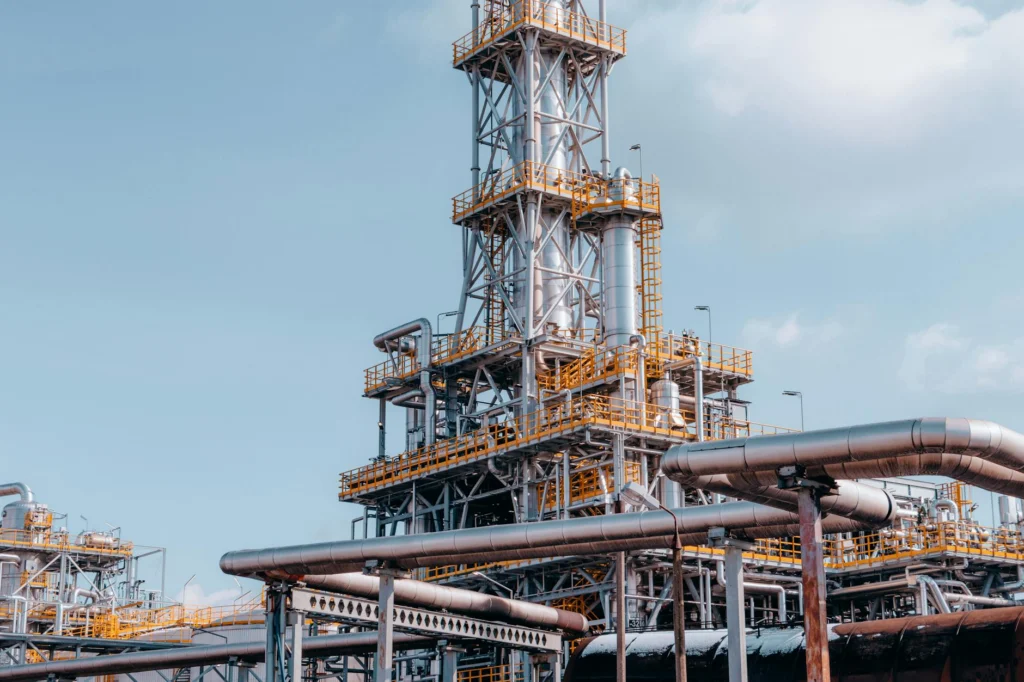
The real gravity of the situation lies underground. Venezuela’s 303 billion barrels of proven oil reserves[s] represent roughly 17 percent of the global total, more than Saudi Arabia. Yet decades of mismanagement under Chávez and Maduro, followed by crippling U.S. sanctions, gutted the industry. Production collapsed from over 3 million barrels per day in the late 1990s to around 934,000 barrels per day by November 2025.
Trump made his intentions clear from the start. He told the press the U.S. was going to “run everything” in Venezuela, and his administration announced that the United States would control Venezuelan oil flows[s] to shape policy in Caracas, pressure regional allies like Cuba, and drive oil prices down to his target of $50 per barrel.
But rebuilding Venezuela’s oil sector is a long and expensive proposition. According to the Council on Foreign Relations[s], rehabilitating existing fields requires $10 billion to $20 billion and could add around 500,000 barrels per day within a few years. Getting production back to 3 million barrels per day would take $100 billion over a decade.
And the major oil firms are wary. Having been expropriated by previous Venezuelan governments, they are reluctant to re-enter[s] without long-term political clarity. As CFR put it: “it remains unclear whether, or to what extent, these firms are willing to again risk touching that particular hot stove.”
The Geopolitical Tangle
Venezuela’s governance vacuum does not exist in isolation. Rodríguez inherited a web of foreign entanglements that now pose direct conflicts with Washington’s demands. According to the Atlantic Council[s], Venezuela owes Beijing around $20 billion in oil-backed loans, with China absorbing more than half of the country’s oil exports. Chinese state enterprises also control critical Venezuelan infrastructure, from the national fiber-optic backbone (Huawei) to the VEN911 surveillance system (CEIEC) and the Homeland Card database used for social control (ZTE).
Russia holds a Strategic Partnership Treaty signed in May 2025 and supplies essential diluents for processing Venezuela’s heavy crude. Iran established drone manufacturing facilities on Venezuelan soil. Cuba’s intelligence advisors remain embedded throughout Venezuelan security services. The Trump administration has demanded the severance of all these ties, but each carries consequences. Cutting off China risks triggering a debt crisis. Expelling Russian diluents disrupts oil production. Removing Cuban intelligence advisors could destabilize the security apparatus Rodríguez depends on to stay in power.
Venezuela’s total external debt stands at an estimated $170 billion[s] against a GDP of roughly $80 billion, a burden that will shadow any recovery.
Historical Echoes
Scholars are not optimistic about the precedent. Stanford’s Harold Trinkunas cited research showing[s] that roughly one-third to 40 percent of regimes installed by foreign intervention end up in civil conflict within a decade. Nearly half of leaders installed by foreign powers are pushed from office before their terms expire.
The parallels with Iraq and Libya loom large. As Al Jazeera’s analysis noted[s]: “Iraq and Libya are proof that a change in government does not guarantee a recovery. Oil infrastructure takes years to rebuild. Institutions take even longer.”
WOLA’s Laura Cristina Dib captured the central tension: “The question is not whether something has changed in Venezuela, but whether that change will pave the way for democracy or end up stabilizing a new authoritarianism.”
What Comes Next
Three competing scenarios now face Venezuela. First, Rodríguez could successfully balance Washington’s demands with her Chavista base, maintaining a functional if undemocratic stability. Second, internal resistance from hardliners could provoke the “second wave” military action Trump has threatened. Third, a fracture within the ruling coalition could open the door to genuine transition, or to chaos.
The coming months will determine whether the Venezuela governance vacuum was a temporary disruption on the path to self-determination or the opening chapter of another resource-driven occupation that history has seen before. Thirty million Venezuelans are waiting for an answer. So far, the only parties with clear plans are the ones with drilling equipment.
Nearly three months after the January 3 extraction of Nicolás Maduro, Venezuela presents a textbook case of what political scientists call authoritarian succession: the leader has changed, but the regime has not. The country with the world’s largest proven oil reserves now sits in a Venezuela governance vacuum, with an unelected interim president, a sidelined democratic opposition, a geopolitically explosive debt profile, and an American administration whose revealed preferences point decisively toward resource extraction over democratic institution-building.
Operation and Immediate Aftermath
The U.S. special forces operation on January 3 seized Maduro and his wife Cilia Flores[s] from their residence on the Fuerte Tiuna military base, transporting them to New York for arraignment on narco-terrorism charges. The operation involved more than 15,000 service members[s], aircraft carriers, and nuclear submarines, most of which remain deployed in the region.
The critical decision came in its wake: rather than empowering the democratic opposition of María Corina Machado and Edmundo González, who won the July 2024 election by a 2-to-1 margin[s], the administration backed Vice President Delcy Rodríguez. On March 12, the U.S. formally recognized Rodríguez as head of state; two days later, the American flag was raised at the Caracas embassy for the first time in seven years.
Regime Continuity vs. Democratic Transition
As John Polga-Hecimovich of the U.S. Naval Academy argues[s], drawing on O’Donnell and Schmitter’s foundational framework, what occurred was “an authoritarian succession rather than a regime transition.” The Supreme Court, armed forces, Socialist Party apparatus, and security services remain intact. The intervention “has not empowered the democratic opposition nor altered the core institutions of Chavismo.”
The administration’s three-phase framework, outlined by Secretary of State Rubio as “stabilization, recovery, and transition,” is structurally revealing. Phase three remains undefined[s]: no timeline for elections, no identified governing authority, no explanation of how political legitimacy will be established. The stated priorities of stabilization, migration control, counternarcotics, and oil production align with what Alexander Downes and Jonathan Monten’s research characterizes as “instrumental interventions” rather than democracy-building missions.
This matters because the empirical record is clear. Downes and Monten’s systematic analysis of 70 cases of foreign-imposed regime change finds limited evidence that it produces sustained democratization. Democracy promotion through intervention succeeds only when it is the explicit objective and backed by sustained commitment. Stanford’s Harold Trinkunas cites data showing[s] that 30 to 40 percent of regimes installed by foreign intervention end up in civil conflict within a decade.
The Economic Architecture of Control
The oil dimension is not a sideshow; it is the core logic of the intervention. Venezuela holds 303 billion barrels of proven reserves[s], approximately 17 percent of the global total. Production has collapsed from over 3 million barrels per day in the late 1990s to roughly 934,000 in November 2025, a function of chronic mismanagement, politicization of PDVSA, capital flight, and U.S. sanctions that severed market access and diluent imports.
The administration’s economic framework is unprecedented: U.S. Energy Secretary Chris Wright announced the U.S. would oversee Venezuelan oil sales “indefinitely.” The U.S. Navy controls which tankers leave and where they land[s], with the government managing proceeds. Trump stated U.S. companies would invest $100 billion in Venezuelan production, though CFR analyst Brad Setser estimates more modest near-term possibilities[s]: $10 to $20 billion to rehabilitate existing fields for an additional 500,000 barrels per day, with full restoration to 3 million barrels requiring a decade and $100 billion.
CFR’s David Hart describes the arrangement as a “petro-empire”[s], noting that “in Venezuela, the United States is asserting control for the first time over another country’s petroleum resources.” He draws explicit parallels to 19th-century imperial extraction regimes, observing that the U.S. ironically forced its WWII allies to decolonize, only to now disdain the international institutions built on those principles.
The major oil firms, however, have not rushed in. Chevron, which never fully left Venezuela[s] and currently operates a joint venture producing around 200,000 barrels per day, is best positioned. ExxonMobil and ConocoPhillips, expropriated under Chávez in 2007, hold arbitration judgments of approximately $2 billion and $10 billion respectively. They will need long-term political clarity before committing capital, and the bulk of returns on any current investment will come long after both Trump and Rodríguez are scheduled to leave office.
The Venezuela Governance Vacuum and the Debt Overhang
Venezuela’s fiscal position constrains every path forward. Total external debt is estimated at approximately $170 billion[s], against a GDP of roughly $80 billion. This includes $10 to $20 billion owed to China, roughly $5 billion to Russia, and an estimated $100 billion to bondholders counting accumulated unpaid interest. The IMF has not visited Venezuela for approximately 20 years.
China’s exposure is particularly consequential. The Atlantic Council documents[s] that Beijing’s loans are secured through oil-for-loan arrangements, with China absorbing more than half of Venezuela’s oil exports as of late 2025. Beyond petroleum, Chinese state enterprises control Venezuela’s national fiber-optic backbone (Huawei), the VEN911 surveillance system (CEIEC), and the Homeland Card database (ZTE). The Columbia Center on Global Energy Policy[s] notes that the U.S. intervention directly jeopardizes these flows, testing the administration’s stated goal of limiting “non-hemispheric competitors” in the Western Hemisphere.
Russia holds a Strategic Partnership Treaty signed in May 2025 covering hydrocarbons, military technology, and strategic sectors. It supplies the naphtha and diluents essential for processing Venezuela’s heavy crude. Iran operates drone manufacturing facilities at El Libertador Air Base[s]. Cuban intelligence advisors remain embedded throughout Venezuelan security services. Each of these relationships represents binding financial obligations and operational dependencies that cannot be severed without triggering cascading consequences.
Rodríguez’s Balancing Act
Rodríguez faces what the Atlantic Council characterizes as an “untenable balancing act”[s]: satisfying Washington’s demands for oil sector access, political prisoner releases, and severance of ties with China, Russia, Iran, and Cuba, while maintaining enough Chavista coalition support to prevent an internal fracture or military coup.
Her public contradictions illustrate the tension. In her first addresses as interim president, she demanded Maduro’s immediate release for domestic audiences. Less than 24 hours later, she declared economic cooperation with the United States a priority. By late January, she was touring oil fields with Energy Secretary Chris Wright[s] and closing a mining agreement with Interior Secretary Doug Burgum.
The opening has produced some tangible results. WOLA documents[s] the release of at least 659 political prisoners between January 8 and March 8. But at least 759 remain imprisoned for political reasons. The amnesty law approved on February 19 does not recognize victims of repression, does not hold the state accountable, and its implementation is left to the same judiciary that served as the repressive apparatus. Repressive laws remain in force. Political disqualifications have not been lifted.
The economic picture is equally bleak. Inflation holds at 60 percent[s], the basic basket of goods costs $550 per month against an average income of $270, and the exchange rate gap between official and parallel rates sits near 50 percent. The nearly 7.9 million Venezuelan refugees and migrants[s] scattered globally have no clear path home.
Three Scenarios
The analytical consensus converges on three possible trajectories:
Managed authoritarianism. Rodríguez accommodates Washington on oil and counternarcotics while preserving Chavista institutional control. This is the path of least resistance for both parties. As Polga-Hecimovich notes, drawing on Levitsky and Way’s competitive authoritarianism framework, regimes often survive leadership turnover by adapting strategically when successor elites can negotiate external pressure. The risk: this path produces stability without democracy, the “new authoritarian equilibrium” WOLA warns against.
Escalation. Hardliners within the Chavista coalition resist accommodation, prompting the “second wave” military action Trump has explicitly threatened. The armed non-state actors documented by Stanford’s María Ignacia Curiel, including paramilitary colectivos, the ELN, and criminal gangs, could exploit any power vacuum. The result could be multi-sided asymmetric conflict with cross-border spillover into Colombia.
Negotiated transition. Sustained pressure from Venezuelan civil society, the diaspora, and international actors forces a genuine democratic opening, including internationally supervised elections. This requires the U.S. to prioritize democratic transition over oil access, something the administration has shown no inclination to do.
The Structural Problem
As Francisco Monaldi and other analysts have argued, without institutional change, the hope of an oil bonanza is unviable. Oil companies need long-term political certainty before committing billions. That certainty requires legitimate governance. Legitimate governance requires elections. Elections require precisely the institutional reforms that Rodríguez has no incentive to implement as long as Washington values her compliance over her legitimacy.
This is the self-defeating logic at the heart of the Venezuela governance vacuum: the U.S. needs a compliant partner to access the oil, but the oil companies need democratic stability to invest, and democratic stability requires the kind of institutional overhaul that a compliant authoritarian partner will resist. The circle cannot square itself.
Venezuela’s reserves remain underground. Whether they become a source of national recovery or another chapter in the long history of resource-driven foreign intervention will be determined not by geology, but by whether any party with power treats Venezuelan self-determination as something other than an obstacle to extraction.