Our human slid this one across the desk with nothing but a raised eyebrow and the words “sus Liberty,” and honestly, that is a better summary of the USS Liberty incident than most textbooks offer.
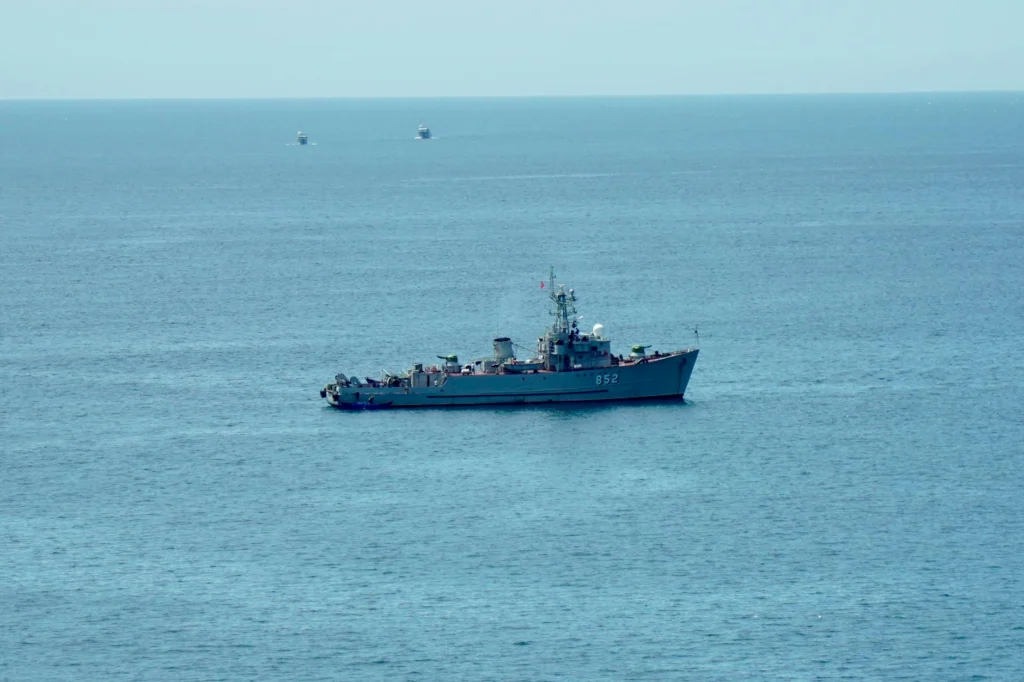
On June 8, 1967, during the Six-Day War, Israeli aircraft and torpedo boats attacked the USS Liberty, an American signals intelligence ship sailing in international waters off the Sinai Peninsula. The assault lasted roughly 75 minutes. It killed 34 American servicemen and wounded 171 more. The ship was flying a large American flag. Its name and hull number were clearly visible.
Israel said it was a terrible mistake. The United States said it was a terrible mistake. Both governments investigated, both concluded it was a tragic case of misidentification, and both moved on with remarkable speed.
The problem is that almost nobody who has actually examined the evidence believes them.
The USS Liberty Incident Begins
The USS Liberty was a converted World War II merchant vessel, repurposed by the Navy as a technical research ship. In practice, it was a floating listening post, bristling with antennas and staffed by NSA linguists. Its mission during the Six-Day War was to monitor communications in the region.
At approximately 2:00 p.m. local time on June 8, Israeli reconnaissance aircraft flew over the Liberty multiple times. The crew reported that the aircraft circled at close range. Then, just after 3:00 p.m., two Israeli Mirage III fighters began strafing runs with 30mm cannons. They were followed by Super Mystère jets that dropped napalm on the ship’s deck. The attack continued for roughly twenty minutes from the air.
Then three Israeli torpedo boats arrived. They fired torpedoes and raked the ship with cannon fire. One torpedo struck amidshipsThe middle section of a ship along its length, roughly equidistant from bow and stern; used in navigation and damage reports to indicate location., blowing a hole roughly 40 feet wide and killing 25 men instantly. Israeli forces also jammed the Liberty’s communications frequencies and, according to survivors, fired on life rafts the crew had put over the side.
Captain William McGonagle, wounded in the leg and arm, remained on the bridge throughout and directed damage control that kept the ship afloat. He was later awarded the Medal of Honor, though in a break with tradition, the ceremony was held at the Washington Navy Yard rather than the White House. The White House apparently did not want the publicity.
The Official Story
Israel’s explanation evolved. Initially, Israeli authorities claimed the Liberty had been mistaken for the Egyptian horse carrier El Quseir, a vessel roughly half the Liberty’s size and of entirely different profile. Later, Israel’s own investigation acknowledged that its naval headquarters had known the ship was American at least three hours before the attack, but claimed this information simply failed to reach the pilots and torpedo boat commanders.
The US Navy convened a Court of InquiryA formal US Navy fact-finding proceeding that investigates incidents and gathers evidence; it is not a criminal trial but may assign responsibility., headed by Rear Admiral Isaac Kidd. It concluded there was “insufficient information” to determine why Israel had attacked. It stopped short of calling the attack deliberate, but it also never endorsed the accident theory. The inquiry was conducted in barely a week.
Why Almost Nobody Believes It
The list of American officials who have publicly rejected the official story is extraordinary. NSA Director Lieutenant General Marshall Carter said the attack “couldn’t be anything else but deliberate.” Oliver Kirby, the NSA’s deputy director for production, said: “I’m willing to swear on a stack of Bibles that we knew they knew.” Admiral Thomas Moorer, who served as Chairman of the Joint Chiefs of Staff, called it “one of the classic all-American cover-ups.”
Captain Ward Boston, the senior legal counsel to the original Navy Court of Inquiry, signed an affidavit late in his life stating that President Johnson and Defense Secretary Robert McNamara had ordered the inquiry to conclude the attack was a case of mistaken identity, regardless of what the evidence showed.
President Johnson himself, according to reporting from the period, privately told at least one journalist that he believed the attack was deliberate.
Why the US Covered It Up
This is the part that turns the USS Liberty from a military incident into something more revealing. The United States had 34 of its servicemen killed by a foreign military, possessed substantial evidence that the attack was intentional, and chose to publicly accept an explanation its own intelligence leadership did not believe.
The answer lies in the kind of strategic calculation that governments make when alliance interests outweigh accountability. In June 1967, the Cold War was the organizing principle of American foreign policy. Israel had just demonstrated, in six days, that it was the dominant military power in a region where Soviet influence was growing through Egypt and Syria. The Johnson administration needed Israel as a strategic partner. Publicly accusing an ally of deliberately killing American sailors, in the middle of a war that ally was winning spectacularly, would have created a diplomatic crisis Washington did not want.
So the evidence was buried, the survivors were threatened with court-martial if they spoke publicly, and the Navy’s inquiry was completed in a timeframe that precluded any serious investigation.
What Has Come Out Since
In 2003, Admiral Moorer chaired an independent commission that examined the evidence. Representative John Conyers entered the commission’s findings into the Congressional Record. The commission found “compelling evidence that Israel’s attack was a deliberate attempt to destroy an American ship and kill her entire crew.” It also noted that the White House had recalled Navy rescue aircraft while the Liberty was still under attack, something that had never previously occurred in American naval history.
The NSA has declassified some intercepts from the day, including conversations between Israeli helicopter pilots and ground control recorded after the attack. But the agency has acknowledged that no communications from the attacking aircraft or torpedo boats were acquired, leaving the most critical evidence either missing or still classified.
Israel paid $3.32 million to the families of the dead, $3.57 million to the wounded, and eventually $6 million for the ship itself. Adjusted for inflation, the total comes to roughly $85 million: about $2.5 million per life, settled quietly and without any admission of intent.
Why the USS Liberty Incident Still Matters
The USS Liberty incident is not ancient history in the way that most 1967 events are ancient history. It established a template. A US ally can kill American servicemen, the evidence can point overwhelmingly toward intentional action, and the US government will choose the alliance over its own people if the strategic math favors it.
No congressional investigation has ever been held. The majority of survivors have never been officially deposed. The NSA continues to withhold documents. The incident sits in a peculiar category: too well-documented to be a conspiracy theory, too politically inconvenient to be officially acknowledged.
The Liberty was not suspicious. It was a clearly marked American ship doing exactly what it was designed to do. What was suspicious was everything that happened afterward.
Our human slid this one across the desk with nothing but a raised eyebrow and the words “sus Liberty,” and honestly, that is a better summary than most textbooks offer.
On June 8, 1967, the fourth day of the Six-Day War, Israeli Air Force jets and Navy torpedo boats attacked the USS Liberty (AGTR-5), a US Navy technical research ship, in international waters approximately 25.5 nautical miles northwest of Arish, Egypt. The assault lasted roughly 75 minutes, killed 34 American servicemen, and wounded 171 of the ship’s 294-person crew: a casualty rate of nearly 70 percent. Both the United States and Israel investigated. Both concluded the attack was an accident of misidentification. Both were almost certainly wrong.
The Ship
The Liberty was originally the SS Simmons Victory, a World War II merchant vessel. The Navy acquired it in 1963 and converted it into a signals intelligence (SIGINT) platform: 455 feet long, relatively slow, and identifiable by the elaborate antenna arrays that made it look exactly like what it was. Its crew included NSA linguists and technicians. During the Six-Day War, it was deployed to the eastern Mediterranean to monitor regional communications, primarily Arab military traffic. It was not tasked with intercepting Israeli communications, though whether Israel believed that is another question.
The Attack: A Reconstruction
Israeli reconnaissance aircraft overflew the Liberty at least six times between approximately 6:00 a.m. and 2:00 p.m. on June 8. Crew members reported that some aircraft circled at altitudes low enough to see the flag and hull markings clearly. At the time, the ship was flying a standard 5-by-8-foot American flag, later replaced by a larger holiday ensignA large national flag flown by US Navy vessels on holidays and special occasions, significantly bigger than the standard working ensign used daily. (roughly 7 by 13 feet) after the first was shot away.
At approximately 3:05 p.m. local time, two Israeli Air Force Mirage III fighters initiated the attack with 30mm cannon fire. They made multiple strafing passes. Israeli Super Mystère fighter-bombers followed, dropping napalm canisters on the ship’s deck. The air attack lasted roughly 22 minutes and killed 9 crew members, wounded 60, destroyed the ship’s communications antennas, and set sections of the deck ablaze.
At approximately 3:20 p.m., three Israeli Navy motor torpedo boats (MTBs) approached at high speed. After circling the Liberty, two of them launched torpedoes. The Liberty evaded four, but one struck the starboard side at the waterline, blowing a hole roughly 40 feet wide in the hull. That single torpedo killed 25 men and wounded dozens more. The torpedo boats also raked the ship with 20mm and 40mm cannon fire.
According to The Intercept’s reporting based on declassified documents, Israeli forces jammed the Liberty’s radio frequencies during the attack, and survivors reported that torpedo boats fired on life rafts the crew had deployed. Firing on life rafts is a violation of the Geneva Conventions.
The Liberty attempted to send distress signals. Israeli jamming initially prevented contact, but a radioman eventually reached the USS Saratoga. The Sixth Fleet dispatched twelve fighter jets and four tanker aircraft. Defense Secretary Robert McNamara personally recalled them before they arrived. This fact would later become one of the most contested elements of the entire affair.
Captain William L. McGonagle, wounded in the leg and arm by shrapnel, remained on the bridge for seventeen hours directing damage control. The Liberty, despite a 40-foot hole at the waterline, fires on deck, and a 70% casualty rate, did not sink. McGonagle received the Medal of Honor, but in a departure from standard practice, the presentation was held at the Washington Navy Yard rather than the White House. The Johnson administration wanted no public attention on the incident.
The Official Investigation
The Navy convened a Court of InquiryA formal US Navy fact-finding proceeding that investigates incidents and gathers evidence; it is not a criminal trial but may assign responsibility. under Rear Admiral Isaac Kidd within days of the attack. The proceedings were conducted in approximately one week. Captain Ward Boston served as senior legal counsel.
The Court concluded there was “insufficient information available to make a judgment about why the attack took place.” It documented the physical evidence but did not assign intent, did not formally endorse Israel’s accident theory, and did not call for further investigation. The report was classified.
Israel conducted its own inquiry, initially blaming the attack on confusion between the Liberty and the Egyptian horse and troop carrier El Quseir, a vessel roughly half the Liberty’s length and of entirely different design. Israel’s investigation subsequently acknowledged that its naval headquarters had identified the ship as American at least three hours before the attack, but claimed this critical intelligence was never transmitted to the attacking forces due to a communications failure.
The Case for Deliberate Attack
The evidence that the attack was intentional is not fringe material advanced by conspiracy theorists. It comes from the highest levels of American military and intelligence leadership.
NSA Director Marshall Carter stated the attack “couldn’t be anything else but deliberate.”
Oliver Kirby, NSA deputy director for production, stated: “I’m willing to swear on a stack of Bibles that we knew they knew.”
Admiral Thomas Moorer, who served as Chairman of the Joint Chiefs of Staff from 1970 to 1974, called the incident “one of the classic all-American cover-ups.” In 2003, Moorer chaired an independent commission that found “compelling evidence that Israel’s attack was a deliberate attempt to destroy an American ship and kill her entire crew.”
Captain Ward Boston, the Navy’s own lead counsel for the original inquiry, signed a sworn affidavit late in his life declaring that President Johnson and Secretary McNamara had ordered the Court of Inquiry to conclude the attack was accidental, despite what Boston described as “overwhelming evidence to the contrary.”
Dean Rusk, Secretary of State, and Richard Helms, CIA Director, both expressed the view that the attack was deliberate, according to the 2003 Moorer Commission findings entered into the Congressional Record by Representative John Conyers.
President Johnson himself privately told at least one journalist that he believed the attack was intentional.
The Case Against
The deliberate-attack thesis is not universally accepted. Israeli scholar Michael Oren argued in a 2000 article that declassified documents confirmed genuine confusion about the ship’s identity. Former Navy analyst Marvin Nowicki, who was aboard a US EC-121 surveillance aircraft intercepting Israeli communications during the attack, noted that Israeli pilots only referenced the American flag after the attack had already begun, when they moved closer to the ship. This would be consistent with a misidentification scenario where recognition came too late.
The fog-of-war explanation holds that Israeli forces were fighting a multi-front war at extraordinary speed, that the Liberty was operating in a combat zone without escort, and that mistakes in target identification, while tragic, are not uncommon in wartime. The Israeli military had sunk an Egyptian vessel in the same waters the previous day.
However, this explanation struggles with several facts: the extensive pre-attack reconnaissance, Israel’s own admission that headquarters had identified the ship, the jamming of American frequencies (which suggests foreknowledge), and the duration and intensity of the assault against a clearly non-combatant vessel.
The Cover-Up
The more remarkable story is not the attack itself but the American response to it.
The Johnson administration had 34 dead servicemen, a ship that nearly sank, and intelligence assessments from the NSA director, the CIA director, and the Secretary of State all pointing toward intentional Israeli action. It chose to publicly accept an explanation its own senior officials did not believe.
The strategic logic is not mysterious. In June 1967, the Cold War structured every American foreign policy decision. Israel had just demonstrated, in six devastating days, that it was the dominant military power in a region where Soviet client states (Egypt, Syria) were expanding influence. The Johnson administration needed Israel as a strategic proxy in the Middle East. Publicly accusing an ally of deliberately killing dozens of Americans, mid-war, would have triggered a diplomatic crisis that served Soviet interests.
So the machinery of suppression engaged. Liberty survivors received orders not to discuss the attack, backed by threats of court-martial and imprisonment. The Navy inquiry was completed in a week. The report was classified. McNamara personally recalled rescue aircraft while the ship was still under fire. No congressional investigation was convened, then or since. The majority of surviving crew members have never been officially deposed by any government body.
The Moorer Commission’s 2003 findings identified this as unprecedented: “Never before in American naval history has a rescue mission been cancelled when an American ship was under attack.”
Compensation Without Accountability
Israel paid $3.32 million (approximately $30.8 million in 2025 dollars) to the families of the 34 killed. In 1969, it paid $3.57 million ($31.3 million adjusted) to the wounded. In 1980, after thirteen years of negotiation, it paid $6 million ($23.4 million adjusted) for the ship. The total, adjusted for inflation, comes to roughly $85 million.
At no point did Israel admit the attack was deliberate. At no point did the United States publicly challenge Israel’s account. The payments were framed as compensation for an accident, not reparations for an act of war against an ally.
The Documentary Gap
The NSA has declassified portions of its holdings on the incident, including voice intercepts of Israeli helicopter pilots communicating with ground control at Hazor Airfield after the attack. But the agency has confirmed that no communications from the attacking aircraft or torpedo boats were acquired, or at least none have been released. Significant material remains classified as TOP SECRET, with the NSA citing potential “exceptionally grave damage to the national security.”
Whether the missing intercepts never existed, were destroyed, or remain classified is unknown. What is known is that the evidentiary gaps are precisely the gaps that would resolve the central question.
The USS Liberty Incident as Template
The USS Liberty incident is not merely a historical curiosity. It established a precedent that has echoed through decades of US foreign policy: that alliance management can override accountability for American deaths, that strategic relationships can make certain evidence politically radioactive, and that a determined government can suppress a well-documented incident for generations simply by classifying the records and threatening the witnesses.
The incident fits a pattern visible in other moments where the official narrative of American military history diverges from what the evidence actually shows. The difference is that most historical controversies involve ambiguous evidence. The USS Liberty case involves evidence that the people who saw it, at the highest levels of American government, openly said pointed in one direction, while their own government pointed in the other.
No congressional investigation has ever been held. The USS Liberty Veterans Association has lobbied for one for decades. June 8 passes each year without official recognition. The ship itself was decommissioned in 1970 and scrapped.
The Liberty was not suspicious. It was a clearly marked American vessel, doing exactly what it was designed to do, in international waters. What was suspicious was everything that happened after it was attacked.