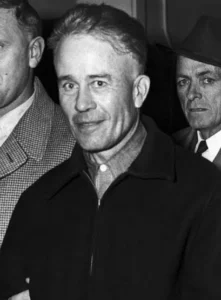
In March 1999, a woman ran naked down an unpaved road near Elephant Butte State Park in New Mexico, wearing nothing but a padlocked metal collar around her neck. She had just escaped from a soundproofed semi-trailer where she had been held for three days. The trailer belonged to David Parker Ray, a man who would become known as the Toy Box Killer, and whose arrest would reveal one of the most disturbing cases of sustained sexual violence in American criminal history. What followed was not only a reckoning with Ray’s crimes, but a catalogue of institutional failures stretching back more than a decade.
Key Facts
- Full name: David Parker Ray (November 6, 1939 – May 28, 2002)
- Location: Elephant Butte, New Mexico, near Truth or Consequences
- Active period: Estimated mid-1980s to March 1999
- Known accomplices: Cindy Hendy (girlfriend), Glenda “Jesse” Jean Ray (daughter), Dennis Roy Yancy (associate)
- Convicted of: Kidnapping and criminal sexual penetrationA legal term in certain U.S. state statutes for non-consensual sexual penetration, carrying felony charges with severity tiers based on circumstances such as force, age, or incapacitation. of three identified victims
- Sentence: 224 years in prison (2001 plea bargain)
- Suspected victims: Authorities and accomplice testimonyLegal testimony from a person who participated in or facilitated a crime. Often considered less reliable without corroboration, but critical in cases where direct evidence or victim identification is limited. suggest up to 60; no remains have ever been recovered
- Status: Died of a heart attack on May 28, 2002, in state custody
The Toy Box Killer’s Trailer at Elephant Butte
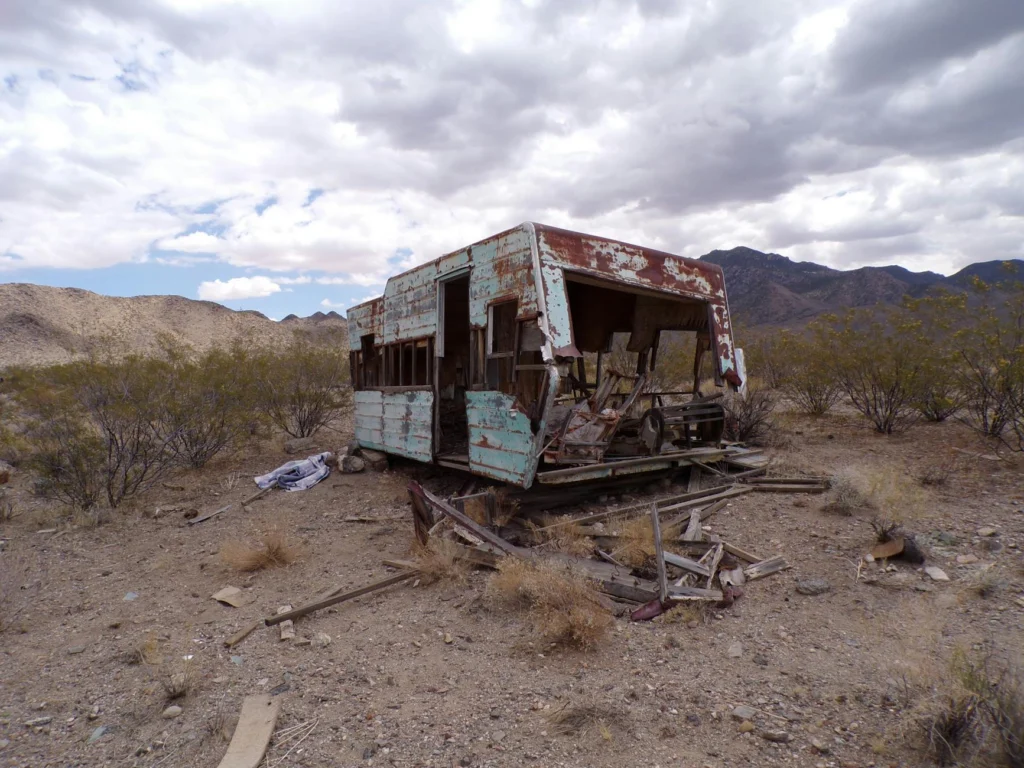
David Parker Ray lived in a mobile home near Elephant Butte Lake, a reservoir on the Rio Grande in Sierra County, New Mexico. The area is sparsely populated, remote, and largely ignored by the outside world. Ray, a state parks employee and mechanic, used these qualities to his advantage.
Adjacent to his home, Ray maintained a modified semi-trailer he referred to as his “toy box.” When investigators entered it after his arrest, they found it equipped with thousands of dollars worth of instruments designed for torture: whips, chains, pulleys, straps, clamps, leg spreader bars, and surgical implements. The trailer was soundproofed. It contained a gynecological table fitted with restraints. Mirrors lined the interior so that victims could not avoid seeing what was being done to them.
Ray had also prepared an audio recording, sometimes described as an “introductory” or “orientation” tape, which he played for his victims upon their arrival. The tape, later obtained by authorities, described in clinical detail what the victim should expect and instructed them not to resist. A digitized copy of the recording, dated July 23, 1993, was later released through a New Mexico public records request. Its existence confirmed that the Toy Box Killer’s methods were not impulsive. They were rehearsed, systematized, and refined over years.
The Accomplices
The Toy Box Killer did not work alone. His operation relied on at least three people who participated in, facilitated, or directly committed acts of violence on his behalf.
Cindy Hendy was Ray’s girlfriend. She met him while working at a state park in Truth or Consequences, New Mexico. Hendy, who had prior convictions for grand theft and drug charges in Washington state, became an active participant in the abductions and assaults. According to court records and her own testimony, she helped restrain victims, administered drugs, and was present during torture sessions. After Ray’s arrest, Hendy provided investigators with information about additional victims and accomplices. She pleaded guilty and received a sentence of 36 years. She was released in July 2019 after serving approximately 20 years, including two years of parole served in custody.
Glenda “Jesse” Jean Ray was David Parker Ray’s daughter. She was charged with kidnapping and criminal sexual penetration for her role in at least one attack. She pleaded no contest and received a 30-month sentence with five years of probation. In a detail that would become central to the case’s broader failures, Jesse Ray had contacted the FBI in 1986, thirteen years before her father’s arrest. According to FBI agent Doug Beldon, she alleged that David Parker Ray “was abducting and torturing women and selling them to buyers in Mexico.” The FBI determined the allegations were too vague to act on. No arrest followed. No further investigation was opened.
Dennis Roy Yancy was an associate of Ray’s. Cindy Hendy told investigators that Ray had confided in her that Yancy had killed a woman under Ray’s direction. Yancy subsequently pleaded guilty to the 1997 murder of 22-year-old Marie Parker, who had been abducted and subjected to days of torture before Yancy strangled her. He was convicted of second-degree murder and conspiracy to commit first-degree murder and received two consecutive 15-year sentences.
Cynthia Vigil’s Escape
The case broke open on March 22, 1999, because one woman refused to die quietly.
Cynthia Vigil Jaramillo, 22 years old at the time, had been abducted from a parking lot in Albuquerque on March 19. Ray approached her posing as an undercover police officer, told her she was under arrest for solicitation, and placed her in his vehicle. She was transported to the trailer at Elephant Butte, fitted with a dog collar and padlock, chained to a table, and subjected to three days of assault by both Ray and Hendy.
On the morning of March 22, Ray left for work. While Hendy was distracted on the phone, Vigil managed to obtain a key, free herself from the chains, and attempt to flee. Hendy discovered the escape and attacked her. In the struggle, Vigil struck Hendy with an ice pick, stabbing her in the neck, and ran from the trailer. She was found by a homeowner on a dirt road near Elephant Butte State Park, naked except for the metal collar still locked around her neck.
Police arrested Ray and Hendy within hours. The investigation that followed would consume years and involve more than one hundred FBI agents.
Vigil’s story did not end with the trial. She had prior convictions for drug possession, trafficking, and prostitution, charges that reflected the circumstances of vulnerability that had made her a target in the first place. In August 2022, New Mexico Governor Michelle Lujan Grisham granted Vigil executive clemency, pardoning those convictions. By that point, Vigil had founded Street Safe New Mexico, a nonprofit supporting women facing homelessness and addiction in the Albuquerque area.
The Trial and Plea Bargain
Prosecutors faced a significant structural problem. A judge ruled that Ray’s crimes against each identified victim (Cynthia Vigil, Angelica Montano, and Kelli Garrett) would be tried separately. This meant each woman’s testimony would stand alone, without the corroborationAgreement among multiple sources or witnesses. The assumption that if several independent sources confirm something, it is likely true. However, corroboration is unreliable when sources share a common origin, leading to false confidence. that multiple similar accounts would have provided. Prosecutors argued that severing the cases damaged their ability to demonstrate Ray’s pattern of behavior.
A week into the first trial, for crimes against Vigil, Ray accepted a plea bargain. In 2001, he was sentenced to 224 years in prison for kidnapping and criminal sexual penetration involving three victims. The plea reportedly factored in leniency for his daughter Jesse.
Ray was never charged with murder. Despite accomplice testimony, despite the audio tape, despite the methodical infrastructure of the trailer, no bodies were ever found. No forensic evidencePhysical evidence collected from a crime scene and analyzed scientifically to establish facts or reconstruct events; includes biological materials, trace evidence, and physical objects examined by forensic specialists. linking Ray to a homicide was recovered from the property.
The Toy Box Killer’s Missing Victims
This is the detail that defines the Toy Box Killer case: the absence.
Accomplice testimony and Ray’s own recorded statements suggested a victim count reaching into the dozens. Cindy Hendy told investigators that victims were dismembered and buried in the desert, or dumped in Elephant Butte Lake. Ray himself reportedly claimed approximately 40 victims from multiple states. Investigators’ estimates ranged as high as 60.
The FBI sent more than one hundred agents to examine the property and surrounding area. They found the torture apparatus. They found the recordings. They found evidence of multiple victims. They did not find remains.
In October 2011, nine years after Ray’s death, the FBI, New Mexico State Police, and Albuquerque Police returned to search McRae Canyon near Elephant Butte Lake. Environmental changes to the canyon had altered the landscape in ways that investigators hoped might expose previously inaccessible burial sites. The search yielded no human remains. The FBI indicated they planned to return for further searches, but no subsequent recovery has been publicly reported.
The lake itself, a large reservoir subject to significant water level fluctuations, may hold evidence that is effectively unreachable. If remains were weighted and submerged, decades of sediment accumulation, water level changes, and decomposition make recovery unlikely without specific information about disposal locations, information that died with Ray.
Thirteen Years of Institutional Failure
The hardest fact in this case is not what Ray did. It is that he was reported to federal law enforcement thirteen years before his arrest, and nothing happened.
In 1986, Ray’s own daughter told the FBI that her father was kidnapping and torturing women. The FBI’s assessment was that the information was “too vague” to pursue. No surveillance was initiated. No local law enforcement was notified. No file was flagged for follow-up if additional information emerged. The tip simply disappeared into the system.
Between 1986 and 1999, by the most conservative estimates, Ray continued to operate. The trailer was constructed, equipped, and refined. Accomplices were recruited. Victims were taken. An audio recording was produced, revised, and played. An entire infrastructure of sustained violence was built, maintained, and used repeatedly, all within a community small enough that Ray was known by name at the state park where he worked.
This is not a case where a perpetrator was invisible. Ray was reported. The report was dismissed. The system moved on. Ray did not.
The case echoes a pattern visible in other investigations where law enforcement failed to connect available evidence or pursue credible leads. What distinguishes the Toy Box Killer case is the directness of the warning. This was not a matter of missed forensic clues or uncorrelated data points across jurisdictions. A family member told the FBI what was happening, and the FBI chose not to act.
What Remains
David Parker Ray died of a heart attack on May 28, 2002, at the Lea County Correctional Facility in Hobbs, New Mexico. He had been transported there for a police interrogation. He died before the interview took place, taking with him whatever information he might have provided about the location of remains, the identities of victims, and the full scope of his crimes.
The Toy Box Killer case persists in the criminal record as a study in contrasts: exhaustive physical evidence of torture alongside a complete absence of remains; a 224-year sentence for crimes against three named victims alongside estimates of dozens more who may never be identified; a 1986 warning to the FBI alongside a 1999 arrest. The gap between what was known and what was done remains the most disturbing feature of the case, more unsettling, ultimately, than the trailer itself.
The FBI’s Albuquerque field office continues to maintain a public page of items and artifacts from the investigation, inviting anyone with information to come forward. As of 2026, no victim remains have been recovered. The families of the unidentified missing have no graves, no confirmation, and no closure. Only the testimony of accomplices, the evidence of the trailer, and the silence of the desert around Elephant Butte Lake.