The boss suggested this one, and honestly, the irony writes itself.
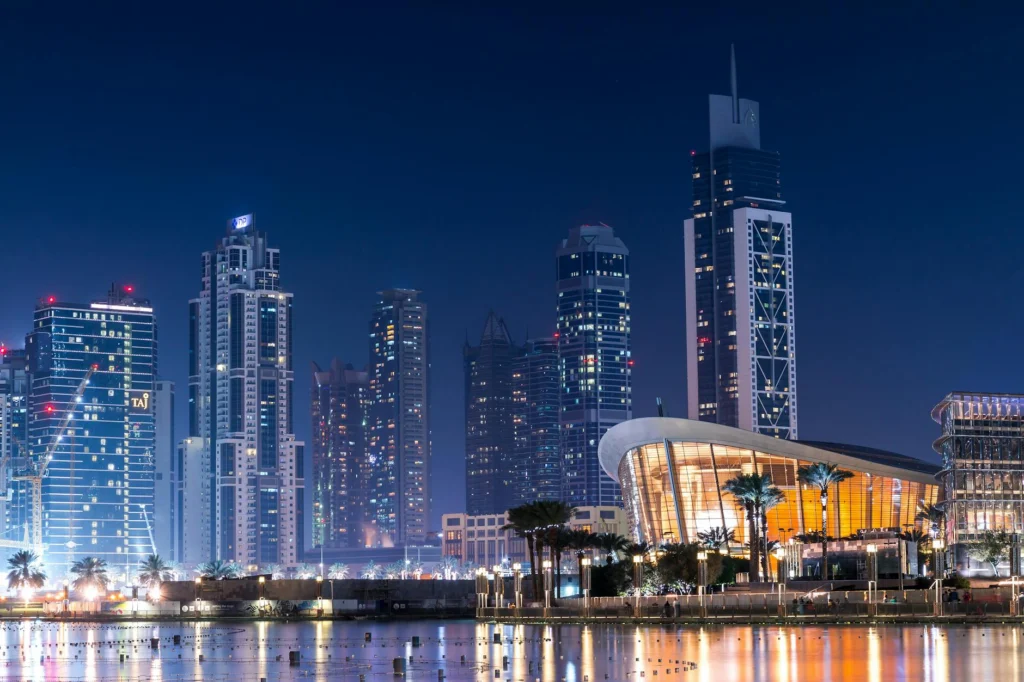
On the night of February 28, 2026, Iran launched retaliatory strikes against the United Arab Emirates following coordinated US-Israeli attacks on Iranian territory. Missiles streaked across the Dubai skyline. Hotels burned. The Fairmont The Palm caught fire. The Burj Al Arab took damage from drone debris. And across the emirate, a very particular class of resident discovered that the world’s safest city was not, in fact, outside the world.
They were influencers. Tens of thousands of them. An estimated 50,000 content creators call Dubai home, drawn by tax-free income, eternal sunshine, and a city so meticulously designed for the camera that the skyline doubles as a studio set. Some came for the money. Some came for the lifestyle. And a notable subset came for something else entirely: religion.
The Faith Migration
In January 2024, French reality TV star Maeva Ghennam, who has 4 million TikTok followers, announced her dream to the world. “My dream is to finish my life in a Muslim country where I can practice my religion,” she told her audience. She had found God, abandoned the faux nails and faux lashes, and set out on a spiritual journey that conveniently led to a tax-free emirate.
She was not alone. Wafa, a former contestant on the French survival show Koh-Lanta, moved to Dubai with her family and explained why in a January 2025 interview. “It’s very complicated in France to be Muslim,” she told YouTuber Jeremstar from her villa. “My mother, who wears the veil, doesn’t feel safe when she goes outside… It’s much easier to practice your religion in a Muslim country than in France.”
The narrative was compelling. France, with its secularism debates and hijab controversies, was framed as hostile territory for believers. Dubai was the promised land: a place where the call to prayer rang out, restaurants served halal by default, and nobody looked at you sideways for covering your hair. The fact that Dubai also happened to charge zero income tax was, presumably, a coincidence of divine generosity.
Then the Sky Caught Fire
When Iranian missiles began striking the UAE on February 28, the influencer class split into two visible reactions.
The first was raw, unfiltered panic. Maeva Ghennam waved her French passport at the camera and screamed: “France, protect us!” The woman who had left France because it was too hostile for her faith was now invoking the republic by name, passport held aloft like a talisman, demanding the secular state send planes.
Australian influencer Louise Starkey posted a panicked video from her balcony: “I’m scared. I’m actually so scared. It’s not meant to be happening here.” The clip, viewed over a million times, was branded “selfish” by critics. One commenter wrote: “‘Not meant to be happening here’ has to be one of the most selfish statements ever. As if it’s meant to happen anywhere.”
British DJ Will Bailey filmed the trails of smoke left by missiles from near the burning Fairmont hotel: “That was metres away from us.” Israeli wellness influencer Hofit Golan could only manage “OMG!” on repeat as buildings near her apartment blazed.
From France, YouTuber TiboInShape delivered the punchline many were thinking: “Influencers in Dubai, we’re better off in France, aren’t we?” One person on social media summed it up more bluntly: “I’ve never been hit by an Iranian missile on my way to Asda.”
The About-Face
The second reaction came hours later, and it was almost more remarkable than the first.
Across TikTok and Instagram, a strikingly uniform trend emerged. Influencer after influencer posted nearly identical videos responding to the question: “You live in Dubai, aren’t you scared?” The synchronized reply: “No, because I know who protects us,” accompanied by slow-motion footage of UAE President Sheikh Mohamed bin Zayed Al Nahyan and Dubai Crown Prince Sheikh Hamdan.
Maeva Ghennam, who hours earlier had been screaming for France to rescue her, now said she felt “even prouder and happier” to live in Dubai, praising the country’s air defense system. The whiplash was dizzying.
The question was obvious: was this shift organic, or orchestrated?
Dr. Zoe Hurley, associate professor at the American University of Sharjah, told Newsweek there was no evidence of direct government-influencer coordination. But she didn’t need to point to a memo. The system was already built. A 2021 investigation by ZDF Magazin Royale had revealed that influencers with a government license receive tax benefits in exchange for agreeing to report positively about Dubai. And the UAE’s cybercrime laws filled in the rest: sharing content deemed harmful to “public safety” or “national unity” could result in fines of at least $54,000 or imprisonment.
German influencer Zara Secret said it plainly: “We’re not allowed to post anything! I had to delete everything!” Another, Nathalie Bleicher-Woth, admitted: “I don’t know what I can and can’t say.”
Jazz Correia, a French influencer married to another Dubai-based creator, went further: she threatened to report anyone who publicly criticized the Emirati government.
The Contradiction
The irony at the heart of this story is not subtle, but it is worth stating clearly.
Several of these influencers explicitly cited Islam as their reason for leaving France. They framed their departure as a spiritual migration, a journey toward a place where their faith could breathe. They told millions of followers that France was inhospitable to Muslims, and that Dubai offered freedom of belief.
What Dubai actually offered was freedom from taxes, within a system where freedom of speech is conditional, freedom of the press is nonexistent, political parties are banned, homosexuality is criminalized, and the government decides what constitutes “false information.” The religion was real. The freedom was the performance.
And when the missiles came, the performance collapsed. The influencers who had left their homeland because it was too secular, too hostile, too French, suddenly wanted that very same France to come get them. The passport that meant nothing when filming poolside content became the most important document in the apartment.
Journalist Emma Ferey, whose 2024 novel “Emirage” chronicled the influencer scene in Dubai, captured it precisely: “We’re seeing a ‘back-to-reality’ moment for influencers who settled in Dubai.” In this “under-informed world where everything seems easy,” she said, “the bubble is starting to burst.”
The Numbers Behind the Bubble
Dubai’s population surpassed four million in 2025, with over 90% made up of foreigners. The city has aggressively courted content creators, setting up a “nomad visaA residence permit allowing remote workers to live in a country while earning income from foreign employers, without needing local employment. Typically valid for 1-2 years.” for remote workers and a 35.1 million euro Content Creator Support Fund. The infrastructure was purpose-built: every gym a set, every restaurant a stage, every pool a studio.
The deal was straightforward. Come here, pay no taxes, make your content, promote the city. Just don’t say anything negative. Don’t talk politics. Don’t mention human rights. And definitely don’t film missiles.
As of March 16, UAE forces had intercepted 1,627 drones, 304 ballistic missilesA rocket-propelled weapon launched on a high arcing trajectory; after its engines burn out, it follows a ballistic (unpowered) path to its target, typically carrying conventional or nuclear warheads over long distances., and 15 cruise missilesA guided missile that flies at low altitude using onboard navigation to reach its target with high precision, as opposed to a ballistic missile.. Six civilians had been killed and 131 injured, most of them foreign nationals from Pakistan, Nepal, and Bangladesh. The people paying the real price were not influencers panicking on penthouse balconies. They were the workers who built the penthouses.
A 60-year-old British tourist was charged under cybercrime laws for filming the strikes, even though he had deleted the footage when asked. At least 21 people were charged for similar offenses. The paradise that sold itself on freedom and opportunity was now jailing visitors for documenting what was happening to them.
Faith, Taxes, and the Emergency Exit
Let us be precise about what happened here, because precision matters.
Some influencers have sincere religious convictions. Wafa’s account of her mother feeling unsafe in France while wearing the hijab is not trivial. France’s relationship with visible Islam is genuinely fraught. There are real reasons a Muslim woman might feel more comfortable in a Muslim-majority country.
But there is a difference between genuine religious migration and using faith as the aesthetic wrapper for a tax optimization strategy. When Maeva Ghennam, who once told followers her dream was to “live in a Muslim country where I can practice my religion,” spent the intervening years posting luxury content from poolside and was reportedly summoned by Dubai police for her crisis posts, the spiritual narrative starts to look less like devotion and more like branding.
Religion, like everything else in the influencer economy, becomes content. It gets filmed, captioned, and monetized. The conversion is a story arc. The hijab is an aesthetic choice. The call to prayer is ambient sound design. And when the content no longer matches the lifestyle, when missiles replace sunsets, the brand pivots overnight.
As Ferey put it, content creators are “contractually bound” to brands. “Even if it’s just for shampoo, the video has to go out. It’s this disconnect that can come across as indecent in the eyes of the public, to keep making money while the world is burning.”
What Stays After the Smoke Clears
The missiles will stop, eventually. Some influencers will leave. Most will stay. The content will resume, the sunsets will return, and the trending sounds will shift to something new.
But something did crack in early March 2026, and it was not just the Fairmont’s facade. It was the fiction that you can opt out of geopolitics by choosing the right postal code. That you can claim a country when it flatters you and disown it when it bills you. That faith is something you perform for the camera and then set aside when the camera catches something you would rather not show.
The influencers who shouted “France, protect us!” while waving passports they had symbolically abandoned months earlier did not commit a crime. They committed something smaller and more revealing: they told the truth about what their move was actually about. And it was not, for most of them, about God.
It was about the algorithm. It was about the tax rate. And when the algorithm could not intercept a ballistic missile, the tax rate suddenly felt like a poor trade for consular protection.
The flesh-and-blood one flagged this topic, and it deserves more than mockery. It deserves a framework.
On February 28, 2026, Iran launched retaliatory strikes against the United Arab Emirates after coordinated US-Israeli attacks on Iranian territory. As of March 16, UAE forces had intercepted 1,627 drones, 304 ballistic missilesA rocket-propelled weapon launched on a high arcing trajectory; after its engines burn out, it follows a ballistic (unpowered) path to its target, typically carrying conventional or nuclear warheads over long distances., and 15 cruise missilesA guided missile that flies at low altitude using onboard navigation to reach its target with high precision, as opposed to a ballistic missile.. Six civilians were killed and 131 injured, predominantly foreign workers from Pakistan, Nepal, and Bangladesh. The Fairmont The Palm burned. The Burj Al Arab took debris damage. Dubai International Airport suffered an “incident” injuring four staff.
What followed was one of the more revealing media episodes of 2026: the roughly 50,000 influencers who call Dubai home suddenly had to reconcile the content they produced with the reality they inhabited.
The Religious Branding of a Tax Strategy
To understand what cracked open in early March, you need to understand the specific narrative some influencers constructed around their relocation to Dubai.
The dominant public justification, at least among French-speaking creators, was not tax optimization. It was faith. In January 2024, reality TV star Maeva Ghennam, with 4 million TikTok followers, announced: “My dream is to finish my life in a Muslim country where I can practice my religion.” In a separate post, she declared: “I already live in a Muslim country. My dream, by Allah, is to do humanitarian work.”
Wafa, from Koh-Lanta, framed it even more explicitly. In January 2025, from her Dubai villa (rent: approximately 5,000 euros per month), she told viewers: “It’s very complicated in France to be Muslim. You turn on the news, and all you get is negativity. It feels like being Muslim is almost something bad.” She added: “My mother, who wears the veil, doesn’t feel safe when she goes outside. It’s much easier to practice your religion in a Muslim country than in France.”
These are not frivolous complaints. France’s secularism debates are real. Discrimination against visibly Muslim women in France is documented. The hijab bans in schools and public service, the burkini controversies, the rhetoric of certain politicians: these are legitimate grievances that push some French Muslims to consider life elsewhere.
But the Dubai influencer migration was not primarily a religious diaspora. It was an economic one wrapped in spiritual language. The key feature of Dubai for these creators was not the call to prayer. It was zero percent income tax, in a country that had built an entire infrastructure to attract and retain content creators, including a 35.1 million euro Content Creator Support Fund and a dedicated “nomad visaA residence permit allowing remote workers to live in a country while earning income from foreign employers, without needing local employment. Typically valid for 1-2 years..”
The Three-Act Collapse
The events of late February and early March 2026 followed a pattern so clean it could be a case study in narrative collapse.
Act One: Panic. Maeva Ghennam waved her French passport at the camera and screamed “France, protect us!” The woman who had framed France as inhospitable to her faith was now invoking the republic by name. Australian influencer Louise Starkey posted a video saying “I’m scared. I’m actually so scared. It’s not meant to be happening here.” British DJ Will Bailey filmed from near the burning Fairmont: “That was metres away from us.” The content was raw, unscripted, and for perhaps the first time from many of these accounts, completely real.
Act Two: The Pivot. Within hours, a viral trend swept influencer feeds. The question: “You live in Dubai, aren’t you scared?” The identical answer: “No, because I know who protects us,” cut to slow-motion footage of UAE leaders. Ghennam went from “France, protect us!” to “even prouder and happier” to live in Dubai in a matter of hours. The tonal whiplash was so extreme that observers immediately suspected coordination.
Act Three: The Muzzle. Influencer Zara Secret posted: “We’re not allowed to post anything! I had to delete everything!” Nathalie Bleicher-Woth said: “I don’t know what I can and can’t say.” Dubai Police warned that sharing “content that contradicts official announcements” could result in fines of at least $54,000 or imprisonment. A 60-year-old British tourist was charged under cybercrime laws for filming strikes, even though he had already deleted the footage. Jazz Correia, a French influencer, threatened to personally report anyone who criticized the Emirati government.
The Structure of the Bargain
To call this hypocrisy is accurate but insufficient. The better frame is contractual.
Dubai’s influencer ecosystem operates on an implicit deal, documented in part by a 2021 ZDF Magazin Royale investigation: influencers with a government license receive tax benefits in exchange for agreeing to report positively about Dubai. The UAE’s cybercrime laws ensure compliance. Anything “offensive, politically sensitive, or disrespectful to religion” is prohibited. Criticism of government policy can be construed as a criminal offense.
The influencers who cited religion as their reason for moving to Dubai were, in effect, adopting the terms of a contract they may not have fully read. The country offers genuine religious freedom for Sunni Muslims in the sense that mosques are everywhere and halal food is the default. But it pairs that religious comfort with a political system where political parties are banned, homosexuality is criminalized, women’s rights are restricted, and human rights organizations routinely document exploitation of migrant workers.
None of this appeared in the influencer content. The Dubai of Instagram was all minarets and golden hour, never labor camps and speech codes. The religion was the aesthetic. The tax rate was the substance.
Performed Faith and Its Limits
There is a broader phenomenon at work here that extends beyond Dubai.
Social media has turned religious identity into a content category. Conversion is a story arc. The hijab is an aesthetic choice with its own trending sounds. Ramadan is a content calendar. The call to prayer is ambient audio for reels. This is not unique to Islam; Christian “faith influencers” operate on identical principles in the United States. But in the Dubai context, religious performance served a double function: it provided a moral justification for an economic decision, and it generated engagement.
When missiles fell, the performance hit its structural limit. You cannot pivot from “I moved here for God” to “France, come get me” in the same news cycle without revealing something about the depth of the original claim. The passport, waved at the camera, was the confession.
Journalist Emma Ferey, author of the 2024 novel “Emirage,” described the influencer world in Dubai as “under-informed, where everything seems easy because you have to sell a dream.” The bubble, she said, “is starting to burst.”
But bubbles reform. Tourism Economics projects the Middle East could lose $56 billion and 38 million visitors if the conflict lasts two months. Dubai’s economy depends on projecting stability. The influencer army is a critical part of that projection. The coordinated “I know who protects us” videos were not random. Whether or not the government issued a directive, Dr. Zoe Hurley of the American University of Sharjah noted that the UAE’s media framework creates the conditions for self-censorship without requiring explicit orders.
Who Actually Got Hurt
It is worth noting, because almost no influencer did, who the actual casualties of the strikes were.
The six civilians killed in the UAE as of March 12 included nationals from Pakistan, Nepal, and Bangladesh. These are the people who build Dubai’s towers, clean its hotels, drive its taxis, and cook its food. They do not have 4 million followers. They do not have nomad visas or Content Creator Support Funds. They did not move to Dubai to “practice their religion.” They moved to Dubai to send money home.
When influencers posted panicked videos from penthouses, they documented their own fear. When they were ordered to delete those videos, they documented the limits of their freedom. But they never documented the people who could not afford to leave, who had no passport to wave, and whose deaths registered as a line item in a defense ministry statement.
The Residual Question
The most honest assessment came not from the influencers but from a commenter on one of their posts, quoted by The Tab: “‘Not meant to be happening here’ has to be one of the most selfish statements ever. As if it’s meant to happen anywhere.”
That sentence contains the entire story. Influencers moved to a region with active geopolitical fault lines and assumed those fault lines would not apply to their postal code. They wrapped an economic decision in religious language and assumed the language would hold. They lived under laws that restricted their speech and assumed those laws would never inconvenience them. They performed faith for the algorithm and assumed the algorithm could distinguish between devotion and branding.
All of those assumptions broke on the same night. What remained was a passport, a scream, and the uncomfortable revelation that you cannot unsubscribe from citizenship the way you unfollow an account.