On Christmas Day 2024, a Cook Islands-flagged oil tanker called the Eagle S dragged its anchor across the floor of the Gulf of Finland for roughly 100 kilometers. By the time Finnish police and coast guard boarded and detained the vessel, it had severed one power interconnector and four data cables. The tanker, linked to Russia’s shadow fleetOlder, uninsured tankers used to evade international sanctions by operating outside official shipping registries and insurance markets., was approaching yet another cable when authorities intervened.
The incident was dramatic, but what made it significant was not the ship itself. It was what the ship revealed: the internet, for all its apparent weightlessness, is a physical thing. It has geography. It has borders, bottlenecks, and single points of failure. And those failure points are remarkably fragile.
The Internet Is Made of Glass
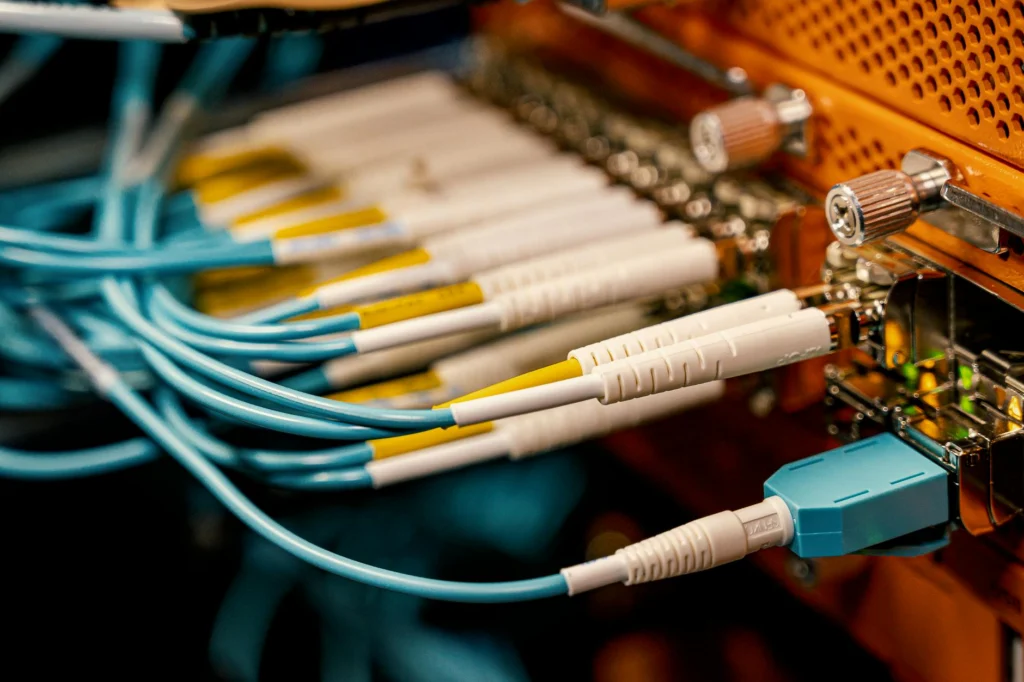
About 99% of international internet traffic travels through submarine cables. Not satellites. Not radio waves. Glass fibers, bundled into cables roughly the width of a garden hose, laid along the ocean floor by specialized ships. As of 2025, there are roughly 570 commercial undersea cables in operation, with another 81 planned. They stretch across approximately 1.7 million kilometers of seabed, enough to wrap around the Earth more than 40 times.
These cables carry everything: your email, your video calls, stock trades, military communications, cloud computing, streaming video. Trillions of dollars in daily financial transactions pass through them. They are, by any reasonable measure, the most critical infrastructure on the planet. And most people have never thought about them.
The Chokepoints
Just as oil tankers must pass through narrow straits, submarine cables converge at geographic bottlenecks. The most important ones:
The Red Sea and Suez Canal corridor. This narrow waterway carries about 18% of the world’s data traffic, connecting Europe, the Middle East, and Asia. In February 2024, a vessel struck by a Houthi-fired missile sank in the Red Sea and damaged three major cables, disrupting an estimated 25% of data traffic between Europe and Asia.
The Strait of Malacca. Between Malaysia, Singapore, and Indonesia, this passage is one of the densest cable corridors in the world, carrying data between the world’s two largest digital economies (the US and China) and the rest of Asia.
Egypt. Nearly all Europe-to-Asia cable routes funnel through Egyptian territory. Because the Red Sea corridor alone carries about 18% of global data traffic, and most other Europe-to-Asia routes also transit Egyptian territory, a major Egyptian infrastructure failure could cause widespread disruption across multiple continents.
The Baltic Sea. A shallow, busy sea where cables connecting Northern European nations have been repeatedly severed in suspicious incidents since late 2024.
When Cables Break, Countries Go Dark
Cable breaks are not hypothetical. They happen 150 to 200 times per year, averaging three to four per week. Most go unnoticed because redundant cables pick up the slack. But when multiple cables fail simultaneously, or when a country lacks alternatives, the consequences are severe.
In March 2024, an underwater rockslide off West Africa damaged four submarine cables at once. Internet connections went down across at least 16 countries. Nigerian banks went offline. Mobile payments in Ghana ground to a halt. The disruption lasted days.
Two months later, damage to two cables off the coast of South Africa disrupted internet services in 12 East African countries, with Tanzania, Mozambique, and Malawi hit hardest.
In 2022, an underwater volcano destroyed Tonga’s only submarine cable. The entire island nation went offline. SpaceX donated 50 Starlink terminals as an emergency measure, but satellites restored only a tiny fraction of the lost bandwidth. Two years later, the replacement cable broke again. Restoration took over a month.
Sabotage or Accident? A Growing Gray Zone
Most cable damage comes from ship anchors and fishing equipment, not sabotage. But the line between accident and aggression has become dangerously blurry.
In November 2024, two Baltic Sea cables were cut nearly simultaneously. One connected Sweden and Lithuania; the other connected Finland and Germany. The suspect: the Chinese-owned bulk carrier Yi Peng 3, which Western intelligence officials believed may have damaged the cables with its anchor. China blocked investigators from boarding the ship for weeks.
Then came the Eagle S on Christmas Day, dragging its anchor for roughly 60 miles across the seabed, hitting cable after cable. The tanker belonged to Russia’s “shadow fleet,” vessels with obscure ownership, minimal insurance, and flags from countries with little maritime oversight.
Across 2024 and 2025, Recorded Future’s Insikt Group documented 44 publicly reported cable damages. Anchor dragging accounted for 25% of them. At least four incidents involved Russia- or China-linked vessels operating under suspicious circumstances.
Why Satellites Are Not the Backup You Think
Whenever cable vulnerability comes up, someone suggests satellites as a fallback. The math doesn’t support this. When Taiwan’s Matsu Islands lost their two submarine cables in 2023, a backup microwave system restored only about 5% of the lost bandwidth. Satellites are slower, more expensive per bit, and orders of magnitude lower in capacity than fiber optic cables. They are a stopgap for emergencies, not a replacement.
What Happens Next
Investment in new cables is surging. Over $13 billion in new submarine cable construction is planned for 2025 through 2027, far exceeding recent annual averages of about $2 billion. Google, Meta, and other tech giants are driving much of this investment, particularly across the Pacific.
But more cables alone won’t solve the problem. The repair fleet is small and aging. There are only about 62 specialized cable-laying and repair ships in the world, and by 2040, nearly half of them will have reached the end of their service lives. Cable repairs cost $1 to $3 million each and can take months.
NATO has established a coordination cell and deployed patrols in the Baltic Sea. The EU published an action plan on cable security in 2025. The ITU created an International Advisory Body for Submarine Cable Resilience in 2024.
The fundamental vulnerability, though, remains: the internet is a physical network, concentrated in physical places, subject to physical attack. The legal framework protecting these cables dates back to the 1884 Paris Convention, reinforced by the 1958 Geneva Conventions and the 1982 UN Convention on the Law of the Sea. These treaties make it illegal to damage submarine cables. They do not, however, make it difficult.
On Christmas Day 2024, the Cook Islands-flagged tanker Eagle S struck one power interconnector and four data cables in the Gulf of Finland by dragging its anchor across roughly 60 miles of seabed. Finnish authorities boarded and detained the vessel, part of Russia’s “shadow fleetOlder, uninsured tankers used to evade international sanctions by operating outside official shipping registries and insurance markets.,” before it could reach a sixth cable. The incident crystallized a problem that infrastructure engineers have been warning about for years: the physical internet has a geography, and that geography has chokepoints.
Architecture of the Submarine Cable Network
As of 2025, 597 subsea cables are in operation or under construction, up from 559 in 2024. These cables carry an estimated 97-98% of intercontinental internet traffic. The ITU’s Deputy Secretary-General has put the figure at 99% for all international traffic. The remaining fraction moves via satellite, which the US Federal Communications Commission reports accounts for just 0.37% of all US international capacity.
Physically, submarine cables are fiber optic strands sheathed in protective layers of steel wire, copper, and polyethylene. In deep water, where the risk of anchor damage is low, the cable may be as thin as 17mm in diameter. In shallow coastal waters, heavier armoring increases the diameter but the cable remains, as the ITU describes it, “roughly the width of a garden hose.” The total network stretches across approximately 1.7 million kilometers of seabed.
The manufacturing and installation market is dominated by three companies: France’s Alcatel Submarine Networks, the US’s SubCom, and Japan’s NEC. Between 2020 and 2024, Alcatel delivered 23 systems, SubCom delivered 13, and NEC delivered 10. China’s HMN Technologies (formerly Huawei Marine) has emerged as a fourth player with seven systems delivered in the same period, raising concerns among Western governments about potential surveillance and supply chain risks.
Geographic Chokepoints and Concentration Risk
The submarine cable network shares a critical vulnerability with global shipping: geographic concentration. Cables, like tankers, must pass through narrow straits and coastal zones where they bunch together.
The Red Sea/Suez corridor is the most consequential chokepoint. Cables connecting Europe with Asia, Africa, and the Middle East run through this narrow waterway, carrying about 18% of global data traffic. In February 2024, a vessel sunk by Houthi-fired missiles damaged the AAE-1, EIG, and SEACOM cables, disrupting 25% of data traffic between Asia and Europe. The concurrent instability in the Strait of Hormuz, where Meta and partners paused work on the 2Africa Pearls cable system, has created what analysts call a “dual chokepoint” compounding Middle Eastern connectivity risk.
Egypt is a singular point of failure. Nearly all cable routes between Europe and Asia transit Egyptian territory, either through the Suez Canal or overland. Because the Red Sea corridor carries about 18% of global data traffic, and most alternative Europe-to-Asia routes also cross Egyptian territory, a major Egyptian infrastructure failure could cause severe disruption to intercontinental connectivity.
The Strait of Malacca, between Malaysia, Singapore, and Indonesia, concentrates trans-Pacific and intra-Asian cable traffic in a passage barely 65 kilometers wide at its narrowest point.
The Baltic Sea presents a different vulnerability profile: shallow waters (average depth 55 meters), heavy shipping traffic, and cables connecting EU and NATO member states. The shallow depth means cables here are especially exposed to anchor strikes.
Fault Taxonomy and the Sabotage Question
The International Cable Protection Committee reports roughly 200 cable faults per year. The ITU cites 150 to 200 incidents annually. Around 80% are caused by human activity, primarily ship anchors and fishing trawlers contacting cables at depths of less than 200 meters. Natural phenomena (earthquakes, underwater landslides, abrasion) account for approximately 10%.
Recorded Future’s Insikt Group analyzed 44 publicly reported cable damages in 2024 and 2025, occurring in 32 distinct groupings. The breakdown: unknown causes (31%), anchor dragging (25%), seismic activity or natural phenomena (16%), and other identified causes (28%).
The sabotage question centers on a specific tactic: anchor dragging. A ship drops its anchor and drags it along the seabed, severing any cables in its path. The technique requires no specialized equipment and offers plausible deniabilityA condition in which a state or official can credibly deny involvement in a covert action because no formal evidence of their participation exists., since anchors do occasionally drag accidentally. Of the nine incidents Insikt Group identified in the Baltic Sea and around Taiwan in 2024-2025, at least five involved ships dragging their anchors, including four vessels linked to Russia or China operating under suspicious circumstances or with opaque ownership structures.
The Baltic timeline illustrates the escalation:
- October 2023: The Chinese-owned Newnew Polar Bear damages the Balticconnector gas pipeline and a data cable in the Gulf of Finland.
- November 17, 2024: The Chinese-flagged Yi Peng 3 is suspected of cutting cables connecting Sweden-Lithuania and Finland-Germany. The Finland-Germany cable (C-Lion1) was the only direct data link between Finland and the European continent.
- December 25, 2024: The Eagle S, a shadow fleet tanker, drags its anchor for approximately 60 miles, damaging one power cable and four data cables before Finnish authorities board the vessel.
Despite the suspicious circumstances, proving intent remains legally and technically challenging. Sweden shelved its investigation of the Vezhen, another vessel suspected of cable damage in January 2025, because prosecutors could not prove the crew had intentionally released the anchor.
Redundancy Asymmetry: Who Survives Cable Cuts
The impact of cable damage depends almost entirely on how much redundancy exists at the point of failure. The contrast between European and African experiences in 2024 illustrates this starkly.
When the Baltic Sea cables were cut in November 2024, Cloudflare reported “little-to-no observable impact” on the affected countries, because European internet infrastructure has extensive redundancy: multiple cable routes, terrestrial backups, and well-connected internet exchange points.
When four cables broke off West Africa in March 2024, at least 16 countries experienced disruptions. Nigerian banks went offline. The estimated repair bill was $8 million. Many of these countries depended on only one or two cable systems.
Bangladesh offers a middle case. When a cable outage hit in 2023, the country maintained internet services by rerouting traffic through terrestrial connections with India and relying on locally cached content. The survival was not luck; it was infrastructure investment in regional interconnection and content distribution.
The Repair Bottleneck
The world’s cable repair fleet is a critical constraint. The Bulletin of the Atomic Scientists reports 62 specialized cable-laying and repair vessels globally. Recorded Future counts approximately 80 vessels when including both purpose-built and multipurpose ships. The fleet is aging.
The math is sobering. By 2040, industry analysts project a 48% net increase in total cable kilometers. In the same period, nearly 50% of repair ships will reach end of life. New cable ships cost $100 million or more and take years to build.
Repairs themselves average $1 to $3 million per incident and require specialized crews. Current median restoration time sits at around 40 days, but this figure is likely to rise without new fleet investment. Conflict zones and permitting delays compound the problem: repair vessels need diplomatic clearance to enter territorial waters, and some damaged cables sit in waters where armed conflict makes access impossible.
The satellite backup narrative collapses under capacity constraints. When Taiwan’s Matsu Islands lost both submarine cables in 2023, a backup microwave system restored only about 5% of the cables’ bandwidth. Full internet access was not restored until April 2023, two months after the damage. Tonga’s 2022 experience was similar: Starlink terminals provided emergency connectivity but could not substitute for fiber capacity. Restoration of the replacement cable took over a month.
The Investment Surge and Geopolitical Realignment
Investment is accelerating. TeleGeography forecasts over $13 billion in new submarine cable construction between 2025 and 2027, a sharp increase from recent years. The biggest surge is in trans-Pacific routes, where Google- and Meta-led projects will drive over $3 billion in spending.
This investment is not purely commercial. Cable routes are being chosen with geopolitical resilience in mind. New projects are emerging across the Arctic, the Mediterranean, and the Indian Ocean, diversifying away from the Red Sea chokepoint. The EU published a comprehensive action plan on cable security in 2025, treating submarine cables as critical infrastructure on par with energy and defense systems.
On the security side, NATO established a coordination cell at its headquarters in early 2023 and later deployed a dedicated Baltic Sea task force. The ITU created the International Advisory Body for Submarine Cable Resilience in 2024. Finland’s dramatic boarding of the Eagle S in its exclusive economic zoneThe maritime zone extending 200 nautical miles from a coastal state's baseline, where it holds sovereign rights over natural resources and limited jurisdiction over foreign vessels., though legally controversial, signaled a willingness to enforce cable protection through direct action.
The legal architecture protecting cables is old but surprisingly durable. The 1884 Paris Convention made it an offense to damage submarine cables. The 1958 Geneva Convention on the High Seas reinforced the right to lay them. The 1982 UN Convention on the Law of the Sea (UNCLOS) established the current framework. But enforcement gaps remain: coastal states have limited jurisdiction in their exclusive economic zones, and flag statesThe country under whose flag a ship is registered, which holds primary jurisdiction over that vessel under international maritime law, even on the high seas. can shield vessels from investigation, as China did with the Yi Peng 3.
The Core Vulnerability
The fundamental architecture of the internet creates an inherent tension. Efficiency demands that cables follow the shortest, most cost-effective routes. Those routes inevitably converge at geographic bottlenecks. Redundancy mitigates the risk, but true redundancy is expensive, and the countries that need it most can least afford it.
The cables were laid along routes optimized for efficiency, not survivability. That design philosophy worked for decades, sustained by an assumption that no one would seriously try to break them. That assumption no longer holds.