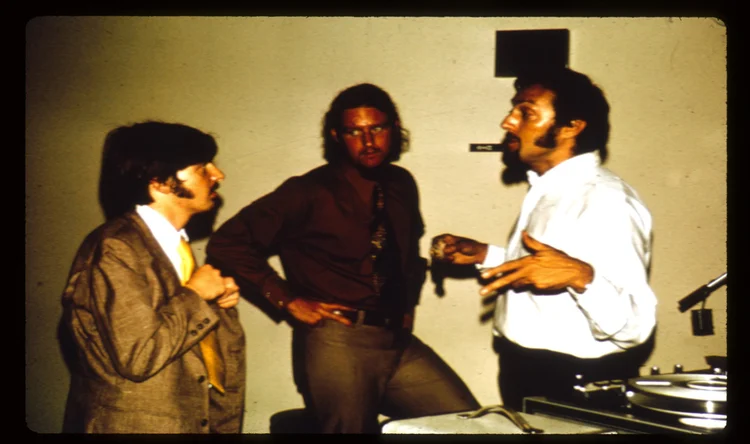
The Stanford Prison Experiment Everyone Knows
The Stanford Prison Experiment is one of the most famous studies in the history of psychology. In August 1971, Philip Zimbardo converted a basement corridor in Stanford University’s Jordan Hall into a mock prison. He recruited 24 young men through a newspaper ad, randomly assigned them to be “guards” or “prisoners,” and waited to see what would happen. Within days, the guards turned sadistic. The prisoners broke down. Zimbardo ended the experiment after six days because things had spiraled out of control.
That is the version taught in virtually every introductory psychology course on Earth. It appears in textbooks as proof that ordinary people will become cruel when placed in positions of authority. Zimbardo spent decades building a career on that conclusion, eventually testifying as an expert witness in the Abu Ghraib torture trials and publishing The Lucifer Effect in 2007 to explain “how good people turn evil.”
The problem: much of it was staged.
What Actually Happened in the Basement
The textbook version omits several facts that change the story entirely. Zimbardo did not passively observe what happened. He served simultaneously as the lead researcher and the prison superintendent, actively managing the environment he was supposedly studying. His research assistant, David Jaffe, was recorded on tape coaching guards to be tougher with prisoners. Guards were not spontaneously cruel; they were told what kind of environment to create.
The most famous moment of the experiment, a prisoner named Douglas Korpi having what appeared to be a psychological breakdown, was not real. Korpi, who later became a forensic psychologist, told journalist Ben Blum decades later: “Anybody who is a clinician would know that I was faking.” He wanted to leave the experiment to study for his graduate school exams. His screaming was a performance to get released, not evidence of situational psychological collapse.
Meanwhile, the guard who became the experiment’s poster child for cruelty, Dave Eshelman, told Inside Higher Ed that he approached the whole thing “as a kind of an improv exercise,” deliberately modelling a character from the film Cool Hand Luke. He was performing, not succumbing to the power of his role.
What the Archives Revealed
In 2019, French researcher Thibault Le Texier published a paper in the American Psychologist, the flagship journal of the American Psychological Association, titled “Debunking the Stanford Prison Experiment.” Le Texier had done something no one else had bothered to do in nearly fifty years: he went through Zimbardo’s own archives at Stanford, reviewed unpublished recordings, read internal memos, and interviewed participants.
What he found was damning. The guards had received specific instructions on how to treat prisoners. The research team had encouraged aggressive behaviour and reprimanded guards who were too lenient. A student experiment in one of Zimbardo’s classes three months earlier had served as a rehearsal. The conclusions Zimbardo presented to the world were, in Le Texier’s assessment, written before the data was collected.
The experiment was not a study that produced surprising results. It was closer to a demonstration designed to confirm what its creator already believed.
Why Textbooks Kept Teaching It Anyway
Here is where the story becomes less about one flawed study and more about how science fails to correct itself. A 2015 content analysis by Jared Bartels examined fourteen introductory psychology textbooks and found that only two cited any critical articles about the Stanford Prison Experiment. None mentioned the BBC Prison Study, a 2002 replication by psychologists Alex Haslam and Steve Reicher that produced the opposite result: when guards were not coached, they did not become tyrants, and prisoners actually organized collective resistance.
This is not a minor omission. The entire point of the Stanford Prison Experiment, as taught, is that situations override individual character. The BBC study showed that they don’t, at least not automatically. Omitting it from textbooks is like teaching Newtonian physics without mentioning that Einstein had some notes.
The pattern is familiar. The replication crisisThe widespread failure of scientific research findings to be independently reproduced when retested, revealing systematic flaws in methodology, analysis practices, and publication incentives. in psychology has shown that many landmark studies cannot be reproduced, but the studies themselves remain embedded in curricula because updating textbooks is slow, publishers are conservative, and famous experiments make better teaching material than the messy truth. The Stanford Prison Experiment survived for the same reason the serotoninA neurotransmitter that relays signals between neurons in the brain, involved in mood regulation, sleep, appetite, and other functions. myth survived: it was a clean, compelling story, and clean compelling stories are resistant to correction. This kind of selective evidence creates the illusion that famous studies must be valid simply because they’re famous.
Why It Matters
Zimbardo’s experiment was not just an academic exercise. He used it to build a framework, “situationismThe theory that human behavior is primarily determined by external situations and environments rather than individual personality or character. Applied to research, it suggests that ordinary people will conform to situational pressures regardless of their personal values.,” that influenced how courts, militaries, and policymakers think about human cruelty. When he testified at the Abu Ghraib trials, he argued that the soldiers who tortured Iraqi prisoners were not bad people but ordinary individuals corrupted by a bad system. That argument rests entirely on the premise that his 1971 experiment proved situations can override moral character.
If the experiment was manipulated, the foundation of that argument is compromised. This does not mean situations never influence behaviour (they obviously do), but it means the most famous piece of evidence for extreme situationism was not evidence at all. It was a demonstration by a researcher who had already decided what the answer was.
The lesson is not that psychology is broken. It is that famous experiments require the same scrutiny as obscure ones, that a compelling narrative is not the same as a robust finding, and that fifty years of citation does not make something true. As with other forms of junk science that persist despite debunking, institutional momentum can sustain bad research for decades. As UC Davis psychologist Simine Vazire put it after the revelations: “We must stop celebrating this work. It’s anti-scientific. Get it out of textbooks.”
The Stanford Prison Experiment: Setup and Standard Narrative
Philip Zimbardo’s Stanford Prison Experiment (SPE) ran from August 14 to August 20, 1971, in a converted corridor in the basement of Jordan Hall at Stanford University. Zimbardo recruited participants through a classified ad in the Palo Alto Times and The Stanford Daily reading: “Male college students needed for psychological study of prison life. $15 per day for 1–2 weeks.” Of approximately 75 respondents, 24 were selected after screening for psychological stability. They were randomly assigned: nine guards, nine prisoners, with six alternates. The experiment was funded by the U.S. Office of Naval Research.
The canonical narrative, as Zimbardo presented it for decades and as it appeared in thousands of textbooks, courses, and TED talks, was straightforward situationismThe theory that human behavior is primarily determined by external situations and environments rather than individual personality or character. Applied to research, it suggests that ordinary people will conform to situational pressures regardless of their personal values.: place ordinary people in a prison structure, and the structure itself produces cruelty in guards and helplessness in prisoners. Zimbardo positioned himself as a passive observer who was horrified by what emerged organically from the situation. He terminated the study after six days when, by his account, the abuse had become too severe to continue ethically.
This narrative began unravelling in 2018 and collapsed almost entirely by 2019.
The Manipulation Evidence
Guard coaching
Le Texier’s archival research, published in the American Psychologist in 2019 (“Debunking the Stanford Prison Experiment,” Vol. 74, No. 7, pp. 823–839), established that guards received explicit instructions from the research team. Zimbardo’s own documents show he provided guards with rules and procedures designed to dehumanise prisoners. Le Texier found that “guards’ brutality was rehearsed,” that staff “encouraged guards’ aggression and reprimanded those who were too lenient,” and that the entire framework had been pre-tested in a student class experiment three months earlier.
David Jaffe, Zimbardo’s undergraduate research assistant (who later co-authored the original study), was captured on tape instructing a guard to escalate his treatment of prisoners. This was not a peripheral figure improvising; Jaffe had designed the guard orientation and was actively managing guard behaviour throughout the experiment.
The Korpi breakdown
Prisoner #8612, Douglas Korpi, produced the SPE’s most iconic footage: screaming, sobbing, apparently suffering a genuine psychological crisis roughly 36 hours into the experiment. This footage became central to Zimbardo’s narrative that the situation had overwhelmed participants’ psychological defences.
In a 2018 interview with journalist Ben Blum, published in Medium, Korpi stated unambiguously: “Anybody who is a clinician would know that I was faking.” His motivation was prosaic: he wanted to leave the experiment to study for his graduate entrance exams. He described his performance as “more hysterical than psychotic.” Korpi went on to earn a PhD in clinical psychology, which lends a certain irony to the fact that his undergraduate acting was mistaken for a genuine breakdown for nearly half a century.
The Eshelman performance
Guard Dave Eshelman, who became the experiment’s most recognizable “cruel guard,” told Inside Higher Ed that he consciously constructed a persona inspired by the sadistic captain in Cool Hand Luke. He described his approach as “a kind of an improv exercise” and said he deliberately escalated his behaviour to test “how much abuse will these people take before they say, ‘knock it off’?” This is not situational corruption. This is a college student doing amateur theatre.
Zimbardo’s dual role
Zimbardo served simultaneously as principal investigator and prison superintendent. In any other experimental context, this would be immediately disqualifying: the researcher was an active participant in the system he claimed to be objectively studying. Guard John Mark stated that Zimbardo “knew what he wanted and then tried to shape the experiment…to fit the conclusion that he had already worked out.”
The consent form problem
Zimbardo claimed participants signed informed consentAn ethical and legal requirement in research that participants must be fully informed about the nature, risks, benefits, and procedures of a study, and must voluntarily agree to participate without coercion or misrepresentation. A key principle in research ethics. forms that included an explicit safe phrase (“I quit the experiment”) to exit the study at any time. Ben Blum’s investigation found no mention of such a phrase in the actual August 1971 consent documents. This is not a minor discrepancy. If participants believed they could not leave, the “prison” dynamic changes from an emergent psychological phenomenon to a straightforward constraint: people who think they are trapped behave like trapped people.
The Failed Replication
In 2002, psychologists Stephen Reicher and Alexander Haslam conducted the BBC Prison Study, a methodologically tighter prison simulation with a critical difference: the guards received no instructions on how to behave. The results were the opposite of the SPE. Guards did not form a cohesive authoritarian group. Prisoners organized collective resistance. By day six, the prisoners staged a breakout that made the guard regime unworkable.
Reicher and Haslam argued that the SPE’s findings were artifacts of Zimbardo’s active intervention, not evidence of a universal human tendency. Their social identity model of tyranny proposed that group identification, not situational role assignment, determines whether people comply with or resist oppressive systems. When guards lack shared identity and purpose (as in the BBC study), authority fragments. When prisoners develop shared identity, resistance emerges.
This is a fundamentally different model of human behaviour, and it has substantially more empirical support than Zimbardo’s situationism. Yet as of 2015, not a single introductory psychology textbook in Bartels’ sample mentioned the BBC Prison Study.
The Textbook Problem
Jared Bartels’ 2015 content analysis in Psychology Learning & Teaching examined fourteen introductory psychology textbooks for their coverage of SPE criticisms. The results were stark: only two of fourteen cited any critical literature. None mentioned the BBC replication. None addressed ecological validityThe degree to which research findings obtained in a controlled laboratory setting can be generalized to real-world situations and behaviors outside the laboratory. Studies with low ecological validity may show effects that disappear when examined in actual, natural environments.. A single textbook mentioned participant selection bias. A parallel analysis by Griggs and Whitehead (2014) of social psychology textbooks found the same pattern.
This is not merely an oversight. Textbooks are the primary mechanism through which psychology students encounter research, and for most students, the textbook version is the only version they will ever read. When textbooks present the SPE uncritically, they are not just failing to update; they are actively propagating a distorted understanding of human behaviour to each new generation of students.
A 2019 pedagogical paper suggested using the SPE revelations as a teaching tool for critical thinking about research methodology. This is a reasonable approach, but it requires instructors to know the criticisms exist, and the pipeline through which most instructors encounter the SPE (their own textbooks, years earlier) did not include them.
The Abu Ghraib Extension
The practical consequences of the SPE’s flawed conclusions were not limited to classrooms. Zimbardo parlayed the experiment into a broader theory of evil, publishing The Lucifer Effect: Understanding How Good People Turn Evil in 2007. He served as an expert witness in the defence of Staff Sergeant Ivan “Chip” Frederick, the highest-ranking soldier court-martialled for prisoner abuse at Abu Ghraib. Zimbardo’s argument was that Frederick was not a “bad apple” but a product of a “bad barrel”: the systemic conditions at Abu Ghraib had turned an ordinary soldier into a torturer, just as his 1971 experiment had supposedly turned ordinary students into sadists.
If the foundational experiment was manipulated, this expert testimony was built on compromised evidence. The situationist framework may contain partial truths (systemic pressures do influence behaviour), but the degree of that influence was dramatically overstated by a study in which the researcher was actively engineering the outcome he later attributed to impersonal forces.
The Mechanism: How Bad Science Persists
The SPE’s longevity illustrates several reinforcing mechanisms that keep flawed research alive:
- Narrative superiority over data. “Good people turn evil in bad situations” is a better story than “a researcher coached participants and one of them faked a breakdown.” Stories that offer clean moral lessons resist correction because the correction is less satisfying than the original.
- Citation cascadesWhen a study is cited repeatedly not because researchers verified it, but because earlier papers cited it. The original claim gains false authority through accumulated references rather than independent confirmation.. Once a study is cited in enough textbooks and secondary sources, subsequent authors cite the secondary sources rather than checking the original. The study becomes its own citation network, self-sustaining and self-referencing.
- Institutional prestige. Stanford’s name on the experiment gave it automatic credibility. Zimbardo’s prominence within the APA (he served as president in 2002) made it professionally awkward to challenge him.
- Slow textbook cycles. Academic publishers update textbooks on multi-year cycles, and removing a famous experiment requires replacing it with something equally teachable. Inertia favours the status quo.
- The replication gap. Until the BBC study in 2002, no one had attempted a systematic replication. Thirty-one years is a long time to go unchecked. As we have covered in our analysis of the replication crisisThe widespread failure of scientific research findings to be independently reproduced when retested, revealing systematic flaws in methodology, analysis practices, and publication incentives., this kind of gap is not unusual in psychology.
This pattern, where a flawed finding becomes entrenched because it tells a good story and nobody checks the original data, is not unique to the SPE. It is the same mechanism that sustained the chemical imbalance theory of depression and that anti-motivated reasoningReasoning away from a conclusion you find unwelcome by actively searching for flaws in the evidence, rather than evaluating it impartially. The direction is chosen before the analysis begins. helps protect from scrutiny. The difference is that the SPE had a particularly gifted promoter.
What the SPE Actually Demonstrates
Stripped of its mythology, the Stanford Prison Experiment is not evidence for situationism. It is evidence for something arguably more important: how a charismatic researcher with institutional backing can construct a narrative, promote it aggressively, and embed it so deeply in educational infrastructure that it takes nearly fifty years and a French academic going through the archives to dislodge it.
The experiment does not prove that situations make people evil. It proves that science without adversarial scrutiny, without replication, and without archival transparency is not science at all. It is storytelling with a lab coat.