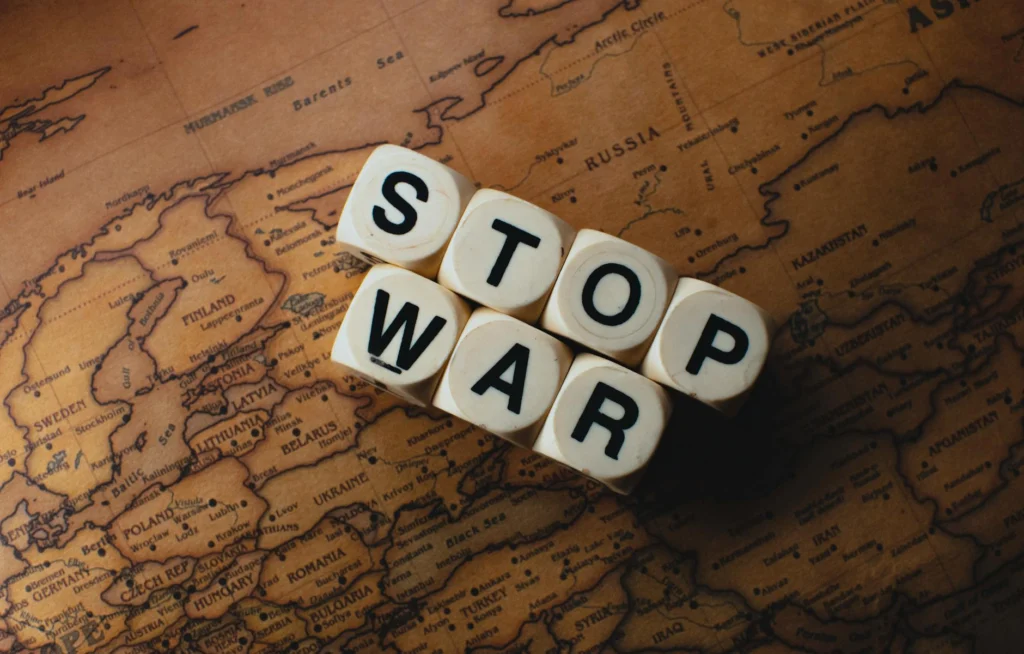
Proxy warsA conflict where two opposing powers use third parties to fight on their behalf, avoiding direct military confrontation while advancing their strategic interests. are conflicts where outside powers support local combatants instead of fighting each other directly. The sponsor provides weapons, money, training, and intelligence. The proxy does the dying. The arrangement lets both sides avoid the costs and risks of direct confrontation, particularly the nuclear kind, while still competing for influence.
The logic behind proxy wars is straightforward: fight your rival’s allies instead of your rival. The practice is ancient. The consequences are predictable and grim.
The Basic Mechanics
Every proxy war involves at least three actors: a sponsor state, a proxy forceAn armed group operating on behalf of a state actor while maintaining its own territorial base, command structure, and organizational independence., and the rival the sponsor wants to weaken. The sponsor identifies a local conflict that overlaps with its strategic interests, picks a side, and starts sending support. That support ranges from cash and small arms to advanced missile systems, satellite intelligence, and special forces advisers who officially are not there.
The proxy gets resources it could not obtain alone. The sponsor gets influence without body bags bearing its own flag. The people living in the conflict zone get a war that now has enough outside fuel to burn far longer than it otherwise would.
There are three main channels of support. Direct military aid means weapons, ammunition, and training. Economic support means funding the proxy’s operations, sometimes its entire governing apparatus. Political support means diplomatic cover: vetoing UN resolutions, legitimizing the proxy’s cause internationally, or simply refusing to call what is happening a war.
Why States Choose Proxy War
The most common reason is nuclear deterrence. During the Cold War, the United States and Soviet Union could not fight each other without risking global annihilation. Instead, they fought through proxies in Korea, Vietnam, Angola, Afghanistan, and dozens of smaller conflicts between 1946 and 1991. The logic of alliances made direct confrontation unthinkable; proxy wars became the release valve.
But nuclear standoff is not the only motivator. States also choose proxies to avoid international condemnation, to test weapons systems under real combat conditions (Germany did this during the Spanish Civil War in the 1930s), and to maintain plausible deniabilityA condition in which a state or official can credibly deny involvement in a covert action because no formal evidence of their participation exists.. If your soldiers are not officially in the country, the war is not officially your problem.
A 2023 RAND Corporation study on proxy warfare in strategic competition found that geopolitical factors, particularly acute security threats from rival states, are typically the primary driver. Ideological alignmentIn AI safety, the process of ensuring an AI system's goals and behaviors match human values and intentions. Poor alignment can cause AI systems to optimize for measurable metrics in ways that contradict human interests. provides ready-made local allies. Economic considerations tend to restrain rather than encourage proxy engagement: states whose trade might be disrupted are less eager to light fires.
The Principal-Agent ProblemA conflict of interest where a decision-maker (the agent) acts in their own interest rather than in the interest of the party they are supposed to serve (the principal).
The central weakness of proxy warfare is control. Political scientist Andrew Mumford defines the proxy relationship as one between “a benefactor, who is a state or non-state actor external to the dynamic of an existing conflict, and their chosen proxies who are the conduit for weapons, training and funding.” The problem is that conduits have their own agendas.
Proxies routinely pursue local objectives that diverge from their sponsor’s strategic goals. The sponsor wants to weaken a rival; the proxy wants territory, power, or revenge. These interests overlap enough to sustain the relationship but rarely align completely. The result is that sponsors frequently discover their proxies using supplied weapons for purposes the sponsor never intended, or refusing to negotiate peace when the sponsor decides the war has served its purpose.
The most consequential example: the CIA’s Operation Cyclone funneled roughly $3 billion to Afghan mujahideenArabic term for Muslim fighters engaged in armed struggle; used specifically for Afghan resistance groups who fought the Soviet invasion from 1979 to 1989. fighting the Soviet Union between 1979 and 1992. The program succeeded spectacularly at its stated objective. The Soviets withdrew. But much of the aid was channeled through Pakistan’s intelligence services to the most ideologically extreme factions, including groups with jihadist ties. The weapons and training did not disappear when the Soviets left. Some of the fighters went on to form the Taliban and al-Qaeda.
Case Studies: Syria and Yemen
The Syrian civil war, which began in 2011 and killed hundreds of thousands of people while displacing nearly fourteen million, became the most complex proxy war of the twenty-first century. Iran and Russia backed the Assad government with money, weapons, advisers, and eventually direct military intervention. The United States, Turkey, Qatar, and Saudi Arabia supported various opposition factions with over a billion dollars in training and arms. The result was a country carved into zones controlled by different armed groups with different foreign patrons, each pursuing overlapping but distinct objectives.
Yemen followed a similar pattern. When Houthi rebels seized control of the capital in 2014, Iran provided support while a Saudi-led coalition, backed by the United States and United Kingdom, intervened to restore the internationally recognized government. A decade later, more than 18 million Yemenis need humanitarian assistance, over 150,000 have died from direct violence, and 83 percent of the population lives in poverty, according to the UN and Human Rights Watch. The war’s proxy architecture ensured it had enough external fuel to resist every ceasefire attempt for years.
What Proxy Wars Do to the Places Where They Happen
The pattern across proxy wars is consistent. Outside support extends conflicts far beyond their natural lifespan. Local power structures fragment as competing factions gain independent access to foreign resources. Civilian infrastructure collapses. Humanitarian crises compound because multiple armed groups control different pieces of the same country, each with a different foreign sponsor whose interests do not include the welfare of the local population.
Proxy wars also make peace harder to achieve. A rebel group funded by a foreign patron has less incentive to negotiate than one running out of ammunition. A government receiving advanced weapons from an ally has less incentive to compromise. And when multiple sponsors are backing multiple proxies, any peace deal requires satisfying not just the local combatants but their entire network of foreign backers.
The economic sanctions that often accompany proxy conflicts add another layer of civilian suffering, frequently punishing populations who had no say in the war’s geopolitical architecture.
The Pattern Is Not Changing
The RAND study found indications that strategic competition is driving states, particularly Russia and Iran, toward more frequent use of proxy warfare, with China potentially returning to such methods under certain circumstances. The logic has not changed since Athens and Sparta fought through allies in the fifth century BC. Direct war between major powers remains too costly. Proxy war lets you compete at someone else’s expense.
The innovation is in scale and sophistication. Modern proxies receive drone technology, encrypted communications, satellite reconnaissance, and financial networks that make them more capable and harder to track than Cold War-era insurgencies. The sponsor’s fingerprints get lighter even as the sponsor’s influence grows.
The costs, as always, are borne by the people who live where the proxy war is fought.
Proxy warsA conflict where two opposing powers use third parties to fight on their behalf, avoiding direct military confrontation while advancing their strategic interests. are armed conflicts in which at least one external power materially supports a belligerentA state or armed group legally recognized as an active party to an armed conflict, subject to the laws of war. without engaging in sustained direct combat itself. The term covers a spectrum: from covert arms shipments to open military aid packages worth billions, from deniable intelligence sharing to the deployment of “advisers” who happen to call in airstrikes. What distinguishes proxy war from alliance warfare is the asymmetry. The sponsor shapes the conflict’s trajectory while the proxy absorbs its casualties.
The concept is as old as organized warfare. What has changed is the institutional sophistication of the sponsorship apparatus and the scale of its humanitarian consequences.
Anatomy of a Proxy Relationship
Andrew Mumford, whose 2013 study remains the standard academic framework, defines proxy war as “the indirect engagement in a conflict by third parties wishing to influence its strategic outcome.” The relationship involves a benefactor (state or non-state actor external to the conflict) and proxies who serve as “the conduit for weapons, training and funding.”
The support architecture has three tiers. The first is material: weapons, ammunition, vehicles, and increasingly, surveillance and strike drones. The second is financial: direct funding of proxy operations, which can extend to bankrolling an entire parallel governing structure. The third is political: diplomatic recognition, UN Security Council vetoes, sanctions relief, and media narratives that frame the proxy’s cause as legitimate.
Each tier creates different dependencies. Material support can be calibrated (send anti-tank missiles but not anti-aircraft systems, as the U.S. initially did in Syria). Financial support is harder to control once disbursed. Political support is the hardest to withdraw because it creates public commitments the sponsor’s own domestic audience may enforce.
Strategic Logic: Why Proxy Over Direct
The nuclear dimension dominates the Cold War literature for obvious reasons. Between 1946 and 1991, the U.S. and Soviet Union fought through proxies in Korea, Vietnam, Angola, Mozambique, Nicaragua, Afghanistan, and elsewhere precisely because direct confrontation risked escalation to mutually assured destruction. But nuclear deterrence is only one of several motivations, and framing proxy war exclusively through the Cold War lens understates its scope.
The 2023 RAND Corporation study “Proxy Warfare in Strategic Competition” identified three categories of motivation. Geopolitical factors (security threats, territorial disputes, alliance commitments) are typically primary. Ideological alignmentIn AI safety, the process of ensuring an AI system's goals and behaviors match human values and intentions. Poor alignment can cause AI systems to optimize for measurable metrics in ways that contradict human interests. (shared political systems, ethnic solidarity, religious affinity) provides the connective tissue that makes sponsor-proxy relationships viable: it is easier to arm people who already agree with you. Economic considerations tend to restrain: states with significant trade exposure to a conflict zone are less likely to escalate through proxy engagement.
Additional motivations include weapons testing (Nazi Germany used the Spanish Civil War to trial the Condor Legion’s dive-bombing tactics, later deployed across Europe), intelligence gathering, and what Mumford calls “warfare on the cheap”: the appeal of strategic influence at a fraction of the cost of deploying one’s own forces. The Hoover Institution’s 2024 conference on proxy warfare noted that the American Revolution itself was partly a French proxy operation against Britain, with French troops outnumbering Continental forces at the decisive Battle of Yorktown in 1781.
The Principal-Agent ProblemA conflict of interest where a decision-maker (the agent) acts in their own interest rather than in the interest of the party they are supposed to serve (the principal).
The structural flaw in every proxy arrangement is the divergence between sponsor objectives and proxy objectives. The sponsor wants to weaken a rival, secure a trade route, or establish a sphere of influence. The proxy wants to win its own war, which may mean seizing territory, eliminating ethnic rivals, or establishing a government the sponsor never intended to support.
This produces several recurring pathologies:
Mission drift. The proxy pursues local goals incompatible with the sponsor’s strategy. U.S.-backed Syrian rebel groups frequently fought each other rather than the Assad regime, because their local territorial disputes mattered more to them than Washington’s geopolitical chess game.
Weapons proliferation. Arms supplied to proxies migrate. Libyan weapons supplied to anti-Gaddafi rebels in 2011 turned up across the Sahel within months. CIA-supplied Stinger missiles in Afghanistan became a post-war proliferation nightmare that required a separate covert program to buy them back.
Moral hazardThe tendency of a party to take greater risks or act less carefully when shielded from consequences because another party bears the costs.. A proxy receiving external support has reduced incentive to negotiate. Why compromise when your sponsor will keep the weapons flowing? This dynamic extends conflicts well beyond their natural lifespan. The logic of alliances that initially draws sponsors in becomes the mechanism that prevents exit.
BlowbackUnintended harmful consequences experienced by a state as a result of its own covert operations or support given to foreign actors.. The most consequential case: Operation Cyclone, the CIA’s program to arm Afghan mujahideenArabic term for Muslim fighters engaged in armed struggle; used specifically for Afghan resistance groups who fought the Soviet invasion from 1979 to 1989. against the Soviet Union from 1979 to 1992. The U.S. spent approximately $3 billion (with Saudi Arabia roughly matching that figure, for a combined total estimated between $6 billion and $12 billion). The program succeeded: the Soviet Union withdrew in 1989, and the war contributed to its collapse. But the aid, channeled through Pakistan’s ISI, disproportionately favored the most ideologically extreme factions. The organizational infrastructure, combat experience, and weapons that Operation Cyclone provided contributed directly to the rise of both the Taliban and al-Qaeda.
Case Study: Syria as Proxy War Laboratory
The Syrian civil war (2011 to 2024) involved at least six major external sponsors backing different factions. Iran invested billions propping up the Assad regime, deploying Revolutionary Guard advisers and mobilizing Shia militias from Iraq, Afghanistan, and Pakistan. Russia intervened directly in 2015 with airstrikes and mercenary forces. On the other side, the United States provided over $1 billion in training and arms to selected rebel groups, Turkey backed its own preferred factions in the north, and Gulf states funded various Islamist opposition groups.
The result was a conflict that killed hundreds of thousands and displaced nearly fourteen million people (more than half Syria’s prewar population), according to the Council on Foreign Relations. The country fractured into zones controlled by different armed groups with different foreign patrons. The proxy architecture made the war almost impossible to end through negotiation because any deal required simultaneous agreement from the local belligerents and their respective sponsors, each with different and often contradictory objectives.
The war ended not through diplomacy but through a rebel military offensive in late 2024 that toppled the Assad regime, a reminder that proxy dynamics can also produce decisive outcomes when the sponsor’s own position collapses.
Case Study: Yemen’s Layered Proxy Architecture
Yemen’s conflict illustrates how proxy relationships layer onto pre-existing local grievances to create intractable crises. The Houthi movement’s roots are in domestic Yemeni politics: Zaydi Shia marginalization in the north. When Houthi forces seized the capital Sanaa in 2014, the conflict acquired its proxy dimension. Iran provided support to the Houthis (the extent is debated, ranging from modest arms shipments to significant missile and drone technology). Saudi Arabia led a coalition, backed by the UAE, U.S., and UK, intervening with airstrikes and a naval blockade in 2015.
A decade into the war: more than 18.2 million people need humanitarian assistance, over 150,000 have died from direct violence, 83 percent of the population lives in poverty, and 70 percent of commercial imports pass through the port of Hodeidah, which has itself become a military target. The proxy dimension has kept the war alive by ensuring both sides retain access to external resources, while the economic sanctions and blockades that accompany the proxy engagement devastate the civilian population caught between the combatants.
The Evolving Toolkit
Modern proxy wars have diverged significantly from the Cold War model. Three developments stand out.
First, drone proliferation has transformed proxy capabilities. Iran’s transfer of drone technology to the Houthis, Hezbollah, and various Iraqi militias has given non-state proxies precision strike capabilities that previously required an air force. The cost asymmetry is staggering: a drone costing thousands of dollars can threaten infrastructure worth billions.
Second, cyber operations and information warfare have opened new proxy channels. States can sponsor hacking groups, troll farms, and disinformation campaigns with even less attribution risk than covert arms shipments.
Third, private military companies (Russia’s Wagner Group being the most prominent example) have created a new category of proxy: corporate, deniable, and deployable across multiple theaters simultaneously. Wagner operated in Syria, Libya, Mali, the Central African Republic, and Sudan, serving Russian strategic interests while maintaining a commercial veneer.
Why the Pattern Persists
RAND’s research found indications that strategic factors are driving Russia and Iran toward more frequent proxy warfare, with China potentially returning to such methods under certain conditions. The structural incentives have not changed since Sparta leveraged Syracuse against Athens in the fifth century BC. Direct war between major powers remains too costly. Proxy war distributes the costs downward, to the local combatants and the civilians in their path.
The innovation is in sophistication, not logic. The sponsors get better at hiding their involvement. The proxies get more capable weapons. The humanitarian consequences compound. And the people who design proxy strategies from capital cities rarely visit the places where those strategies are implemented.