The counterfeit money plot at the heart of Peaky Blinders: The Immortal Man might sound like the kind of thing a screenwriter invents over a long weekend. A Nazi scheme to crash the British economy by flooding it with fake banknotes, funneled through criminal networks in wartime Birmingham? It reads like fiction. Except that the core of it is real, and the actual story is stranger than anything Steven Knight put on screen.
Operation Bernhard was the largest counterfeiting operation in recorded history. It produced more than nine million fake British banknotes worth an estimated £130 million, the equivalent of billions today. And it was run from inside a concentration camp, by prisoners who knew that the moment they stopped being useful, they would be killed.
What the Film Gets Right
In The Immortal Man, the central conflict revolves around a Nazi plot to destabilize the British economy through mass forgery. Tim Roth’s villain, John Beckett, a British fascist collaborator, tries to distribute counterfeit pounds through the Shelby family’s underground networks. The scheme pulls Tommy Shelby out of hiding for one final fight.
The real Operation Bernhard had the same goal. In 1939, Arthur Nebe, chief of the Reich Criminal Police, proposed producing huge quantities of fake British banknotes to trigger hyperinflation and collapse Britain’s financial system. The original plan was breathtakingly blunt: drop the forged notes from aircraft over British cities. That plan was abandoned, reportedly because German intelligence concluded that Britons might simply keep the money rather than panic.
The film also draws from the very real bombing of the Birmingham Small Arms factory on November 19, 1940, which killed over fifty workers during the Blitz. Series creator Steven Knight’s mother once worked at the BSA factory, and the film opens with this tragedy as its emotional anchor.
What the Film Invents
There were no Shelbys, of course. And no British gangsters were ever involved in distributing Operation Bernhard’s counterfeit notes. In reality, the money was laundered through neutral countries’ banks and used to pay Nazi spies and purchase supplies across occupied Europe. The film compresses the timeline: Operation Bernhard’s peak production did not begin until 1943, not 1940 when the film is set.
Tim Roth’s John Beckett is a fictional composite, though the threat of British fascist sympathizers during wartime was genuine. The film uses Beckett to represent the real fifth-column danger that consumed British intelligence during the early war years.
The Real Operation, Briefly
The scheme began as “Operation Andreas” in 1940 under SS Major Alfred Naujocks but stalled after internal power struggles and the assassination of Reinhard Heydrich in 1942. It was revived under a new name and a new leader: SS Major Bernhard Krueger, who assembled 142 Jewish prisoners at Sachsenhausen concentration camp near Berlin. These prisoners, selected for their skills in engraving, printing, and banking, were forced to produce counterfeit £5, £10, £20, and £50 notes.
They succeeded. The forgeries were so good that even trained bankers could not distinguish them from genuine notes. The operation’s undoing was a detail the Nazis never cracked: the Bank of England’s serial numbering system. They were forced to reuse numbers from genuine notes, and in 1943, an alert Bank clerk in Morocco noticed a serial number that had already been recorded as withdrawn.
The Bank of England responded by pulling all notes above £5 from circulation. It would take 21 years before a £10 note was reissued.
Why It Still Matters
Operation Bernhard sits at the intersection of espionage, economic warfare, the Holocaust, and the moral compromises of survival. The prisoners who forged those notes knew they were helping the Nazi war effort. They also knew that refusing meant death. Adolf Burger, one of the survivors, wrote about this impossible bind in his memoir The Devil’s Workshop, published in 1983. His account later became the basis for the 2007 Austrian film The Counterfeiters, which won the Academy Award for Best Foreign Language Film.
Peaky Blinders: The Immortal Man brings this history to a massive new audience, even if it filters it through the lens of gangster mythology. The real story needs no embellishment. It is a reminder that economic warfare is as old as money itself, and that some of history’s most consequential battles were fought not with bullets but with printing presses.
On September 18, 1939, just weeks after Germany invaded Poland, Arthur Nebe, chief of the Reich Criminal Police, proposed an audacious plan to his superiors: produce massive quantities of counterfeit British banknotes and use them to destroy the enemy’s economy from within. It was, by any measure, one of the strangest weapons programs of the Second World War. Over the next six years, it would become the largest counterfeiting operation in recorded history, producing more than nine million fake notes worth an estimated £130 million.
Operation Andreas: The First Attempt
The initial scheme was code-named Operation Andreas. Led by SS Major Alfred Naujocks, a man already notorious for staging the false-flagA covert operation designed to appear as if carried out by another party, used to create a pretext for military or political action. attack on the Gleiwitz radio station that served as a pretext for invading Poland, the operation set up shop in a villa at Delbruckstrasse 6A in Berlin’s Charlottenburg district. The basement held a 200-ton printing press. The second floor housed a photographic lab. Staff called it “The Devil’s Workshop.”
The target was the Bank of England’s “White Notes,” elegant, single-sided banknotes on cotton-rag paper, virtually unchanged since 1855. The black printing appeared on only one side of the white paper, with a small image of Britannia in the top left-hand corner. Simple. Iconic. And, the Germans believed, vulnerable.
The plan was staggeringly direct: forge millions of pounds and scatter them over Britain from aircraft. The resulting flood of untraceable cash would, in theory, trigger hyperinflation and collapse public confidence in the currency. Not everyone in the Nazi hierarchy approved. Economics Minister Walther Funk worried about violating international law. Propaganda Minister Joseph Goebbels privately called it “ein grotesker Plan”, a grotesque plan, though he conceded it could work.
The technical challenges were immense. Albert Langer, a mathematician and codebreaker, led the effort to replicate the banknote paper. British notes used pure cotton rag with no wood pulp, giving them a distinctive feel. The German team sourced old rags and even simulated the effect of British laundry to match the paper’s hue. Under ultraviolet light, their early attempts still failed, until Langer discovered that differences in water chemistry were to blame. By treating their water to mirror England’s mineral content, the counterfeits finally passed UV inspection.
The engraving of Britannia, the seated figure that adorned every note, proved equally maddening. German engravers reportedly nicknamed her “Bloody Britannia” after months of painstaking work on the printing plates. By 1942, Operation Andreas had produced roughly 400,000 notes, but the project stalled. Naujocks fell from favor, and the assassination of SS General Reinhard Heydrich by Czechoslovak partisans that year left the operation without its key patron.
Bernhard Krueger and the Sachsenhausen Workshop
Heinrich Himmler revived the scheme under a new directive. The goal shifted: rather than dropping notes over Britain, the counterfeits would be used to finance intelligence operations, pay spies, and buy supplies, including gold. The man chosen to lead was SS Major Bernhard Krueger, a meticulous officer from the Security Service (Amt VI of the RSHA). The operation was renamed after him.
Krueger’s approach was brutally pragmatic. He had concentration camps searched exclusively for Jewish prisoners from the graphics trade, paper specialists, or other skilled manual workers. By late 1942, he had assembled a team of 142 Jewish prisoners at Sachsenhausen concentration camp near Berlin.
The prisoners were housed in a sealed compound, strictly isolated from the rest of the camp for reasons of secrecy. Conditions were marginally better than elsewhere: single beds, civilian clothes, newspapers, permission to grow their hair. But this relative comfort came with a clear understanding. As the Sachsenhausen Memorial records, the prisoners “lived with the knowledge that illness, failure or termination of the operation would mean their death.”
Among the key figures were Salomon Smolianoff, a Russian-born engraver with a pre-war history of counterfeiting across Europe, and Adolf Burger, a Slovak printer who had been arrested for forging baptismal certificates to help Jews escape deportation. Together, they and their fellow prisoners built what became the most advanced counterfeiting workshop in history.
Cracking the Code
The prisoners studied vast quantities of genuine banknotes, breaking the problem into discrete challenges. According to both the Bank of England and the Professional Coin Grading Service (PMG), they identified no fewer than 150 intentional security marks, minor defects different for each denomination, that the Bank of England had embedded as anti-counterfeiting devices.
The team produced high-quality printing plates for £5, £10, £20, and £50 notes. They perfected the paper, matched the ink, and aged the finished product by hand, with a team of prisoners repeatedly rubbing and folding the notes with dirty hands to create the appearance of wear and tear. By late 1943, the operation was printing nearly one million counterfeit notes per month.
But one critical barrier remained: the Bank of England’s serial numbering system. Despite years of analysis, the Nazis tried but failed to crack the numbering system and were forced to reuse serial numbers from genuine notes already in circulation. This would prove to be the operation’s fatal flaw.
Detection and the Bank’s Response
In 1943, an eagle-eyed Bank clerk in Morocco noticed that a note in front of him carried a serial number already recorded as “paid”, meaning the genuine note with that number had already been withdrawn. The forgery was so good that it had passed through a British bank unquestioned until that single repeated number flagged it.
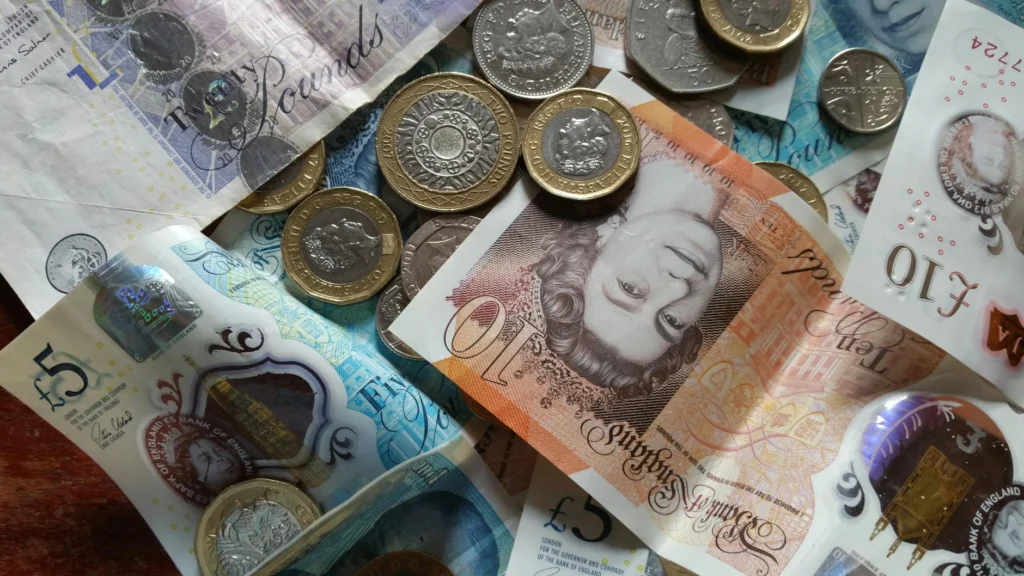
Once the Bank of England realized the scale of the problem, the response was drastic: all notes with a face value higher than £5 were withdrawn from circulation. The £10 note would not return until 1964. The £20 came back in 1970. The £50 was not reissued until 1981, nearly four decades later. The new designs were far more colorful and sophisticated than the elegant white notes they replaced, specifically because of what Operation Bernhard had exposed.
Some historians have estimated that up to 40% of the notes in circulation after the war were counterfeit, and that the Bank of England may have downplayed the full extent of the fraud.
Where the Money Went
The counterfeits funded some of the war’s most notable espionage operations. Among the agents paid with Operation Bernhard currency was Elyesa Bazna, a valet to the British ambassador in Ankara who spied for Germany under the code name “Cicero.” After the war, he discovered that roughly half of his payment had been counterfeit.
The International Spy Museum records that counterfeit notes were also used to fund the rescue of Benito Mussolini after his arrest in 1943, with Operation Bernhard currency reportedly paying bribes that facilitated the daring German commando operation.
According to the Sachsenhausen Memorial’s own records, based on secretly kept statistics, a total of over £135 million worth of banknotes were created. The SS used the counterfeit money to procure war-essential goods and pay foreign agents across occupied and neutral Europe.
The End: Lake Toplitz and Liberation
As the Allied advance closed in during early 1945, the operation was shut down. In February 1945, the counterfeiting unit was transferred first to Mauthausen and then to the Redl-Zipf subcamp. Production never resumed. The prisoners were moved again to Ebensee concentration camp, where they were liberated by American troops in early May 1945.
The Nazis attempted to destroy the evidence. Printing equipment, remaining notes, and documentation were loaded onto trucks and dumped into Lake Toplitz in the Austrian Alps. The £10 printing plate recovered from Lake Toplitz is the only one known to have survived, and it now sits in the International Spy Museum in Washington, D.C.
In 1959, divers began recovering wooden boxes of counterfeit notes from the lake. According to the Bank of England, the counterfeits had a face value of roughly £9 million and were destroyed by the Austrian National Bank.
The Afterlife: Memoir, Film, and Peaky Blinders
Adolf Burger survived the war and published his memoir, The Devil’s Workshop, in 1983. His account of life inside the counterfeiting unit, the moral impossibility of helping the Nazis while depending on that help for survival, became the basis for the 2007 Austrian film The Counterfeiters (Die Fälscher), directed by Stefan Ruzowitzky. Burger served as a consultant on the film, which won the Academy Award for Best Foreign Language Film. He died in 2016 at the age of 99.
Bernhard Krueger himself was detained by British forces after the war but faced no charges, as forging enemy currency during wartime was not considered a grievous crime. He went through denazificationThe Allied post-war process of removing Nazi ideology, officials, and influence from German society, government, and institutions after 1945. and settled in West Germany.
Now, Peaky Blinders: The Immortal Man has brought Operation Bernhard to its largest audience yet. The film roots its central plot in the real Nazi conspiracy to flood Britain with fake currency, though it invents a fictional mechanism of distribution through Birmingham’s criminal underworld. The BSA factory bombing of November 19, 1940, which killed over fifty workers, is also woven into the narrative as the film’s opening tragedy.
The film compresses and dramatizes. The real operation’s peak production came in 1943 and 1944, not 1940 when The Immortal Man is set. There were no gangster intermediaries. But the fundamental truth holds: the Nazis genuinely attempted to weaponize the printing press against the British economy, and they came closer to succeeding than most people realize.
Today, professional grading services like PMG authenticate and grade surviving Operation Bernhard notes. Bryan Burke, author of Nazi Counterfeiting of British Currency During World War II, has identified 28 differences between genuine White Notes and their Operation Bernhard counterparts. To the naked eye, many of these differences are invisible. To the 142 prisoners who produced them under threat of execution, they were a matter of life and death.