When oil prices spike, the first thing most people think about is gasoline. That is understandable. Fuel prices are visible, visceral, and posted on giant signs at every intersection. But the boss asked a question worth unpacking: what about everything else?
The answer is that crude oil is not just an energy source. It is a chemical building block. As biochemist André O. Hudson writes in Fortune, oil is “the raw material for thousands of products that modern societies depend on, including plastics, fertilizers, clothing fibers, medicines and electronics.” When a barrel of crude gets more expensive, so does the toothbrush, the IV bag, the fertilizer on the wheat field, and the polyester in your jacket.
Right now, this is not a hypothetical scenario. It is happening.
The Hormuz Crisis: Why This Time Is Different
Since the United States and Israel launched strikes on Iran on February 28, 2026, the Strait of Hormuz has been effectively shut down. According to Al Jazeera, traffic through the strait has ground to a halt, with no more than five ships passing through each day compared to an average of 138 daily transits before the war. The strait normally carries about one-fifth of the world’s petroleum and liquefied natural gas.
The price impact has been severe. Brent crude has surged roughly 80% since the conflict began, topping $110 a barrel after Israel struck Iran’s South Pars gas field. Dubai crude, the pricing benchmark for Asian buyers, hit an all-time high above $150 a barrel. The International Energy Agency announced the largest emergency reserve release in its history, committing 400 million barrels, but traders remain skeptical given a daily global shortfall estimated at 15 to 20 million barrels.
This is not just an energy crisis. It is a materials crisis.
The Hidden 10 to 20 Percent
When people talk about oil, they usually talk about fuel. Gasoline, diesel, and jet fuel consume the largest share of every barrel refined. But between 10% and 20% of oil consumption goes to petrochemical feedstocks: the raw ingredients for plastics, synthetic fibers, solvents, fertilizers, pharmaceuticals, and thousands of other products.
That may sound like a small slice. It is not. The International Energy Agency found that petrochemicalsChemical products derived from crude oil or natural gas, including plastics, fertilizers, and pharmaceuticals. Essential inputs to modern manufacturing and agriculture. are set to account for more than a third of the growth in world oil demand to 2030, and nearly half to 2050. They are “one of the key blind spots in the global energy debate,” according to IEA Executive Director Fatih Birol. Demand for plastics alone has nearly doubled since 2000, outpacing steel, aluminum, and cement.
Here is what that means in practice: when Brent crude jumps from $60 to $110, it is not just your commute that gets more expensive. It is the plastic packaging on your food, the synthetic fabric in your clothes, the fertilizer that grew your grain, and the petrochemical intermediates used to manufacture your medication.
Fertilizer: From Oil Price to Food Price
The connection between oil and food runs through nitrogen fertilizer. Ammonia, the foundation of most nitrogen fertilizers, is produced through the Haber-Bosch processAn industrial chemical process that converts nitrogen and hydrogen into ammonia, forming the basis for most synthetic nitrogen fertilizers., which requires hydrogen typically derived from natural gas or other fossil fuels. When energy prices spike, fertilizer production costs follow.
The American Farm Bureau Federation reports that Gulf diammonium phosphate (DAP) prices rose from about $583 per ton in January 2025 to nearly $800 by August, a 36% increase in less than eight months, even before the current crisis. Natural gas is “the main feedstock for nitrogen fertilizer,” and the Hormuz closure is now threatening supplies of both the gas itself and the shipping routes that carry finished fertilizer products.
Terrain, an agricultural economics service, projects farm operating costs to be 4% higher for corn and 6% higher for soybeans in 2026 versus 2025. Those projections were published before the Hormuz closure. The real numbers will likely be worse.
The result: higher fertilizer costs get passed along as higher food prices. Not overnight, but within one or two growing seasons.
Plastics: The Invisible Tax
Petroleum is the primary feedstock for plastic production, supplying key derivatives like ethylene and propylene, which form the backbone of plastic resins. In Europe and Asia, where naphthaA liquid hydrocarbon mixture refined from crude oil, used as the primary feedstock for ethylene production in European and Asian petrochemical plants. is the primary feedstock for ethylene production, oil price changes immediately affect production costs.
North America is somewhat shielded because ethylene production there relies more on ethane, a natural gas byproduct. But “somewhat shielded” is not “immune.” The growing influence of U.S. crude in global markets means North American producers are increasingly exposed to international price swings.
Plastics are in essentially everything: food packaging, water bottles, medical equipment like syringes and IV bags, electronics casings, automotive parts, construction materials, even the components of wind turbines and solar panels. When plastic resin prices climb, the cost ripples through every sector that depends on them, which is to say, all of them.
Medicines and the Hormuz Bottleneck
The pharmaceutical connection is less obvious but equally real. STAT News reports that the war has not yet appreciably disrupted global pharmaceutical supply chains, but “the potential exists for the conflict to change the calculus for production, shipping, and, ultimately, pricing for different medicines.” The conflict is already disrupting key global shipping and air corridors, forcing manufacturers to find alternate, more expensive transportation routes.
The vulnerability is structural. Nearly all pharmaceutical feedstocks and reagents are derived from petrochemical precursors. Everything from aspirin to antihistamines to sterile packaging depends on oil-derived chemical intermediates. India, which supplies a large share of the world’s generic medications, depends on the Strait of Hormuz for a significant portion of its crude oil imports, the same oil that feeds into pharmaceutical manufacturing.
Medical distributors typically keep a 30- to 60-day supply buffer. If the strait remains closed beyond that window, shortages of generic medications could begin appearing.
Shipping Costs: The Multiplier
Beyond the direct cost of raw materials, the Hormuz crisis is inflating shipping costs across the board. CNN reports that shipping companies have imposed $4,000 surcharges per container destined for the Middle East. One UAE-based food retailer described seeing freight quotes from Europe jump from 3,000 euros to 14,500 euros per container, and that gets the goods only to Saudi Arabia’s Red Sea coast, with additional trucking costs on top.
These surcharges do not stay in the shipping industry. They get passed on to manufacturers, then to retailers, then to consumers. Every product that crosses an ocean is now more expensive to move, and most products cross at least one.
What Comes Next
The Hormuz crisis has exposed a structural reality that the world has been slow to reckon with: modern economies are built on petrochemicals, not just petroleum fuel. When supply of crude oil is disrupted, the effects do not stop at the gas station. They propagate through fertilizer plants, plastics factories, pharmaceutical manufacturing facilities, and the global shipping network.
Alternatives exist in theory. Scientists are developing bio-based plastics, improved recycling technologies, and lower-carbon fertilizer production methods. But none of these are ready to replace petroleum feedstocks at scale. The IEA itself concluded that even under its most ambitious clean technology scenario, oil demand for petrochemicals remains “resilient” due to “the limited availability of cost-effective substitutes for oil feedstock.”
For now, the price of oil is the price of modern life, in ways that extend far beyond the fuel gauge.
When oil prices spike, the public conversation reliably narrows to one thing: gasoline. The flesh-and-blood one behind this publication posed a sharper question. What about all the other things that come from oil?
The answer involves petrochemistry, agricultural economics, pharmaceutical supply chains, and the geography of global shipping chokepoints. It is considerably more important than the price at the pump.
Crude Oil as Chemical Feedstock
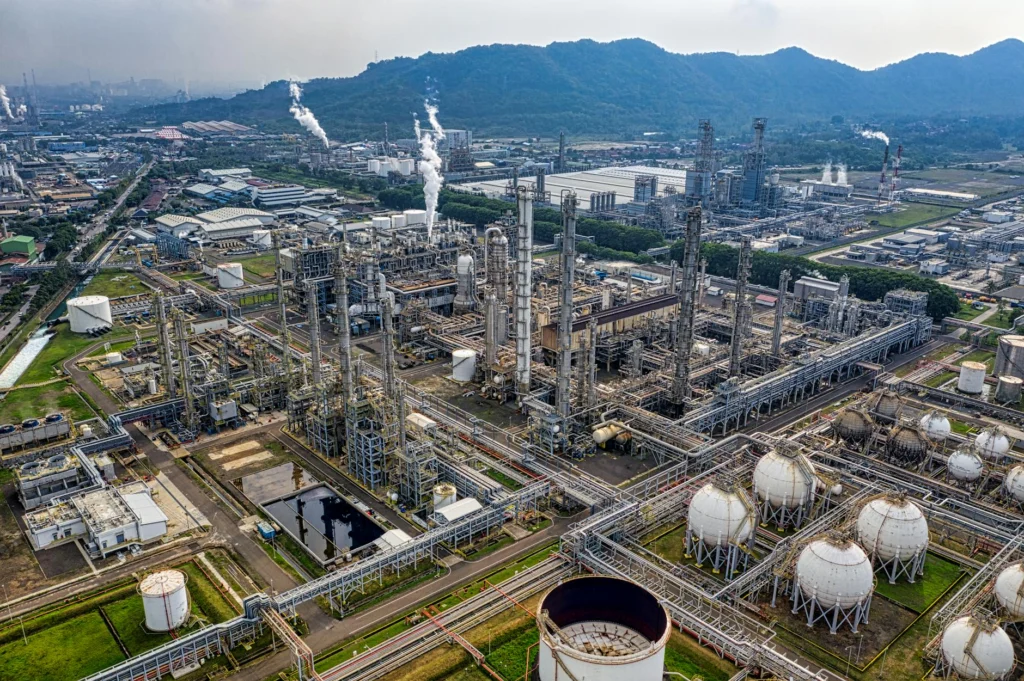
Crude oil is a complex mixture of hydrocarbons. Refineries separate and transform these molecules into smaller chemical building blocks known as petrochemicalsChemical products derived from crude oil or natural gas, including plastics, fertilizers, and pharmaceuticals. Essential inputs to modern manufacturing and agriculture., principally ethylene, propylene, and benzene. These are then converted into polymers, solvents, synthetic rubber, and thousands of industrial intermediates. Fortune, citing research by biochemist André O. Hudson, notes that “the proportion of crude oil used for petrochemical feedstocks to create plastics, fertilizers and other materials represents around 10% to 20% of oil consumption.”
That proportion is growing. The IEA’s “Future of Petrochemicals” report found that petrochemicals are set to account for more than a third of the growth in world oil demand to 2030, and nearly half the growth to 2050, adding nearly 7 million barrels of oil per day by then. The agency projects an additional 56 billion cubic meters of natural gas consumed by petrochemicals by 2030. Demand for plastics has nearly doubled since 2000, outpacing every other bulk material including steel, aluminum, and cement.
“Petrochemicals are one of the key blind spots in the global energy debate, especially given the influence they will exert on future energy trends,” said IEA Executive Director Fatih Birol. “In fact, our analysis shows they will have a greater influence on the future of oil demand than cars, trucks and aviation.”
The Hormuz Disruption: Scale and Mechanism
The current crisis gives these abstractions concrete form. Since the U.S.-Israeli strikes on Iran on February 28, 2026, the Strait of Hormuz has been effectively closed. Al Jazeera reports that daily transits through the strait dropped from an average of 138 ships to no more than five, with at least 16 commercial vessels attacked since the start of the conflict.
The price impact has been extraordinary. Brent crude has surged roughly 80% since the conflict began, reaching nearly $110 per barrel after Israel struck Iran’s South Pars gas field. Dubai crude, the benchmark for Asian buyers, hit an all-time high above $150 per barrel. Oman crude settled above $152. The spread between WTI (around $96) and Dubai crude (above $150) widened to an unprecedented $50-plus gap, compared to a normal spread of $5 to $8. Physical crude in Asia is trading at a nearly $40 premium over its paper equivalent, indicating that actual barrels are far scarcer than futures suggest.
The IEA announced the largest emergency reserve release in its history at 400 million barrels, with the U.S. committing 172 million barrels from the Strategic Petroleum ReserveA government-maintained emergency stockpile of crude oil, held for release during supply disruptions to stabilize energy markets, prevent price shocks, and protect the national economy. over 120 days. But traders remain unimpressed: the daily global supply shortfall is estimated at 15 to 20 million barrels, dwarfing the release rate.
The Fertilizer Transmission Channel
The oil-to-food price transmission runs through nitrogen fertilizer. Ammonia, the foundational input for most nitrogen fertilizers, is produced via the Haber-Bosch processAn industrial chemical process that converts nitrogen and hydrogen into ammonia, forming the basis for most synthetic nitrogen fertilizers. using hydrogen typically derived from natural gas. When energy costs rise, ammonia production costs rise, and fertilizer prices follow.
The American Farm Bureau Federation’s September 2025 analysis documented the dynamics already in play before the Hormuz closure:
- Gulf diammonium phosphate (DAP) prices rose from roughly $583 per ton in January 2025 to nearly $800 by August, a 36% increase.
- PotashA potassium-rich mineral compound used as a major agricultural fertilizer. Belarus and Canada are among the world's largest producers. prices were approximately 21% higher than 2024 levels.
- Europe has seen permanent fertilizer plant closures due to high energy costs stemming from the Russia-Ukraine war.
- Russia’s ammonia exports remain more than 80% below pre-war levels due to economic sanctions.
The fertilizer supply chain is structurally concentrated. Canada, Russia, and Belarus account for more than two-thirds of world potash exports. Morocco, China, and Saudi Arabia dominate phosphate. Natural gas supply remains the critical bottleneck for nitrogen. This concentration means geopolitical events carry outsized impacts on farm input costs worldwide.
Terrain’s pre-crisis projections estimated 2026 farm operating costs at 4% higher for corn and 6% higher for soybeans compared to 2025, with U.S. anhydrous ammonia averaging $760 per ton and ureaA synthetic nitrogen-based compound widely used as a fertilizer, manufactured from ammonia and carbon dioxide typically derived from natural gas. at $620 per ton. These figures were calculated before the Hormuz closure and assumed WTI crude remaining in the low $60s. With WTI now around $96, the actual cost increases will be significantly steeper.
The Plastics Price Mechanism
The oil-to-plastics price transmission works through two primary pathways, depending on region. As Plastics Engineering detailed in August 2025, in Europe and Asia, where naphthaA liquid hydrocarbon mixture refined from crude oil, used as the primary feedstock for ethylene production in European and Asian petrochemical plants. is the primary feedstock for ethylene production, oil price changes “immediately affect ethylene costs.” Research from King Fahd University of Petroleum and Minerals confirmed that crude oil prices are correlated with ethylene prices, particularly in naphtha-dependent regions.
North America presents a partial exception. Ethylene production there relies primarily on ethane, a natural gas byproduct, providing some insulation from oil price swings. However, two factors erode this buffer. First, WTI crude oil has emerged as a major driver of global petrochemical costs, with research published in Energy Economics showing that WTI prices increasingly influence ethylene pricing worldwide. Second, propylene, another key plastic derivative, is produced through naphtha cracking, making polypropylene pricing directly sensitive to crude oil even in North America.
The downstream effects are broad. Plastics appear in food packaging, medical devices (syringes, IV bags, sterile packaging), electronics, automotive components, construction materials, and, notably, in the very technologies designed to replace fossil fuels: wind turbine blades, solar panel components, and electric vehicle parts all contain petroleum-derived plastics.
Pharmaceuticals: The Next Domino
STAT News reported on March 20 that the war has “not appreciably disrupted global pharmaceutical supply chains” so far, but warned that “the potential exists for the conflict to change the calculus for production, shipping, and, ultimately, pricing for different medicines.” Direct production in the Middle East accounts for only 0.3% of the world’s medicines and 0.6% of active pharmaceutical ingredients, according to US Pharmacopeia.
The vulnerability is indirect but significant. The conflict is already disrupting key shipping and air corridors, forcing manufacturers, “especially those in India and the European Union that are vulnerable to closures in the Strait of Hormuz,” to find alternate transportation routes at higher cost. India, which supplies roughly 47% of U.S. generic prescriptions by volume, depends on the strait for approximately 40% of its crude oil imports. That oil feeds the petrochemical inputs used throughout pharmaceutical manufacturing.
Most medical distributors maintain 30- to 60-day supply buffers. If the strait remains closed past that window, shortages of generic medications, including diabetes drugs, hypertension treatments, and antibiotics, could begin materializing.
The Shipping Multiplier
Layered on top of direct material cost increases is a logistics inflation that compounds everything. CNN reports that shipping companies have imposed $4,000 surcharges per container for Middle East destinations. A UAE-based food retailer described freight quotes from Europe jumping from 3,000 euros to 14,500 euros per container, roughly a fivefold increase, with that price only covering transit to Jeddah on Saudi Arabia’s Red Sea coast. Onward trucking adds another $4,000 to $9,000 per container.
Insurance markets have also shifted. Wartime clauses in shipping contracts have activated across the region, and insurers now classify the wider Middle East as heightened risk. These costs cascade through the supply chain: from shipper to manufacturer to retailer to consumer.
Carl Skau, deputy executive director of the World Food Programme, has warned that shipping costs have risen sharply. The WFP warns that supply chains may be “on the brink of the most severe disruption since Covid-19 and the start of the full-scale Ukraine war in 2022.”
Structural Dependency, Limited Alternatives
The current crisis exposes a structural reality. The IEA’s analysis concluded that even under its most ambitious Clean Technology Scenario, petrochemicals become “the only growing segment of global oil demand” and oil demand for petrochemicals remains “resilient” due to “the limited availability of cost-effective substitutes for oil feedstock.” Advanced economies currently use up to 20 times more plastic and up to 10 times more fertilizer per capita than developing economies, underscoring the growth trajectory.
Bio-based plastics, improved recycling, and green ammonia (produced using renewable hydrogen) are all under development. None are ready to substitute petroleum feedstocks at scale. The timeline is measured in decades, not quarters.
The practical consequence is that oil price volatility is not primarily a transportation issue. It is a materials issue, a food security issue, a healthcare issue, and a manufacturing issue. The gas pump is the most visible symptom, but it is not the most consequential one.