In 1946, a Yale professor named S. Austin Allibone published a useful observation about quotations: people will believe anything if you put a famous name next to it. That quote, naturally, cannot be sourced to Allibone. It was invented just now for this opening paragraph, and it sounded perfectly plausible because that is exactly how misattributed quotes work. A confident sentence, a recognizable name, and a vague sense that you read it somewhere once. That is the entire mechanism.
The history of misattributed quotes is, at its core, a history of information launderingThe process by which dubious, fabricated, or low-credibility claims gain apparent legitimacy by being attributed to respected authorities, institutions, or sources.. A statement of middling insight or uncertain origin gets attached to Einstein, Churchill, Lincoln, or Mark Twain, and suddenly it carries the weight of genius. The quote does not become smarter. The audience simply stops scrutinizing it. This has been happening for centuries, and the internet has turned what was once a slow process of misremembering into an industrial-scale manufacturing operation.
The Twain Industrial Complex
Mark Twain is the single most misquoted person in the English language. He said many brilliant things, which is precisely the problem: his actual wit created a gravitational field that now attracts every clever orphaned sentence in circulation.
“The coldest winter I ever spent was a summer in San Francisco.” Twain never said it. The Quote Investigator, a research project run by Garson O’Toole that has done more to correct misattributed quotes than any academic institution, traced this one through decades of increasingly confident repetition. The earliest versions do not mention Twain at all. By the 1970s, San Francisco tour guides were reciting it as gospel. By the 2000s, it appeared on official city merchandise. The misattribution had achieved what researchers call “critical mass,” the point at which correcting it becomes functionally impossible because the false version has more cultural momentum than the truth.
“Reports of my death have been greatly exaggerated” is another case study. What Twain actually wrote, in a note to the journalist Frank Marshall White in 1897, was: “The report of my death was an exaggeration.” One sentence. No “greatly,” no plural “reports.” The cleaned-up version is punchier, which is why it survived and the original did not. This is a pattern: when a real quote exists but is slightly less elegant than the myth, the myth wins.
Then there are the quotes Twain never said in any form. “It’s easier to fool people than to convince them that they have been fooled” appears on approximately ten thousand social media graphics. No Twain scholar has ever located it in his writing. “Whenever you find yourself on the side of the majority, it is time to reform (or pause and reflect)” is a loose paraphrase of something he wrote in his notebook in 1904, but the actual sentence is different enough that the popular version counts as a new creation.
Einstein’s Second Career as a Greeting Card Writer
Albert Einstein published over 300 scientific papers. He also, according to the internet, authored several hundred inspirational aphorisms about imagination, love, simplicity, and compound interest. The overlap between these two bodies of work is approximately zero.
“The definition of insanity is doing the same thing over and over again and expecting different results.” This is the most widely circulated Einstein quote, and he never said it. The earliest documented appearance is in a 1981 pamphlet from Narcotics Anonymous. Before that, variations appeared in mystery novels and self-help literature through the 1970s. Einstein, who spent years working on unified field theory using repeated mathematical approaches with incremental modifications, would have found the sentiment somewhat ironic.
“Compound interest is the eighth wonder of the world. He who understands it, earns it; he who doesn’t, pays it.” No evidence in any Einstein archive, letter, or recorded conversation. The Quote Investigator traced it to an advertising campaign, which is fitting: misattributed quotes and advertising share the same basic logic. Both rely on borrowed authority.
“Everybody is a genius. But if you judge a fish by its ability to climb a tree, it will live its whole life believing that it is stupid.” This one is particularly instructive. The fish-climbing-a-tree image appears in a 2004 self-help book by Matthew Kelly, with no attribution. Someone, at some point, decided it sounded like something Einstein would say, and the attribution calcified within years. The mechanism is revealing: the quote sounds wise, Einstein was wise, therefore Einstein must have said it. This is circular reasoning dressed up as historical fact, and it is how most misattributed quotes are born.
Churchill: The Wit Who Gets Credit for Everyone Else’s
Winston Churchill was genuinely funny, which makes him the English-language equivalent of Twain as a quote magnet. Anything droll and British gets routed to Churchill the way anything droll and American gets routed to Twain.
“If you’re going through hell, keep going.” There is no record of Churchill saying or writing this. The International Churchill Society, which maintains a database of his verified statements, has found no source. It first appeared attributed to him in the 1990s, decades after his death, the biographical equivalent of a cold case going unsolved.
“A lie gets halfway around the world before the truth has time to put its pants on.” This one is attributed, depending on who is doing the attributing, to Churchill, Twain, Jonathan Swift, or Thomas Jefferson. Swift is the closest candidate: in The Examiner (1710), he wrote that “falsehood flies, and the truth comes limping after it.” But the “pants” version is someone else’s paraphrase, and the journey from Swift’s original to the modern formulation is a game of telephone spanning three centuries. The quote about lies traveling fast has itself traveled fast, shedding its actual author along the way.
“If you’re not a liberal at twenty you have no heart; if you’re not a conservative at forty you have no brain.” Attributed to Churchill constantly. The sentiment, in various forms, has been traced back to the mid-nineteenth century French historian François Guizot, and before him to other French political figures. Churchill, who switched parties twice during his career, would at least have appreciated the irony of being credited with a quote about political consistency.
Why Misattributed Quotes Are a Form of Information Laundering
The pattern across all these cases is consistent enough to constitute a rule: misattributed quotes are a form of credibility laundering. The quote itself might be clever, banal, or outright wrong, but once it carries a famous name, it stops being evaluated on its merits. Nobody fact-checks Einstein. Nobody asks Churchill for a citation. The name does the work that evidence should.
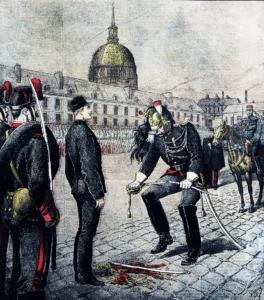
This mechanism is identical to what happens in other domains of misinformation. When the French military insisted Dreyfus was guilty despite mounting evidence, the institutional authority behind the claim mattered more than the claim itself. When the CIA constructed a false narrative around the 1953 Iranian coup, the story stuck not because it was true but because credible-seeming sources repeated it. Misattributed quotes operate on exactly the same principle, just at a smaller and less consequential scale.
Fred Shapiro, editor of the Yale Book of Quotations, has spent decades cataloging this phenomenon. His research shows that misattribution tends to follow a predictable lifecycle. First, a quote circulates without attribution or with a correct but obscure one. Second, someone attaches a famous name, either through genuine confusion or deliberate fabrication. Third, the famous-name version spreads faster because it is more shareable. Fourth, correction efforts fail because the false version has already been printed in books, carved into plaques, and shared millions of times online. The British quotation researcher Nigel Rees coined the term “Churchillian drift” for this tendency: any sufficiently pithy English quote will be attributed to Churchill given enough time.
The internet accelerated every stage of this process. Before social media, a misattributed quote had to survive through oral repetition, printed collections, and the occasional newspaper column. It might take decades to reach critical mass. Now it takes weeks. A fabricated Einstein quote can be designed in Canva, posted to Instagram, shared fifty thousand times, and become effectively permanent in less time than it takes to write a correction. Like the molasses that buried Boston’s North End, once the flow starts, you cannot push it back.
The Correction Asymmetry
Misattributed quotes are funny until you think about what they represent. If we cannot accurately track who said a seven-word sentence, our ability to track more complex claims is in serious trouble. The same cognitive shortcut that makes people accept “Einstein said it” without checking also makes them accept “a study found” or “experts agree” without asking which study or which experts.
Garson O’Toole, whose Quote Investigator project has corrected hundreds of misattributed quotes through painstaking archival research, has noted that corrections rarely achieve the same reach as the original misattribution. A viral fake Einstein quote will be seen by millions. The correction will be read by a few thousand people who were already skeptical. The information asymmetryA situation where one party in a transaction has more or better knowledge than the other, allowing the informed party to gain advantages at the expense of the less informed party. is structural, not fixable by better fact-checking alone.
As Twain almost certainly never said: the truth is still putting on its shoes.
Sources
- Quote Investigator, Garson O’Toole. Comprehensive research database on misattributed and apocryphal quotations, including detailed entries on the Einstein “insanity” quote, the Twain “San Francisco” quote, and hundreds of others.
- “Quotes Falsely Attributed to Winston Churchill,” International Churchill Society. Maintained database of quotes incorrectly credited to Churchill, with sourcing notes.
- Fred R. Shapiro, ed., The Yale Book of Quotations (Yale University Press, 2006). Standard reference work with extensive notes on attribution history and the concept of “Churchillian drift.”