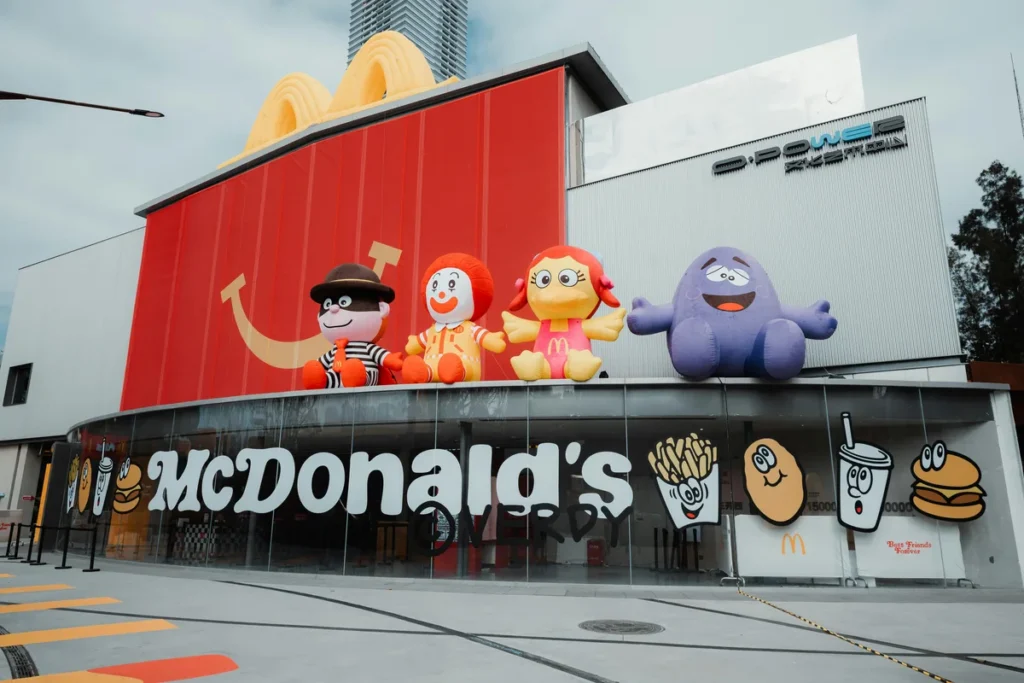
The boss wanted us to look into McDonald’s and children, and the deeper we dug, the more unsettling the picture became. McDonald’s child food addiction is not an accident. It is the product of decades of deliberate strategy, from toys that override nutritional judgment to food chemistry that hijacks developing brains. Here is how the world’s largest fast food company turns toddlers into lifelong customers.
The Branding Starts Before Children Can Read
In 2007, researchers at Stanford University and Lucile Packard Children’s Hospital conducted a now-landmark experiment. They gave 63 children, aged 3 to 5, pairs of identical foods. One portion came in McDonald’s-branded packaging; the other in plain wrappers. The result: children consistently said the McDonald’s-branded food tasted better, even though it was the exact same product. This held true for chicken nuggets, fries, carrots, and milk.
“Kids don’t just ask for food from McDonald’s,” said lead author Dr. Thomas Robinson. “They actually believe that the chicken nugget they think is from McDonald’s tastes better than an identical, unbranded nugget.”
The effect was strongest in children who had more televisions in their homes and ate at McDonald’s more frequently. By age 3, these children had already been conditioned to associate the Golden Arches with pleasure. Research shows that children’s brand recognition begins as early as age 2, well before they can understand what advertising is or why someone would want to sell them something.
And McDonald’s knows this. The company has historically directed about 40% of its total advertising budget toward children. Its mascot, Ronald McDonald, has achieved a level of name recognition among children second only to Santa Claus.
McDonald’s Child Food Addiction: The Toy Trap
The Happy Meal, launched in 1979, is perhaps McDonald’s most effective tool for reaching children. By 2003, Happy Meals accounted for 20% of all McDonald’s meals sold and generated $3.5 billion in revenue. The key ingredient is not the food. It is the toy.
In 2009, the fast food industry spent $341 million on toy premiumsIndustry term for free toys bundled with children's fast food meals, used as a marketing tool to drive repeat customer visits. for kids’ meals alone. McDonald’s accounted for 70% of all televised fast food commercials aimed at young children, and most of those ads featured the toy, not the food. The toys are frequently tied to blockbuster movies, popular TV shows, or collectible series that encourage repeat visits.
A Dartmouth study found that children who knew what toys McDonald’s was currently offering were 1.38 times more likely to have eaten there in the past week, even after controlling for the parents’ own fast food habits and socioeconomic factors. The mechanism is straightforward: a child wants the toy, the parent buys the meal, and the food comes along for the ride.
A Canadian experiment made this even clearer. When researchers offered toys only with healthier Happy Meal options, children were 3.19 times more likely to choose the healthier meal. The toy, not taste, was driving the decision.
Playgrounds, Schools, and the Architecture of Loyalty
McDonald’s approach goes beyond advertising. The company has built physical environments designed to forge emotional bonds between children and the brand.
In the early 1970s, McDonald’s introduced its first PlayLand at a location in Chula Vista, California. The playground increased the location’s business by more than 60% in the months following its opening. By 1991, McDonald’s had become America’s largest playground operator with 3,000 PlayPlaces, operating more than 8,000 playgrounds across the United States, more than any private corporation and more than most municipalities.
McDonald’s also embedded itself in schools. Founder Ray Kroc scouted new restaurant sites near schools from a Cessna airplane. The company sponsored educational programs like the “McSpellit Club,” where children earned meals for good attendance and academic performance, and “Passport to Play,” which reached 31,000 elementary schools. By 2006, 24% of U.S. high schools and 19% of middle schools offered on-site brand-name fast food.
The Chemistry of Craving
Marketing gets children through the door. But the food itself is engineered to keep them coming back.
The food industry uses a concept called the “bliss pointThe precise combination of sugar, salt, and fat in a food product that maximizes pleasure and craving without triggering the brain's fullness signals.,” the precise combination of sugar, salt, and fat that maximizes the pleasurable response. These three ingredients act synergistically: together, they are more rewarding than any one alone. When you bite into a McDonald’s cheeseburger or dip a nugget in sweet-and-sour sauce, you are experiencing a product that has been calibrated for maximum sensory reward.
This is not hyperbole. The science on ultra-processed foodIndustrially manufactured food containing additives and substances rarely found in home cooking, such as emulsifiers, colorings, and artificial flavor enhancers. addiction is now substantial. A 2024 research review estimated that 14% of adults and 15% of young people meet the clinical criteria for ultra-processed food addiction, using the same diagnostic framework applied to substance use disorders. In young people, this prevalence is unprecedented among legal substances.
Animal studies have shown that repeated intake of ultra-processed foods triggers changes in the nucleus accumbensA small brain region at the core of the reward circuit that releases dopamine in response to pleasurable experiences such as food, money, or humor., a brain region central to reward and addiction, in a pattern characteristic of addictive substances. These changes occurred before the animals became obese, suggesting that the addiction precedes the weight gain.
Children’s developing brains are especially vulnerable. A Dartmouth School of Medicine study found that moderate exposure to child-targeted fast food advertising was associated with a 31% increase in the likelihood of a preschooler eating fast food in the past week. The advertising does not just inform. It conditions.
The Tobacco Playbook
The connection between addictive food and addictive tobacco is not a metaphor. It is a matter of corporate history.
In the 1980s, tobacco giant Philip Morris acquired Kraft and General Foods. Released industry documents have revealed that tobacco industry leaders applied the techniques used to enhance the addictive properties of tobacco products to the development of ultra-processed foods. A University of Kansas study found that tobacco-owned foods were 29% more likely to be classified as fat-and-sodium hyper-palatable and 80% more likely to be carbohydrate-and-sodium hyper-palatable than foods made by non-tobacco-owned companies.
McDonald’s was not directly owned by a tobacco company, but it operates in the same ultra-processed food ecosystem that Big Tobacco helped engineer. The same additives, the same flavor optimization techniques, and the same targeting of children.
A Global Strategy That Hits the Poorest Hardest
If McDonald’s marketing to children were tapering off, the story might be different. It is not.
A 2021 study published in BMJ Nutrition, Prevention and Health analyzed McDonald’s Instagram marketing across 15 countries. The findings were stark: McDonald’s posted 154% more content in lower-middle-income countries than in high-income ones. Child-targeted themes appeared in 22% of posts in lower-income countries, compared to 12% in wealthier nations. Price promotions and giveaways appeared in 40% of posts in lower-income countries versus 14% in high-income markets.
The pattern is clear: as regulations tighten in wealthy countries, McDonald’s intensifies its child-focused marketing in places with fewer protections. The 15 Instagram accounts studied collectively maintained 10 million followers and generated 38.2 million video views in just four months.
What Parents Are Up Against
This is not a story about bad parenting. As Dr. Robinson noted in his Stanford study, “Parents don’t choose for their children to be exposed to this type of marketing. Parents have a very difficult job.”
Between the ages of 2 and 11, American children are exposed to approximately 5,500 food advertisements every year. More than 50 countries now regulate marketing directed at children, but the United States still relies largely on industry self-regulation, an approach that a 2012 FTC follow-up report showed had mostly shifted spending from television to less regulated digital channels rather than reducing it.
The system works exactly as designed. A child who loves the toy, trusts the clown, and craves the carefully engineered combination of salt, sugar, and fat does not need to be convinced. They become an advocate for the brand within their own family. As McDonald’s founder Ray Kroc once observed: “A child who loves our TV commercials and brings her grandparents to a McDonald’s gives us two more customers.”
The question is not whether McDonald’s manipulates children. The evidence is overwhelming that it does. The question is what, if anything, we plan to do about it.
The boss asked us to take a hard look at McDonald’s and children, and the trail of evidence runs deeper than most consumers realize. McDonald’s child food addiction is not a conspiracy theory or activist rhetoric. It is a well-documented corporate strategy, supported by peer-reviewed research in neuroscience, behavioral psychology, and public health. Here is the full picture.
Neurological Branding: How McDonald’s Rewires Taste Perception
The most striking evidence of McDonald’s influence on children comes from a 2007 study published in Archives of Pediatrics and Adolescent Medicine, conducted by Dr. Thomas Robinson at Stanford University. Sixty-three children aged 3 to 5, recruited from Head Start centers serving low-income families, were given five pairs of identical foods. One portion in each pair was presented in McDonald’s-branded packaging; the other in plain wrappers.
For four of five foods tested (chicken nuggets, french fries, baby carrots, and milk), children rated the McDonald’s-branded version as better-tasting. The foods were identical. The only variable was the packaging. As Robinson noted: “Kids don’t just ask for food from McDonald’s. They actually believe that the chicken nugget they think is from McDonald’s tastes better than an identical, unbranded nugget.”
The branding effect was significantly stronger in children with more television sets in their homes and those who ate at McDonald’s more frequently. More than half the children in the study had a TV in their bedroom, about one-third ate at McDonald’s more than once a week, and more than three-quarters had McDonald’s toys at home. By preschool age, the brand had already colonized their sensory experience.
This is consistent with research showing that children’s brand recognition begins as early as age 2, well before they can understand the persuasive intent of advertising. A study of 9- to 10-year-old Australian children found that more than half believed Ronald McDonald knew what was best for them to eat.
The Happy Meal Machine: McDonald’s Child Food Addiction Through Toys
The Happy Meal, introduced in 1979, is arguably the most successful child-targeted food marketing device in history. By 2003, it accounted for 20% of McDonald’s meals sold and generated $3.5 billion in annual revenue. But the meal is secondary to the toy.
In 2009, the fast food industry spent $583 million on child-directed marketing, $341 million of which went to toy premiumsIndustry term for free toys bundled with children's fast food meals, used as a marketing tool to drive repeat customer visits.. McDonald’s dominated this space, accounting for 70% of all televised fast food commercials aimed at young children, most of which prominently featured the toy rather than the food. The toys are strategically tied to blockbuster entertainment properties. In 1999 alone, McDonald’s released 80 different versions of Furby. Cross-promotional tie-ins (CPTIs) with movie franchises, TV shows, and games create collectible series that encourage repeat visits.
The epidemiological evidence supports the mechanism. A 2016 study by researchers at Dartmouth’s Geisel School of Medicine surveyed 583 parents of 3- to 5-year-olds. Even after controlling for parent fast food consumption and sociodemographic factors, children who usually knew what toys were being offered at fast food restaurants were 1.38 times more likely to have eaten at McDonald’s in the past week. The association was specific to McDonald’s and was not detected for Burger King, Subway, or Wendy’s. McDonald’s released half of all unique toy premiums tracked during the study period.
An experimental study at the University of Waterloo provided the causal mechanism. When 337 children aged 6 to 12 were offered Happy Meals with toys only paired with healthier options, they were 3.19 times more likely to choose the healthier meal (OR=3.19, 95% CI: 1.89-5.40). The toy, not the taste or nutritional content, was the primary driver of choice. The effect was more pronounced in boys (OR=1.90, 95% CI: 1.14-3.17).
Physical and Institutional Infrastructure
McDonald’s strategy extends beyond media into physical space. The company’s PlayPlace program, launched in the early 1970s, transformed fast food restaurants into destinations. The first PlayLand in Chula Vista, California increased the location’s business by over 60%. By 1991, McDonald’s had 3,000 PlayPlaces. At its peak, the company operated more than 8,000 playgrounds across the United States, more than any private corporation and more than most municipalities. Originally modeled on Disney World, these spaces associated the McDonald’s brand with play, safety, and sociality.
The institutional penetration went further. Founder Ray Kroc scouted new restaurant locations near schools from a Cessna. The company sponsored in-school programs like “McSpellit Club” (meals for academic performance), “Passport to Play” (reaching 31,000 elementary schools), and “McTeachers Night” events. McDonald’s provided branded textbook covers through Cover Concepts and placed outlets inside school cafeterias. By 2006, 24% of U.S. high schools and 19% of middle schools offered on-site brand-name fast food. Philadelphia Children’s Hospital and other pediatric hospitals housed McDonald’s outlets. The Ronald McDonald House Charities further cemented the brand’s association with children’s welfare.
Food Science: The Bliss PointThe precise combination of sugar, salt, and fat in a food product that maximizes pleasure and craving without triggering the brain's fullness signals. and Ultra-Processed FoodIndustrially manufactured food containing additives and substances rarely found in home cooking, such as emulsifiers, colorings, and artificial flavor enhancers. Addiction
The marketing creates the demand. The food chemistry sustains it.
Ultra-processed foods like those served at McDonald’s are formulated around the “bliss point,” the precise ratio of sugar, salt, and fat that maximizes palatability. These ingredients act synergistically: the combination produces a reward response greater than any single ingredient alone. Ultra-processed foods are not found in nature. They have been, as researchers at Drexel University put it, “intentionally created to be hyper-palatable through the addition of added fats, refined carbohydrates, and/or salt.”
The addiction framing is not metaphorical. A 2024 research review in Current Obesity Reports estimated the global prevalence of ultra-processed food (UPF) addiction at 14% of adults and 15% of young people, using criteria adapted from the DSM-5 substance use disorder framework. The adult rate mirrors that of alcohol use disorder (14%) and is close to tobacco use disorder (18%). The youth rate is, as the authors note, “striking and unprecedented.”
The biological mechanisms are increasingly well understood. Preclinical studies show that repeated UPF intake triggers rapid upregulation of calcium-permeable AMPA receptors in the nucleus accumbensA small brain region at the core of the reward circuit that releases dopamine in response to pleasurable experiences such as food, money, or humor., a neurological change characteristic of addictive substances and associated with increased cue-induced craving. Critically, this neural adaptation preceded the onset of obesity in the animal models, suggesting the addiction drives the weight gain, not the reverse.
Neuroimaging studies in humans have found that individuals meeting criteria for UPF addiction exhibit neural responses to ultra-processed foods that parallel those seen in people with substance use disorders: greater anticipatory reward, reduced consummatory reward, and enhanced functional connectivity across reward-processing brain regions.
Children’s developing prefrontal cortexes, responsible for impulse control and long-term decision-making, make them especially vulnerable. A 2017 study from Dartmouth found that moderate exposure to child-targeted fast food TV advertising was associated with a 31% increase in the likelihood of a preschooler eating fast food in the past week.
The Tobacco Connection
The parallels between ultra-processed food and tobacco are not coincidental. They share a corporate genealogy.
In the 1980s, Philip Morris, one of the world’s largest tobacco companies, acquired and merged Kraft and General Foods. R.J. Reynolds acquired Nabisco. Released industry documents have revealed that tobacco industry leaders applied the techniques used to enhance the addictive properties of tobacco to the development of ultra-processed foods, including the use of additives to enhance flavor, texture, and visual appeal to maximize profit.
A 2023 University of Kansas study, published in the journal Addiction, quantified the result. Analyzing 105 tobacco-owned foods and 587 non-tobacco-owned foods, researchers found that tobacco-owned products were 29% more likely to be fat-and-sodium hyper-palatable and 80% more likely to be carbohydrate-and-sodium hyper-palatable. Lead author Tera Fazzino noted: “There’s evidence to indicate tobacco companies were consistently involved with owning and developing hyperpalatable foods during the time that they were leading our food system.”
McDonald’s itself was not owned by a tobacco company. But the broader food system in which it operates was reshaped by tobacco industry practices. The same principles of bliss-point optimization, cue-triggered craving, and targeting of vulnerable populations apply.
Global Targeting: Poorer Countries, Fewer Protections
A 2021 study published in BMJ Nutrition, Prevention and Health analyzed 849 McDonald’s Instagram posts across 15 countries, categorized by World Bank income level. The results revealed a clear pattern of intensified child-targeted marketing in lower-income nations.
McDonald’s posted 154% more content in lower-middle-income countries than in high-income ones. Child-targeted themes appeared in 22% of posts in lower-income countries versus 12% in wealthier markets. Price promotions and giveaways constituted 40% of posts in lower-income countries compared to 14% in high-income ones. Conversely, health-related messaging was more prevalent in high-income countries, suggesting a deliberate segmentation strategy: healthier branding where regulators are watching, aggressive child-targeting where they are not.
The 15 accounts collectively maintained 10 million followers and generated 38.2 million video views in just four months.
Regulatory CaptureThe process where a regulated industry shapes the legislation meant to regulate it, often resulting in rules that benefit the industry more than the public interest. and the Self-Regulation Failure
The United States has largely relied on industry self-regulation to address food marketing to children. The record of that approach is poor.
In 2006, the FTC found that 44 food companies spent more than $1.6 billion promoting food and beverages to children and adolescents. By 2009, fast food alone accounted for $714 million in marketing to youth, the single largest category. Total spending declined 19.5% between 2006 and 2009, but this primarily reflected reduced television spending. Digital marketing to children increased by 50% over the same period.
In 2007, McDonald’s and nine other companies announced the Children’s Food and Beverage Advertising Initiative, pledging to devote at least half their advertising messages to promoting healthier choices. In practice, the nutritional improvements have been incremental. When McDonald’s introduced apple slices with Happy Meals, the “Apple Dippers” actually increased the sugar content of the meal. And while some overtly child-targeted features like PlayPlaces have declined, the underlying marketing machinery has migrated to digital platforms with even less oversight.
More than 50 countries regulate marketing directed at children. The science supporting such regulation continues to accumulate. Whether policy will catch up to the evidence remains an open question. But the evidence itself is not in dispute: McDonald’s has built a multi-decade, multi-billion-dollar system for converting children into customers before those children have the cognitive capacity to understand what is happening to them.